-
China Environment Forum
Resigned Activism: Rural China’s Quiet Environmentalism
MORE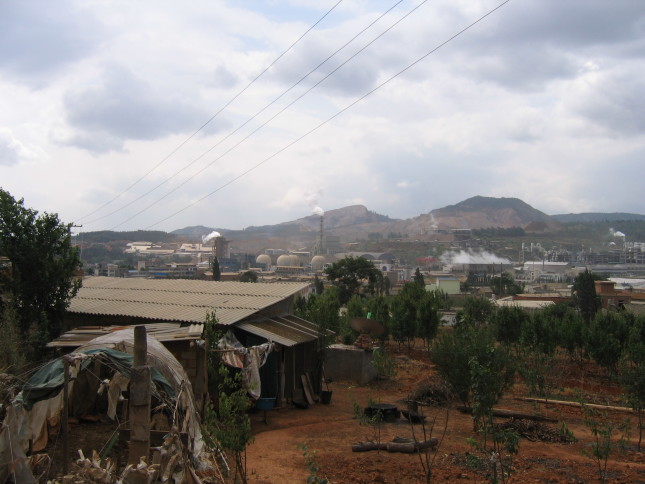
While conducting ethnographic fieldwork in Yunnan province in 2009, I discovered a new vegetable: the cabbage-turned-turnip. Villagers in Baocun explained that after the town’s fertilizer plants began extracting and processing phosphorous, their cabbages began to grow very long roots, resembling turnips, as they adapted to the new polluted environment.
-
Guest Contributor
Playing Energy Politics: The Risks of Securitizing Natural Gas Markets in Europe
MORE
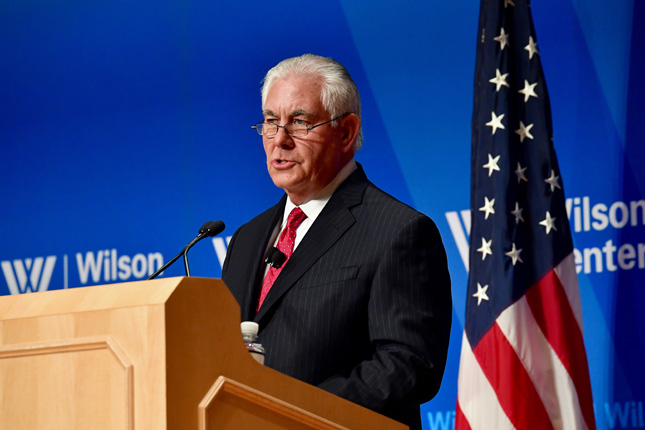
Russia is “playing politics with energy supplies,” said U.S. Secretary of State Rex Tillerson at a major policy speech at the Wilson Center this week. He accused Russia of wielding natural gas “as a political weapon” and said that ensuring European energy security was “fundamental” to U.S. national security objectives. In Europe, the debate is raging over how best to achieve energy security in the face of the twin challenges of Russian dominance and the need to decarbonize the economy. The ongoing securitization of Russian natural gas could not only complicate the road to a low carbon future in Europe, it could also undermine a European integration project that has mostly been a success.
-
China Environment Forum
GMOs: Can U.S.-China Cooperation Address Public Distrust and Increase Food Security?
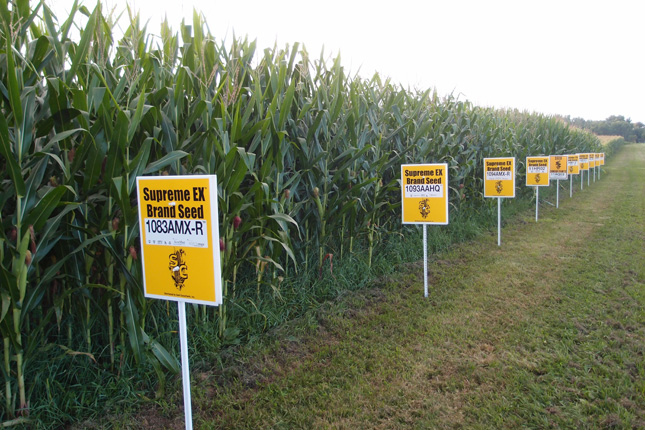
MOREToday, China feeds 1.38 billion people—approximately one-fifth of the global population—with about 10 percent of the world’s arable land. Compared to the United States, where each acre of land feeds one citizen on average, China has only 0.2 acres per person. This people-to-land mismatch helps explain why 9.3 percent of China’s population was undernourished in 2015.
-
Guest Contributor
Flooding in Bangladesh: Calling Out Climate Change From the High Ground
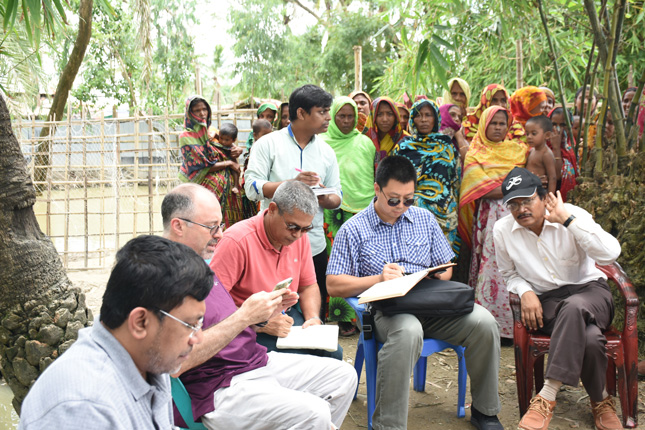
MOREFloods have taken the lives of more than 100 people in northern Bangladesh over the last two weeks. Fully one third of the country has been flooded and some 600,000 people have been displaced in the riverine nation as a result of monsoons in India and Nepal. At international climate forums, Bangladeshi diplomats consistently decry such disasters as part of their urgent calls for action to mitigate changing weather patterns worldwide. But here in the country’s Rangpur-Kurigam region, both authorities and citizens have been reluctant to attribute these deadly disasters to the effects of climate change.
Topics: Bangladesh, climate change, development, environment, featured, Guest Contributor, migration, water -
On the Beat
Fresh Water, Safe Water: Integrating Freshwater Conservation and WASH in Sub-Saharan Africa
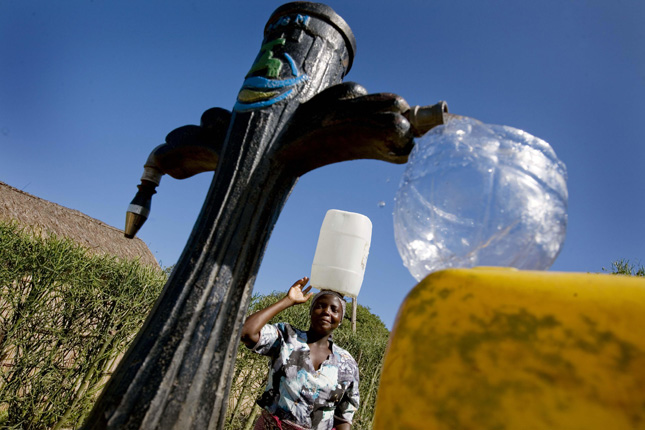
MOREDespite sharing a common element—water—the freshwater community and the Water, Sanitation and Hygiene (WASH) community have traditionally worked independently of each other, said Jimmiel Mandima, director of U.S. government relations at the African Wildlife Foundation during a recent webinar organized by USAID-supported Africa Biodiversity Collaborative Group (ABCG). However, that is starting to change: “Integration will bring value addition and synergy,” he said.
-
China Environment Forum // Eye On
Inside ‘The Poachers Pipeline’: Q&A With Al Jazeera’s Jeremy Young and Kevin Hirten
MORERhino horn is the most valuable illegally traded wildlife product in the world, more expensive per pound than either gold or cocaine and much more valuable than elephant ivory. With as few as 25,000 wild rhinos left in Africa, conservationist and law enforcement fight a constant battle with criminal syndicates seeking to kill rhinos and sell their horns to wealthy consumers abroad, many in Asia.
-
Masculinity Under the Microscope: Better Accounting for Men in Climate Adaptation
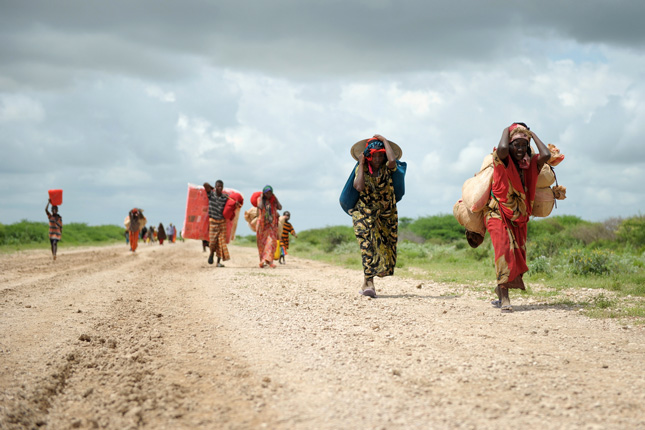
December 13, 2016 // By Anam AhmedMORE“Before the famine my life was better. I was a man in my own country,” Abdi Abdullahi Hussein, a Somali refugee living in Kenya, tells The Climate Reality Project. “When you have livestock and a farm and it all disappears, it feels like falling off a cliff.”
Topics: adaptation, Africa, agriculture, Asia, climate change, development, environment, featured, food security, GBV, gender, HIV/AIDS, India, land, livelihoods, Mali, migration, mitigation, risk and resilience, Somalia, Tanzania, Vietnam -
From the Wilson Center
Navigating Complexity: Climate, Migration, and Conflict in a Changing World
MORERecord levels of displacement and accelerating climate change have prompted many to wonder if the world is headed toward a more violent future. The nexus of climate change, migration, and conflict is posing fundamental challenges to societies. But not always in the ways you might think. In a new report prepared for the U.S. Agency of International Development, Lauren Herzer Risi and I present a small guide to this controversial and consequential nexus of global trends.
 A Publication of the Stimson Center.