-
Environmental Security Weekly Watch: April 20-24, 2026
›
A window into what we’re reading in the Stimson Center’s Environmental Security Program
The Bolivian Cacao Farmers Taking on the Gold-Mining Industry (The Guardian)
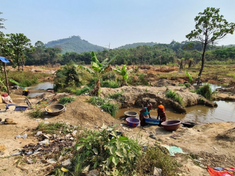
Cacao farmers in Bolivia’s Alto Beni and Palos Blancos municipalities successfully pushed for local mining bans in 2021, protecting their organic agroforestry land from the destructive gold rush sweeping the region. Gold prices are up over 64% since 2020—intensifying illegal and legal mining across Bolivia, driving deforestation, mercury poisoning, flooding, and encroachment into protected national parks. Communities near active mining zones report polluted rivers, declining fish populations, and mercury-related illnesses.
-
Warfare and Global Warming
›
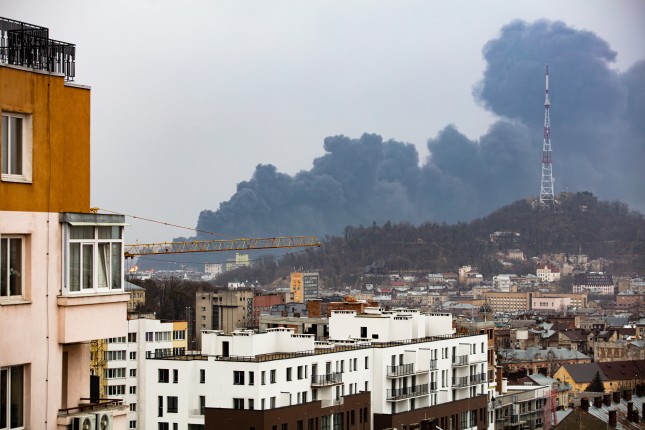
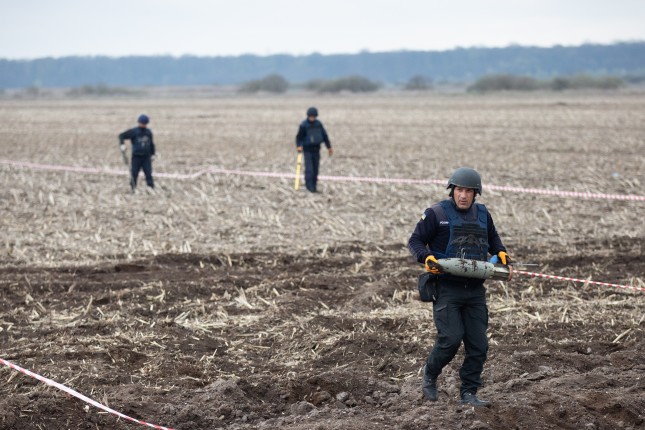
The world has plenty of reasons to avoid conflict already. Yet attendees at the recently-concluded COP27 climate conference in Sharm el-Sheikh, Egypt were presented with another compelling argument: Warfare is bad for global warming. So much so, in fact, that Ukraine’s delegation to the conference organized a special session at the conference of parties on “War Related Emissions,” bringing along a tree trunk bearing scars from Russian shell fragments as tangible evidence.
-
Meeting the Global Energy Transition: A Conversation with Jonathan Pershing
›“Things that we used to think were 20 or 30 years into the future are in fact happening today… Climate change is noticeably changing the extent, the severity, and the frequency of these kinds of events.”
This stark assessment from Jonathan Pershing, Program Director of Environment at the William and Flora Hewlett Foundation, is at the center of a discussion of progress made and needed for international climate commitments, the role of critical minerals in the green energy transition, and climate-related migration trends with ECSP Senior Fellow Sherri Goodman and ECSP Program Associate Amanda King in this week’s episode of New Security Broadcast. Pershing brings a wealth of perspective to the conversation, drawing on his roles formally supporting Special Presidential Envoy for Climate John Kerry, and serving both as a Special Envoy for Climate Change at the U.S. Department of State and lead U.S. negotiator to the U.N. Framework Convention on Climate Change.
-
Community-centered Approaches to Green Mineral Mining: A Conversation With Pact’s Roger-Mark De Souza
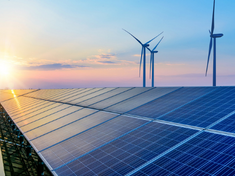
›According to the World Bank, building enough renewable energy infrastructure to keep global warming below 2C will require more than 3 billion tons of minerals. Reducing emissions quickly is crucial to minimizing risk for the world’s most climate-vulnerable communities, many of whom are on the front lines of a crisis they did not create. But unless we are careful, ramping up mining in order to decarbonize could actually worsen inequity and injustice. “How do we do this quickly, safely, and sustainably, in ways that benefit all?” asks Lauren Risi, Director of the Wilson Center’s Environmental Change and Security Program in this week’s New Security Broadcast.
-
How AGWA is Tracking and Shaping Water’s Crucial Role in Climate Adaptation
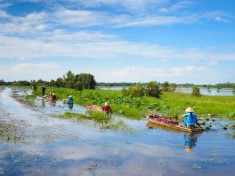
›As the last decade has brought about a dramatic shift in approaches to addressing climate change, water is increasingly at the forefront of the conversations around adaptation and resilience. In part, this is because more countries now experience the damaging effects of climate change through water-related events including rising sea levels, intensification of natural disasters, droughts, and flooding.
In this week’s New Security Broadcast, John Matthews, Executive Director of the Alliance for Global Water Adaptation (AGWA), observes that the heightened attention to water has placed his group at the center of discussions at the 2022 United Nations Climate Change Conference (COP27) in Sharm El-Sheikh, Egypt.
-
Catastrophe and Catalyst: Pakistan’s Foreign Minister on His Nation’s Climate Tragedy
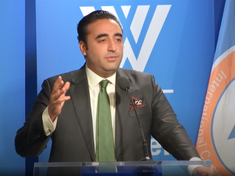
›On a recent visit to the Wilson Center, Pakistan’s Foreign Minister Bilawal Bhutto Zardari remarked on the historic nature of the monsoon-related floods that have submerged a huge swath of his country over the last several months.
“These are no normal monsoons and no normal floods,” said Zardari. “We are used to monsoons. We are used to floods. We have provincial mechanisms [and] national mechanisms to deal with such disasters. What we were not prepared for was for floods to descend from the sky.”
-
Agricultural Land in Russian Territorial and Geopolitical Ambitions
›The negative impacts on global food security wrought by Russia’s war in Ukraine are obvious. But recent news that Russia currently occupies more than one fifth of Ukrainian farmland, draws attention to another dimension of this politically-induced food and agricultural crisis: land itself. Of course, territory has long been an object of conflict and warfare. But agricultural land—in particular—is also a key, though understated, dimension of the geopolitical ambitions undergirding Russian activity at home and abroad.
-
Disillusioned Youth: A Danger to Democracy
›Global risks abound these days, from climate change to the next pandemic, as well as acute supply chain disruptions, energy shortfalls, and cybersecurity threats. These challenges play out in a landscape of immense political instability fomented by the Russian Federation, the People’s Republic of China, Iran and others, as well as dangers looming in the potential state collapse of countries like Afghanistan, Yemen, and Sudan. Taken together, the risk tally of our moment is mounting quickly.
Showing posts from category featured.