-
Dot-Mom // From the Wilson Center
USAID Egypt’s Health and Population Legacy Review
MOREOn May 23 the Middle East Program, ECSP, and the Global Health Initiative of the Woodrow Wilson Center, along with the Global Health Technical Assistance Project, hosted a panel of speakers discussing the past 30 years of the U.S. Agency for International Development’s health and population initiatives in Egypt, as outlined in the new Egypt Health and Population Legacy Review. Geoffrey Dabelko, director of ECSP and coordinator of the Global Health Initiative at the Wilson Center, moderated the event. [Video Below]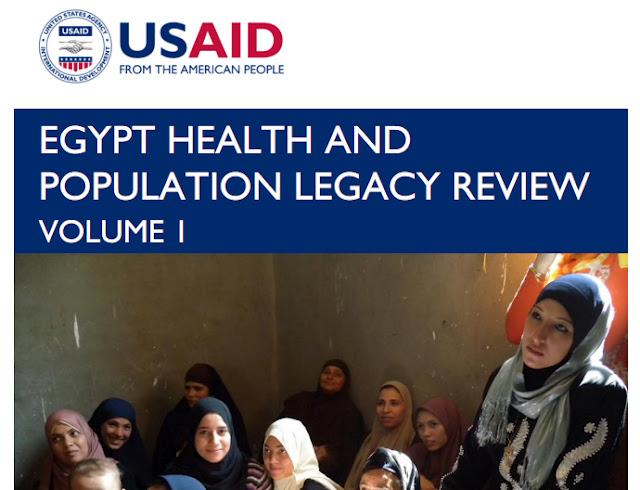
Peter McPherson, former administrator of USAID during the Reagan administration, and George Laudato, the administrator’s special assistant for the Middle East, presented on the historical context behind USAID in Egypt and the results of their efforts. McPherson pointed to three lessons that can be drawn from the recent report:- “Big payoffs” require long-term efforts; and
- Economic support for a country can have a dramatic impact; but
- The host country’s commitments and investments are still important.
Motaz Zahran, political counselor for the Embassy of Egypt, noted that USAID efforts were “just one sector of a fruitful partnership” between the United States and Egypt that he hoped would continue. He said the success story outlined by the report was reflective of improvements in coordination and addressing specific goals.
Other panelists outlined the successes of USAID in Egypt as related to their own areas of expertise. Leslie B. Curtin, co-author of the review and an expert in demographics and health outcomes, noted the dramatic improvements in a range of health sectors, in particular the rise in contraceptive prevalence and immunization rates and decrease in both maternal and infant mortality rates.
Nahed Matta, MD, senior maternal and newborn health officer at USAID, focused on improvements to the quality of maternal health, which she said were made possibly through better technology and increased fact-gathering to identify the key factors regarding maternal health trends. Sameh El-Saharty, MD, senior health policy specialist at the World Bank and Health Legacy Review Committee member, credited the increased number of health professionals in Egypt, better information gathering on health systems, and restructured models of health insurance, as successful strategies.
Concluding the session, Amie Batson, deputy assistant administrator for Global Health at USAID, discussed the lessons that other development initiatives can draw from the legacy of USAID efforts in Egypt. She highlighted the importance of country ownership, in which the developing country engages with other institutions and religious and political leaders at both national and local levels, and of policies that fund routine monitoring and evaluation. She also outlined the possibilities of innovation and south-to-south sharing on the local and international scale, referencing inroads made by two recent initiatives: the “MAMA” mobile device program, launched by Secretary Clinton in May 2011 to assist with disseminating maternal health information, and the Saving Lives at Birth initiative, launched by USAID in partnership with several other organizations in March 2011.
Laura Rostad is an intern for the Middle East Program at the Woodrow Wilson Center.
Image Credit: Adapted from cover of the Egypt Health and Population Legacy Review, courtesy of USAID; cover photo courtesy of Leslie Curtin.Topics: development, Dot-Mom, Egypt, family planning, foreign policy, From the Wilson Center, funding, gender, global health, population, USAID, video -
Guest Contributor
Environmental Action Plans in Darfur: Improving Resilience, Reducing Vulnerability
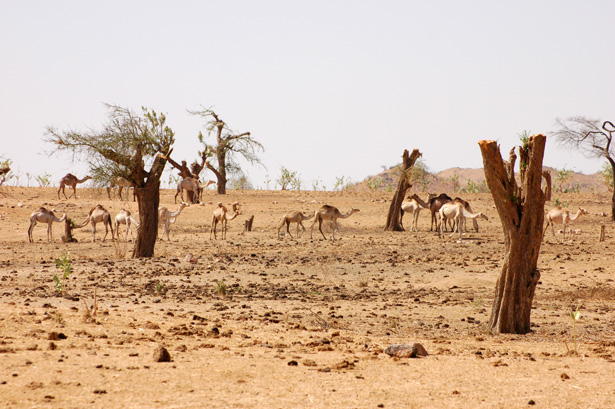
MOREMany villagers in Baaba, a community of 600 in South Darfur, remember a shady forest of mango and guava trees that provided food and a valuable income for the villagers and a pleasant picnic spot for people in Nyala, the nearby state capital. Over the last decade, that forest has degraded into eroded brush dotted by the occasional baobab – a transformation that is unfortunately a familiar sight throughout Darfur.
Most of Baaba’s trees have become firewood and charcoal for the people living in nearby internally displaced persons (IDP) camps. Baaba’s residents, who themselves returned from the camps to try to rebuild their lives at home, struggle to coax enough food from the soil, which has largely eroded away following deforestation. Afraid to venture any further than necessary from home for fear of violence and banditry in the countryside, they farm and graze the same land year after year without fallow periods – further depleting the soil and driving yields ever lower.
Baaba is like hundreds of Darfuri villages, which face a brutal mix of insecurity and environmental decline that leaves them one poor harvest away from being forced into the IDP camps. Baaba, however, is also a pilot participant in a new approach – the Community Environmental Action Plan – that aims to rehabilitate the local environment, enable people to sustainably manage natural resources, and ultimately to make communities more prosperous and resilient.
Most of Darfur has always been marginal land where farming and herding provide a meager livelihood and natural resources are few. Even before war broke out in 2003, soaring population growth (total population has quintupled since the 1970s) was putting intolerable pressure on the land, water, and trees of Darfur. The conflict in Darfur has since heavily disrupted traditional methods for sharing and maintaining natural resources, leading to environmental devastation. The worsening effects of climate change – though hard to separate from local environmental depletion – are also beginning to disrupt weather patterns and farming. The disheartening result is that even where fighting has subsided and displaced persons return home, they often find that the land no longer sustains them.
Traditional humanitarian aid and infrastructure projects are ill-suited to help, since persistent insecurity deprives humanitarian actors of access to communities for weeks or months at a time. Environmental decline didn’t start the humanitarian crisis in Darfur, but it threatens to prolong it and put a sustainable peace out of reach.
Community Environmental Action PlansThe International Organization for Migration (IOM), mandated to work on IDP and return issues in Darfur, aimed to address these challenges with Community Environmental Action Plans (CEAPs) in three pilot villages. CEAPs build comprehensive local capacity, enabling communities to manage natural resources sustainably and address environmental problems themselves without relying on outside support. The ultimate goal is to build the resilience and adaptive capacity of vulnerable communities. IOM worked with Baaba and two other villages to implement CEAPs, in partnership with the Swiss-based environmental NGO ProAct, the UN Environment Programme (UNEP), the government of South Darfur, and Darfuri environmental organizations. The project, funded by the Government of Japan, ran from early 2009 until mid-2010.
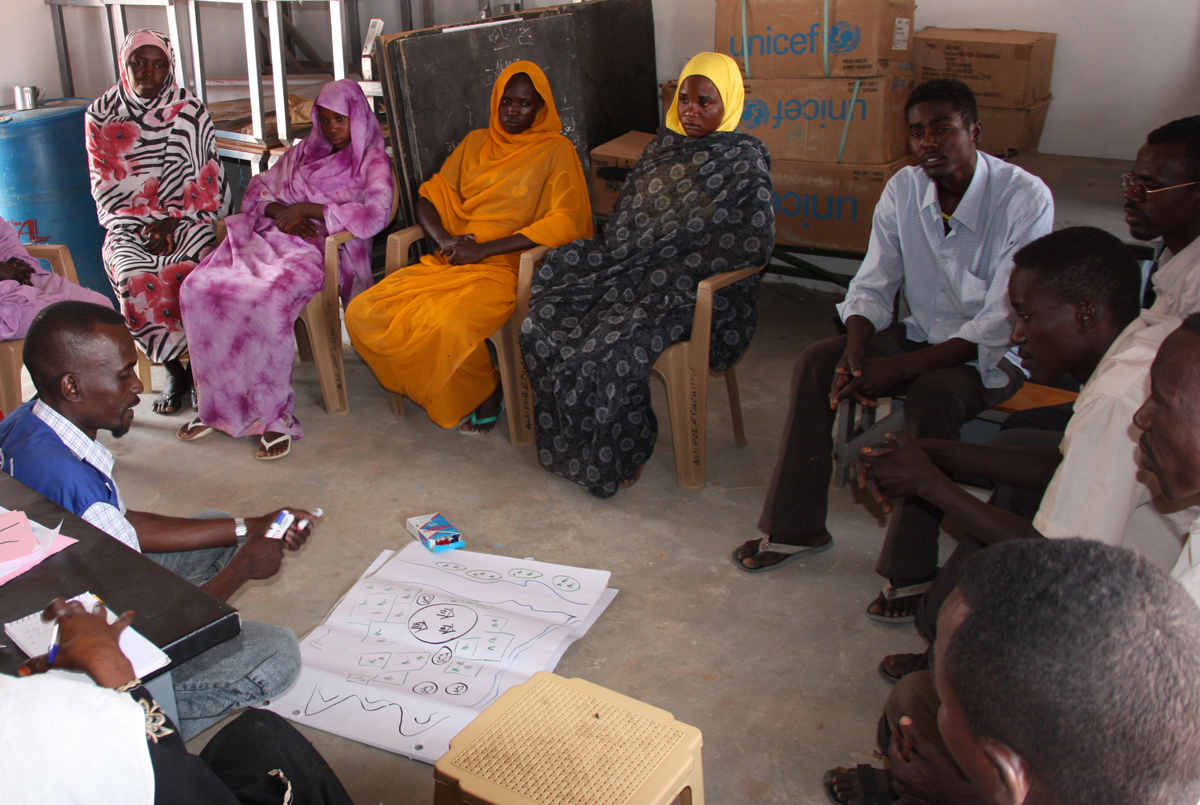
The CEAP process trains communities to understand the connections between a healthy ecosystem and a prosperous community and to promote livelihoods by rehabilitating the environment. Each participating village formed a CEAP governance committee, which was then trained to understand the environment as a single integrated system and to see how damaging one resource like trees can devastate other ecosystem services – such as pollination, groundwater retention, and soil fertility – that enable and promote human livelihoods. The communities then identified essential needs, including reforestation, water harvesting, and improved sanitation, and worked with IOM to develop appropriate responses. These activities were all implemented by the villages themselves, with technical and material support from IOM and its partners.
Building Local Capacity
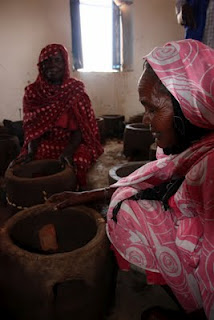
The communities built low-tech but highly productive tree nurseries, producing and planting over 200,000 seedlings to restore damaged land and provide a sustainable wood supply. Local women learned how to make highly fuel-efficient stoves using locally available materials, cutting their need for firewood and allowing them to sell stoves in the nearby Nyala market.Farmers received extensive training in sustainable agriculture techniques, including water harvesting, composting, agro-forestry, and intercropping (mixing complementary plant species together in the same fields). Volunteers were trained in effective hygiene practices and built latrines for each household. Water committees were trained to repair and maintain the villages’ indispensable but fragile water hand pumps, ensuring a more reliable source of drinking water. Each of these activities was governed by a community committee, including women and youth, trained to manage the projects for the benefit of the entire community and continue the work after the project’s end.
Through this approach, all three villages significantly boosted their livelihoods and agricultural productivity while becoming less dependent on the unsustainable exploitation of their fragile environment. The CEAP approach benefits greatly from focusing on capacity-building and local implementation, which fosters a strong sense of community ownership that persists after the project ends. Equally important, CEAPs attempt to address most or all of a community’s environmental issues simultaneously, reducing the risk that neglected environmental problems – particularly agricultural failure – will critically destabilize and displace a community in the future.
A Replicable Model
CEAPs aren’t a panacea, particularly in the conflict-prone areas where they are most needed. Insecurity, particularly a series of abductions of humanitarian workers from several organizations in 2010, cut off IOM’s access to the communities late in the project. Though the core activities were completed by working through local partners with more reliable access, the security situation left few opportunities for follow-up activities. Longer-term threats, particularly unrestrained population growth – which requires a comprehensive approach that includes addressing unmet need for family planning services – could undo much of the good that CEAPs accomplish.
Though insecurity prevented IOM from continuing the project, other organizations including UNEP are implementing and refining the CEAP approach elsewhere in Darfur and other regions in sub-Saharan Africa. As climate changes intensifies and the potential for related conflicts looms, the CEAP approach should be considered as a powerful and flexible tool to rehabilitate the environment and strengthen vulnerable communities.
Paul Rushton is a consultant for the International Organization for Migration, Sudan, and worked as a Programme Officer managing the CEAP projects in South Darfur from 2009 to 2010.
Sources: International Organization for Migration, UN.
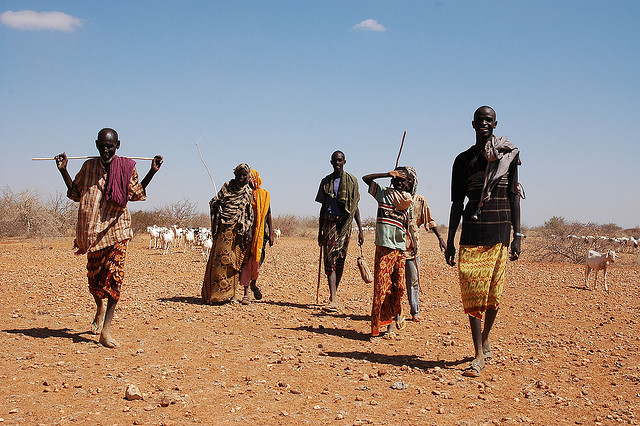
Photo Credit: Camels graze in a destroyed and degraded village in Western Darfur, courtesy of UNEP; and pictures from CEAP sites in Southern Darfur, courtesy of Paul Rushton. -
Biofuels: The Grassroots Solution
May 24, 2011 // By Wilson Center StaffMOREThe original version of this article, by Joan Melcher, appeared on ChinaDialogue.
The cultivation of biofuels – fuels derived from animal or plant matter – on marginal lands could meet up to half of the world’s current fuel consumption needs without affecting food crops or pastureland, environmental engineering researchers from America’s University of Illinois have concluded following a three-year study. The findings, according to lead author Ximing Cai, have significant implications not only for the production of biofuels but also the environmental quality of degraded lands.The study, the final report of which was published in the Journal of Environmental Science and Technology late last year, comes at a time of increasing global interest in biomass. The International Energy Agency predicts that biomass energy’s share of global energy supply will treble by 2050, to 30 percent. In March, the UK-based International Institute for Environment and Development called on national governments to take a “more sophisticated” approach to the energy source, putting it at the heart of energy strategies and ramping up investment in new technologies and research programs.
The University of Illinois project used cutting-edge land-use data collection methods to try to determine the potential for second-generation biofuels and perennial grasses, which do not compete with food crops and can be grown with less fertilizer and pesticide than conventional biofuels. They are considered to be an alternative to corn ethanol – a “first generation” biofuel – which has been criticized for the high amount of energy required to grow and harvest it, its intensive irrigation needs and the fact that corn used for biofuel now accounts for about 40 percent of the United States entire corn crop.
A critical concept of the study was that it only considered marginal land, defined as abandoned or degraded or of low quality for agricultural uses, Cai, who is civil and environmental engineering professor at the University of Illinois in the mid-western United States, told ChinaDialogue.
The team considered cultivation of three crops: switchgrass, miscanthus, and a class of perennial grasses referred to as low-impact high-diversity (LIHD).
Continue reading on ChinaDialogue.
Sources: Sources: International Energy Agency, Journal of Environmental Science and Technology, Reuters, University of Illinois.
Photo Credit: Adapted from “Biofuels,” courtesy jurvetson. -
Winning Hearts and Minds: An Interview with Chief Naval Officer Admiral Gary Roughead
May 23, 2011 // By Wilson Center StaffMOREThe original version of this article, by Rosemarie Calvert, appeared in the Center for a Better Life’s livebetter magazine.
Few people understand “smart” power as well as Chief Naval Officer (CNO) Admiral Gary Roughead. To this ingenious, adept leader of the world’s largest and most powerful navy, it’s not just about military strategy or political science; it’s about heart. It’s about the measure of a man with regard to honor, courage and commitment. And, it’s about appreciation and respect for the natural world. As one of the U.S. Defense Department’s most powerful decision-makers, Roughead has helped mold a new breed of sailor who understands that preventing war is just as important as winning war – that creating partners is more important than creating opponents. Add mission mandates such as humanitarian assistance, disaster relief, and environmental stewardship, and it’s clear why Roughead and his brand of smart power are having a profound impact on international peace, national security, and natural security.
Engendering Environmental Advocacy
“You don’t live on the ocean and not love it. My appreciation for the environment came from a very early age – from just loving to be on the water. It’s something that’s had a very strong impact on me,” explains Roughead, who grew up in North Africa where his father worked in the oil business. He and his family lived along an uninhabited area of coastline where his father’s company built a power plant and refinery to process and transport Libya’s huge oil field finds to offshore tankers.
“We were the first people to move there; I was still in grammar school. The beauty in being the first was that the coastline was absolutely pristine. Even before school, I would get up and go skin diving. There were beautiful reefs, and fish were everywhere. The vegetation was just incredible. The company built an offshore loading area a few miles off the beach with 36-inch pipes pumping crude oil out to where these big supertankers would come in. Back then, there wasn’t a high regard for the environment, so when storms would kick-up and ships got underway in a hurry, they would just cast them off and all that oil would go into the ocean.
“Fast forward about five years, and the last time I went skin diving I didn’t see a living thing. The vegetation was dead. At that time I was visiting my folks on summer leave from the Naval Academy. There were periods when I would skin dive and then surface after being down about 35-40 feet, and my lungs would be ready to burst. I’d look up, having moved from my original location, and see this massive oil slick. And, I’d go, ‘Oh gosh…no!’ But, you didn’t have any choice. I would come home and actually have to clean the oil off with kerosene because it was caked on me.
“I saw and experienced environmental devastation, and it had an effect on me. Being at sea all the time – I love going to sea and seeing everything about it – drove me to the views I have. I really do think there’s compatibility between the Navy and the environment. We have things we must accomplish, but we can do them cleanly and responsibly. That’s what we’ve tried to demonstrate to those who have different views – that there has to be compatibility between the two.”
Continue reading on the Center for a Better Life.
Rosemarie Calvert is the publisher and editorial director of livebetter magazine and director of the Center for a Better Life.
Photo Credit: Adapted from “USS Nitze underway with ships from U.S. Navy, Coast Guard and foreign navies,” courtesy of flickr user Official U.S. Navy Imagery. -
From the Wilson Center
USAID, Muslim Separatists, and Politics in the Southern Philippines
For some years after the terrorist attacks of 9/11, the existence of violent Muslim separatists on the southern Philippine island of Mindanao gave U.S. officials significant cause for concern. In 2005, for example, the U.S. embassy charge d’affaires to the Philippines, Joseph Mussomeli, told reporters that “certain portions of Mindanao are so lawless, so porous…that you run the risk of it becoming like an Afghanistan situation. Mindanao is almost, forgive the poor religious pun, the new Mecca for terrorism.” During the Bush administration, officials referred to the region as a “second front” in the War on Terror: the region was once seen as a “new Afghanistan” that “threatened to become an epicenter of Al Qaeda.” [Video Below]MORE
Nevertheless, as noted by Wilson Center Fellow Patricio Abinales at an Asia Program event on May 11, U.S. efforts to co-opt and pacify separatist guerrillas have proven remarkably successful in some areas of the islands. Some commentators have highlighted the role of the U.S. military in bringing a relative sense of security to troubled regions, noting that Mindanao presents a “future model for counterinsurgency.” However, Abinales’s research shows the military activities have had little effect, often because troops are stationed far from potential areas of conflict. Instead, it is the civilian side of the American presence that has dampened conflict in the war zones of the southern Philippines.
Abinales specifically explored the factors behind the success of the U.S. Agency for International Development’s (USAID) Growth with Equity in Mindanao (GEM) program in demobilizing and reintegrating 28,000 separatist guerrillas of the Moro National Liberation Front (MNLF), as well as the long-term political consequences of this accomplishment.
“Arms to Farms”
Usually, USAID programs are organized on the basis of grants for specific and limited projects. In contrast, GEM arose as a long-term umbrella organization that oversees the disbursement and management of American funding across a number of long-term projects. Coordinators are trained directly in Mindanao and are encouraged to “go native,” living in the area and becoming part of the community. GEM prioritizes cultural understanding, respect for community leaders, an appreciation of the important role that women play in local societies, and sensitivity to potential divisions within separatist groups and their security concerns vis-à-vis the Philippine government.
There has often been a general tendency for aid organizations to associate the demobilization of warring groups with disarmament. While Philippine officials on Mindanao have sometimes tried this approach, cash-for-guns amnesty schemes have opened up opportunities for corruption and have not been particularly effective. Understanding that one of the major concerns of guerrilla rebels is exploitation by corrupt government officials, GEM established an “Arms to Farms” scheme, whereby Muslim rebels are trained to engage in agriculture, but are not encouraged to put away their weapons. In this way, the program keeps potential guerrillas and Al Qaeda recruits busy with legitimate and peaceful economic activity, while it assuages their concerns about the threat from corrupt government officials, who may otherwise take the fruits of agricultural labor by force.
In fact, Abinales noted that one of the keys to GEM’s success is that the organization has never submitted to the official local authorities, and has largely been allowed a free reign by Manila to conduct its activities on Mindanao. It is precisely because the state has not been successful in delivering welfare regimes which provide stability to the area that GEM is seen as an alternate source of development and security in the region. Moreover, because of GEM’s activities, other American officials are allowed relatively free access, and are even welcomed into areas where the authority of the Philippine government holds no sway. Most of GEM’s activities are conducted with the MNLF, which has maintained its own official treaties and agreements with Manila since the 1970s. However, the American organization is beginning to enter the territory of the Moro Islamic Liberation Front, a splinter group of the MNLF that rejects relations with the national government outright, but one whose leaders are jealous of the development gains the MNLF has made under GEM.
Abinales was quick to point out that although GEM’s activities have been successful, they are tailor-made to specific circumstances. It is therefore difficult to present them as a generalized model that can be applied to other separatist conflicts. Nevertheless, Abinales’s work suggests that government agencies working on counterinsurgency efforts elsewhere might do well to examine the benefits of the flexible civilian approaches to conflict resolution formed with a deep understanding of the concerns of the specific communities involved.
Bryce Wakefield is program associate with the Asia Program at the Woodrow Wilson Center.Topics: agriculture, Asia, conflict, development, foreign policy, From the Wilson Center, Philippines, security, video -
The Walk to Water in Conflict-Affected Areas
May 18, 2011 // By Wilson Center StaffMOREConstituting a majority of the world’s poor and at the same time bearing responsibility for half the world’s food production and most family health and nutrition needs, women and girls regularly bear the burden of procuring water for multiple household and agricultural uses. When water is not readily accessible, they become a highly vulnerable group. Where access to water is limited, the walk to water is too often accompanied by the threat of attack and violence.
Topics: conflict, food security, gender, humanitarian, natural resources, risk and resilience, USAID, water -
From the Wilson Center
Connections Between Climate and Stability: Lessons From Asia and Africa
MORE“We, alongside this growing consensus of research institutes, analysts, and security agencies on both sides of the Atlantic, think of climate change as a risk multiplier; as something that will amplify existing social, political, and resource stressors,” said Janani Vivekananda of International Alert, speaking at the Wilson Center on May 10. [Video Below]
Vivekananda, a senior climate policy officer with International Alert’s Peacebuilding Program, was joined by co-presenter Jeffrey Stark, the director of research and studies at the Foundation for Environmental Security and Sustainability (FESS), and discussant Cynthia Brady, senior conflict advisor with USAID’s Office of Conflict Management and Mitigation, to discuss the complex connections between climate change, conflict, stability, and governance.
A Multi-Layered Problem
Climate change and stability represent a “double-headed problem,” said Vivekananda. Climate change, while never the only cause of conflict, can increase its risk in certain contexts. At the same time, “states which are affected by conflict will already have weakened social, economic, and political resilience, which will mean that these states and their governments will find it difficult to address the impacts of climate change on the lives of these communities,” she said.
“In fragile states, the particular challenge is adapting the way we respond to climate change, bearing in mind the specific challenges of operating in a fragile context,” said Vivekananda. Ill-informed intervention programs run the risk of doing more harm than good, she said.
For example, Vivekananda said an agrarian village she visited in Nepal was suffering from an acute water shortage and tried adapting by switching from rice to corn, which is a less water-intensive crop. However, this initiative failed because the villagers lacked the necessary technical knowledge and coordination to make their efforts successful in the long term, and in the short term this effort actually further reduced water supplies and exacerbated deforestation.
“Local responses will only be able to go so far without national-level coordination,” Vivekananda said. What is needed is a “harmony” between so-called “top-down” and “bottom-up” initiatives. “Adapting to these challenges means adapting development assistance,” she said.
“What we’re finding is that the qualities that help a community, or a society, or in fact a government be resilient to climate change are in fact very similar qualities to that which makes a community able to deal with conflict issues without resorting to violence,” said Vivekananda.
No Simple, Surgical Solutions
“The impacts of environmental change and management of natural resources are always embedded in a powerful web of social, economic, political, cultural, and historical factors,” said Stark. “We shouldn’t expect simple, surgical solutions to climate change challenges,” he said.
Uganda and Ethiopia, for example, both have rich pastoralist traditions that are threatened by climate change. Increasing temperatures, drought, infrequent but intense rains, hail, and changes in seasonal patterns are threatening pasture lands and livelihoods.
At the same time, pastoralists are confronting the effects of a rapidly growing population, expanding cultivation, forced migration, shrinking traditional grazing lands, anti-pastoralist attitudes, and ethnic tensions. As a result, “any intervention in relation to climate adaptation – whether for water, or food, or alternative livelihoods – has to be fully understood and explicitly acknowledged as mutually beneficial by all sides,” Stark said. “If it is seen in any way to be favoring one group or another it will just cause conflict, so it is a very difficult and delicate situation.”
Yet, the challenges of climate change, said Stark, can be used “as a way to involve people who feel marginalized, empower their participation…and at the same time address some of the drivers of conflict that exist in the country.”
Case Studies: Addressing the “Missing Middle”
When doing climate change work in fragile states, “you have to think about your do-no-harm parameters,” said Brady. “Where are the opportunities to get additional sustainable development benefit and additional stabilization benefit out of reducing climate change vulnerability?”
More in-depth case studies, such as the work funded by USAID and conducted by FESS in Uganda and Ethiopia, are needed to help fill the “missing middle” between broad, international climate change efforts – like those at the United Nations – and the community level, Brady said.
The information generated from these case studies is being eagerly awaited by USAID’s partners in the Departments of State, Defense, and Treasury, said Brady. “We are all hopeful that there will be some really significant common lessons learned, and that at a minimum, we may draw some common understanding about what climate-sensitive parameters in fragile states might mean.”
Image Credit: “Ethio Somali 1,” courtesy of flickr user aheavens.Topics: Africa, Asia, climate change, community-based, conflict, Ethiopia, forests, From the Wilson Center, Nepal, USAID, video, water -
From the Wilson Center
India’s Quest for a Lower Carbon Footprint
MOREBetween 1994 and 2007, India reduced its carbon dioxide emissions by 35 percent. As a result, the country’s emissions per capita now register at just over a ton per year – less than China (nearly five tons) and much less than the United States (18 tons). On May 10, Wilson Center Public Policy Scholar Ajay Shankardiscussed how India made these reductions, and what the nation plans to do to bring them down further in the decades ahead.
According to Shankar, several factors account for the 35 percent reductions. One is market-based, with high costs having discouraged heavy carbon-based energy consumption. India levied a “huge de facto” carbon tax on all commercial and industrial uses of electricity, which led to prices as much as 80 percent higher than the cost of supply. Another reason is legislation: New Delhi passed a robust energy conservation law. The private sector was a major contributor to the reductions; Shankar pointed out that India is now the world’s largest hub for small fuel-efficiency vehicles, as embodied by the Tata Motors corporation’s Nano car.
Shankar acknowledged the need for further carbon reductions. As India’s economic growth continues and its citizens become wealthier, carbon emissions will likely increase as more people buy cars and invest in air conditioning. Accordingly, the country has announced its intention, by 2020, to lower emissions by 20 to 25 percent from 2005 levels. He identified two carbon-reducing “opportunities” for India in the coming decades. One is to make irrigation more energy-efficient through the use of solar energy.
Another opportunity lies in India’s cities, where 300 to 400 million people are expected to flock over the next two to three decades. Urbanization presents a considerable carbon challenge, given the proliferation of carbon-emitting vehicles and AC units envisioned by such migration. Shankar spoke of the need for “smart cities” replete with “green buildings,” parks, and electric vehicles. He argued that India has created these types of cities before – including Chandigarh, the capital of Punjab Province, back in the 1950s.
Shankar stated that solar and nuclear energy constitute the “game-changers” for lessening the country’s carbon emissions. New Delhi hopes to generate 20,000 megawatts of solar capacity by 2020, with projections of grid parity by 2017 – meaning that in just several years, solar power could be as cheap to generate as fossil-fuel-driven electricity. He also underscored the priority New Delhi places on nuclear energy, noting that Prime Minister Manmohan Singh was willing to stake his political survival on the passing of a controversial civil nuclear deal with Washington because of nuclear’s environmental benefits. Shankar insisted that the Indian government will not be deterred by Japan’s recent nuclear crisis.
While Shankar described New Delhi’s 20 to 25 percent reductions goal as “ambitious,” he contended that he is more optimistic than he would have been several years ago about India’s prospects for attaining that objective. India, he concluded, must “rule out no option, and pursue every option intelligently.”
Michael Kugelman is program associate with the Asia Program at the Woodrow Wilson Center.
Photo Credit: “Tata nano,” courtesy of flickr user mjaniec.
 A Publication of the Stimson Center.