-
From the Wilson Center
In Search of a New Security Narrative: National Conversation Series Launches at the Wilson Center
MOREThe United States needs a new national security narrative, agreed a diverse panel of high-level discussants last week during a new Wilson Center initiative, “The National Conversation at the Woodrow Wilson Center.”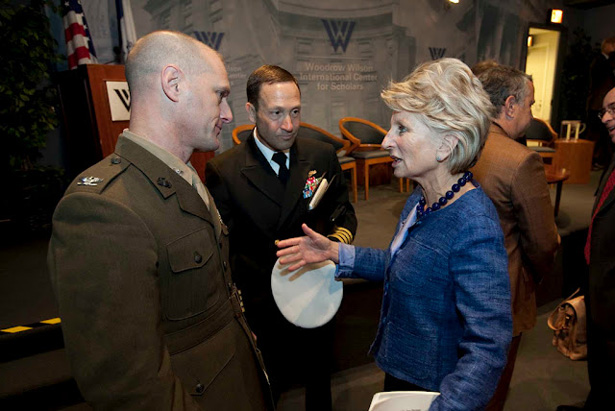
Hosted by new Wilson Center President and CEO Jane Harman and moderated by The New York Times’ Thomas Friedman, the inaugural event was based on a white paper by two active military officers writing under the pseudonym “Mr. Y” (echoing George Kennan’s “X” article). In A National Strategic Narrative, Captain Wayne Porter (USN) and Colonel Mark Mykleby (USMC) argue that the United States needs to move away from an outmoded 20th century model of containment, deterrence, and control towards a “strategy of sustainability.” [Video Below]
Anne-Marie Slaughter of Princeton University, who wrote the white paper’s preface, summarized it for the panel, which included Brent Scowcroft, national security adviser to President Ford and President H.W. Bush; Representative Keith Ellison (D-Minn.); Steve Clemons, founder of the American Strategy Program at the New America Foundation; and Robert Kagan, senior fellow for foreign policy at the Brookings Institution.Framing a 21st Century Vision
We can no longer expect to control events, but we can influence them, Slaughter said. “In an interconnected world, the United States should be the strongest competitor and the greatest source of credible influence – the nation that is most able to influence what happens in the international sphere – while standing for security, prosperity, and justice at home and abroad.”
“My generation has had our whole foreign policy world defined as national security,” said Slaughter, “but ‘national security’ only entered the national lexicon in the late 1940s; it was a way of combining defense and foreign affairs, in the context of a post-World War II rising Soviet Union.”
As opposed to a strategy document, their intention, write Porter and Mykleby, was to create a narrative through which to frame U.S. national policy decisions and discussions well into this century.
“America emerged from the Twentieth Century as the most powerful nation on earth,” the “Mr. Y” authors write. “But we failed to recognize that dominance, like fossil fuel, is not a sustainable source of energy.”It is time for America to re-focus our national interests and principles through a long lens on the global environment of tomorrow. It is time to move beyond a strategy of containment to a strategy of sustainment (sustainability); from an emphasis on power and control to an emphasis on strength and influence; from a defensive posture of exclusion, to a proactive posture of engagement. We must recognize that security means more than defense, and sustaining security requires adaptation and evolution, the leverage of converging interests and interdependencies. [italics original]
Prosperity and Security a Matter of Sustainability
The “Mr. Y” paper is similar in some respects to other strategic documents that have promoted a more holistic understanding of security, such as the State Department’s Quadrennial Diplomacy and Development Review, which was partially authored by Slaughter during her time in State’s Policy Planning Office. But there’s a markedly heavy focus on economics and moving beyond the “national security” framework in Porter and Mykleby’s white paper. They outline three “sustainable” investment priorities:
“These issues have come in and out of the security debates since the end of the Cold War, but they have not been incorporated well into a single national security narrative,” Geoff Dabelko, director of the Wilson Center’s Environmental Change and Security Program, told The New Security Beat. “This piece is a positive step toward achieving a coherent and inclusive national security narrative for the United States.”- Human capital: refocus on education, health, and social infrastructure;
- Sustainable security: use a more holistic, whole-of-government approach to security; essentially, expand the roles of civilian agencies and promote stability as much as ensuring defense; and,
- Natural resources: invest in long-range, sustainable management of natural resources, in the context of expanding global demand (via population growth and consumption).
To provide a “blueprint” for this transition, Porter and Mykleby call for the drafting of a “National Prosperity and Security Act” to replace the national security framework laid by the National Security Act of 1947 (NSA 47) and followed by subsequent NSAs.A New Geostrategic Model?
The panel unanimously praised the white paper’s intentions, if not its exact method of analysis and proposed solutions. All agreed that globalization and technology have helped create a more interconnected and complex world than current foreign policy and national security institutions are designed to deal with. Scowcroft called the 20th century “the epitome of the nation-state system” and said he expects an erosion of nation-state power, especially in light of integrated challenges like climate change and global health.
Kagan disagreed, saying he’s less convinced that the nation-state is fading away. “If anything, I would say since the 1990s, the nation-state has made a kind of comeback,” he said, adding that the paper lacks “a description of how the world works, in the sense of ‘do we still believe in a core realist point that power interaction among nation states is still important?’” In that sense, he said, “I’m not at all convinced we’ve left either the 20th century or the 19th century, in terms of some fundamental issues having to do with power.”
“I think there are three things that really are new,” said Slaughter. “The first [is the] super-empowered individual…the ability of individuals to do things that only states could.” We saw that with 9/11, with individuals attacking a nation, and we’re seeing that with communications as well, she said. “I can tell you, Twitter and the State Department’s reporting system, they’re pretty comparable and Twitter’s probably ahead, in terms of how much information you can get.”
Second, there is a “whole other dimension of power that simply did not exist before and that is how connected you are,” Slaughter said. “The person who is the most connected has the most power, because they’re the person who can mobilize, like Wael Ghonim in Egypt.”
Third, there are a greater number of responsible stakeholders. “What President Obama keeps telling other nations is ‘you want to be a great power? It’s not enough to have a big economy and a big army and a big territory, you have to take responsibility for enforcing the norms of a global order,’” Slaughter said. Qatar’s willingness to participate in the international community’s intervention in Libya, she said, was in part an example of a country responding to that challenge and stepping up into a role it had not previously played.
These new dimensions to power and security don’t entirely replace the old model but do make it more complex. “It’s on top of what was,” Slaughter said, and “we have to adapt to it.”
Photo Credit: Colonel Mark Mykleby (USMC), Captain Wayne Porter (USN), and Wilson Center President and CEO Jane Harman, courtesy of David Hawxhurst/Wilson Center. -
Watch: Elizabeth Leahy Madsen Explains the Demography-Civil Conflict Interface in Less Than Two Minutes
April 12, 2011 // By Schuyler NullMORE“We know that historically, as well as in the present, countries that have very young age structures – those that have youthful and rapidly growing populations – have been the most vulnerable to outbreaks in civil conflict,” said Elizabeth Leahy Madsen, senior research associate at Population Action International, in an interview with ECSP. “It’s not a simple cause and effect relationship, but we think that demographic trends and pressures can exacerbate underlying conditions.”
-
From the Wilson Center
Tunisia Predicted: Demography and the Probability of Liberal Democracy in the Greater Middle East
MORE
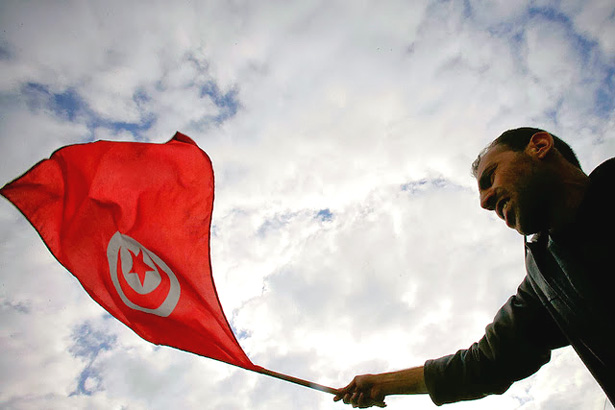
In 2008, demographer Richard Cincotta predicted that between 2010 and 2020 the states along the northern rim of Africa – Morocco, Algeria, Tunisia, Libya, and Egypt – would each reach a demographically measurable point where the presence of at least one liberal democracy (and perhaps two), among the five, would not only be possible, but probable. Recent months have brought possible first steps to validate that prediction. [Video Below]
Topics: Africa, Algeria, conflict, democracy and governance, demography, Egypt, featured, From the Wilson Center, Iraq, Libya, Middle East, Morocco, population, security, Syria, Tunisia, video, Yemen, youth -
From the Wilson Center
Biofuels: Food, Fuel, and Future?
The Wilson Center’s Program on America and the Global Economy (PAGE) together with the Brazil Institute, have held a series of conferences focused on the field of biofuels and its impact both internationally and domestically. As part of the series, PAGE has published the results of a conference held last July on the current “state-of-play” for the biofuels industry in the United States.MORE
In the brief, Biofuels: Food, Fuel, and Future?, C. Ford Runge and Robbin S. Johnson, of the University of Minnesota, and Calestous Juma, of Harvard University, provide context on the various federal mandates, subsidies, and policies that affect the U.S. biofuels market. They also present recommendations to improve what is now a not-so-new market, with the aim of reducing damaging effects on food prices and creating more international competition. The brief was edited by PAGE Director Kent H. Hughes and Elizabeth A. Byers.
Read more from PAGE on their blog, America and the Global Economy, and download the full brief and other PAGE publications from their website at the Wilson Center. -
Guest Contributor
Forest Conservation Method a Fit for Canada’s Oil Sands?
MOREIn Wednesday’s speech on U.S. energy security, President Obama stated clearly that the United States would continue to rely on oil imports from Canada and other stable nations. But serious environmental concerns continue to dog the Canadian oil sands industry. Could an agreement reached by Canada’s Forest Products Association provide a model for a way forward?
In May 2010, the Canadian Boreal Forest Agreement (CBFA) was signed by 21 members of the Forest Products Association of Canada (FPAC) and nine major environmental groups, including Greenpeace, the Nature Conservancy, and the Pew Charitable Trusts, without government involvement. The three-year agreement represents the largest forest conservation plan in history and protects more than 72 million hectares of Canada’s Boreal Forest. It also ended a long “do not buy” campaign of FPAC products, previously spearheaded by environmental organizations.
The CBFA essentially commits FPAC to the highest environmental standards of forest management and conservation, as well as the suspension of logging in environmentally sensitive areas, in part to protect endangered caribou populations. In return, environmental organizations agreed to support FPAC members.
The oil sands industry faces a similar challenge. In both cases, industry and environmental NGOs have clashed in a long and bitter battle over industry practices and their impact on the environment. The difference is that FPAC realized that directly engaging environmental groups in reasoned discussion might be a more intelligent approach to resolving environmental challenges than shouting back and forth at one another. FPAC also believes that buyers will be attracted to their newfound reputation for sustainable practices and higher ethical standards.
Model Agreements
Oil sands producers have much to gain by engaging the environmental community in new and innovative ways Should the CBFA model be followed, the oil sands industry may be able to negotiate an agreement with environmental organizations and voluntarily agree to higher environmental standards in return for recognition and support of their efforts from key environmental organizations.This wouldn’t be the first initiative where creative engagement between environmental organizations and industry served to mutually benefit both sides. For instance, in 1999, WWF and Unilever created the Marine Stewardship Council (MSC), a program that rewards fisheries employing environmentally sustainable practices by recognizing their efforts through MSC certification and eco-labeling. Member fisheries maintain that MSC labeling has helped them retain existing markets, expand into others, and in some cases obtain a price premium for their product.
Such an initiative would go a long way to allow oil sands producers to shed their damaging reputation for producing “dirty oil.” Even if an agreement could not be reached, the oil sands industry would be viewed at the very least as willing to listen to the concerns of environmental organizations and take such issues seriously.
Not Perfect, But It’s a Start
The CBFA model may not be a perfect fit for the oil sands but it demonstrates that environmental groups and industry can find common ground on extremely contentious issues.
Finding this common ground must begin with accepting that the oil sands will never be “green.” According to a study by the Royal Society of Canada, in 2008, oil sands mining and development operations covered an area roughly the size of the state of Illinois and was responsible for emitting nearly 37 million tons of CO2. The study also found that there are legitimate concerns regarding the impact of oil sands development on the quality and quantity of regional freshwater supplies.
Nevertheless, the oil sands also represent a critical source of stable energy supplies for Canada and the United States, and calls by some environmental NGOs to halt oil sands production are unrealistic. More than 20 percent of U.S. oil is sourced from Canada, making it the United States’ leading supplier, and roughly half of that comes from the oil sands.
A CBFA-style agreement could help oil sands producers secure the U.S. market, which currently takes 99 percent of Canada’s oil exports, by quelling campaigns in the United States to stop imports from the oil sands. And under an agreement similar to the CBFA, the environmental community could have a larger say in how it is developed and extracted
As it stands, both industry and the environmental community remain engaged in a heated war of words, with neither side really listening to the other. Until they are willing to sit down and engage each other in new ways, both groups are likely to continue to talk over one another and make little progress on striking an environmental and economic balance that could ultimately benefit both sides.
Ken Crist is a program associate with the Canada Institute at the Woodrow Wilson International Center for Scholars.
Sources: Sources: The Canadian Boreal Forest Agreement, National Resources Defense Council, The New York Times, Royal Society of Canada, Vancouver Sun.
Photo Credit: “Athabasca oil sands digger,” courtesy of flickr user . Shell, and “Boreal forest 2009,” courtesy of flickr user Gord McKenna. -
Reading Radar
The Impact of Environmental Change and Geography on Conflict
MORE“Environmental Change, Strategic Foresight, and Impacts on Military Power,” published in Parameters by Chad M. Briggs, the Minerva Chair of Energy and Environmental Security at the Air University, USAF, tackles the changing definition of “environmental security” and how the concept can help planners better prepare for the effects of climate change and an elevated focus on energy security. New potentially destabilizing issues like glacial melt, sea-level rise, and Arctic ice melt are on the horizon, writes Briggs. China and others are already planning for these events, and it’s important that the United States does the same, starting with a greater appreciation for the impact of environmental security on vulnerability and risk. “Due to past practices and bureaucratic stovepipes, implementation is limited more by initiative and imagination than actual resources,” he writes.Clionadh Raleigh of Trinity College Dublin and the International Peace Research Institute finds in “Seeing the Forest for the Trees: Does Physical Geography Affect a State’s Conflict Risk?” that a region’s geography does not have a uniform effect on its likelihood of experiencing conflict. Raleigh’s conclusions, published in International Interactions, run counter to traditional histories which often emphasize the importance of physical geography, specifically with regard to civil war and insurgencies. Focusing on the Great Lakes region of Africa, Raleigh finds that other factors – like how populated an area is and its proximity to valuable natural resources – correlate higher with an area’s propensity for violence than any other factor. -
Integrated Approach Helps “Model Farmers” Increase Productivity in Ethiopia
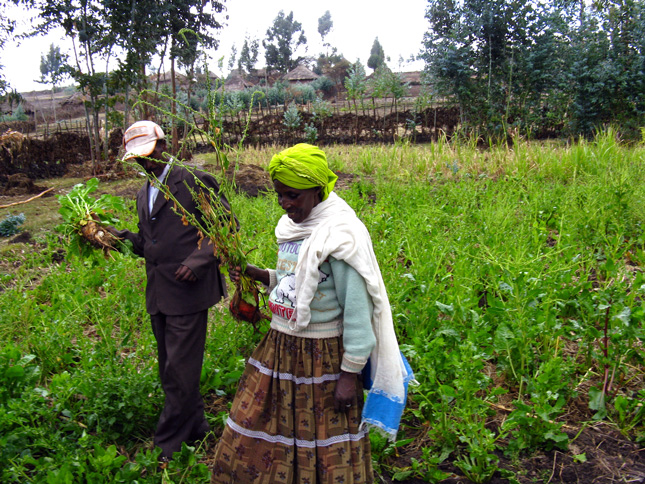
March 24, 2011 // By Schuyler NullMORETo reach the village of Grar Gaber from Addis Ababa, you drive up over the Entoto Mountains overlooking the capital then motor down two hours of new Japanese-built highway to the town of Fiche. From there it’s 20 minutes on a broken dirt road across rocky hills. I was joined there by about 20 others from the PHE Ethiopia Consortium’s general assembly (see day one and day two coverage here) and Population Action International, to visit an integrated population, health, and environment (PHE) development program run by LEM Ethiopia.
-
The Continuing Challenges of Integrated Development
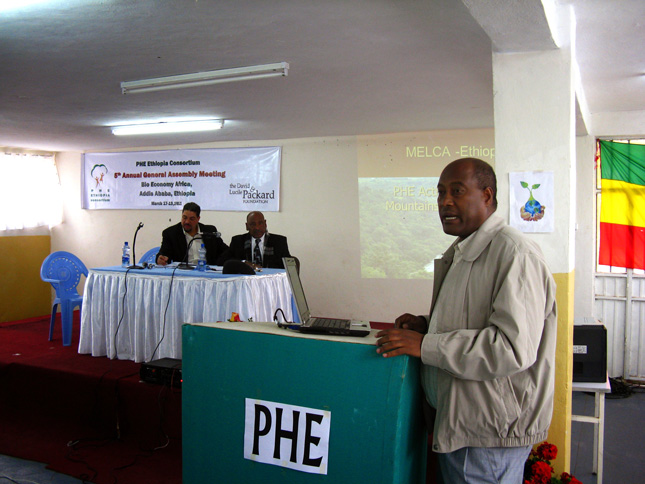
March 20, 2011 // By Schuyler NullMORE“How are we going to feed all these mouths?” asked Bekele Hambissa, director of the Environmental Protection and Development Organization in Addis, on day two of the PHE Ethiopia Consortium general assembly (read about day one here). Environmental resources are directly tied to Ethiopia’s population growth, said Hambissa, during a discussion of balancing efforts to address population growth, environment, and livelihoods. While poverty alleviation is an important goal of population, health, and environment integration (PHE), it must be environmentally sustainable, he said.
Topics: Africa, agriculture, community-based, cooperation, development, Ethiopia, From Ethiopia, PHE, population, poverty, water
 A Publication of the Stimson Center.