-
Integration, Communication Across Sectors a Must, Say Speakers at 2012 NCSE Environment and Security Conference (Updated)
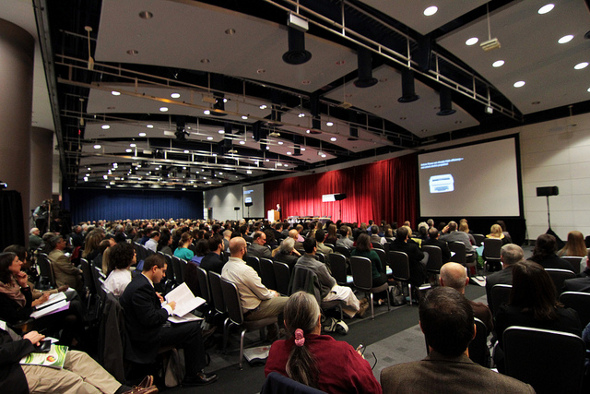
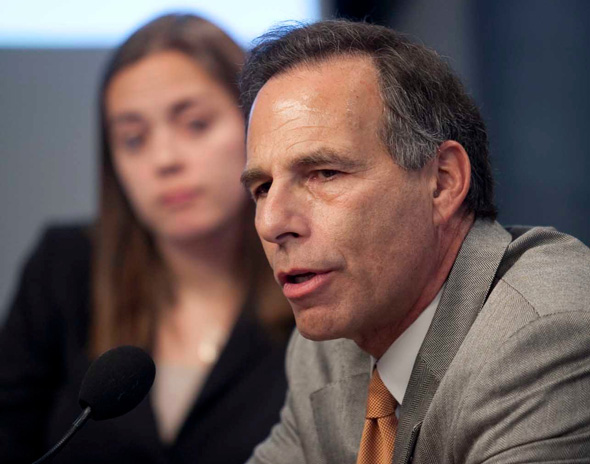
February 23, 2012 // By Wilson Center StaffECSP staff were among the more than 1,000 attendees discussing non-traditional security issues at the 12th National Conference on Science, Policy, and the Environment last month at the Ronald Reagan Building. Our own Geoff Dabelko spoke on the opening plenary (above) and we collected other excerpts below, though they’re only a small slice of the conference. Find our full coverage by following the NCSE tag, see the full agenda on environmentalsecurity.org, and follow the conversation on Twitter (#NCSEconf).MORE
Climate, Energy, Food, Water, and Health
At the conference’s lead-off plenary, Jeff Seabright (Vice President, The Coca-Cola Company), Daniel Gerstein (Deputy Under Secretary for Science and Technology, U.S. Department of Homeland Security), Rosamond Naylor (Director, Stanford’s Center on Food Security and Environment), and our ECSP’s Geoff Dabelko highlighted the challenges and opportunities of addressing the diverse yet interconnected issues of climate, energy, food, water, and health.
“We need to embrace diversity regardless of the complexity,” said Dabelko, and “abandon our stereotypes and get out of our stovepipes.” Government agencies, academics, and NGOs must be open to using different tools and work together to capture synergies. “If we know everyone in the room, we are not getting out enough,” he said.
“We have to be concerned with every level – national, state, tribal, regional, down to the individual,” said Gerstein. DHS recognizes that climate change affects all of its efforts, and has established three main areas of focus: Arctic impacts; severe weather; and critical infrastructure and key resources.
For Coca-Cola, “managing the complex relationship among [food, water, and energy] is going to be the challenge of the 21st century, said Seabright, who noted that the business community is “seeing a steady increase in the internalization of these issues into business,” including as part of companies’ competitive advantages and strategies.
Similarly, we must offer opportunities and not just threats, said Dabelko, such as exploring climate adaptation’s potential as a tool for peacebuilding rather than simply focusing on climate’s links to conflict. We need to “find ways to define and measure success that embrace the connections among climate, water, and energy, and does not try to pretend they aren’t connected in the real world,” he said.
Communicating Across Sectors: Difficult But Necessary
Next, Sherri Goodman (Executive Director, CNA Military Advisory Board), Nancy Sutley (Chair, White House Council on Environmental Quality), Rear Admiral Neil Morisetti (Climate and Energy Security Envoy, UK Ministry of Defence), and Susan Avery (Director, Woods Hole Oceanographic Institute) called on governments, militaries, and institutions to move away from traditional, vertically segmented responsibilities to address today’s environmental and security challenges.
“We live in an interdependent, connected world,” Morisetti said, but communicating that is a challenge. Militaries are likely to have new, broader missions, including conflict prevention, he said, which makes communications all the more important.
Science is moving from reductive to integrated outlooks to better address larger, systems-wide challenges, said Avery, but communicating results of this research to the public, and across and between disciplines, is difficult.
Confronting these communication and education challenges, particularly the difficulties of conveying the probability of various risks, is a key focus of the Council on Environmental Quality, said Sutley. “We confront the challenge of risk communication every day and it’s not limited to climate change,” she said.Challenging Conventional Wisdom on Climate and Conflict
The common argument is that climate change will lead to scarcity – less arable land, water, rain, etc. – and scarcity will lead to conflict, said Kate Marvel (Lawrence Livermore National Lab). But the link between scarcity and conflict is not that clear. It’s “very important to treat models as tools, not as magic balls,” she said. Developing better diagnostics to test models will help researchers and observers sort out which ones are best.
Kaitlin Shilling (Stanford University) called on the environmental security community to move beyond simple causal pathways towards finding solutions. After all, rolling back climate change is not an option at this point, she said; to find solutions, therefore, we need more detailed analysis of the pathways to violence.
The most common types of climate-conflict correlations are not likely to directly involve the state, said Cullen Hendrix (College of William and Mary). Traditional inter-state wars (think “water wars”) or even civil wars are much less likely than threats to human security (e.g., post-elections violence in Kenya) and community security (e.g., tribal raiding in South Sudan). For this reason, the biggest breakthroughs in understanding climate and conflict links will likely come from better interactions between social and physical scientists, he said.
Because the many unique factors leading to conflict vary from place to place, a better way to assess climate-conflict risk might be mapping human vulnerability to climate change rather than predicting conflict risk in a given place, said Justin Mankin (Stanford University). While human reactions are very difficult to predict, vulnerability is easier to quantify.
Yu Hongyuan (Shanghai Institute for International Studies) compared the concerns of U.S. and Chinese officials on climate change. Polling results, he said, show Chinese officials are most concerned with maintaining access to resources, while American policymakers focus on climate change’s effects on global governance and how it will impact responses to natural disasters, new conflicts, and humanitarian crises. Given the centrality of these two countries to international climate negotiations, Yu said he hoped the “same issues, different values” gulf might be bridged by better understanding each side’s priorities.
Schuyler Null, Lauren Herzer, and Meaghan Parker contributed to this article.
Video Credit: Lyle Birkey/NCSE; photo credit: Sean Peoples/Wilson Center. -
Reading Radar
The U.S. Military, Climate Change, and Maritime Boundaries
MOREThe Defense Science Board, which advices the U.S. military on scientific and technical matters, writes in a recent task force report that the most immediate and destabilizing effects of climate change will impact U.S. security indirectly, through American reliance on already-vulnerable states that are “vital” sources of fuel and minerals or key partners in combatting terrorism. The report singles out three specific themes as particularly important to responding to near-term climate-driven threats and adapting to climate change’s long-term impacts: providing “better and more credible information [about climate change] to decision makers,” improving water management, and building better local adaptation capacity, particularly in African nations. Ultimately, the report concludes that the most effective, most efficient way the United States can respond to climate change is not militarily but “through anticipatory and preventative actions using primarily indigenous resources.”In “Maritime Boundary Disputes in East Asia: Lessons for the Arctic,” published in International Studies Perspectives, James Manicom writes that as climate change makes access and exploration easier, there are lessons to be learned from East Asian states’ handling of maritime disputes for Arctic nations. Manicom finds that simply because a state may be party to the UN Convention on the Law of the Sea (UNCLOS), disputes over boundaries and “over the methods used to settle disputes” persist. Domestic identity politics also can and do affect the extent to which a state attempts to exert influence over disputed areas – a noteworthy conclusion given growing rhetoric in Arctic states over the national importance of disputed territories. Finally, Manicom points out that, while “high expectations of resource wealth” may fuel disputes and “political tension,” those expectations do not inevitably doom competing states to conflict over resources.Topics: adaptation, Africa, Arctic, climate change, conflict, military, natural resources, oceans, Reading Radar, UN -
From the Wilson Center // Guest Contributor
Stuck: Rwandan Youth and the Struggle for Adulthood (Book Preview)
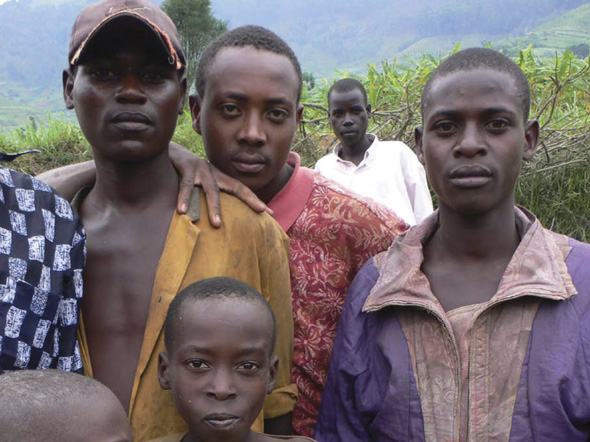
MORESeveral years ago, I wrote that the central irony concerning Africa’s urban youth was that “they are a demographic majority that sees itself as an outcast minority.” Since that time, field research with rural and urban youth in war and postwar contexts within and beyond Africa has led me to revise this assertion. The irony appears to apply to most developing country youth regardless of their location.
-
Dot-Mom // On the Beat
Championing Women’s Rights and Population Issues in Kenya With the ‘Reject’
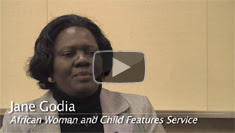
MORE“We find that politicians play around with [population] numbers when it comes to the common man and the common woman,” says Jane Godia in this short video interview. Godia writes for Reject, an African Woman and Child Feature Service biweekly news publication that won a Global Media Award from the Population Institute for its issue on family planning and politics in Kenya.
Godia says that politicians “use these numbers for their gain, they tell women not to use family planning because they want more children so that…they can have more voters, but nobody thinks about if this woman will be able to feed these children, if this family will be able to have their next meal, or even accommodation, or even land to till.”
The Reject’s name comes from the paper’s early practice of running stories – often about underserved groups, like women, children, and the poor – that had been rejected from mainstream publications. Population and environment issues have been highlighted since the first issue came out in September 2009, when “we were talking about families moving on to Mount Kenya…to look for pasture and water for their animals,” says Godia.
“When there’s no water and when there’s no food, people migrate,” she says. “And when people are migrating they’re moving with their animals, they’re moving with their families, and they end up going to places” that eventually become overcrowded and resource-stressed, sometimes introducing the same problems that led people to migrate in the first place.Topics: Dot-Mom, environment, family planning, food security, Kenya, media, On the Beat, PHE, population, video, water -
Taking a Livelihoods Approach to Understanding Environmental Security
February 17, 2012 // By Kate DiamondMORESince the concept of “environmental security” first gained traction in the early 1990s, research on the issue has been overwhelmingly focused on how environmental change impacts state security. That has been to the detriment of policymakers trying to preempt instability and conflict, according to the University of Toronto’s Tom Deligiannis in his article, “The Evolution of Environment-Conflict Research: Toward a Livelihood Framework,” published in February’s Global Environmental Politics.
-
Eye On
‘Marketplace’ and ‘NewsHour’ Highlight Population, Health, and Environment Program in the Philippines
The Danajon reef is the only double barrier reef in the Philippines, “one of the richest marine biodiversity hot spots in the world,” and it’s being devastated as the country’s exploding population depends on its waters for their food and livelihoods, reported Sam Eaton in a recent two-part series on population, health, and environment issues in the Philippines broadcast last month for American Public Media’s Marketplace and the PBS NewsHour.MORE
The report is part of joint project called Food for 9 Billion, with Homelands Productions, the Center for Investigative Reporting, APM, and PBS. Previous reports examined food security in East Africa and Egypt.
The Philippines “import more rice than any other country on the planet,” said Eaton. The “highest population growth rates in all of Southeast Asia” as well as dwindling natural resources – nearly 100 million people live in a land area the size of Arizona – have created a cycle of poverty. The first step to breaking that cycle, he said, is improving access to family planning.
Growing Families, Growing Poverty
The Canayong family, living on the edge of a garbage dump in a Manila slum, offers a vivid example of what poverty means in the Philippines. Clarissa Canayong has had 14 children – 4 died from measles and dengue fever, the remaining 10 spend their days alongside Clarissa, sifting through the dump for things they need and things they can sell. At the end of a good day, the family has earned around $7 to survive on. All in all, Clarissa’s “inability to provide enough food, and to pay for her children’s education, all but guarantees she and her family will remain poor,” said Eaton.
The archipelago adds about two million people every year, putting population on track to double in size sometime around 2080. “And that’s only if something is done to close the birth control gap,” said Eaton, as those projections build in an expectation that growth will slow.
“As cities all across the country expand, the displaced often end up migrating to urban slums,” he said. “Population growth among poor Filipinos is twice the national average,” meaning that once a family enters poverty, they end up in a cycle “that’s nearly impossible to break.”
The Difference Family Planning Can Make
If Clarissa had had access to family planning, she told Eaton, she would have wanted to have only two children. In Humayhumay, where residents have access to a community-based family planning distribution program started by PATH Foundation Philippines, Inc., families have that luxury of choice.
Working through local partners, the PATH Foundation identifies and trains community-based vendors to sell contraception – both pills and condoms, said Dr. Joan Castro, who began the program in Humayhumay. The idea is to make buying contraceptives “as easy as buying soft drinks or matches.”
Both Jason Bostero, a farmer and fisherman in Humayhuay, and his wife, Crisna, grew up in large families – so large, in Crisna’s case, that “sometimes, we would only eat once a day because we were so poor. We couldn’t go to school. I did not finish school because there were just so many of us,” she told Eaton.
Now that they have access to contraceptives, a smaller family size means their income is “just right” to feed everyone three times a day. For the community as a whole, smaller family sizes mean that the nearby fish stocks that provide the community with food and income have a chance to replenish themselves in the absence of overfishing.
“In just six years since the program was first established here,” reported Eaton, “family sizes have plummeted from as many as 12 children to a maximum of about 4 today.”
Exception to the Rule
Humayhumay is an exception to the rule in the Philippines. There is no state funding for birth control in the country, and over the past few years, major international donors like USAID and the United Nations have ended their family planning work in the country. More than a quarter of poor Filipinos have no access to any type of family planning service, and more than half of all pregnancies are unintended, said Eaton.
Family planning has long been a contentious issue in the country. Eaton spoke to Congressman Walden Bello, who has spent more than a decade trying to pass legislation to establish universal access to birth control and improve other family planning and reproductive services. The Catholic Church, said Bello, is a powerful (80 percent of Filipinos are Catholic) and consistent opponent. In October 2010, the Church went so far as to threaten President Benigno Aquino with excommunication after he voiced support for access to contraception.
Rather than limit population growth, the Church argues the country should increase food production. But land is limited, rice imports are already the highest in the world, and, “according to the World Bank, every major species of fish here shows signs of severe overfishing,” said Eaton.
Looking Forward and Abroad
Eaton pointed to the Philippines’ neighbors as examples to emulate: “A long history of government-supported family planning has…paved the way for Thailand to become one of the world’s biggest rice exporters” and helped to cut back poverty in the country, said Eaton.
Indonesia too, he pointed out, has largely avoided the population growth-resource depletion-poverty cycle, thanks in part to a state- and faith-backed family planning program. (As Elizabeth Leahy Madsen wrote in a recent New Security Beat post, the decision of Indonesia’s religious leaders to throw their support behind family planning in the 1960s was a key factor in success there.)
Considering the obstacles, the Philippines face an uphill battle before family planning services become similarly universal. But the political tides may already be turning: last April, the President said he would support the reproductive health legislation even if it meant excommunication.
Meanwhile, PATH Foundation’s Castro is hopeful that Humayhumay’s success story will lay the seeds for widespread public support for family planning. “The vision of the project is in this community you see more children educated who are able to become leaders and speak out for themselves in the future and be able to become stewards of their own sexuality and the future environment,” said Castro. “This is the legacy.”
Sources: BBC, Bloomberg News, Catholic News Agency, The Guardian, Population Reference Bureau, TIME Magazine, US Agency for International Development, U.S. Catholic.Topics: environment, Eye On, family planning, food security, global health, natural resources, oceans, PHE, Philippines, population, poverty, video -
From the Wilson Center
Political Demography: How Population Changes Are Reshaping International Security and National Politics (Book Launch)
MORE“The world’s population is changing in ways that are historically unprecedented,” said Jack Goldstone, George Mason University professor and co-editor of the new book, Political Demography: How Population Changes Are Reshaping International Security and National Politics. [Video Below]
Topics: Africa, aging, conflict, demography, development, economics, family planning, From the Wilson Center, global health, Middle East, military, population, security, South Asia, U.S., video, youth -
Pop at COP: Population and Family Planning at the UN Climate Negotiations
February 8, 2012 // By Wilson Center StaffMOREThe original version of this article, by Kim Lovell, appeared on the Sierra Club’s activist network.
“Population, development, and climate should be a single discussion,” explained Jacques van Zuydam of South Africa’s National Population Unit. Van Zuydam, speaking to a sparsely filled room at the United Nations Framework Convention on Climate Change (UNFCCC) in Durban last month, centers his work around the concept that climate matters because people matter.
Given the focus on the Green Climate Fund, climate change adaptation, and the effects of sea-level rise and changing weather patterns on some of the world’s most vulnerable populations, it would have made sense for discussions about population to play a central role at the 17th Conference of Parties (COP-17). Yet despite these obvious links – and lead negotiator Jonathan Pershing’s admission to the U.S. youth delegation that population plays a central role when discussing climate impacts – the issue gained little traction in the formal negotiations.
Pershing said he considers population “too controversial” to play a role in the international climate talks, and recommended raising the issue elsewhere. But where better to talk about the need for increased access to voluntary family planning services than among a group of world leaders considering solutions to mitigate and adapt to climate change?
As Brian O’Neill and his colleagues at the National Center for Atmospheric Research explained in a 2010 paper, meeting the unmet need for contraceptive services worldwide could reduce emissions in 2050 by 1.4 to 2.5 billion tons of carbon per year, or 16 to 29 percent of the emissions reductions necessary to avoid dangerous changes to our climate. And beyond the potential effects on carbon, increasing access to education and family planning resources will have a huge impact on the ability of women and families to adapt to the effects of climate change that are already altering weather patterns, water availability, and agricultural production around the globe.
Continue reading at Sierra Club.
Sources: Amplify.
Image Credit: UNFCCC/Climate Change Information Center of Armenia.Topics: adaptation, agriculture, climate change, COP-17, development, education, environment, family planning, food security, population, U.S., UN, water
 A Publication of the Stimson Center.