-
On the Beat
World Population Day 2012: Looking Beyond Reproductive Health
MOREHow should the seven billion or so of us on Earth mark World Population Day? Today, major global players are focusing on increasing access to family planning around the world. But there are other important aspects to population that also deserve our sustained attention.
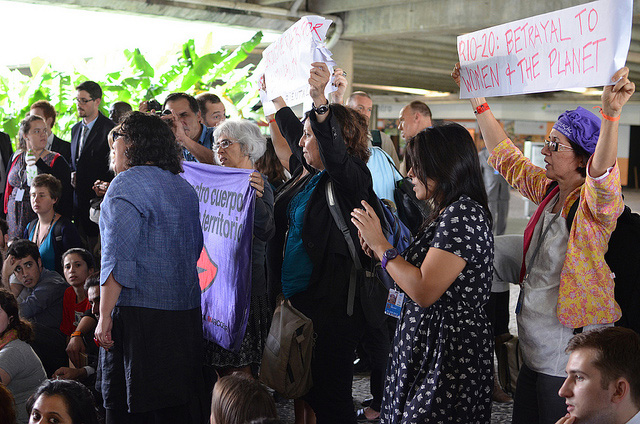
The links between demography and development have come into the limelight over the last few months, first as advocates decried the last minute removal of reproductive rights language from the Rio+20 outcome document and now as the Bill and Melinda Gates Foundation prepares a massive funding push for reproductive health (starting today, not coincidentally).
“Multiple crises – food, fuel, and financial – have caused significant suffering and served as a wake-up call about the need to pay far more attention to the building blocks of sustainable development,” UN Secretary-General Ban Ki-moon says in an address for today. “Reproductive health is an indispensable part of the sustainable development equation.”
The sustainable development connection is fairly obvious. Environmental destruction in some of the most biodiversity-rich parts of the world has complex but significant population drivers, as Wilson Center consultant Laurie Mazur explains:Human impact on the environment is mediated by a host of factors, including culture, technology, institutions, and market forces. And inequitable socioeconomic systems mean that some human beings have far greater impact than others.
“Often, the value of biodiversity becomes apparent only when it is lost,” Mazur continues. “For example, with the global decline of honeybee populations, growers can now calculate the monetary value of pollination services that were once provided for free by nature. ‘Bee pollination is worth $190 billion,’ said Pavan Sukhdev, a Yale environmental economist, in an interview with Bloomberg. ‘But when did a bee ever send you an invoice?’”
But some generalizations can be made. We live on a planet dominated and transformed by human activity. As we have become more numerous, we have also become more adept at altering ecosystems for human use, replacing species-rich natural landscapes with simpler monocultures.
In other areas, population drivers threaten more basic scarcities: food and water, which in turn impede development and cost human lives. Some of the most successful efforts to address these relationships have combined women’s empowerment, family planning, and basic health interventions with site-based conservation and livelihood efforts.
But besides reproductive rights, there are other important aspects of population that deserve attention on this day.
The demographic dividend – a concept that marries population dynamics and development economics – requires more than just fertility decline to take effect in countries. Economic and social policies that prepare and enable young people to enter the workforce are just as important.
And the Arab Spring helps illustrate the complex relationship between population and democracy. “Among the five countries where revolt took root, those with the earliest success in ousting autocratic leaders also had the most mature age structures and the least youthful populations,” writes Wilson Center consultant and demographer Elizabeth Leahy Madsen. The work of fellow Wilson Center consulting demographer Richard Cincotta shows that countries with very young age structures are prone both to higher incidence of civil conflict and undemocratic governance. What happens next in Egypt, Libya, Yemen, and Syria will further test the connection between youth and democracy.
In South Asia, Madsen finds that as Afghanistan and Pakistan’s political circumstances have become more entwined, their demographic paths are more closely parallel than expected. “For Afghanistan, given its myriad socioeconomic, political, cultural, and geographic challenges, this is good news. But for Pakistan, where efforts to meet family planning needs have fallen short of capacity, it is not,” she writes in the first issue of the newly re-launched ECSP Report, “Afghanistan, Against the Odds: A Demographic Surprise.”
In more developed countries, population aging is a concern. At the Wilson Center last year, economists Andrew Mason and Ronald Lee explained the challenges that those on the other side of the “demographic divide” will face in the near future. From 2010 to 2015, 85 countries are projected to witness the largest absolute increase in history of their populations aged 60 and over, straining public welfare systems and reducing labor forces. It’s not the “catastrophe” that it has been portrayed to be in the media, they said, but like many demographic issues, it is a challenge that will require planning for.
These connections demonstrate the wide importance of population dynamics to understanding how the world works today. Demography is the study of us – all seven billion of us. Demography affects – and is affected by – economics, political stability, health, the environment, food security, foreign policy, development, and conflict. Let’s not overlook that breadth on this World Population Day 2012.
For more, be sure to read some of our additional resources from the recent archives:- Food Security in a Climate-Altered Future: More Than a Supply Problem
- Taming Hunger in Ethiopia: The Role of Population Dynamics
- Uganda’s Demographic and Health Challenges Put Into Perspective With Newfound Oil
- New Surveys Generate Mixed Demographic Signals for East and Southern Africa
- In Building Resilience for a Changing World, Reproductive Health Is Key
- Demographic Security 101 (video)
- Yemen: Revisiting Demography After the Arab Spring
- Hania Zlotnik Discusses Latest Changes to UN Population Projections (audio)
- Book Review: ‘World Population Policies’
- Tunisia’s Shot at Democracy: What Demographics and Recent History Tell Us
- Joel E. Cohen on Solving the Resource-Population Equation in the Developing World (video)
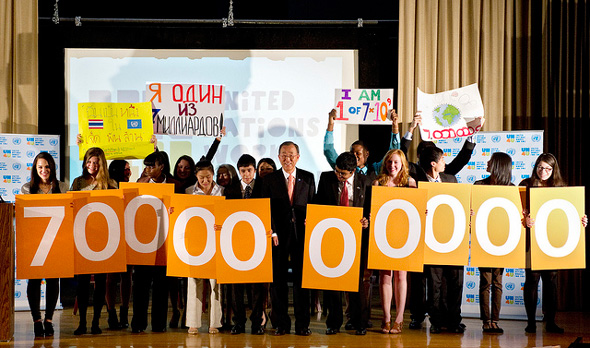
Photo Credit: UN Day Secretary-General Ban Ki-moon with students in October celebrating the seven billion mark, courtesy of Eskinder Debebe/UN Photo. -
What You Are Reading
Top 10 Posts for June 2012
With the focus on sustainable development last month, Rio+20 coverage and related-population, health, and environment stories crept into the top posts (measured by unique pageviews). Carl Haub of Population Reference Bureau made a surprise appearance too with his update on the Democratic Republic of Congo’s latest demographic and health survey coming in at number three. To read ECSP’s full coverage of the 20th anniversary of the UN Earth Summit, see a full line-up of posts from Sandeep Bathala and our partners here.MORE
1. India’s Maoists: South Asia’s “Other” Insurgency
2. The Year Ahead in Political Demography: Top Issues to Watch
3. Republic of Congo Demographic and Health Survey Shows High Maternal Health, But No Fertility Decline
4. In Search of a New Security Narrative: The National Conversation Series Launches at the Wilson Center
5. Reading Radar: USAID’s New Global Health Framework and Delivering Equity in Health Interventions
6. Guest Contributor Tim Hanstad: Poor Land Tenure: A Key Component to Why Nations Fail
7. Pop at Rio+20: Getting Women’s Rights on the Agenda
8. Bringing Environment and Climate to the 2012 Population Association of America Annual Meeting
9. On the Beat: Sex and Sustainability on the Road to Rio+20
10. PHE and Community-Based Adaptation to Climate Change: Stronger Together -
Book Review: ‘World Population Policies’ Offers Sweeping Overview of a Complex Field
July 2, 2012 // By Elizabeth Leahy MadsenMOREWith much attention in the international family planning community directed to the impending anniversary of the 1994 International Conference on Population and Development and the closing date of the Millennium Development Goals, the fact that 2012 is the 60th anniversary of two other milestones in population programming may have escaped notice. In 1952, the International Planned Parenthood Federation was created, and India became the first country to formulate a national policy to reduce population growth.
These and many other landmarks are highlighted in World Population Policies: Their Origin, Evolution and Impact, a new book by demographer John May that reviews several decades of policies, advocacy, and program interventions addressing the full range of diverse demographic trends seen globally.May, who spent more than two decades working on population issues at the World Bank and other international institutions before recently assuming a fellowship at the Center for Global Development, is well-positioned to provide such an ambitious overview. Although the breadth of material included in the book means that some topics receive less coverage than a specialist might wish, it serves as a sound introduction to this diverse field, and offers some particularly interesting case studies.
The book’s main chapters begin with a summary of current population trends, including a comprehensive array of figures and statistics about population size, distribution, and projections. Some important concepts, such as the demographic transition and dividend, are perhaps covered too quickly, and in such cases the book would have benefited from more than a handful of figures, charts, and graphs. May classifies regions and countries as demographic “hotspots,” where the number of people outstrips available resources, and “coldspots,” which have too few residents. He makes an ambitious suggestion that high-density countries facing resource challenges, such as Bangladesh, should consider promoting rapid fertility decline below replacement level to stop population growth, then reverse course and increase to a rate that promotes a stable population – but such a reversal from low fertility is a feat that has stymied several countries in Europe and East Asia.
Evolution of the “Population Movement”
In addition to summarizing the ways that demographic issues have been framed in the past several decades, May briefly describes the long-running debate between demographers and economists about the ways in which population is theorized to affect economic development.
Three points in this chapter were particularly striking: First, the concept of family planning as a human right dates from well before the 1994 International Conference on Population and Development. In 1968, the Tehran International Conference on Human Rights defined the ability to choose family size and spacing as a fundamental right; still, some programs, such as India’s under the Emergency-era government of the late 1970s, adopted coercive practices. Second, population policies are not limited to official initiatives targeting fertility, mortality, and migration, but also encompass implicit or “passive” policy measures that arise without advance planning or that have an unintended effect on demographic trends. Related to this, May suggests that “contextual variables” such as education, health, gender, culture, and religion can have a greater impact on population policies’ effectiveness and demographic outcomes than government structures or funding.
Although population policies are most often designed at the national level, May’s discussion of the “population movement” highlights the influence of international networks and donors on such policies. By the late 1960s, the U.S. Agency for International Development had begun funding family planning programs overseas, and the United Nations Population Fund (UNFPA) was active. Although the United States has become less dominant over time, population programming remains a Northern-driven movement.
Beginning with a meeting in Belgrade in 1965, a series of international population conferences successfully raised the prominence of population issues on the global development agenda and built consensus around international goals, while also becoming increasingly political.
May’s cautions about such conferences are timely given this month’s London Family Planning Summit: “Consensus-building through international conferences and their preparatory meetings is often inefficient as a process, whereas such events could be used to promote learning among policymakers and experts…The gap between the conferences’ resolutions and the actual policies implemented at country level is important to remember” (110).
Growth and Aging Distinguish the Demographic Divide
In his chapter focusing on the developing world, May notes that population policies have become broader in the nearly 20 years since the Cairo conference, incorporating a reproductive rights framework while also addressing new issues such as the environment, HIV/AIDS, and poverty. But under this more holistic approach, national policies are susceptible to becoming overly diffuse, with an ambitious agenda not matched by concrete action plans.
The challenges expand to policy implementation as well. Kenya is profiled as emblematic of the difficulties facing population programs in fast-growing sub-Saharan Africa, particularly political disinterest, mismanagement, opposition from some religious groups, and commodity shortages. But when implemented well, such policies can be very successful. The book offers a thorough summary of research findings on the common features of effective family planning programs (such as leadership, monitoring performance data, and opening access to contraceptive methods at lower levels of the health system), as well as their demographic impact. Several country examples are cited to show that family planning programs reduce lifetime fertility rates by 0.5 to 1.5 children per woman, while also benefiting individual and social health, income, and well-being.
While population policies have been often effective at shaping demographic trends in high-fertility settings, even in changing cultural norms about family size, May notes that their impact has been notably weaker in reversing the trajectory of declining fertility in developed countries. While countries such as France have maintained a fertility rate close to, albeit still below, replacement level thanks to generous paid parental leave, housing initiatives and public child care facilities, policies that try to boost low fertility through financial compensation have been particularly ineffective.
Developed countries are less likely to have formal population policies and tend to address demographic issues through incentives and disincentives implemented by multiple agencies. Aging and immigration are receiving greater attention in such countries, along with low fertility rates. Population aging raises policy concerns that are both economic and social, and May focuses largely on the benefit of reducing incentives for early retirement. He notes that thanks to improvements in health and life expectancy, “today’s 65-year-old persons are young compared to their counterparts” of previous generations (180). Despite their economic soundness, government efforts to raise retirement ages are widely unpopular, and France’s newly elected president has promised to cut the retirement age from 62 to 60 for some workers.
What Comes Next
Some observations are intriguing and could have been further detailed. For example, May notes a recent “fragmentation” of organizations working on population issues, and suggests that “too many institutions and NGOs appear to support their own limited mandates as they also struggle for resources that are less abundant” (5). Decentralization and integration within health systems is a growing trend that could have been discussed in more detail, along with the legacy of pronatalist laws and attitudes by colonial powers in Africa, the effect of recent European efforts to tighten immigration policies, and the achievements of forums designed for collaboration on population policy issues (for example, the United Nations Commission on Population and Development or the Reproductive Health Supplies Coalition).
Looking towards the future, May foresees continued integration of demography with related development issues, such as poverty reduction and equitable growth, gender and youth perspectives, environmental issues, and conflict prevention. He notes a few challenges, including sub-Saharan Africa’s lag in fertility decline and the overall ineffectiveness of policies aimed at addressing the pressures of urbanization on infrastructure and resources.
In high-fertility settings, May recommends that instead of framing reproductive health writ large, policies should more specifically target family planning and women’s empowerment, including education and income-generation opportunities as well as legal rights. Bangladesh is presented as a model for other countries, as a setting where cultural change and economic development laid the groundwork for successful family planning outreach efforts. Most of all, May entreats government leaders to maintain a policy focus on population issues, regardless of where they stand in the demographic divide.
Elizabeth Leahy Madsen is a consultant on political demography for the Wilson Center’s Environmental Change and Security Program and senior technical advisor at Futures Group.
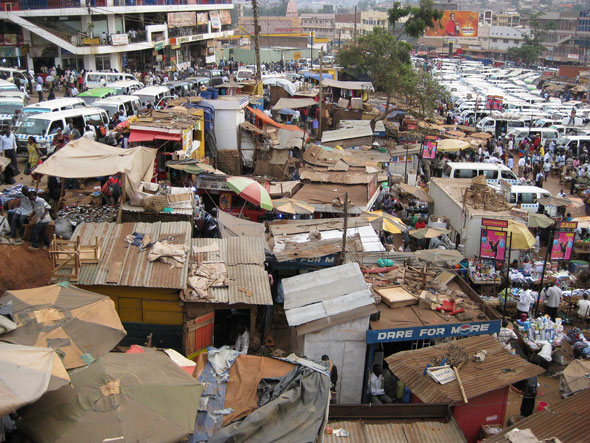
Photo Credit: “Crowded Shopping District,” courtesy of flickr user EnvironmentBlog.Topics: Africa, aging, Bangladesh, demography, development, economics, environment, family planning, gender, global health, India, population, security, urbanization, USAID, youth -
From the Wilson Center
IPPF and Partners Connect Reproductive Rights With the Environment and Development
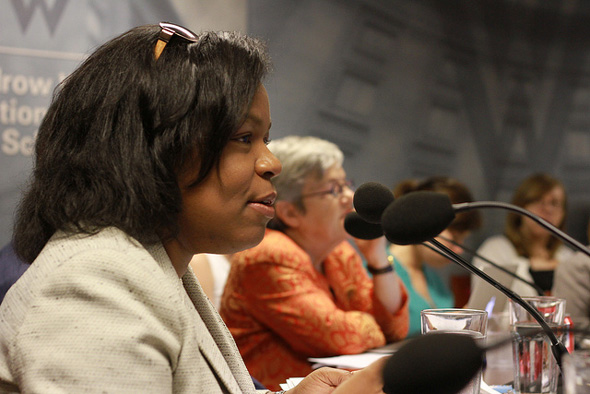
MOREA new framework for sexual and reproductive health is needed, argued panelists in a recent event at the Wilson Center, and the Rio+20 conference on sustainable development would have been the place to start. An international consensus around women’s human rights was developed at the International Conference on Population and Development in Cairo in 1994, but Carmen Barroso, director of the International Planned Parenthood Federation’s Western Hemisphere Region, said there has been slow implementation, little funding, and furthermore the world has changed significantly since then.
Barroso was joined by Latanya Mapp Frett, vice president of Planned Parenthood Global, as well as two representatives of Planned Parenthood partner organizations, Marco Cerezo of FUNDAECO and Ben Haggai of Carolina for Kibera.
New challenges to the reproduce rights landscape include the rapid spread of HIV/AIDS and decreased funding for international programs. But new opportunities include rapid dissemination provided by the internet and globalization and a subsequent mobilization of youth. “Young people are the largest cohort in history,” Barroso said in an interview with ECSP, both in absolute numbers and in percent of the population. “We have a historical opportunity [to incorporate] them in these decision-making processes.” Additionally, gender and health issues are incresaingly seen by many as linked with the environment and development.
Intersection of Health and the Environment
Marco Cerezo’s FUNDAECO (Foundation for Ecodevelopment and Conservation) is an example of Planned Parenthood’s partnership with other organizations. Based, in rural Guatemala, they shifted from primarily focusing on conservation and sustainable development to incorporating women’s health after finding a vicious cycle of poverty, high fertility, and environmental degradation in the places they worked.
Women’s health was so dire it was holding development back, Cerezo said. “Sustainable community development will not be possible without the education, empowerment, and support to rural women,” they write in their mission statement.
FUNDAECO now acts as a model for the intersection between reproductive health and the environment. Cerezo reported that once women are healthy and empowered through clinics established by FUNDAECO, they become more active in all aspects of the community, including ecological preservation.
Building Healthy Communities
Ben Haggai, who works in Nairobi’s biggest slum, Kibera, further reiterated the need for integrated programs. Carolina for Kibera has a number of programs to improve the quality of life for residents, he said, and has a particular focus on youth with sports associations and education programs.
Youth are the best reproductive health educators, Haggai said, as they are able to talk frankly with their peers. The NGO trains peer youth educators to reach out to community members about reproductive health and other issues like substance abuse. Since the young people work as volunteers, Haggai said, they are motivated only by a desire to improve their communities.
A Natural Intersection
Latanya Mapp Frett agreed that sexual and reproductive health aligns quite naturally with issues of sustainability. “We try to work in the countries overseas in Latin America and Africa where we focus particularly on non-traditional health sectors,” she said in an interview with ECSP following the panel. “One of those sectors is the environment.”
While emphasizing that contraceptive use is a cost-effective way to ensure sustainable development, Mapp Frett cautioned against framing sexual and reproductive health only in the context of reducing fertility. While this may have been common in the past, she noted, it’s important to ensure that women have the right to make childbearing choices for themselves.
Mapp Frett also urged policymakers in the United States to look to developing countries for intersections between development, the environment, and reproductive health. She said that Planned Parenthood’s partner organizations, including FUNDAECO and Carolina for Kibera, have found these connections and successfully partnered with already existing networks like churches to more effectively reach the community.
Translating Into Effective Action
Each member of the panel spoke about the challenge of articulating the need for sexual and reproductive health programs to people outside the field. Barroso mentioned research conducted by Brian O’Neill which found that meeting the current unmet need for contraception would slow population growth enough to reduce emissions by 17 percent.
Cerezo emphasized the importance of consensus among the staff of a given organization, saying it is difficult to make a case to agronomists and farmers if a culture clash exists within the institution. Haggai agreed, adding that focusing on reproductive issues is an important measure of prevention which helps protect both the environment and the health of women in a community.
For Mapp Frett, women’s reproductive and sexual health is indivisible from other aspects of development. “As you talk about sustainable development, you talk about ensuring that women are empowered to make sure that our earth is sustainable,” she said.
Assessing Rio+20
The panel took place before the UN Conference on Sustainable Development got underway in Rio. Participants had high hopes for a renewed focus on gender and reproductive rights at the conference. Unfortunately, language on reproductive rights was first weakened and then omitted entirely from the final outcome document (see the account written by ECSP’s Sandeep Bathala at Rio for more on the conference).
While pressure from the Vatican and the G-77 kept reproductive health out of the outcome document, it was not entirely forgotten at the conference. A number of side events highlighted the importance of reproductive rights, especially in the context of the environment and development.
Hillary Clinton also re-affirmed U.S. commitment to access to contraception and reproductive health care. “Women must be empowered to make decisions about whether and when to have children,” she said at the conference on Friday. “And the United States will continue to work to ensure that those rights are respected in international agreements.”
Clinton shared the urgency expressed by the panelists at the Wilson Center. “There is just too much at stake, too much still to be done,” she said. “We simply cannot afford to fail.”
Event Resources:Sources: FUNDAECO, UN Conference on Sustainable Development, U.S. Department of State.
Photo Credit: Sean Peoples/Wilson Center.Topics: development, environment, family planning, From the Wilson Center, global health, Guatemala, Kenya, maternal health, population, poverty, Rio+20, State, U.S., video, youth -
Pop at Rio+20: Reproductive Rights Missing From Outcome Document – Assessing the Disappointment
June 22, 2012 // By Sandeep BathalaMOREAs heads of state get ready to sign on to the outcome document here in Rio, all eyes are on next steps – especially for the reproductive health and integrated development communities, which have seen their hopes of mainstreaming their issues with the sustainable development agenda dashed.
The final outcome document can be found here. USA Today reports that opposition from a group of countries in the 11th hour stripped the text of critical reproductive rights language:An initial draft of this conference’s outcome document stated, “We are committed to ensure the equal access of women and girls to education, basic services, economic opportunities, and health care services, including addressing women’s sexual and reproductive health and their reproductive rights.”
Absent entirely is any explicit connection between reproductive rights, population dynamics, and sustainable development.
In the final draft, the stronger wording “We are committed to ensure the equal access” was switched to the weaker “We are committed to promote the equal access.” The reference to reproductive rights was deleted altogether, after opposition from the G-77, a negotiating bloc of developing countries at the United Nations, and the Holy See.
But others, as we have heard repeatedly throughout the conference, insist that gender issues and reproductive rights have a strong and vital connection to sustainable development. Yesterday, USAID, the Aspen Institute, and the Center for Environment and Population held a discussion in the U.S. tent on this very issue, titled “Making Population Matter: The Demographic Dividend and Sustainable Development.”
As Vicky Markham of the Center for Environment and Population reports on RH Reality Check, the side-event aimed to demonstrate the effects of population dynamics, both positive and negative:We have the largest youth demographic ever in the history of the world, and most developing nations have a “youth bulge.” This can be seen as a challenge, or opportunity, particularly if the focus is on providing development programs for child survival, family planning, reproductive health, and education. The importance of women’s empowerment was also central. But it’s not a given; it’s an opportunity only if we pay attention to these issues to increase the benefits of the “demographic dividend.”
The demographic dividend, as described by USAID Deputy Administrator and panelist Donald Steinberg in blog post earlier this week, “is an opportunity that arises when a country transitions from high to low rates of fertility and child and infant mortality.” But it’s not just about ensuring access to family planning and reproductive health; youth-focused economic and education policies are also needed: “Maximizing the dividend requires social and economic policies that reinforce inclusion, equity, and opportunity across the entire population,” he writes. USAID is making a point of creating youth-focused policies for this reason, he said in Rio.
Carmen Barroso, regional director of the International Planned Parenthood Federation’s Western Hemisphere Region, pointed out that Latin American countries could not take advantage of the demographic dividend before recent societal changes occurred, including decreased fertility, increased urbanization (which leads to smaller families), and greater schooling and employment of women.
Seventy percent of world population growth is likely to be generated by Africa this century, said Eliya Msiyaphazi Zulu, executive director of the African Institute for Development Policy – and it is the only continent projected to continue to grow in the next century, he said. He called for redefining growth as more than GDP as that measure does not consider environmental degradation and its costs: “We must have other means to measure development.”
As heads of state and negotiators consider their positions at this conference – which many were hoping would make a much stronger statement – they might do well to ponder today’s comments from Secretary of State Hillary Clinton:While I am very pleased that this year’s outcome document endorses sexual and reproductive health and universal access to family planning, to reach our goals in sustainable development we also have to ensure women’s reproductive rights. Women must be empowered to make decisions about whether and when to have children. And the United States will continue to work to ensure that those rights are respected in international agreements.
Sources: RH Reality Check, UN, U.S. Department of State, USA Today, USAID.
Now none of this is an abstract discussion. There is just too much at stake, too much still to be done. And many of you visited the U.S. Center here in Rio and saw practical solutions related to some of the work I’ve discussed and other goals we hold in common. We believe solutions require action by all of us. Governments, yes; let’s do our part. Let’s do more than our part.
Photo Credit: YouthPolicy.org. -
From the Wilson Center
Royal Society Launches ‘People and the Planet’ Study
MORE“This is a time of rapid and multifaceted change in both population and the planet,” said Parfait Eloundou-Enyegue, a member of the U.K. Royal Society’s People and the Planet working group and contributing author to the report of the same name launched at the Wilson Center on June 4. “The question that the report is trying to address is whether we can actually envision a world in which we can sustainably and equitably meet the consumption needs of seven billion people, and the more to come.” [Video Below]The Royal Society is a self-governing fellowship of scientists that fosters research to address pressing social issues and better inform policy on a global scale. Eloundou-Enyegue, also an associate professor of development sociology at Cornell University, was joined by fellow working group member and African Institute for Development Policy Director and Founder Eliya Msiyaphazi Zulu to discuss their assessment of growing population and consumption pressures on global wellbeing.
Current Trends Are Unsustainable
“The current trends of global population growth and material consumption and the concomitant changes in the environment are unsustainable,” said Zulu.
On the population side, “you have changes that are affecting not just the size, the growth of the population, but also changes in family structure, in the population distribution, [and] population movement,” said Eloundou-Enyegue.
On the consumption side, “beyond the increase in consumption itself, there’s also a dramatic rise in aspiration,” he continued. “People are in greater contact and this tends to encourage…an increasing aspiration to mimic or to emulate the consumption standard of the more industrialized countries.”
Limits to Equitable Growth
When measuring consumption, which itself tends to be a misplaced barometer of wellbeing, according to Eloundou-Enyegue, there is a “disproportionate focus on GDP.”
Using GDP growth as a measure of consumption and wellbeing both “misses a lot of the economic production that’s not mediated through the market,” and “counts as positive things that are damaging to the planet,” he said.
The People and the Planet report marks a departure from the traditional consumption framework by asking “about the relevance of growth – is growth what we ought to be after?”
“The report tried to make a distinction between two types of consumption – the consumption of material resources and the consumption of goods and services – that are all relevant to wellbeing but have different implications for the environment,” Eloundou-Enyegue said. “So there is a need to think about how to shift or to favor consumption that is less damaging to the environment.”
Not an “Either-Or” Proposition
There is “a tendency to look at population and consumption when you’re addressing the impact of the environment in an either-or format, as if you had to choose either population as being the main culprit or consumption,” said Eloundou-Enyegue. “The reality is that they all have to be integrated and considered jointly.”
At the same time, there is “a tendency to shy away from population issues when you set development goals because they tend to be controversial,” he said. And yet, said Zulu, “there’s no question about it, the global population growth needs to be slowed down and ultimately stabilized for both people and the planet to flourish.”
The vast majority of future population growth is expected to come from Africa. Based on the United Nation’s medium variant projection, 70 percent of global population growth over the rest of the century will come from the continent.
That projection, however, belies a big assumption: “that the high fertility countries now will follow the same pattern in decline in fertility as the countries that have [already] achieved lower fertility had [in the past],” said Zulu, which “may actually not be the case.”
“You might actually find a situation where fertility might stabilize around three to four children in some of the…least developed countries,” he said, “and if that happens, it means that actually we stand a much, much bigger chance of getting to the high variant [of 15.8 billion by 2100] than we often tend to assume.”
In spite of that dire warning, however, Zulu said that “we should recognize that demography is not destiny, that through…appropriate socioeconomic and health policies and investment, we can actually slow down population growth.”
The report concludes that voluntary and non-coercive “reproductive health and family planning programs are urgently required,” said Zulu. “There is also a need for strong political leadership and financial commitment to make sure that these programs and services reach out to all women around the world who need them.”
Have We Missed the Boat Again?
Part of the urgency from the working group is because, so far, commitments to reproductive health appear to be falling short. It is the international community’s responsibility “to make sure that women have the contraceptives that they need in order to achieve their fertility aspirations,” said Zulu, but some of the most important agenda-setting events in global development over the past 20 years have sidelined population, reproductive health, and family planning.
The Millennium Development Goals, for instance, “tried to stay clear of population,” said Eloundou-Enyegue, even though “all the indicators that I see are either intrinsically demographic or have a strong demographic component.”
“If you think about stratification and the reproduction of inequality and poverty across generations and the role that differential fertility and reproduction plays, there’s no way you can sidestep population,” he continued. “If you’re talking about maternal mortality and child mortality…it doesn’t make sense to set population aside.”
Now, as the international community prepares for the upcoming Rio+20 summit, “there’s been a big struggle to get…consideration of population issues” on the agenda, said Zulu.
“Population is at the peripheral of all those discussions,” said Zulu. When in Nairobi for a preparatory conference earlier this year, Zulu said UNFPA Executive Director Babatunde Osotimehin “told me that he was quite alarmed that there was hardly any mention of population in all those discussions. And he asked me the question, ‘have we missed the boat again?’”
That concern reinforces the main argument of People and the Planet, said Zulu: there is an “urgent need to reduce material consumption of the richest, and increase consumption and healthcare for the poorest 1.3 billion people.”
“We’re talking about having the majority of people in the world being able to flourish, being able to lead decent lives.”
Event Resources:Photo Credit: “Market_Kampala, Uganda,” courtesy of the Hewlett Foundation. -
Pop at Rio+20: Cairo, Rio, and Beyond
June 18, 2012 // By Sandeep BathalaMOREGreetings from Rio de Janeiro! I will be blogging from the UN Conference on Sustainable Development throughout the week, tracking the inclusion of reproductive health and rights in the agenda.
Population dynamics have significant influence on sustainable development but the two have not always been seen as connected.
This year’s conference is the follow-on to the original UN Earth Summit held in Rio in 1992 (thus Rio+20). The resulting documents from that conference – Agenda 21, the Rio Declaration on Environment and Development, and the Statement of Principles for the Sustainable Management of Forests – were adopted by more than 178 governments and have done much to set the sustainable development agenda over the last two decades. Population dynamics were largely left off the table and instead were taken on separately, and in parallel, at the International Conference on Population and Development in Cairo in 1994.
This year, watchers from across the spectrum are eager to see these two issues talked about in a more integrated fashion. The official proceedings don’t start until the 20th, but side events have already begun.
At the first of Population Action International’s side events, appropriately named “From Rio to Cairo to Rio…and Beyond,” Eliya Zulu, executive director of the African Institute for Development Policy, said that virtually all development policies in sub-Saharan Africa cite population growth as an inhibitor to sustainable development and efforts to alleviate poverty, ensure food security, and preserve the environment. Furthermore, climate change is increasingly seen as a major threat to sustainable development in Africa. Policymakers in the region recognize the linkages between population, climate change, and sustainable development; however, little integration of these issues – operationally or conceptually – has been achieved.
Michael Herman, a technical adviser on population and economic development at the United Nations Population Fund, reminded audience members that demographic projections, like those predicting 10 billion by mid-century, are not destiny: population growth or decline is affected by policies, which should include human rights-based access to voluntary family planning.
Doris Mpoumou, an international policy officer at International Planned Parenthood Federation’s Western Hemisphere Regional Office, concluded the event by describing efforts to ensure that the Rio+20 outcome document being negotiated recognizes several key points. First, that population dynamics influence production and consumption rates; second, that population dynamics are relevant to the management of resources and sustainable development planning; and third, that population dynamics should be carefully integrated into development strategies and environmental planning with a focus on human rights.
Stay tuned here for more updates from Rio+20 and follow us on Twitter. I’ll be at every population-environment event I can get to and will also be visiting a favela with IPPF to see first-hand the ways Brazilians cope with the challenges of sustainable development.
Photo Credit: View of Rio de Janeiro from a mountain in Tijuca National Forest, courtesy of Michos Tzovaras/UN Photo. -
On the Beat
Sex and Sustainability on the Road to Rio+20
MOREWhen it comes to the public conversation about sustainable development, we can’t tell the story with only half the world’s population. Women’s voices are key – and women must have a seat at the table. Earlier this week I was honored to join Musimbi Kanyoro of the Global Fund for Women and Carmen Barroso of International Planned Parenthood Federation to brief bloggers and reporters about the linkages between sex and sustainability. The three of us are heading down to the landmark Rio+20 conference to track the inclusion of reproductive health and rights in the sustainable development agenda.
Some highlights from our call:- Musimbi noted that though the linkages between the environment – particularly climate change – and reproductive health issues can be contentious, we must remember that we are talking about real people with real needs – not abstract ideas.
- Carmen argued that women’s health and rights should be included in the upcoming Sustainable Development Goals, because health is intrinsic to sustainability, and reproductive rights are intrinsic to health.
- Musimbi remarked that climate change, urbanization, energy, and food security are all connected to population, our planet, and reproductive health. She highlighted the need for an open discussion about these linkages, especially for the 200 million women who want access to family planning.
- I pointed out that development projects that address population, health, and environmental issues are making a difference in remote communities around the world.
Follow me to Rio+20 here on the blog and the New Security Beat Twitter feed.
Image Credit: Adapted from UNSCD 2012 official logo.
 A Publication of the Stimson Center.