
-
VIDEO: Nicholas Kristof On Comprehensive Approaches to Family Planning
October 2, 2009 // By Wilson Center Staff“Poor countries can’t begin to deal with food issues, with economic pressures, with conflict and shortages of water and grassland that may lead to social conflict, unless they begin to deal with population problems,” journalist Nicholas Kristof tells ECSP Director Geoff Dabelko in a video interview.MORE
But “the single most effective contraceptive isn’t any kind of device,” Kristof says, “it’s girl’s education. And that has the most extraordinary impact on birthrates.” Unfortunately, this approach to family planning has “been neglected in the last 20 years.”
Empowering women and girls may be our best strategy for fighting poverty, claim Kristof and WuDunn in their new book, Half the Sky: Turning Oppression into Opportunity for Women Worldwide, which was launched at the Wilson Center.
Half the Sky tells the transformational stories of women and girls who are the “face of statistics” on four appalling realities: maternal mortality, sexual violence, and lack of education and economic opportunities. -
Missives From Marrakech: Enter the Environment
October 2, 2009 // By Gib ClarkeMORE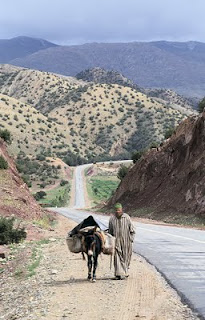
“Contraception is the cheapest way to combat climate change,” read the headline of The Telegraph in mid-September, announcing the release of “Fewer Emitters, Lower Emissions, Less Cost,”a study from the Optimum Population Trust (OPT) and the London School of Economics (LSE). Similar stories appeared in newspapers around the world.
Though there has been near-universal agreement that the OPT-LSE paper oversimplifies the link between demography and climate change, the buzz among the family planning and environment communities has continued during the IUSSP conference in Marrakech. Perhaps this is because demographers are not used to appearing in the press except when discussing census results. More likely it is the timing of the report, with the Copenhagen conference on climate change coming in December.The buzz hit a peak on Thursday at the IUSSP, with a plenary presentation examining the links. Wolfgang Lutz jumped right in, noting that it’s not as simple as the OPT-LSE study makes it. Population growth is important, but size is not the only thing that matters; other aspects such as age distribution, household structures, and levels of urbanization come into play as well.
In addition, between population size and climate change lie a number of intermediary factors, such as consumption levels, technology improvements, and greenhouse gas (GHG) emissions. Lutz argued that demography has a unique contribution to make to the climate discussion, for no other discipline understands the composition of different populations in different places both now and in the future. Therefore, demographers should explain how different groups will contribute to climate change, and how they will suffer the consequences, so that adaptive capacities can be strengthened and social programs can fill the gaps.
Leiwen Jiang described research conducted by some of the giants in climate and demography: National Center for Atmospheric Research, International Institute for Applied Systems Analysis, and Population Action International. Their work uses a “PET” model – Population, Environment, and Technology – which looks at how the PET elements impact four critical predictors of GHG emissions: consumption, energy use, labor, and savings. A forthcoming paper by this group will delineate the complete findings, including the potential for GHG “savings” brought by decreases in fertility and thus reduced population growth, as well as the added GHG due to future urbanization.
Susana Adamo took a step back to show the audience the view from 30,000 feet – literally, with maps demonstrating that population density is highest in areas most vulnerable to impacts of climate change, such as sea-level rises, droughts, floods, and other severe weather events.
Unfortunately, one of the stars of this research, Brian O’Neill, was unable to attend, due to health reasons. His research, to be published soon, is highly anticipated, and should add additional quantitative fuel to the fire.
Not Just Climate
Environmental links with population and demographic factors have also factored in other parts of this “demography” conference. A host of sessions, many organized by the Population-Environment Research Network, have explored linkages between population growth, migration, and urbanization on the demographic side; and deforestation, natural resource management, and environmental degradation on the environmental side. Questions concerning these and other environmental factors have surfaced at panels exclusively dedicated to other topics such as family planning. Some sessions examined how population and environment concerns can be jointly addressed.
It is encouraging to see demographers and reproductive health specialists taking climate and environmental factors so seriously. The response from the environmental community has been mixed, with some interest in population issues, but also some opposition from the climate community to including discussions of family planning in an already controversial topic. At a similarly large gathering of environmentalists and conservationists, the 2008 IUCN conference in Barcelona, only two sessions addressed health or population. So we have a long way to go progress to unite these communities of researchers and practitioners, and come together in a truly fruitful engagement.
Photo courtesy World Bank Photo Collection. -
Missives From Marrakech: 50 Years of Counting. And Counting.
September 29, 2009 // By Gib ClarkeMORE Demographers often get a bad rap for being boring. There’s a saying that demography is all about sex—but the details aren’t as much fun. To find out, I’m in Marrakech, Morocco, reporting on the biennial gathering of number crunchers, the 26th conference of the International Union for the Scientific Study of Population (IUSSP). After the first day, I have only 4 days, 86 panels, 327 presentations, 5,340 PowerPoint slides, and 426 poster presentations left to go.
To most of you, this may not seem exciting. But it is terrifically important. For example, at a panel on maternal health, the presenters offered easier, more accurate, and less expensive ways to collect maternal mortality data, which led to a discussion of strategies for meeting MDG 5 and for improving maternal and infant health throughout the world. Similar panels addressed the challenges facing scientists and programmers working on issues as disparate as water, migration, and the effect of armed conflict on children.
For its 50th Anniversary, IUSSP also indulged in a bit of navel-gazing. Wolfgang Lutz called for more research on predictions and more policy recommendations—what he dubbed the “Demographers’ Transition” (an inside joke, to be sure). Ndola Prata’s “Opportunity Model” (developed jointly with Malcolm Potts and Martha Campbell), argues that use of contraceptives may increase simply if they are more available. Borrowing from marketing theory and such examples as remote controls and Post-It notes, the model generated quite an uproar. A UNFPA-hosted plenary on “After Cairo” closed the day with a strategic discussion about future population, family planning, reproductive health, and development strategies.
A Visit to the Hospital
At the Ibn Zohr Hospital’s crisis center in Marrakech, victims of sexual, physical, and psychological violence are treated and counseled free of charge. Though only founded in 2006, the clinic has defied expectations by helping hundreds of women and children each year, thanks in large part to an effective referral network comprising NGOs, media (especially radio), the police, hospitals, and health professionals. “Listening centers,” local outposts offering basic education on health and rights, are responsible for 56 percent of all referrals.
Ibn Zohr’s services are funded by the Moroccan government and UNFPA. Data has been collected since service delivery began, and shows that the overwhelming type of abuse suffered by women is physical (86 percent), while children under 15 report a mix of sexual (40 percent) and physical (43 percent) abuse, with more sexual abuse occurring among boys than girls.
Other IUSSP site visits included a rural reproductive health clinic, a center for abandoned children, and a house for female students. Too often, site visits are far away from the conference and before or after the main events, costing attendees extra time and money. Instead, the IUSSP site visits are here in Marrakech, where even the most experienced practitioners can learn more about Morocco’s unique blend of modernization and religious and cultural conservatism. These trips are truly unique and invaluable learning opportunities—organizers of similar conferences take note.
Gib Clarke reported from Marrakech, Morocco.
Photo courtesy flickr user DavidDennisPhotos. -
Connecting the Dots on Natural Interdependence
September 3, 2009 // By Brian KleinMOREA vast symphony of natural processes sustains our life on Earth. Recognizing the complex interdependence of nature’s concert reminds us of a simple fact: the social, economic, and environmental challenges we face are not isolated from one another, and neither are their solutions. Tom Friedman drives this point home in a recent New York Times op-ed, “Connecting Nature’s Dots.”
“We’re trying to deal with a whole array of integrated problems—climate change, energy, biodiversity loss, poverty alleviation and the need to grow enough food to feed the planet—separately,” Friedman argues.
“[W]e need to make sure that our policy solutions are as integrated as nature itself. Today, they are not,” he says.
Take, for example, water scarcity—a looming problem that the increasing global incidence of droughts, floods, melting glaciers, and drying rivers will likely exacerbate.
“Droughts make matters worse, but the real problem isn’t shrinking water levels. It’s population growth,” says Robert Glennon, author of Unquenchable: America’s Water Crisis and What To Do About It, in a Washington Post op-ed that points out the integrated nature of our environmental problems. “Excessive groundwater pumping has dried up scores of lakes,” many of which—including Lake Superior—can no longer “float fully loaded freighters, dramatically increasing shipping costs.” Companies reliant on rivers to run their factories or discharge their wastewater have furloughed workers as low flows disrupt normal operations. “Water has become so contentious nationwide,” Glennon continues, “that more than 30 states are fighting with their neighbors over water.”
In addition, while “more people will put a huge strain on our water resources…another problem comes in something that sounds relatively benign: renewable energy, at least in some forms, such as biofuels.” Growing enough corn to refine one gallon of ethanol, for example, can take up to 2,500 gallons of water.
“In the United States, we’ve traditionally engineered our way out of water shortages by diverting more from rivers, building dams, or drilling groundwater wells,” Glennon says. “[But] we’re running out of technological fixes.”
Global food security is also affected. We need the oceans, seas, lakes, rivers, and streams to provide habitat for fish and other marine life—a vital source of sustenance for the poorest segments of our population. Furthermore, wetland areas play a critical role in mitigating the consequences of natural disasters, buffering vulnerable coastal communities from storm surges.
Addressing water scarcity thus requires a complex understanding of the hydrological cycle, its relationship to other natural processes, and humanity’s place in that system.
For years, celebrated environmentalist and entrepreneur Paul Hawken has emphasized the interconnectedness of indigenous, environmental, and social justice movements. In his 2007 book Blessed Unrest, Hawken contends that groups as disparate as land rights reformers in the DR Congo and community members fighting to protect the Anacostia Watershed share fundamental values. Grassroots campaigns of a similar bent have sprung up across the globe, all seeking to right humans’ relationships with the Earth, and with each other.
Policymakers in the U.S. and abroad should take a page from Hawken’s book, recognize the natural interdependence of our problems, and design integrated solutions. Otherwise, our strategies to confront the myriad challenges enumerated by Friedman will fall flat.
Photo courtesy Flickr user aloshbennett. -
Demography and Democracy in Iran
August 12, 2009 // By Brian KleinMOREPresident Mahmoud Ahmadinejad might have blamed sinister “foreign powers” for fomenting post-election civil unrest in Iran, but some analysts have fingered another culprit: demography. According to Farzaneh (Nazy) Roudi, program director for the Middle East and North Africa at the Population Reference Bureau, two phenomena “provide a backdrop for understanding Iran’s current instability.” First is the country’s youthful population age structure, or “youth bulge”; over 30 percent of Iranians are between the ages of 15 and 29, and 60 percent are under the age of 30. Second is Iran’s surprisingly comprehensive family planning program, which has empowered women to make their own reproductive choices and enter higher education en masse. -
The Indian Ocean: Nexus of Environment, Energy, Trade, and Security
June 5, 2009 // By Brian KleinMORE“[F]or global trade, global food security, and global energy security, the Indian Ocean is critical,” says Amit Pandya in The Indian Ocean: Resource and Governance Challenges, the most recent addition to the Stimson Center’s Regional Voices: Transnational Challenges report series. “And it remains a stage for the pursuit of the global strategic and regional military interests of all world and regional powers.”
During a launch event on May 21, Pandya—the project director behind the series—sat with Stimson Director Ellen Laipson, Vice Admiral Kevin Cosgriff, USN (Ret.), and East-West Center in Washington Director Satu Limaye to reflect on the report and discuss the myriad challenges facing Indian Ocean states in the maritime resources and governance sectors.
The 21st Century’s “Center Stage”
The Indian Ocean’s international profile has been bolstered by the region’s rising economic prowess and political clout, significant resource wealth, and critical shipping routes—which transport the vast majority of oil leaving the Persian Gulf. Journalist Robert Kaplan recently labeled the region “center stage for the 21st century” because of its importance to global trade and energy, as well as the fact that it hosts the “dynamic great-power rivalry” between India and China.
The Stimson report is divided into two sections: the first comprises several articles written by authors from Indian Ocean littoral states, while the second includes pieces from Pandya and Laipson that analyze and interpret general trends in regional ocean governance.
Ocean Resources, Maritime Security
“In the last half-century, the production of fish and fish products in the Indian Ocean (IO) region has increased tremendously as a result of improvements in fish capture technology and rising demand caused by a growing global population,” write Edward N. Kimani et al. in their article in the report, which examines southwest Indian Ocean fisheries. These trends have precipitated conflict between small-scale artisanal fishers and industrial fishers, in addition to placing enormous pressure on ocean ecosystems. Effective management mechanisms must be implemented in order to address overfishing and its consequences for global food security and ecosystems. (A forthcoming documentary, The End of the Line, takes an in-depth look at overfishing.)
In a similar vein, Mak Joon Num’s contribution, “Pirates, Barter Traders, and Fishers: Whose Rights, Whose Security?”—roundly praised by speakers at the report launch—considers the diverse range of stakeholders operating in the Straits of Malacca and the Sulu Sea. Malaysian trawler fishers, Acehnese pirates, and Filipino barter traders compete to glean their livelihoods from the ocean. All are victims and predators in their own right, Mak Joon Num argues, and climate change, poverty, and a lack of coordinated ocean governance policies exacerbate the present problems of resource scarcity, disputed sovereignty, and unsustainability.
Shifting to the northwestern littoral states of the Indian Ocean, Mustafa Alani presses the case for a comprehensive maritime security compact in the Persian Gulf, which holds more than 30 percent of the world’s known oil deposits. The Gulf Cooperation Council provides the foundational structure for such an agreement, which would likely comprise several levels of cooperation, ranging from “soft security”—managing fishing and environmental degradation, search-and-rescue coordination, and marine transport—to “strategic security”—coordinating naval exercises and anti-terrorism operations.
Questions of Governance
In order to address these challenges, concerned states must put forth “more effort at the national level to integrate civilian and military aspects of maritime policy,” Laipson concludes in the report’s final lines. “We also need a fresh look at the regional and international levels to ensure that governance of the maritime realm strives to manage the complex interplay of human and natural activity and to maintain the Indian Ocean as a sustainable zone for commerce, energy, security, and peace.”
Population: A Missing Factor?
While the report does an excellent job of illuminating the resource and governance challenges in the Indian Ocean, it fails to substantively consider one factor that will have a profound influence on all others: population growth. Burgeoning populations in Indian Ocean states will have considerable consequences for resource management, governance, poverty, and security in the region, particularly in relation to migration, human trafficking, overfishing, and ecosystem health.
Photo: Artisanal fishers off the Malabar coast of India. Courtesy Flickr user mckaysavage. -
Former USAID Population Directors Argue for Major Boost in Family Planning Funding
April 7, 2009 // By Gib Clarke“We know how to do family planning, we know what it costs, and we know that it works,” said Joseph Speidel of the University of California, San Francisco, at the launch event for Making the Case for U.S. International Family Planning Assistance sponsored by the Wilson Center’s Environmental Change and Security Program on March 17, 2009. The key missing element, he said, is political will.MORE
Speidel and his co-authors—all former directors of the U.S. Agency for International Development’s (USAID) Office of Population and Reproductive Health—argued that Congress should more than double spending on international family planning in the coming years for health, economic, and environmental reasons.
The Big Ask
Making the Case recommends that the USAID population budget be increased from $457 million in FY2008 to $1.2 billion in FY2010, growing further to $1.5 billion in FY2014. According to the speakers, this increase is necessary to:- Meet the “enormous pent-up and growing unmet need for family planning”;
- Stabilize population growth rates, especially in Africa; and
- Achieve the Millennium Development Goal of universal access to reproductive health services.
Duff Gillespie of the Johns Hopkins Bloomberg School of Public Health showed that U.S. funding for family planning has been stagnant in real dollars since the late 1960s, despite the fact that there are 200 million women with an unmet need for family planning. Without champions within USAID and the Obama administration, he said, the dollar amounts appropriated for family planning are unlikely to increase.
Speidel explained that growing populations, combined with stable or increasing rates of consumption, contribute to climate change. The current rate of population growth is unsustainable, given Earth’s finite natural resources. Changes in behavior and technology—such as eating less meat or using clean energy—could improve environmental outcomes.
Absolute numbers still matter, however: Although population growth rates have declined, the global population continues to grow. Addressing the nearly one-half of all pregnancies that are unplanned would bring great health and environmental benefits, said Speidel.According to Steven Sinding of the Guttmacher Institute, although most economists and demographers agree that economic growth leads to lower fertility, whether lower fertility reduces poverty is still a matter of much debate. But the “demographic dividend” generated by slowing population growth is a reality, he argued, and countries can benefit from it if their institutions are prepared to take advantage of it. For example, a USAID study found that one dollar invested in family planning in Zambia saved four dollars in other development areas.
A Broader Base of SupportRuth Levine of the Center for Global Development urged the authors to avoid “preaching to the choir.” One way to engage other constituencies interested in demographic issues is to broaden the scope of “population” to include not only family planning, but also migration, urbanization, and other key demographic issues.
In addition, convincing World Bank economists, especially the Bank’s next president, of the connections between declining fertility and poverty reduction should be a priority, said Levine, because developing countries put a lot of stock in the Bank’s advice.
By Gib Clarke
Edited by Rachel Weisshaar
Photos: From top to bottom, Joseph Speidel, Duff Gillespie, Steven Sinding, and Ruth Levine. Courtesy of Dave Hawxhurst and the Wilson Center. -
Mind the Gap: Forging a Consensus on Security and Climate Change in EU and US Foreign Policy
March 5, 2009 // By Will RogersMORE“There are political and economic vulnerabilities that are in fact more important—or seem more important—to the participants of conflict than the physical vulnerability to climate change,” said Clionadh Raleigh at the February 19, 2009, event, “Climate Security Roundtable: U.S. and EU Research and Policy.” Raleigh, a lecturer at Trinity College Dublin, was joined by Nick Mabey, founding director and chief executive of E3G, and Sharon Burke, a senior fellow at the Center for a New American Security, to discuss climate change’s impact on conflict and how the United States and European Union (EU) have begun to adapt their foreign and security policies to the threat of climate change.
Ecological Change, Migration, and Conflict: A Complex Story
“The lack of access to power for certain communities, certain ethnic groups in sub-Saharan Africa, and basic access to resources among the most vulnerable populations has led to people misinterpreting the relationship that ecological change plays in their decision to either participate in conflict or to migrate,” Raleigh said. Although Raleigh’s research, which examined civil conflicts from 1990 to 2004, found that population density and growth were related to higher risks of conflict, “environmental pressures were not more likely to cause conflict in poor states—and not more likely during periods of instability,” she concluded. “Social, political, and economic factors are the most important determinants of civil war within developing countries,” she emphasized. “Poverty and unequal development come up time and time again.”
According to Raleigh, fears of mass international migration in response to climate change are overplayed. “Individuals and communities have quite a lot of coping mechanisms to deal with ecological difficulty,” including migration from rural to urban areas in the same country, she explained. Most migration, including labor and distress migration, “is temporary, internal, and circular,” she emphasized. “There is very little to no evidence that there will be an increase in international migration” in response to ecological change, although “there is evidence that there will be an increase in internal migration.”
Climate Change and Security: Perspectives from the EU“Climate change is serious,” emphasized Mabey. “It’s a threat multiplier, it will make unstable places less stable—it’s going to change strategic interests, alliances, borders, threats, economic relationships, comparative advantages, the nature of international relations, and the legitimacy of the UN.” In the future, “security policy will need to get more preventive and risk-based because climate change just injects a huge bolt of uncertainty into the future,” said Mabey. He urged the expansion of forward-looking information systems that provide policymakers with the data they need to make decisions at the geopolitical, strategic, and operations levels. He also said security experts should strive to communicate the potential consequences of climate change to decisionmakers.
The EU has taken steps to integrate climate change into its security strategy; Great Britain, Germany, and Denmark have taken the lead. The Arctic has been a particular focus, with security experts examining trade routes, maritime zones, and new access to resources. Climate change “is not all about instability” in fragile, impoverished states, Mabey explained. “The Arctic is by far the most important climate security issue in the minds of traditional foreign-policy types in Europe.”
Environmental Security Gets a New Tool: The Climate War GameLast year, Burke helped conduct a climate change war game based on a scenario of extreme weather events like droughts, wildfires, and cyclones. “Every country sort of hewed to what you would expect,” said Burke of the high-profile participants from China, India, Europe, and the United States. “The EU team spent the first two hours debating whether they could really be a country; the Indian team instantly came up with a negotiating strategy that sounded cooperative and brilliant but was completely impossible to execute; the Chinese team was, ‘No, we’re not going to do anything unless you pay us’; and the American team was keen to lead, only nobody was following.” One of the key lessons from the game, Burke explained, was that “everything comes down to what China is prepared to do.”
In developing the game, Burke and her colleagues discovered “that there’s a vast poverty of the kinds of information that you need to make decisions.” As Burke explained, policymakers need specific data “to obligate large amounts of money and personnel,” and the game revealed that “policymakers don’t have the information they need to make decisions.”
Photos: From top to bottom, Clionadh Raleigh, Nick Mabey, and Sharon Burke. Courtesy of Dave Hawxhurst and the Woodrow Wilson Center.
 A Publication of the Stimson Center.
 Demographers often get a bad rap for being boring. There’s a saying that demography is all about sex—but the details aren’t as much fun. To find out, I’m in Marrakech, Morocco, reporting on the biennial gathering of number crunchers, the
  A vast symphony of natural processes sustains our life on Earth. Recognizing the complex interdependence of nature’s concert reminds us of a simple fact: the social, economic, and environmental challenges we face are not isolated from one another, and neither are their solutions. Tom Friedman drives this point home in a recent New York Times op-ed, “
 President Mahmoud Ahmadinejad might have blamed sinister “
 “[F]or global trade, global food security, and global energy security, the Indian Ocean is critical,” says Amit Pandya in
 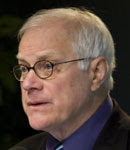 Duff Gillespie of the Johns Hopkins Bloomberg School of Public Health showed that U.S. funding for family planning has been stagnant in real dollars since the late 1960s, despite the fact that there are 200 million women with an unmet need for family planning. Without champions within USAID and the Obama administration, he said, the dollar amounts appropriated for family planning are unlikely to increase.
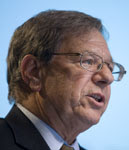 According to Steven Sinding of the Guttmacher Institute, although most economists and demographers agree that economic growth leads to lower fertility,
 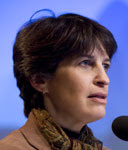 Ruth Levine of the Center for Global Development urged the authors to avoid “preaching to the choir.” One way to engage other constituencies interested in demographic issues is to broaden the scope of “population” to include not only family planning, but also
 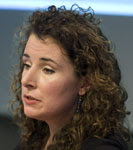 “There are political and economic vulnerabilities that are in fact more important—or seem more important—to the participants of conflict than the physical vulnerability to climate change,” said Clionadh Raleigh at the February 19, 2009, event, “
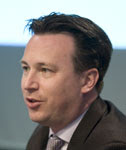 “Climate change is serious,” emphasized Mabey. “It’s a threat multiplier, it will make unstable places less stable—it’s going to change strategic interests, alliances, borders, threats, economic relationships, comparative advantages, the nature of international relations, and the legitimacy of the UN.” In the future, “security policy will need to get more preventive and risk-based because climate change just injects a huge bolt of uncertainty into the future,” said Mabey. He urged the expansion of forward-looking information systems that provide policymakers with the data they need to make decisions at the geopolitical, strategic, and operations levels. He also said security experts should strive to communicate the potential consequences of climate change to decisionmakers.
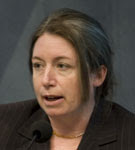 Last year, Burke helped conduct a

