-
Mapping Demographics in WWF Priority Conservation Areas
February 25, 2011 // By Hannah MarquseeMORE“The developing world is urbanizing at a dizzying pace,” yet rural populations living in developing countries are also rapidly increasing, threatening many of the planet’s most biodiverse regions, says a new study, Mapping Population onto Priority Conservation Areas, by David López-Carr, Matthew Erdman, and Alex Zvoleff.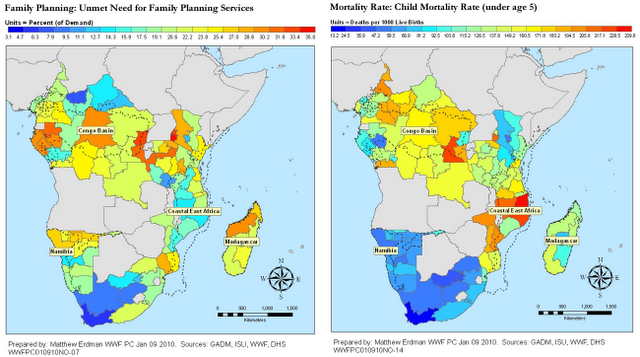
Using comprehensive data from the USAID-sponsored Demographic Health Surveys (DHS), the researchers analyzed population, mortality, and fertility indicators for 10 of the 19 priority places for conservation identified by the World Wildlife Foundation (WWF). These biological hotspots represent parts of 25 countries throughout South Asia, sub-Saharan Africa, and South America, including the Democratic Republic of the Congo, Colombia, Guatemala, Indonesia, Kenya, Nepal, Madagascar, and Thailand.
Urban vs. Rural
The findings confirmed the researchers’ hypothesis that rural areas within WWF priority regions are at a lower state of demographic transition than their urban counterparts, meaning they have higher fertility and infant mortality rates and a younger age structure due to poor access to primary health care, including family planning. Furthermore, women in these regions desire more children than those in urban, non-priority areas, but experience a greater difference between ideal and actual number of children.
For many of the indicators, the differences between urban and rural, and priority and non-priority, regions of the developing world are striking. In urban Asia, the mean predicted population doubling time is 86.1 years; in rural Africa it is only 24.6 years. Urban Asia and South America also have total fertility rates of 1.8 children per woman, while rural Africa’s is 5.2. Infant mortality also ranged from a low of 20 deaths per every 1,000 births in some developing urban areas, to over 100 in rural parts of Coastal East Africa. In the developed world it is less than 10.
There is also consistently less desire among women in priority areas to limit their childbearing. Worldwide, 49.4 percent of women living within priority areas want to limit childbearing, compared to 56.2 percent outside priority areas.
Rural areas in all regions had the highest unmet need for family planning, with the exception of the Congo Basin, where high infant mortality has persisted and dampened women’s desire to limit childbearing. “If much needed health services were provided in the Congo Basin, along with family planning services, child survival rates would increase, and couples would be more inclined to limit overall births,” the study says.
Lower demand for family planning in priority areas is consistent with Caldwell’s theory of intergenerational wealth flows, the paper noted, which explains how in rural agricultural societies, children are economic assets who move wealth to their parents. As countries develop and people gain access to education, healthcare and female empowerment, wealth flows reverse and children become financial burdens. This transition decreases fertility and increases demand for family planning.
Setting Priorities
As WWF plans to scale up its population, health and environment (PHE) programs, this study will help to prioritize places within priority areas that are most in need of PHE intervention and “are most likely to help alleviate negative environmental and social impacts of rapid population growth.” The results of this study show that many areas are ripe for such intervention:Nearly a quarter of households in Coastal East Africa and the Mesoamerican Reef wish to have access to contraception yet their desire remains unfulfilled. Similarly, households within priority places in Coastal East Africa, the Mesoamerican Reef, Amazon and the Guianas, and the Eastern Himalayas wish to have nearly one child fewer than they currently have.
The findings of this study have already informed the planning of several of WWF’s projects in Madagascar and Namibia.
The limited availability and detail of the DHS data was the primary limitation of the study, the researchers noted. The 25 countries examined did not fully cover all WWF’s priority areas – 17 other countries within the priority areas lacked sufficiently comprehensive data for the study. Furthermore, the district or municipality was the smallest unit of analysis possible with DHS data, making it difficult to exactly pinpoint priority communities.
“Geography matters,” write the authors. “Only with further refined data accompanied by qualitative on-the-ground field research can we credibly answer remaining questions.”
Image Credit:“Family Planning: Unmet Need for Family Planning Services” and “Mortality Rate: Child Mortality Rate (Under Age 5)” courtesy of World Wildlife Fund.
Sources: Population Council, World Wildlife Fund. -
The Middle East’s Demographic Destiny
February 25, 2011 // By Jennifer Dabbs SciubbaMOREThe original version of this article, by Jennifer Dabbs Sciubba, appeared on her blog. Sciubba will be speaking at the Wilson Center on March 14 about her newest book The Future Faces of War: Population and National Security.
The so-called “arc of revolution” sweeping across the Middle East and North Africa has some demographers feeling smug. In Egypt, Tunisia, Algeria, Jordan, and Lebanon the population ages 15-29 – a key group for demographers – is very large, about 41-50 percent of all adults ages 15-59. No matter where you’re born, this life period is significant because during this time young adults expect to finish their education, get a job, get married, maybe start a family, and have some say in the way they are governed. As many have noted, the problem in each of these countries is that the desires of young adults are being dashed as they are shut out of economic, political, and even social opportunities. The result is all over the headlines.
Aside from structural failures like corruption and inattention of politicians to creating jobs, why are young people so disadvantaged? The answer lies in demography. Opportunities for young adults are limited in these countries because of what demographers refer to as “cohort crowding,” a situation that results when an age group, in Tunisia’s case those aged 25-29, is significantly larger than the preceding age group. Generally, jobs cannot be created fast enough to keep pace with this demographic bump, so those in the large cohorts are “crowded” out of the labor market. This situation turns into protest and violence when youth from large cohorts fall short of the living standards of preceding generations, which are smaller. In a 2009 Pew Global Attitudes survey, 50 percent of respondents ages 18-29 in Egypt said they thought children born today would be worse off than their parents. In Jordan and Lebanon, 38 and 40 percent, respectively, of respondents had a similarly depressed attitude.
Continue reading on The Future Faces of War: Population and National Security blog.
Sources: Pew Research Center, U.S. Census Bureau.
Photo Credit: “DS-RY028 World Bank,” courtesy of flickr user World Bank Photo Collection (Dana Smillie). -
QDDR Coverage Wrap-up: Institutional Shifts, Development-as-Security, Women’s Empowerment, and Complex New Threats
February 23, 2011 // By Schuyler NullMORESomewhat lost in the wake of turmoil in the Middle East and the budget battle in Congress has been the State Department’s most aggressive attempt yet to reshape itself for the dynamic foreign policy challenges of the 21st century.
Topics: Afghanistan, development, foreign policy, gender, global health, Iraq, Middle East, military, QDDR, Reading the QDDR, State, youth -
USAID’s Role in National Security: Development Matters and It’s Cheaper Than You Think
February 22, 2011 // By Ramona GodboleMORE“Development is not and cannot be a sideshow,” said U.S. Agency for International Development (USAID) head Rajiv Shah, in a speech at the Center for Global Development on January 19. This year marks the 50th anniversary of USAID, and there are some promising changes in the works for the agency as it transforms itself into a “modern development enterprise.”
Over the past year, the Obama administration launched the Quadrennial Diplomacy and Development Review (the QDDR – see our full set of reviews on this first-of-its-kind document), Feed the Future, and the Global Health Initiative. In accordance with these new strategic initiatives, USAID has launched USAID Forward to implement a series of reforms to strengthen its capacity to meet the world’s development challenges effectively and efficiently. The agency has tried to foster a “spirit of innovation, science, technology, and smarter strategic thinking to each of [its] areas of core focus: gender, education, water, and climate,” said Shah. In his speech at CGD, he announced a new, re-worked evaluation policy and outlined a number of cost-saving actions, including graduating countries that no longer need aid, promoting procurement and contracting reform, and eliminating some costly senior positions in the agency.
Value to Shareholders
Moving forward, USAID is working to further reduce inefficiencies and increase transparency, said Shah, and is “focused on delivering the highest possible value for our shareholders – the American people and the congressional leaders who represent them.” He added that “like an enterprise, we’re relentlessly focused on delivering results and learning from success and failure.”
These are exciting changes for the development community. But, if Congress significantly cuts funding, by, for example, passing a plan similar to one endorsed by 165 Republican representatives a few weeks ago, these changes might not see the light of day – the plan proposed to save $1.39 billion by eliminating agency operating expenses. Putting that in perspective, the USAID operating budget for the past fiscal year was $1.69 billion. (Strangely, while the plan all but eliminates the agency that administers them, it does little to cut actual outgoing foreign assistance monies.)
The plan, however, may reflect the views of much of the American public. A World Public Opinion poll showed that Americans believe the government spends up to 25 percent of its budget on foreign aid and want to cut back to 10 percent, while in fact, aid represents just one percent of the federal budget (compared with more than 20 percent for defense).
What the proposed plan fails to take into account is development’s role in promoting peace, security, and prosperity globally. Said Shah at CGD, “as the President and the Secretaries of State, Treasury, and Defense have all made abundantly clear, development is as critical to our economic prospects and our national security as diplomacy and defense.”
A More Efficient Investment
Shah elaborated on this idea in an interview with Foreign Policy last month: “In the military they call us a high-value, low-density partner because we are of high value to the national security mission but there aren’t enough of us and we don’t have enough capability,” he said. “This is actually a much, much, much more efficient investment than sending in our troops, not even counting the tremendous risk to American lives when we have to do that.”
Chad Briggs, a professor for the USAF Air University, pointed out the multiple benefits to the military that increased State and USAID agency in the field could provide in his review of the QDDR:Considering the existing responsibilities of the United States overseas and the potential for future risks and crises that will need to be addressed, the QDDR’s recommendations to strengthen engagement abroad can only be a positive step for U.S. interests. If the various hurdles enumerated above and elsewhere can be addressed, the QDDR’s focus on emerging risks may also ease the burden on DOD resources and force deployments, recognizing that not every engagement abroad should be resolved by the military alone.
If done right, development can provide both economic growth and democratic governance and help stabilize countries before, during, and after conflict or crisis in a cost-effective way while simultaneously addressing transnational human and environmental security issues like hunger, poverty, disease, and climate change (see Yemen for an example where the application of soft power now could reduce the chance of deploying more hard power later).
Policymakers should support USAID’s current efforts to make smarter investments, “which over time will save hundreds of millions of dollars, as opposed to trying to save a little bit now by cutting our capacity to do oversight and monitoring,” said Shah in Foreign Policy.
Sources: Center for Global Development, The Economist, Foreign Policy, USAID, U.S. Department of State, World Public Opinion.
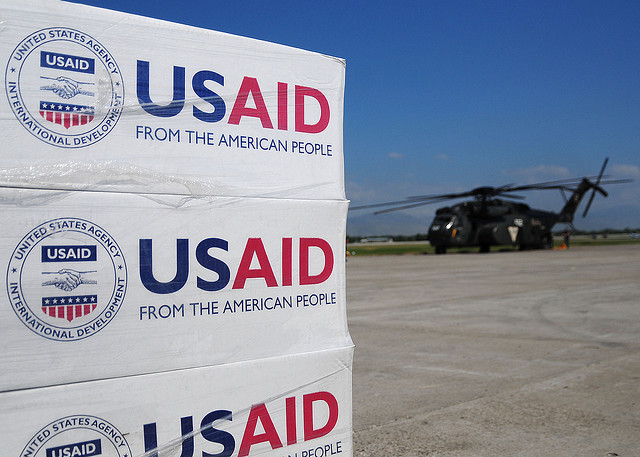
Photo Credit: “Pallets of food, water and supplies staged to be delivered,” courtesy of flickr user USAID_Images. -
Reading Radar
Health, Demographics, and the Environment in Southeast Asia
MORE“Health and Health-Care Systems in Southeast Asia: Diversity and Transitions,” launches a series in The Lancet on health in Southeast Asia. While social, political, and economic development have paved the way for substantial health improvements in some countries, demographic transitions are taking place at among the fastest rates in the world, including reductions in fertility, population aging, and rural-to-urban migration. An epidemiological shift is occurring as well, from infectious to chronic diseases. Rapid urbanization and population movement can not only affect the emergence and spread of new infectious diseases directly, but can also exacerbate environmental changes that indirectly contribute to the burden of waterborne and vector-borne diseases. The series, available early online, addresses these concerns in more detail. Moving forward, the authors advocate for “enhanced regional cooperation in the health sector to share knowledge and rationalize health systems operations, leading to further public health gains for the region’s diverse populations.”In “A Stormy Future for Population Health in Southeast Asia,” author Colin D. Butler responds to the series, stressing that the health of the future generation is dependent on actions today. Environmental change will likely bring sea-level rise that threatens urban centers and food bowls, causing regional food scarcity, exacerbating diseases like dengue fever, increasing the number of extreme weather events, and contributing to resource scarcity throughout the region. With increasing need for sustainable development in the region, Butler concludes that “stronger human factors will be essential to counter the increased physical stresses that seem to be the inevitable destiny of Southeast Asia, largely as a result of the actions of people who have never seen its shores.” -
From the Wilson Center
Watch: Geoff Dabelko and John Sewell on Integrating Environment, Development, and Security and the QDDR
“We all must check our stereotypes of the other communities at the door…we’re not talking about hugging trees and hugging pandas,” said Geoff Dabelko, director of the Wilson Center’s Environmental Change and Security Program, in a panel discussion on Foreign Policy Challenges in the 112th Congress as part of the Wilson Center on the Hill series. Dabelko argued for a more multi-dimensional and integrated approach to addressing environmental issues.MORE
“To tackle these problems, these connections between, say, natural resources, development, and security, it really does require that we have an integrated approach to our analysis [and] an integrated approach to our responses,” Dabelko said.
In dealing with climate change, for example, “a more diversified view would be one where we spend more time trying to understand adaptation,” said Dabelko. “How are we going to deal with the expected impacts of these problems?” he asked.
Dabelko called on policymakers to seek “triple bottom lines,” pointing out that “if you’re worried about climate change, or you’re worried about development, or you’re worried about fragile states, some of the same governance interventions and strong institutions in these fragile or weak states are going be the ones that will get you benefits in these multiple sectors.”
The Political Space
Fortunately, the current political environment is one in which “there is political space for integration,” said Dabelko, as demonstrated by, for example, the Quadrennial Diplomacy and Development Review (QDDR), which Wilson Center Senior Scholar John Sewell addressed in his remarks.
“All of you who are directly or indirectly engaged in Congress are going to be faced with a very important opportunity in the next 12 to 24 months,” Sewell said, “to focus both diplomacy and development on the major challenges that are going to face all of us in the first half of the century.”
Calling the QDDR a “major rethink of both American diplomacy and American development,” Sewell applauded its conceptual alignment, but cautioned that the review leaves many questions unanswered about its implementation.
“The QDDR sets no criteria,” said Sewell. “Are we going to continue to put large sums of money into countries that aren’t developing? Are we going to follow the choice of issues – food, environment, and so on and so forth? It’s a question that is not answered in any of these documents.”
Sewell also pointed to potential clashes over budgeting, USAID/State leadership, and the lack of coordination with other large development agencies, like the World Bank and International Monetary Fund.
For more on Sewell’s analysis of the QDDR, see his recent blog post “Reading the QDDR: Is the Glass Half Full or Half Empty?” -
Beat on the Ground
Promoting Family Planning and Livelihoods for a Healthy Environment in Uganda
MOREThis PHE Champion profile was produced by the BALANCED Project.
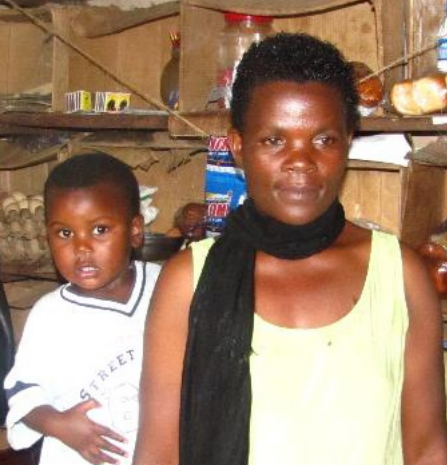
Meet 32 year old Ruth Siyage – a wife, mother, peasant farmer, shop owner, and population, health, and environment (PHE) champion. Ruth, her husband, Siyage Benon, and their three healthy daughters – ages 3, 6, and 11 – live about an hour from Bwindi Impenetrable National Park (BINP) in Uganda’s Kanungu District. The 33,000-hectare BINP is a World Heritage Site known for its exceptional biodiversity – with over 200 species of trees, 100 species of ferns, 350 species of birds, 200 species of butterflies, as well as many endangered species, including the mountain gorilla.
In addition to being a peasant farmer who grows potatoes, millet, beans, and groundnuts to feed her family, Ruth also has a small shop in the nearby trading center where she sells groceries and interacts with most of her friends. Ruth first learned of and embraced the PHE approach through a neighbor and local community volunteer, Mrs. Hope Matsiko – one of 29 PHE volunteers trained by the Conservation Through Public Health (CTPH) programs.
Ruth recalls:Hope used to approach us and tell us about family planning. Others refused to listen, but I took it up. Before, I used to refuse to go to Kajubwe Health Center for services and never got information because it was so far away. However, when Hope, the local volunteer, who is also my neighbor, visited me at home, I got more information about family planning. She also counseled me on the methods I could use, which was best for my health and how to use it. I now use family planning.
As a new champion, Ruth uses several ways to teach her community about family planning and PHE activities. One way is through face-to-face discussions with individuals attending village meetings. She focuses on women she sees often and who she knows have closely-spaced pregnancies. Recently, three of these women started using modern contraceptives.Ruth also spreads her PHE messages through her work with the local women’s association, Kishanda Bakyara Twebiseho (Kishanda Women Livelihoods Association), as an active member of a local church, and as a local village council member. In the council, she is in charge of teaching about agriculture and the environment – a perfect opportunity to share her PHE messages about the linkages between population, health, and the environment. Ruth is a great model of the benefits of taking a PHE approach, with her well-spaced pregnancies – which have helped ensure her own reproductive health and that of her three daughters – and her teaching of others, from what she now knows about the need to keep ourselves and our environment healthy to the impacts of each on the other.
Ruth says she believes that through a PHE approach much can be done and has been done:By teaching people about safe water use, I believe that we can stop diarrhea diseases. And by teaching about sanitation, we can help prevent diseases such as malaria, tuberculosis, and worms. Now my neighbors seldom get sick. We have a fairly healthy life. When we are not sick, we do not have to sell our goats and land to buy medicine. And when we plan our families, we are better able to care for and educate our children. Through our community sensitization, people now even understand the importance of gorilla conservation.
Ruth is especially appreciative of the CTPH program, which first taught her about and then turned her into an advocate for the integrated PHE approach.
This PHE Champion profile was produced by the BALANCED Project. A PDF version can be downloaded from the PHE Toolkit. PHE Champion profiles highlight people working on the ground to improve health and conservation in areas where biodiversity is critically endangered.
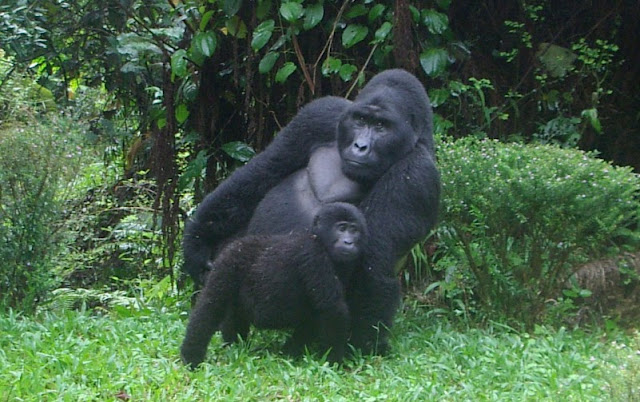
Photo Credit: Silverback mountain gorilla named Mwirima with a juvenille gorilla from the Rusguguar group near Bwindi Impenetrable National Park, and Ruth and her son in their shop in rural Uganda, courtesy of CTPH.Topics: Africa, Beat on the Ground, community-based, conservation, family planning, forests, PHE, PHE Champion -
Guest Contributor
Civilian Power in a Complex, Uncertain World
MORELeading Through Civilian Power: The First Quadrennial Diplomacy and Development Review (QDDR) initiates an encouraging process of rethinking and restructuring that is long overdue. It explicitly links itself to the 2010 National Security Strategy and echoes the latter’s commitment to “national renewal and global leadership.” It refers briefly to the obvious companion document, the Quadrennial Defense Review, although it resists engaging with some key aspects.
Topics: climate change, foreign policy, funding, Guest Contributor, military, QDDR, Reading the QDDR, security, State
 A Publication of the Stimson Center.