-
What You Are Reading
Top 10 Posts for June 2011
Chairman of the Joint Chief of Staff Admiral Mike Mullen joined his former staffers (see “In Search of a New Security Narrative“) on the New Security Beat top 10 list last month after speaking at the Wilson Center in the inaugural Lee Hamilton lecture. Richard Cincotta’s look at Tunisia’s demographics also remained popular, joined by several posts on climate, security, and development, including ECSP’s “Yemen Beyond the Headlines” event.MORE
1. In Search of a New Security Narrative: The National Conversation at the Wilson Center
2. Tunisia’s Shot at Democracy: What Demographics and Recent History Tell Us
3. Connections Between Climate and Stability: Lessons From Asia and Africa
4. Admiral Mullen: “Security Means More Than Defense,” Inaugural Lee Hamilton Lecture at the Wilson Center
5. Climate Adaptation, Development, and Peacebuilding in Fragile States: Finding the Triple-Bottom Line
6. One in Three People Will Live in Sub-Saharan Africa in 2100, Says UN
7. India’s Maoists: South Asia’s “Other” Insurgency
8. Eye on Environmental Security: Where Does It Hurt? Climate Vulnerability Index, Momentum Magazine
9. Helping Hands: An Integrated Approach to Development
10. Yemen Beyond the Headlines: Losing the Battle to Balance Water Supply and Population Growth -
Reading Radar
Nepal to East Africa: Population, Health, and Environment Programs Compared
MORE“Practice, Harvest and Exchange: Exploring and Mapping the Global, Health, Environment (PHE) Network of Practice,” by the University of Rhode Island’s Coastal Resources Institute and the USAID-supported BALANCED Project, explores the successes and challenges of their global population, health, and environment (PHE) network (with a heavy presence in East Africa). In order to increase support of the nascent PHE approach, the network seeks to shorten the “collaborative distance” between “PHE champions,” so they can develop a stronger body of evidence for the links between population, health, and the environment. In their analysis, the authors write that the network has facilitated the development of independent, information-sharing relationships between “champions.” However, they also observed shortfalls in the network, such as its limited reach into less technologically advanced yet more biodiverse regions, its bias toward BALANCED meet-up event participants, and its exclusion of those experts unlikely to be included in published works. In “Linking Population, Health, and the Environment: An Overview of Integrated Programs and a Case Study in Nepal” from the Mount Sinai Journal of Medicine, Sigrid Hahn, Natasha Anandaraja, and Leona D’Agnes provide both a broad survey of the structure and content of programs using the PHE method and an in-depth case study of a successful initiative in Nepal. Hahn et al. praise the Nepalese program for simultaneously addressing deforestation from fuel-wood harvesting, indoor air pollution from wood fires, acute respiratory infections related to smoke inhalation, as well as family planning in Nepal’s densely populated forest corridors. “The population, health, and environment approach can be an effective method for achieving sustainable development and meeting both conservation and health objectives,” the authors conclude. In particular, one benefit of cross-sectoral natural resource and development programs is the inclusion of men and adolescent boys typically overlooked by strictly family planning programs.
 -
From the Wilson Center
Watch ‘Dialogue’ TV on the Future of Women and the Arab Spring
MOREThis week on Dialogue, host John Milewski discusses the role that women played in the Arab Spring and how these roles might evolve in the coming months and years with the enormous political changes sweeping the region. He is joined by Moushira Khattab, Lilia Labidi, and Haleh Esfandiari. [Video Below]
Moushira Khattab is a human rights activist who formerly served as Minister of Family and Population for Egypt. She also served as Assistant Minister of Foreign Affairs, Vice Chair of the UN Committee on the Rights of the Child, and was Egypt’s ambassador to South Africa during the Mandela era. Lilia Labidi is an anthropologist and professor at the University of Tunis who currently serves as Minister of Women’s Affairs in the Republic of Tunisia. Previously she was a visiting professor at the American University in Cairo and a fellow at the Wilson Center. Haleh Esfandiari is author of the book, My Prison My Home: One Women’s Story of Captivity in Iran. Haleh serves as the director of the Wilson Center’s Middle East Program.
Dialogue is an award-winning co-production of the Woodrow Wilson International Center for Scholars and MHz Networks that explores the world of ideas through conversations with renowned public figures, scholars, journalists, and authors. The show is also available throughout the United States on MHz Networks, via broadcast and cable affiliates, as well as via DirecTV and WorldTV (G19) satellite.
Find out where to watch Dialogue where you live via MHz Networks. You can send questions or comments on the program to dialogue@wilsoncenter.org. -
Women in Agriculture: Closing the Gender Gap for Development and World Hunger
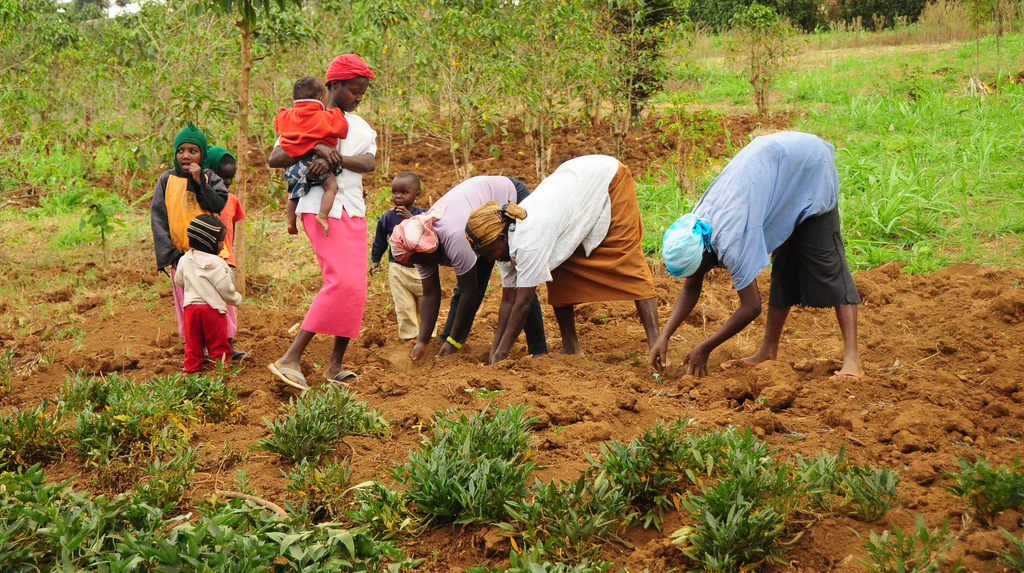
June 22, 2011 // By Kellie FurrMOREProviding women with equal access to productive resources and opportunities may be the key to bolstering the struggling global agricultural sector and feeding communities living in extreme hunger, according to the UN Food and Agriculture Organization’s (FAO) latest State of Food and Agriculture report, which this year is sub-titled, “Women in Agriculture: Closing the Gender Gap for Development.”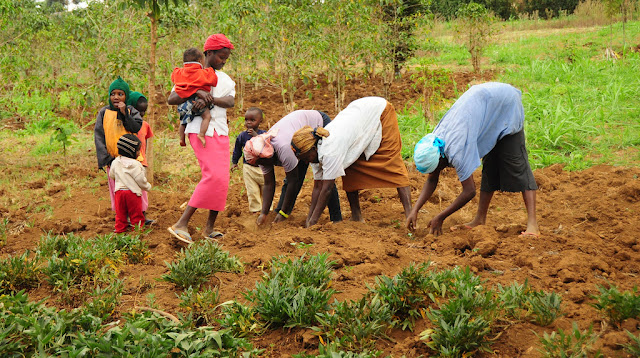
“Women are farmers, workers, and entrepreneurs, but almost everywhere they face more severe constraints than men in accessing productive resources, markets, and services,” write the authors. “This ‘gender gap’ hinders their productivity and reduces their contributions to the agriculture sector and to the achievement of broader economic and social development goals.”
Barriers to Productivity
Globally, women comprise 43 percent of the agricultural labor force, ranging from 20 percent in Latin America to 50 percent in southeastern and eastern Asia and sub-Saharan Africa, according to the report. But despite their significant global presence, female farmers face gender-specific constraints that hinder access to productive resources, financial support, information, and services required to be viable and competitive. “The yield gap between men and women averages around 20 to 30 percent, and most research finds that the gap is due to differences in resource use,” write the authors.
Generally, women are more likely than men to hold lower-wage, part-time, or seasonal positions and tend to get paid less even when they are more qualified. Furthermore, domestic and occupational lines are blurred for women, who are often not compensated for work that is closely related to domestic food preparation. Most significantly for agricultural productivity, women across the developing world often lack access to quality land, sometimes being barred from land ownership. This ban precludes female farmers from exercising managerial discretion over farming activities, such as entering contract farming agreements. Women also generally own less livestock and contract for less labor – two crucial assets for marketable agricultural production in many developing countries. Moreover, because of insufficient land and resources, women farmers are also more vulnerable to climate shocks.
Resource barriers for female farmers extend to education, finance, and technology as well. The authors observe that “female household heads in rural areas are disadvantaged with respect to human capital accumulation in most developing countries, regardless of region or level of economic development,” which represents a historical bias against females in education. Despite notable success observed in finance projects involving female farmers, gender bias exists in the financial system, which prevents women from bearing initial financial risk in order to increase long-term productivity gains. Sources of gender bias in the financial sector include legal barriers, cultural norms, lack of collateral, and institutional discrimination by public and private lenders. Due to the aforementioned lack of credit, labor, and education, women farmers are deficient in all aspects of technology, such as the acquisition of new equipment, information about new seed varietals and animal breeds, pest control measures, and management techniques.
Global Implications
Closing the gender gap could have profound implications for easing world hunger. According to the FAO, approximately 925 million people are currently undernourished, most of whom live in developing countries. If women were given all the inputs and support as men, agricultural output could increase by 2.5 to 4 percent in developing countries, potentially reducing the world’s hungry by 100 to 150 million people. “This report clearly confirms that the Millennium Development Goals on gender equality (MDG 3) and poverty and food security (MDG 1) are mutually reinforcing,” FAO Director-General Jacques Diouf argues in his introductory remarks.
Increasing the economic viability of women farmers may also translate into better infant and child health indicators – when women control additional income, they tend to allocate more of their earnings toward the health and well-being of their children. Closing the agricultural gap is “a proven strategy for enhancing the food security, nutrition, education, and health of children,” Diouf asserted. “Better fed, healthier children learn better and become more productive citizens. The benefits would span generations and pay large dividends in the future.”
Finally, the FAO notes that in addition to reducing child mortality rates, increasing female education and economic prosperity helps lower fertility rates, which over time increases human capital and can help drive a demographic transition towards lower dependency rates and higher per capita growth.
Closing the Gender Gap
“The conclusions are clear,” write the authors:1) Gender equality is good for agriculture, food security, and society; and
Though they note that “no simple ‘blueprint’ exists for achieving gender equality in agriculture,” the authors do recommend some basic principles to the development community, including working towards eliminating discrimination against women under the law, strengthening rural institutions and making them gender-aware, freeing women for more rewarding and productive activities, building the human capital of women and girls, bundling interventions, improving the collection and analysis of sex-disaggregated data, and making gender-aware agricultural policy decisions.
2) Governments, civil society, the private sector and individuals, working together, can support gender equality in agriculture and rural areas
Recognizing that “women will be a pivotal force behind achieving a food secure world,” the U.S. Agency for International Development (USAID) has actually launched initiatives aimed directly at closing the gender gap. The Feed the Future initiative, announced last spring, includes a heavy focus on gender equity and integration with small-scale farming initiatives. For example, the Office of Women in Development is supporting a three-year project in Liberia, “Integrated Agriculture for Women’s Empowerment,” that aims to train and support 1,500 small farmers in Lofa county, two-thirds of whom are women. And in Rwanda, USAID helped the Ministry of Agriculture and Animal Resources – headed by Dr. Agnes Kalibata – develop a national investment plan, which has been successful in bringing in donor support.
However, the FAO report does not offer specific feedback on programs like Feed the Future, which is arguably a crucial component of a truly comprehensive assessment on the current state of agriculture. Though they write that the State of Food Agriculture series is intended to simply be “science-based assessments of important issues,” the infancy of these food security efforts and the immediacy of the problems examined (see recent food price instability) creates an excellent opportunity for critical input. “Women in Agriculture” offers perhaps the most comprehensive report on the gender gap and development to date, but more specific critiques on the current efforts of USAID and others might make more of an impact in a field where the issues at play have been fairly clearly enumerated many times before.
Sources: Food and Agriculture Organization, The Hunger Project, International Fund for Agricultural Development, Population Action International, USAID.
Photo Credit: Adapted from “Ngurumo Village-Ntakira (Kenya),” courtesy of flickr user CGIAR Climate.Topics: agriculture, climate change, economics, Feed the Future, food security, gender, land, Liberia, livelihoods, population, poverty, USAID -
Food Security in Kenya’s Yala Swamp
June 21, 2011 // By Wilson Center StaffThe original version of this article, by Tim Siegenbeek van Heukelom, appeared on State-of-Affairs.MORE
In West Kenya on the Northeastern shore of Lake Victoria, the Yala swamp wetland is one of Kenya’s biodiversity hotspots. The Yala swamp also supports several communities that utilize the wetland’s natural resources to support their families and secure their livelihoods. Even more, many people recognize the swamp’s extraordinary potential as agricultural land to significantly boost Kenya’s food security. These are three widely diverse interests, which may seem to be difficult to reconcile. Yet, with proper management, sufficient investment and effective communication, a differentiated utilization of the Yala swamp can be realized through a system of multiple land use. This will be a difficult but certainly not unrealistic objective.
A Brief History
The most recent development of the Yala swamp was undertaken by Dominion Farms, a subsidiary of a privately held company from the United States investing in agricultural development. The reclamation and development of the swamp, however, is far from a new phenomenon.
The intention of the Kenyan government to transform parts of the Yala swamp into agricultural land for food production goes back as far as the early 1970s. Around that time, the Ministry of Foreign Affairs of the Netherlands was consulted extensively by the Kenyan government for technical assistance on reclamation of the swamp and the feasibility of agricultural production.
Throughout the 1980s numerous reports were commissioned by the Kenyan Ministry for Energy and Regional Development and the Lake Basin Development Authority to the Dutch Ministry of Foreign Affairs. Reports like the “Yala Integrated Development Plan” and the “Yala Swamp Reclamation and Development Project” focused in depth on the potential of the development of the swamp and made recommendations on practical matters, such as drainage and irrigation, soil analysis, agriculture, marketing, environmental aspects, employment opportunities, human settlement, management, and financial planning.
As a result, small-scale reclamation and development of the swamp land was undertaken throughout the 1980s and 1990s under the supervision of the Lake Basin Development Authority. The development of the swamp was partially successful, yet its scale was small and financial benefits were too marginal. Major investment was therefore required to extend the scale of the project.
Then, in 2003, an American investor expressed interest to make significant long-term investments into bringing parts of the swamp into agricultural production. Subsequently, a lease for 45 years was negotiated between Dominion Farms and the Siaya and Bondo County Councils to bring into agricultural production some 7,000 hectares of the Yala swamp. The whole Yala swamp wetland covers 17,500 hectares, which means that Dominion Farms is allowed to reclaim and develop roughly 40 percent of the swamp.
Protracted Conflict
Since the early days of the arrival of the foreign investor in 2004, there has been lingering tension and occasional flares of conflict between the communities surrounding the project site, third parties (i.e. government officials, politicians, NGOs, CBOs, environmentalists), and the investor.
The most commonly touted complaint is that Dominion Farms “grabbed” the communities’ land. While it is hard to trace back the exact procedures and individuals that were involved, there are clear contracts with the Siaya and Bondo County Councils that substantiate the transfer of land-use to Dominion Farms for a period of 45 years. Some claim, however, that the negotiation process for the lease was entrenched in bribery and corruption, yet no one has been able to show this author a single trace of evidence to substantiate these accusations. Similarly, there are complaints by local residents that they were never consulted in the negotiation process – where they should have been, as they rightly point out that the swamp is community trust land. However, the land is held in trust by the relevant county council for the community. The county council should therefore initiate consultations with the local communities and residents to get their approval to lease the land to third parties. So it appears that some of the resentment over the loss of parts of the swamp should not be directed at the foreign investor but rather target the local county council and their procedures.
Continue reading on State-of-Affairs.Topics: Africa, agriculture, biodiversity, development, environment, food security, Kenya, land, water -
Eye On
Watch: Richard Matthew at TEDxChange on Natural Resources, Conflict, and Environmental Peacemaking
“It’s not surprising that about half the time, efforts to try to stabilize countries as they come out of war fail,” said Richard Matthew, associate professor at the University of California at Irvine and founding director of the Center for Unconventional Security Affairs, at a recent TEDxChange event. “Wars today are very destructive. They may not be as big as the wars of the last century, but they do a lot of damage.”MORE
Matthew’s work focuses on the environmental dimensions of conflict and peacebuilding. Conflict can be spurred by competition over natural resources but it also contributes to further scarcity in many cases, creating a feedback loop. The natural resource aspect of conflict is particularly important in areas where livelihoods depend directly on access to land, water, and forests, he said.
In addition to discussing the benefits of including the environment in peacemaking efforts, Matthew also touched on the need for an increased proportion of national security spending to be spent on peace and development rather than defense. “It is in our interest to grow people out of the conditions that foster terrorism and extremism and infectious disease and crisis,” he said.
In particular, Matthew remains confident that an emerging group of leaders will find new and creative ways to support peacebuilding, natural resource management, and adaptation activities in the future: “Social entrepreneurs – people willing to combine their passion to make a better world with sound business tools – are developing truly innovative ways of taking daunting social problems and making them manageable.” -
New Oxfam Report Tackles Broken Food System
June 17, 2011 // By Ramona GodboleMORE“The global food system is broken,” reads a new report from Oxfam International. While much of Growing a Better Future: Food Justice in a Resource-Constrained World essentially reviews the major factors that contribute to food insecurity, Oxfam’s call to transform the food system is certainly timely, given this year’s high food prices (blamed in part for inflaming popular revolts in the Middle East) and fears of another global food crisis.
Despite producing enough food for everyone, one in seven people globally face chronic under-nutrition and almost one billion people are food insecure. Hunger is concentrated within rural areas in developing countries, and within families, women are often disproportionally affected, having serious implications for maternal and child health.
“We face three interlinked challenges in an age of growing crisis: feeding nine billion without wrecking the planet; finding equitable solutions to end disempowerment and injustice; and increasing our collective resilience to shocks and volatility,” write the authors of the report.
A “Perfect Storm” for Hunger
If current trends continue, population growth, natural resource scarcity, and climate change will put increasing stress on the food system in the future and create a “perfect storm” for more hunger, says Oxfam.
In the short term, oil price hikes, extreme weather, and speculative trading in markets have caused food prices to rise. With global population slated to grow to 9.1 billion and the global economy projected to be three times as big, demand for food may increase by as much as 70 percent by 2050. Food scarcity will also be deeply affected by the depletion of other natural resources including water, oil, and land.
According to the report’s predictions, child malnutrition levels in sub-Saharan Africa are expected to grow by 8 million by 2030. This estimate is before taking into account the effects of climate change, which could reduce agricultural yields by 20 to 30 percent in sub-Saharan Africa by 2080. The latest UN Population Division projections over that same time period predict an additional two billion people will be living in the region.
The Broken Food System
Up until now, many governments in developed countries have either ignored rising food prices or made it worse by imposing trade restrictions or encouraging the production of biofuels, says Oxfam. Thirty to fifty percent of all food grown is wasted, at least in part, as the result of poor consumer and business practices in rich countries, write the authors, and national governments are not doing enough to address climate change and manage scarce resources, especially water.
Another major challenge that contributes to global hunger is equitable access to land, technology, and markets, says Oxfam. In Guatemala, for example, less than eight percent of agricultural producers hold almost 80 percent of the land, and in developing countries, despite sharing an equal or larger burden of the work, women account for only 10 to 20 percent of landowners. Large companies, rather than local farmers, make the majority of decisions regarding key resources such as land, water, seeds, and infrastructure, while ignoring the technological needs of small-scale farmers.
“Growing a Better Future”
The report concludes that “from the failing food system to wider social and ecological challenges, the dominant model of development is hitting its limits.” The authors recommend three ways to effectively reduce hunger and fix the broken food system:1) Make food security a top priority for national and international governing bodies;
To make this a reality, write the authors, governments must invest in climate adaptation, disaster risk reduction, and social protection, while international governance of trade, food aid, financial markets, and climate change must work to reduce risks of future shocks and respond quickly and effectively when shocks do occur. The policies and practices of both governments and businesses should support the needs and interests of small-scale farmers, ensuring access to natural resources, technology, and markets.
2) Support small-scale food producers in developing countries; and
3) Set clear global targets for the equitable distribution of scarce resources.
While not exactly novel or ground-breaking ideas, these reforms certainly are lofty and the report avoids sugarcoating issues of food security, directly calling out governments and the private sector for their role in supporting food injustice. But, some argue that simpler solutions, like promoting fertilizers and new technologies among poor farmers, might be more effective at fighting malnutrition. Others question the validity of the reports assertion that the average food prices will more than double in the next 20 years.
Despite criticisms, this report and the corresponding GROW campaign will hopefully help further highlight the importance of food security and the need to move towards a more sustainable future.
Image Credit: “Thriving in Africa,” courtesy of flickr user Gates Foundation.Topics: Africa, climate change, development, food security, natural resources, nutrition, population -
Reading Radar
The Implications of Urbanization on Food Security and Child Mortality of the Urban Poor
MOREIn the chapter, “Urban Agriculture and Climate Change Adaptation: Ensuring Food Security Through Adaptation,” of the edited volume, Resilient Cities: Cities and Adaptation to Climate Change – Proceedings of the Global Forum 2010, authors Marielle Debbeling and Henk de Zeeuw assess the viability of urban and peri-urban agriculture (UPA) as a method of climate change adaptation for the urban poor. Debbeling and de Zeeuw assert that UPA increases the resilience of cities by diversifying both food supply and income streams for the urban poor; decreasing the negative effects of “heat island effect,” air pollution, and urban flooding; conserving water and utilizing organic waste; and reducing energy use and greenhouse gas emissions. Given the scale and impact of modern urbanization, the authors write that “the integration of UPA into urban development and master plans, urban land use and zoning plans, as well as active maintenance of the protected agricultural zones…is crucial.”In “Urban Area Disadvantage and Under-5 Mortality in Nigeria: The Effect of Rapid Urbanization,” published by Environmental Health Perspectives, authors Diddy Antai and Tahereh Moradi found a significant link between the mortality rate of children under five years of age and a poor and disadvantaged urban environment; such an environment is characterized by poor sanitation, overcrowding, a lack of access to safe water, and high levels of disease-inducing air pollution and hazardous wastes. Although urban living may increase proximity to health care and other social amenities, low- and middle-income countries, such as Nigeria, have overstretched their adaptive capacities and the result is poor health indicators. Antai and Moradi predict that the rapid urbanization of Nigerian cities will bring increased infant mortality, unless individual- and community-based policy interventions are implemented to counter the adverse environmental conditions of deprived areas.
 A Publication of the Stimson Center.