-
Beat on the Ground
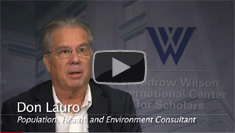
What’s in a Name? Watch Don Lauro on PHE, HELP, and HELPS
MORE Population, health, and environment (PHE) expert Don Lauro has worked on integrated projects for decades as a scholar, an implementer, a donor, and an evaluator. He recently visited the USAID-funded BALANCED Project in Tanzania as part of a wider look at this integrated approach. In an interview with ECSP, Lauro said the effort “made me think more broadly…about this area that we call population, health, and environment and what’s really in a name like that.”
“We commonly say PHE, and we all know what we’re talking about,” Lauro said of the population and development community, “but when you look deeply into these projects – or even not so deeply – you see that there’s other things going on as well.”
For example, Lauro pointed to the focus on livelihoods that many PHE programs have: “In the project I saw in Tanzania, there were many microcredit groups on the ground – mostly women – taking small loans for developing little enterprises that they had, like baking bread, raising bees, buying a cow…little enterprises to make their lives a little bit better.”
“Some people don’t use the term ‘PHE’…maybe it’s a ‘HELP’ project; that is health, environment, livelihoods, and population,” Lauro said. “Other people would say it’s maybe something even longer, ‘HELPS’ – health environment, livelihoods, population, and sustainability (or ‘security’ – Ed.).” When he was at the Wilson Center, Gib Clarke coined the “HELP” term in ECSP’s FOCUS Issue 20, arguing that livelihoods is such a critical component that it ought to be more formally recognized.
But, said Lauro, “on the ground they don’t use these terms – they say things like, ‘this is a healthy community program’ or ‘this is a green community program.’”
“I think it’s very important for us to realize what happens on the ground is lot different, and maybe more real, than how we talk about it.” -
Beat on the Ground
Improving Human Health and Conservation in Madagascar’s Forest Communities
MOREThis PHE Champion profile was produced by the BALANCED Project.
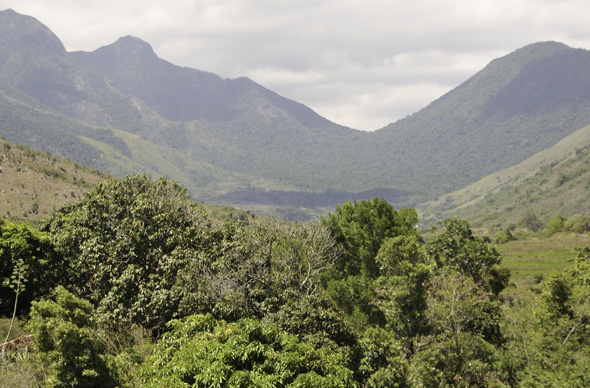
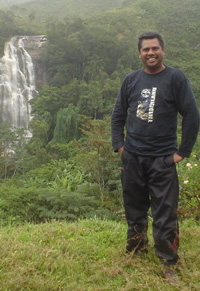
Madagascar is one of the world’s most unique ecosystems, with a total of eight plant families, five bird families, and five primate families that live nowhere else on Earth. Madagascar’s tropical forests and marine environments are home to endemic species of flora and fauna, although tragically 15 species are now extinct. At the same time, Madagascar is rich in freshwater resources, yet more than 60 percent of the island’s 19.7 million people do not have access to safe drinking water.Since 2003, Zo Zatovonirina has worked for Conservation International (CI) in Madagascar, and he has seen up-close the challenges of reaching remote forest communities, often requiring one- or two-day hikes over treacherous roads. As coordinator for USAID’s Healthy Families, Healthy Forests Program, Zo worked with two Malagasy nongovernmental organizations (NGOs), MATEZA, and the Association for Health Action and Security, to implement integrated population, health, and environment (PHE) approaches in response to community needs in the Ankeniheny Zahamena forest corridor in eastern Madagascar.
From 2003-2008, CI and partners reached more than 25,000 village residents with PHE messages; increased contraceptive prevalence in target zones from 17 percent in 2005 to 30 percent in 2008; constructed 3,000 latrines; and improved environmental health in all priority sites.
Today, biodiversity in Madagascar is under increased pressure, in light of political instability since 2009 and continued population pressures. Recognizing CI and partner experience and investments in conservation efforts to improve human well-being, USAID Madagascar and World Learning recently awarded a new 15-month grant to CI Madagascar and two Malagasy NGO partners – Voahary Salama and Ny Tanintsika – to implement an integrated PHE project in the southeastern Ambositra Vondrozo forest corridor. All three organizations have implemented PHE projects in Madagascar, and they have established trusting relationships with the people living in these fragile ecosystems.
Madagascar has a rich history of implementing successful PHE projects, and this project represents a new PHE pilot phase in the midst of political uncertainty. According to Zo, PHE approaches remain constant – simultaneously addressing several complex and linked problems such as poverty, child survival, and unsustainable dependency on natural resources. In Zo’s experience, CI’s PHE approach touches on all these aspects and delivers a pragmatic, integrated package of interventions designed to increase community capacity to better manage their health and environment. Utilizing PHE approaches, CI, Voahary Salama, and Ny Tanintsika will strive to reach communities for the first time ever with family planning, water, sanitation, and hygiene services while helping them conserve their biological heritage.
This PHE Champion profile was produced by the BALANCED Project. A PDF version can be downloaded from the PHE Toolkit. PHE Champion profiles highlight people working on the ground to improve health and conservation in areas where biodiversity is critically endangered.
Photo Credit: The forests of Madagascar, courtesy of Conservation International/Russ Mittermeier, and Zo Zatovonirina, courtesy of Conservation International. -
The Hungry Planet: Global Food Scarcity in the 21st Century
August 16, 2011 // By Wilson Center StaffMOREThe original version of this article, by Russell Sticklor, appeared on World Politics Review.
At the dawn of the 20th century, the world population was inching toward a modest two billion. In the 111 years since, notwithstanding the impact of war, genocide, disease, and famine, the global population has soared, reaching three billion around 1960 and now quickly approaching the neighborhood of seven billion. By 2050, the planet will likely be home to two billion more.
We may not be witnessing the detonation of the “population bomb” that Paul Ehrlich warned of in his seminal 1968 book, but such rapid demographic change is clearly pushing the international community into uncharted territory. With a limited amount of arable land and a finite supply of fresh water for irrigation, figuring out how to feed a planet adding upward of 70 million people each year looms as one of the 21st century’s most pressing challenges.
The push to ensure global food security transcends the desire to avoid repeating the famines that devastated the Soviet Union, China, North Korea, Ethiopia, and so many other corners of the world during the past century. Instead, aid and development organizations today rightly view food insecurity problems as deeply intertwined with issues of economic development, public health, and political stability, particularly in the developing world. To maintain order in the international community and prevent the emergence of new failed states in the decades ahead, it will be critical to find innovative means of feeding the rapidly growing populations of sub-Saharan Africa, the Middle East, and South and East Asia.
Continue reading on World Politics Review.
Note: World Politics Review has graciously white-listed all entrances from NSB for this article, so as long as you use the above link, you should be able to read the full article for free.
Russell Sticklor is a consultant for the Environmental Change and Security Program.
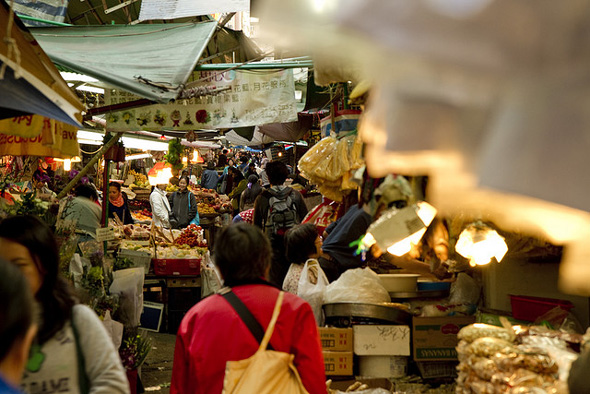
Photo Credit: “Crowded market street,” courtesy of flickr user – yt –. -
Reading Radar
Benefits of Integrating Population, Health, and Environment
MORE“Mainstreaming Environment and Climate Change: Health,” a joint publication from the International Institute for Environment and Development and Irish Aid, is part of a series that aims to show the links between the environment, climate change, and key development sectors, while suggesting key solutions to move into national policies. This health-focused briefing asserts that “nearly one quarter of the global disease burden can be attributed to the environment.” While anyone is prone to the negative effects of climate change, the poor are especially vulnerable because they often live in some of the most precarious environmental conditions. Consequently, the briefing argues that “improving environmental health – raising its profile at national, state and local levels, and integrating environmental health issues into development plans and activities – is critical if we are to reduce poverty and meet the Millennium Development Goals.”In An Assessment of the Benefits of Integrating Family Planning and Environmental Management Activities in the Visayas Region of the Philippines, a study from the University of Rhode Island’s Coastal Resources Center, authors Richard B. Pollnac and Kira Dacanay argue that benefits can be reaped from integrated population, health and environment (PHE) development, but only under certain conditions. Factors influencing the level of benefits include “levels of participation in integrated projects [both by individuals and communities], and how NGOs implement these projects.” Thus, it is important to “tailor strategies based on place-based context and personal characteristics of different participants,” write Pollnac and Dacanay. In the Philippines, the authors suggest that one of the actions future PHE initiatives should take is to “stimulate more project participation, with special efforts in larger, less dense communities and tailor strategies better to different targeted populations within the community.” -
Dot-Mom
Fistula, Stigmatization, and Development
MOREAlthough obstetric fistula may not be as widely recognized as other maternal health issues, the Fistula Foundation estimates that over two million women and girls in developing countries suffer from this condition today. The World Health Organization has labeled it as “the single most dramatic aftermath of neglected childbirth.”
Obstetric fistula is a devastating condition often resulting from obstructed labor that can cause infections, incontinence, and even paralysis. The condition largely afflicts poor, rural, and illiterate women in developing countries who lack resources and access to emergency care and surgery, and sufferers often face an additional burden of social stigma.
Economic Development and Social Standing
Poor infrastructure and poverty significantly increases the occurrence rate of obstetric fistula. Lewis Wall, in an article for The Lancet, writes that “poverty is the breeding-ground where obstetric fistulas thrive.” Wall cites early marriage, low social status of women, malnutrition, inadequately developed social and economic infrastructures, and lack of access to emergency obstetric services as being major contributors of fistulas in developing countries.
Additionally, “postponing the age of marriage and delaying childbirth can significantly reduce the risk of subjecting young women to the arduous labor that induces fistulas,” wrote Sonny Inbaraj of Inter Press Service News Agency (IPS) in an article about how fistula makes social outcasts of child brides.
In most developing societies where child marriage is common, the social standing of women is defined largely in terms of marriage and childbearing. Child marriages are typically arranged without the knowledge or consent of the girls involved. The norms emphasize a girl’s domestic roles and de-emphasize investments such as education.
Stigmatization of Fistula
There is an undeniable link between fistula and social stigmatization. Rather than receiving assistance from their families and communities, women are often ostracized and in many instances exiled from their communities. This is especially true in developing countries where “the role of women is merely limited to providing sexual satisfaction for their husbands, [and] producing children,” said Dr. Catherine Hamlin, founder of the Addis Ababa Fistula Hospital, in an interview with IPS.
“Many women and girls with fistula endure lives of shame, misery, violence, and poverty,” said Agnes Odhiambo, Africa women’s rights researcher and author of ‘I Am Not Dead, But I Am Not Living‘: Barriers to Fistula Prevention and Treatment in Kenya, in a Human Rights Watch article. Human Rights Watch has focused on fistula, recognizing that birth is a human rights issue. Ignoring the issues of women and girls only diminishes progress on human rights and sends a message that says the rights of women do not deserve adequate attention.
Prevention Efforts
Thus far the fight to end fistula has attracted various government agencies and organizations including USAID, UNFPA, EngenderHealth, Maternal Health Task Force, and the Human Rights Watch. Outstanding individuals have also played a key role in fistula prevention efforts, like Drs. Reginald and Catherine Hamlin, Australian gynecologists who came to Addis Ababa in 1959 for temporary medical work, but after hearing heart-breaking stories from fistula patients, they decided to move to Ethiopia permanently and open the Addis Ababa Fistula Hospital. As the only hospital dedicated exclusively to women with obstetric fistula, the hospital provides care free of change, and has done so since 1974.
Although fistula has gotten some support and attention, the need to scale-up the prevention initiatives has never been greater. As a result of the “poverty and the stigma associated with their condition, most women living with fistulas remain invisible to policy makers both in their own countries and abroad,” wrote Inbaraj on IPS.
“Preventing fistula and restoring women’s health and dignity requires more than good policies on paper,” said Odhiambo at Human Rights Watch. Seriously tackling the issue will require much more than traditional medical and public health interventions – prevention efforts must also take into account underlying social issues, food and economic security.
Sources: The Addis Ababa Fistula Hospital, Campaign to End Fistula, The Center for Global Development, The Fistula Foundation, Human Rights Watch, The Lancet, World Health Organization.
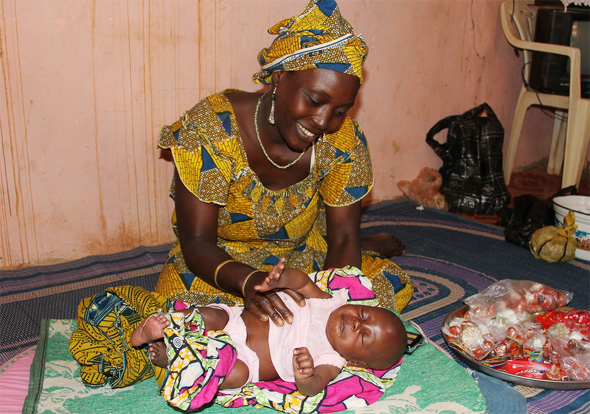
Photo Credit: “Hauwa’u, 25, mother from Rogogo community,” courtesy of flicker user DFID-UK Department for International Development.Topics: development, Dot-Mom, Ethiopia, gender, global health, humanitarian, livelihoods, maternal health -
Friday Podcasts
Sajeda Amin on Population Growth, Urbanization, and Gender Rights in Bangladesh
MORE“One of the reasons why population grows very rapidly in Bangladesh is women get married very early and have children very early,” the Population Council’s Sajeda Amin told ECSP in a recent interview. “So even though they are only having two children, they are having them at an average age of around 20. As demographers would say, women ‘replace’ themselves very rapidly.”
Largely through the promotion of contraceptive use, family planning programs implemented over the past 35 years by the Bangladeshi government and a variety of NGOs have helped lower the country’s total fertility rate to 2.7 from 6.5 in the mid-1970s. To build on this progress, the Population Council has joined a consortium of other organizations – including the Bangladesh Legal Aid and Services Trust, Marie Stopes International, and We Can End All Violence Against Women – to launch the Growing Up Safe and Healthy (SAFE) project in Amin’s native Dhaka and other Bangladeshi cities.
Currently nearing the completion of its first year, the four-year initiative has several aims, among them increasing access to reproductive healthcare services for adolescent girls and young women and bolstering social services to protect those populations from (and offer treatment for) gender-based violence. The project also looks to strengthen laws designed to reduce the prevalence of child marriage – a long-standing Bangladeshi institution that keeps population growth rates high while denying many young women the opportunity to pursue economic and educational advancement.
A Focus on Gender and Climate
Amin says the SAFE project boasts several qualities that collectively set the initiative apart from similar-minded programs in Bangladesh dealing with gender and poverty. These include a strong research component incorporating quantitative and qualitative analysis; the holistic nature of the program, which incorporates educational outreach, livelihood development, and legal empowerment; a commitment to working with both male and female populations; and an emphasis on interventions targeting young people, with the hope that such efforts will allow adolescents to make better-informed decisions about future relationships and reproductive health, thus reducing the likelihood of gender-based violence.
Finally, while many existing gender-based programs focus exclusively on rural communities, Amin points out that the SAFE project also stands apart because of its focus on the country’s rapidly expanding urban areas. To date, the initiative is focusing many of its early interventions in a Dhaka slum that has seen an influx of rural migrants in recent years due to climate-change impacts in the country’s low-lying coastal areas.
“A lot of the big problems in Bangladesh now are climate-driven in the sense of creating mass movements out of areas that are particularly vulnerable or have been hit by a major storm,” Amin said. “Usually these are people who, once they lose their homes and their livelihoods, will have no choice but to move to urban areas, and that’s a process that is kind of a big outstanding issue in Bangladesh now.”
By building programming around girls and young women in such communities, the SAFE project is looking to spark change from the bottom up, prioritizing the unmet health and social needs of some of Bangladesh’s most vulnerable populations.
The “Pop Audio” series is also available as podcasts on iTunes.
Sources: Global Post, Ministry of Health and Family Welfare (Bangladesh), Shaikh and Becker (1985).Topics: Asia, Bangladesh, climate change, education, family planning, Friday Podcasts, gender, podcast, population, urbanization, youth -
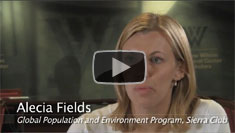
Watch: Alecia Fields on Population, Health, and Environment Advocacy with the Sierra Club
July 29, 2011 // By Roza EssawMORE“The issues of population, health, and environment are pretty foreign to a lot of people,” said Alecia Fields, a recent University of Kentucky graduate who participated in a Sierra Club Global Population and Environment Study Tour of Ethiopia last summer as a student fellow.
“I learned about the program, how to be an effective advocate, and I took those tools back to my university on campus and shared it with young people,” said Fields in this interview with ECSP.
Fields came from a women’s health background but found the connections between population, health, and environment (PHE) compelling enough that she wanted to become an advocate on campus. “At first, people don’t think they have a connection to the issue, but once you start talking with people, they really start to see how they are central to a larger issue,” said Fields.
“It is challenging in the United States to see some of the population and environmental issues…but when you go to a developing country, you see the effects right in front of you,” explained Fields. The Sierra Club’s Global Population and Environment Study Tours bring a select group of student advocates abroad to see PHE projects in the field with the aim of creating pro-active messengers of the importance of integrated development in the United States.
Fields visited various sites and organizations in Ethiopia including the Gauraghe People’s Self-help Development Organization (GPSDO), located in the southwest region. “People in Ethiopia have had tremendous success in connecting population, health, and environment within communities and starting integrated programs that work towards development,” said Fields.
Going to Ethiopia provided Fields with concrete examples of the importance of PHE and allowed her to share her experience with young people through meaningful illustrations and moving stories.
“A lot of it deals with figuring out where people are in their attachment to the subject…and try to figure out how that program can connect to them,” she said. -
Dot-Mom
Maternal Health Challenges in Kenya: An Overview of the Meetings
MOREThe original version of this article, by Emily Puckart, appeared on the Maternal Health Task Force blog.
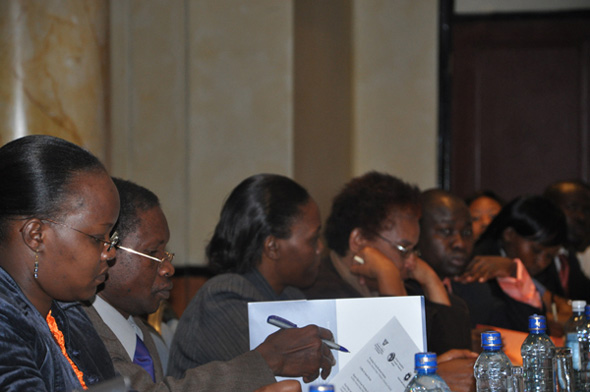
I attended the two day Nairobi meeting on “Maternal Health Challenges in Kenya: What New Research Evidence Shows” organized by the Woodrow Wilson International Center and the African Population and Health Research Center (APHRC). [Video Below]
First, here in Nairobi, participants heard three presentations highlighting challenges in maternal health in Kenya. The first presentation by Lawrence Ikamari focused on the unique challenges faced by women in rural Kenya. Presently Kenya is still primarily a rural country where childbearing starts early and women have high fertility rates. A majority of rural births take place outside of health institutions, and overall rural women have less access to skilled birth attendants, medications, and medical facilities that can help save their lives and the lives of their babies in case of emergency.
Catherine Kyobutungi highlighted the challenges of urban Kenyan women, many of whom deliver at home. When APHRC conducted research in this area, nearly 68 percent of surveyed women said it was not necessary to go to health facility. Poor road infrastructure and insecurity often prevented women from delivering in a facility. Women who went into labor at night often felt it is unsafe to leave their homes for a facility and risked their lives giving birth at home away from the support of skilled medical personnel and health facilities. As the urban population increases in the coming years, governments will need to expend more attention on the unique challenges women face in urban settings.
Finally, Margaret Meme explored a human rights based approach to maternal health and called on policymakers, advocates, and donors to respect women’s right to live through pregnancies. Further, she urged increased attention on the role of men in maternal health by increasing the education and awareness of men in the area of sexual and reproductive health as well as maternal health.
After these initial presentations, participants broke out into lively breakout groups to discuss these maternal health challenges in Kenya in detail. They reconvened in the afternoon in Nairobi to conduct a live video conference with a morning Washington, DC audience at the Woodrow Wilson Center. It was exciting to be involved in this format, watching as participants in Washington were able to ask questions live of the men and women involved in maternal health advocacy, research and programming directly on the ground in Kenya. It was clear the excitement existed on both sides of the Atlantic as participants in Nairobi were able to directly project their concerns and hopes for the future of maternal health in Kenya across the ocean through the use of video conferencing technology.
There was a lot of excitement and energy in the room in Nairobi, and I think I sensed the same excitement through the television screen in DC. I hope that this type of simultaneous dialogue, across many time zones, directly linking maternal health advocates around the globe, is an example of what will become commonplace in the future of the maternal health field.
Emily Puckart is a senior program assistant at the Maternal Health Task Force (MHTF).
Photo Credit: MHTF.
 A Publication of the Stimson Center.