-
AI’s Environmental Footprint is a Gendered Security Risk
May 12, 2026 By Tamara Bah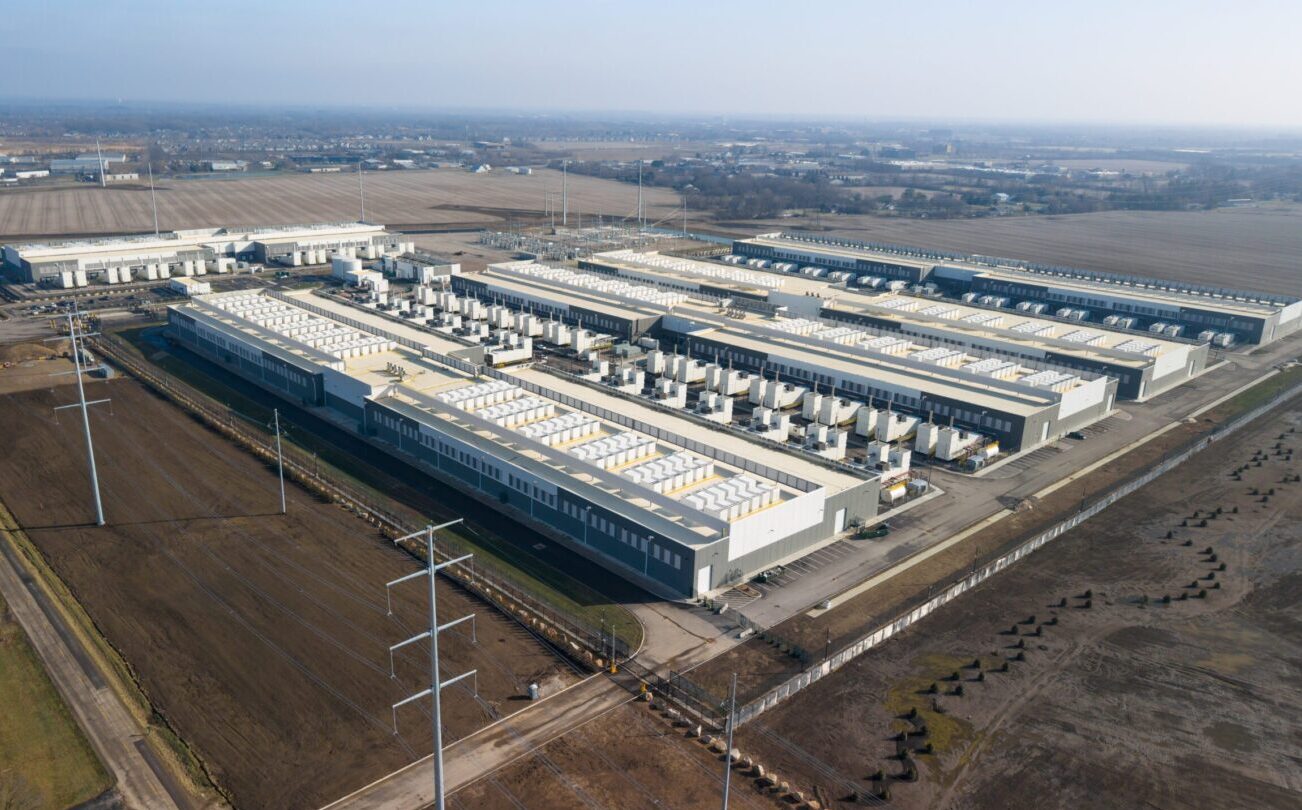
The infrastructure powering artificial intelligence (AI) has become both a political flashpoint and a signal for strategic warfare with significant military, geopolitical, and international security implications. Climate change is a “threat multiplier” that exacerbates fragility. The collision of these two forces is certain to create immediate and long-term impacts. AI’s environmental footprint risks externalizing environmental costs onto poorer countries– and the communities within them–that supply critical minerals, water resources, and host energy-intensive infrastructure, deepening ecological, economic, and social inequalities. Over the long run, it may also undermine long-term climate resilience and global stability
AI is framed as a tool for innovation and economic growth, but behind it lies significant environmental and social costs. From mineral extraction, to water stress linked to data center expansion, to rising energy demand, AI’s environmental impacts are unevenly distributed across gender lines, as illustrated by emerging evidence across multiple contexts. The technology’s environmental footprint also is a hidden driver of women’s insecurity and poverty. Indeed, the negative impacts of the AI boom on women remain largely underrecognized in mainstream conversations about technology and climate change.
There is now growing attention to these issues around the world. In February 2026, hundreds in the United Kingdom joined “March Against the Machines,” one of the country’s largest anti-AI protests organized to oppose the rapid expansion of data centers and its climate and community costs. Data centers have become a growing source of political and community backlash in the United States as well, shaping local elections and intensifying fights over land, water, and electricity. Thailand’s rapid AI data center expansion, driven by Google, Amazon Web Services (AWS), and TikTok, has raised concerns over water use for cooling and growing fossil fuel dependence.
Data centers have also been targets of espionage and cyberattacks. In March 2026, Iranian drone strikes damaged AWS data centers in the United Arab Emirates and Bahrain, disrupting cloud services across the Gulf, costing AWS an estimated $150 million. AI infrastructure can translate geopolitical conflict into immediate disruptions of civilian systems and everyday community life.
Critical Mineral Extraction and the Gendered Security Risks of AI Supply Chains
Mineral extraction is a good place to start a closer examination of these issues, since much of it is sourced from fragile and conflict-affected countries. The hardware associated with AI—chips, servers, data centers as well as semiconductors, and batteries—require cobalt, lithium, and rare earth elements. So the technology’s rise will grow demand for critical minerals.
Precarious geopolitics will only further complicate the AI-critical minerals nexus. These forces already are reshaping extraction in the Democratic Republic of the Congo (DRC), which supplies 70 percent of the world’s cobalt, while also positioning itself as a major hub for AI data centers in Africa. And Silicon Valley-based mineral exploration company, KoBold Metal is launching AI-driven lithium exploration projects in DRC, further tightening links between AI and mineral supply chains that sustain it.
Women are the backbone of artisanal and small-scale cobalt mining (ASM) in the DRC, which is a critical source of minerals for electric vehicles and cellphones. As the demand for AI-driven products accelerate the global demand for these minerals, pressure on ASM there and elsewhere will intensify women’s social, health, and labor burdens. In eastern DRC, mineral extraction contributes to women’s displacement and widespread sexual violence. Recent investigations link mining activity in DRC to rising reproductive health risks. More than half of women surveyed reported irregular menstruation, urogenital infections, frequent miscarriages, and birth defects. These health impacts are also linked to contaminated water exposure in mining-affected communities.
The overexposure of women to toxins and violence is a human security issue, given their historic exclusion from decision-making processes around extraction and land use, despite their recognized roles as peacemakers and environmental advocates.
As AI Scales, So Does Water Stress
The Asia-Pacific region faces an acute water crisis, with over 90% of its population facing imminent water scarcity driven by population growth, urbanization, and climate change. By 2027, data centers in Asia-Pacific alone could require up to 6.6 billion cubic meters of water annually – half of the total annual water withdrawal of the United Kingdom.
AI is driving uneven water demand across the region. There is rapid expansion in countries such as Malaysia, where data center growth raises concerns over water use and energy security in an already politically volatile and water-stressed context. Emerging data center hubs in Johor and Selangor, are facing significant water stress, with cooling demand estimated to require hundreds of millions of liters per day.
Fewer than 18 percent of water-use applications for data centers in Malaysia have been approved. This reflects concerns about diverting water away from households and ecosystems. As Southeast Asia’s leading data center hub, attracting AWS, Oracle, and Alibaba, Johor saw protests in early 2026 over a center construction site near homes, with residents citing dust, health impacts, and water supply concerns. These protests nearly 1,000 people, followed reports of worsening home air quality and water use reaching up to 50 million liters per day, prompting Johor halt approvals for certain data center tiers due to consumption tiers.
National data shows near-universal water and sanitation access in Malaysia, but the availability of rural “usable water” drops to 61 percent in Sabah and 71 percent in Sarawak. Women lack equitable access to clean water, early warning systems, and recovery support. Women and girls are responsible for household water collection and spend significantly more hours than men securing water for daily use, reducing time for school and paid work. Due to climate migration, female-headed households (FHHs) are expected to rise across Asia. Rising water demand from AI infrastructure is likely to deepen debt, water stress, and food insecurity for these financially vulnerable households.
Energy Demand and the Emerging Household Security Risk
Energy demand presents a similar dynamic. AI is accelerating electricity consumption, with projections suggesting data centers could account for up to 10 percent of global electricity demand by the end of the decade. The expansion of AI infrastructure also is raising energy prices across the United States and abroad. In California, women especially single mothers and FHHs) are significantly more likely to spend an unaffordable share of income on home energy costs due to higher energy burdens than men or coupled households do.
This energy burden reflects a broader global pattern of rising energy demand and price volatility that increases household economic stress for FHHs as it exacerbates their physiological (temperature sensitivities), health (mental, physical), economic (pay gap, single parenthood), and cultural (traditional gender roles, decision-making) vulnerabilities.
After Russia’s invasion of Ukraine, reports showed FHHs were hit the hardest and found it harder to pay their energy bills. As of February 2026, 65 percent of Ukraine’s energy capacity is destroyed, leaving women and their families without consistent heat nor electricity. These pressures have intensified as AI has become a “new soldier” in Ukraine, reshaping warfare and information operations as it deepens an already severe energy crisis. As Ukraine expands energy-intensive data centers, it risks worsening instability and economic stress for FHHs by not providing equitable energy planning and safeguards.
Making AI Governance Account for Gender and Environment
To reduce peace and security risks from AI’s environmental footprint while advancing gender equality, governments and energy/water utilities must make water and electrification more affordable and accessible for women. They also should mandate gender-responsive impact assessments for AI-related mining, energy, and data infrastructure projects on their land or home territories.
While extractive/mining companies and AI firms must adopt harm-prevention policies and community benefit agreements (including compensation for environmental and social harm, local hiring, and procurement targets for women), that is not all the work necessary to meet the challenge. Governments at all levels must create accessible grievance redress mechanisms, and engage in formal consultations with women’s organizations for each project and the areas affected by them.
Tamara Bah is the Climate Security Lead at the Georgetown Institute for Women, Peace, and Security.
Sources: ACCORD; American University College of Law; Columbia University; Conflict and Environment Observatory; Cornell University; EESC; FEMM; Foreign Policy; GEPI; Georgetown Institute for Women, Peace, and Security; ICT Works; IFPRI; Japan Times; RAID; UNDP; UNESCO; UK Department for Science, Innovation & Technology; UN Women; UNHCR; WEF (2024); Wiley Online Library; World Bank
Photo Credits: Licensed by Adobe Stock.
 A Publication of the Stimson Center.