
-
On the Beat
Climate Reporting Awards Live From COP; Revkin To Quit NYT
It’s a good news/bad news day for climate-media watchers. The Earth Journalism Awards honor some of the best climate coverage from around the world, while arguably the world’s most respected climate reporter announces he’s leaving journalism.MORE
Earth Journalism Awards
Tune in now to watch the Internews Earth Journalism Awards webcast live from Copenhagen. The spectacularly impressive winning entries span the globe from Kenya, Brazil, Pakistan, and Papua New Guinea.
Two top-notch stories illustrate how nuanced, in-depth reporting can compellingly and accurately portray climate-security links: Lisa Friedman’s 5-part series on Bangladesh for ClimateWire untangles the knotty problem of climate-induced migration, while William Wheeler writes in GOOD Magazine about the increasingly difficult role of Indus Water Treaty in mitigating conflict between India and Pakistan.
The 15 winners are blogging from the summit, as well 40 reporters from 26 developing nations, as part of the Climate Change Media Partnership.
Revkin Frustrated With Journalism; Will Leave NYT
On the bad news side, Yale Forum on Climate Change and Media announced this morning that Andrew Revkin, the NYT’s climate reporter, will leave the paper on December 21. He cites “frustration with journalism,” but will continue writing his popular DotEarth blog.
Maybe Revkin’s frustration is with the disintegration of environmental coverage in the mainstream media? The Internews winners demonstrate the high quality of climate coverage at niche publications like ClimateWire or funded by non-profits like the Pulitzer Center on Crisis Reporting.
Let’s hope Revkin finds a more comfortable home and continues his pioneering work on DotEarth, specifically his efforts to cover population, poverty, consumption, and development connections to climate. -
Nobel Pursuits: Linking Climate Efforts With Development, Natural Resources, and Stability
December 11, 2009 // By Geoffrey D. DabelkoMOREThe only mention of climate change in President Obama’s Nobel Peace Prize acceptance speech falls squarely in the climate and security context. He introduces the climate imperative by highlighting natural resources and development connections to stability and human well-being.
In these two paragraphs, the President identifies the key communities that must come together, first in dialogue and then in cooperation, but who so commonly don’t: development, natural resources, health, climate, peacebuilding, and security.It is undoubtedly true that development rarely takes root without security; it is also true that security does not exist where human beings do not have access to enough food, or clean water, or the medicine and shelter they need to survive. It does not exist where children can’t aspire to a decent education or a job that supports a family. The absence of hope can rot a society from within.
Photo: President Barack Obama looks at the Nobel Peace Prize medal at the Norwegian Nobel Institute in Oslo, Norway, Dec. 10, 2009 (Official White House Photo by Pete Souza).
And that’s why helping farmers feed their own people — or nations educate their children and care for the sick — is not mere charity. It’s also why the world must come together to confront climate change. There is little scientific dispute that if we do nothing, we will face more drought, more famine, more mass displacement — all of which will fuel more conflict for decades. For this reason, it is not merely scientists and environmental activists who call for swift and forceful action — it’s military leaders in my own country and others who understand our common security hangs in the balance. -
Hot and Cold Wars: Climate, Conflict, and Cooperation
November 23, 2009 // By Sajid AnwarMOREAt an American University event on his new book, Climate Change and Armed Conflict: Hot and Cold Wars, the Center for Teaching Excellence’s James Lee identified some plausible scenarios that the international community will have to face to adequately and peacefully address the security impacts of climate change.
With the loss of glaciers and normal river flows, international boundaries that have long been determined by these natural barriers will be called into question, Lee said, raising legitimate issues of sovereignty, migration, and land rights. How will countries separated by large glaciers or rivers deal with their more open and easily accessible borders? Will people who depend on these resources migrate into other countries in search of water? How will these changes impact countries that share these resources?
In his presentation, Lee argued that climate change will lead to violent conflict, using the historical record of climate change and conflict to prove his point. But most of the cases cited occurred before the 20th century, and the changes in climate then were much different than what we are now facing.
Today, we live in a world that is truly global in both governance and accountability. Issues such as severe environmental degradation or scarcity can be a factor in conflict within a country, but the potential for climate change to cause an international conflict is not as high as some warn.
There are multiple variables on the causal chain between climate change and conflict that can be addressed now, through national efforts and international cooperation. Countries can start with strong governance initiatives now to ensure that future problems of transboundary water scarcity, migration trends, and border changes do not lead to conflict.
For example, while climate change may lead to water scarcity, declines in agricultural production, and therefore to food insecurity, countries can avoid this outcome by leasing agricultural land in countries that won’t face high levels of water stress.
In addition, countries could avoid future disagreements over territory by negotiating a shared understanding of borders independent of geographic markers such as rivers or glaciers. These and other variables can be addressed now in order to mitigate the risk of future conflicts.
Renegotiating Water, Avoiding Conflict
Uppsala University Professor Ashok Swain, who spoke via Skype, took a different tack than Lee, stating that the links between climate change and conflict lack proper research. He was concerned by the hard security linkages being made with climate change and called for further exploration.
But Swain identified one potential trouble spot: While interactions over shared river systems have been shown to be overwhelmingly cooperative rather than violent, he voiced concern that the changes brought by climate change are not encompassed in the scope of current water-sharing agreements, which could increase the likelihood of conflict, according to Swain.
In the same way that leasing agricultural abroad or negotiating a shared understanding of borders now could help mitigate conflict in the future, so could renegotiating and strengthening current water-sharing agreements to reflect the future effects of climate change.
Cooperation to ensure sustainable access to shared water sources will still be more likely than conflict, simply because it is more cost-effective. If, as Lee writes in his book, climate change will cause a society’s accumulated wealth to decline, then the cost of mitigating the negative effects of climate change by using force to secure a resource would be too high for any nation to pursue.
Photo: Cracked earth, from the lack of water and baked from the heat of the sun, forms a pattern in the Nature Reserve of Popenguine, Senegal. Courtesy United Nations. -
Traffic Jam: Gender, Labor, Migration, and Trafficking in Dubai
November 16, 2009 // By Calyn Ostrowski“All trafficking is not sex trafficking,” argued Woodrow Wilson Center Fellow Pardis Mahdavi, at a recent Middle East Program event. Drawing on her ethnographic research in the United Arab Emirates, Mahdavi analyzed the policy implications of the latest Trafficking in Persons (TIP) report by the United Nations Office on Drugs and Crime. The TIP report offers information on modern day slavery–human trafficking–and includes comprehensive data on policies and enforcement in 155 countries and territories.MORE
The TIP report paradoxically hurts the people it tries to protect, claimed Mahdavi, by placing too much emphasis on sex trafficking and failing to take into consideration other types of abuse, such as those against men and migrant labor workers. Mahdavi pushed for a “breakthrough of the labeling and politicizing of sex traffickers as women and children,” which depicts women as passive and helpless, while excluding male victims.
According to Mahdavi, in Dubai, 80 percent of the population are migrant laborers. Often, these foreign workers do not trust the government to protect them against trafficking abuses, particularly if they are working in the host country illegally. Thus, civil society organizations, and not the state government, serve as the major source of protection and recourse for abused migrant workers. In the Persian Gulf region, Mahdavi argued that the “TIP report needs to be rewritten…to include increased labor inspectors and police training,” and called for the increased “accountability and transparency” of civil society organizations.
Mahdavi cautioned countries against using the TIP report to enact policies that make migration illegal. Tightening borders forces workers into the informal economy, she maintained, where it becomes difficult to track and protect these individuals.
Although the TIP report has weaknesses, it does pressure countries to act, as Mahdavi has witnessed in the United Arab Emirates, where it has provided opportunities for dialogue on the various aspects of trafficking. -
Missives From Marrakech: Growing and Slowing, and a Letter From the King
October 5, 2009 // By Gib ClarkeMOREHere in Morocco, where I am attending the IUSSP conference on population, if you never went to elementary school or if you married at a young age, you are likely to have more children.
A Bangladeshi couple is more likely to have a third child if they have 0-1 sons, but a European couple is increasingly likely to prefer daughters because they take better care of their aging parents.
Globally, a forthcoming Harvard study shows that the “Reproductive Health Laws Index”—which includes the legal framework governing abortion, condoms, IUDs, and birth control pills—can predict fertility (more liberal laws = fewer children) and potentially increase female participation in the labor force.
Such causes of population growth are favorite topics for demographers and family planning experts here at the conference, and were quite well attended. However, perhaps due to the large number of European attendees, the panels on this popular topic were empty in comparison to those examining aging, fertility decline, and migration—issues at the forefront of European policymakers’ agendas.
A Message From His Majesty
“One of the characteristic features of our population policy stems from our firm belief that [its] impact … cannot be determined in isolation from economic, social, cultural and political factors,” wrote Morocco’s King Mohammed VI in a welcome letter delivered to the conference, which also discussed aging, climate change, food security,natural resource scarcity, the economic crisis, and growing levels of income inequality.
Morocco is taking steps to tackle this complicated set of problems. The government has launched a National Initiative for Human Development to fight poverty and social inequalities, and help Morocco meet the Millennium Development Goals (MDGs). He also notes that the country’s “political and social reforms aimed at increasing the scope of democratic participation and ensuring the advancement of women.”
Like all leaders, Morocco’s will be measured not by his words—eloquent as these may be—but by his deeds and the country’s progress. Morocco has some work to do to reach the MDGs and other social and economic goals. -
Dot-Mom
Watch: Nicholas Kristof on Maternal Mortality
“Although a half million women die each year, that doesn’t get attention, because the victims invariably have three strikes against them: They are poor, they are rural, and they are female,” journalist Nicholas Kristof says in a video interview about his new book, Half the Sky: Turning Oppression into Opportunity for Women Worldwide.MORE
“If men had uteruses and were dying at this rate, every country would have a minister of paternal mortality, the security council would be meeting, this would be a real international priority,” he says.
Recently launched at the Wilson Center, Half the Sky tells the transformational stories of women and girls who are the “face of statistics” on four appalling realities: maternal mortality, sexual violence, and lack of education and economic opportunities.
“So many Americans want to help, but are skeptical,” so Half the Sky offers a “do-it-yourself toolkit,” says Kristof. People “can truly save individual women’s lives out there, and their babies’ lives, that would otherwise die.” -
VIDEO: Nicholas Kristof On Comprehensive Approaches to Family Planning
October 2, 2009 // By Wilson Center Staff“Poor countries can’t begin to deal with food issues, with economic pressures, with conflict and shortages of water and grassland that may lead to social conflict, unless they begin to deal with population problems,” journalist Nicholas Kristof tells ECSP Director Geoff Dabelko in a video interview.MORE
But “the single most effective contraceptive isn’t any kind of device,” Kristof says, “it’s girl’s education. And that has the most extraordinary impact on birthrates.” Unfortunately, this approach to family planning has “been neglected in the last 20 years.”
Empowering women and girls may be our best strategy for fighting poverty, claim Kristof and WuDunn in their new book, Half the Sky: Turning Oppression into Opportunity for Women Worldwide, which was launched at the Wilson Center.
Half the Sky tells the transformational stories of women and girls who are the “face of statistics” on four appalling realities: maternal mortality, sexual violence, and lack of education and economic opportunities. -
Missives From Marrakech: Enter the Environment
October 2, 2009 // By Gib ClarkeMORE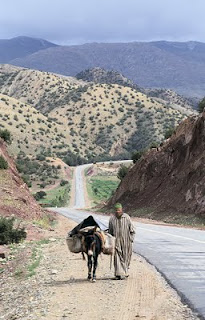
“Contraception is the cheapest way to combat climate change,” read the headline of The Telegraph in mid-September, announcing the release of “Fewer Emitters, Lower Emissions, Less Cost,”a study from the Optimum Population Trust (OPT) and the London School of Economics (LSE). Similar stories appeared in newspapers around the world.
Though there has been near-universal agreement that the OPT-LSE paper oversimplifies the link between demography and climate change, the buzz among the family planning and environment communities has continued during the IUSSP conference in Marrakech. Perhaps this is because demographers are not used to appearing in the press except when discussing census results. More likely it is the timing of the report, with the Copenhagen conference on climate change coming in December.The buzz hit a peak on Thursday at the IUSSP, with a plenary presentation examining the links. Wolfgang Lutz jumped right in, noting that it’s not as simple as the OPT-LSE study makes it. Population growth is important, but size is not the only thing that matters; other aspects such as age distribution, household structures, and levels of urbanization come into play as well.
In addition, between population size and climate change lie a number of intermediary factors, such as consumption levels, technology improvements, and greenhouse gas (GHG) emissions. Lutz argued that demography has a unique contribution to make to the climate discussion, for no other discipline understands the composition of different populations in different places both now and in the future. Therefore, demographers should explain how different groups will contribute to climate change, and how they will suffer the consequences, so that adaptive capacities can be strengthened and social programs can fill the gaps.
Leiwen Jiang described research conducted by some of the giants in climate and demography: National Center for Atmospheric Research, International Institute for Applied Systems Analysis, and Population Action International. Their work uses a “PET” model – Population, Environment, and Technology – which looks at how the PET elements impact four critical predictors of GHG emissions: consumption, energy use, labor, and savings. A forthcoming paper by this group will delineate the complete findings, including the potential for GHG “savings” brought by decreases in fertility and thus reduced population growth, as well as the added GHG due to future urbanization.
Susana Adamo took a step back to show the audience the view from 30,000 feet – literally, with maps demonstrating that population density is highest in areas most vulnerable to impacts of climate change, such as sea-level rises, droughts, floods, and other severe weather events.
Unfortunately, one of the stars of this research, Brian O’Neill, was unable to attend, due to health reasons. His research, to be published soon, is highly anticipated, and should add additional quantitative fuel to the fire.
Not Just Climate
Environmental links with population and demographic factors have also factored in other parts of this “demography” conference. A host of sessions, many organized by the Population-Environment Research Network, have explored linkages between population growth, migration, and urbanization on the demographic side; and deforestation, natural resource management, and environmental degradation on the environmental side. Questions concerning these and other environmental factors have surfaced at panels exclusively dedicated to other topics such as family planning. Some sessions examined how population and environment concerns can be jointly addressed.
It is encouraging to see demographers and reproductive health specialists taking climate and environmental factors so seriously. The response from the environmental community has been mixed, with some interest in population issues, but also some opposition from the climate community to including discussions of family planning in an already controversial topic. At a similarly large gathering of environmentalists and conservationists, the 2008 IUCN conference in Barcelona, only two sessions addressed health or population. So we have a long way to go progress to unite these communities of researchers and practitioners, and come together in a truly fruitful engagement.
Photo courtesy World Bank Photo Collection.
 A Publication of the Stimson Center.


 Here in Morocco, where I am attending the

