-
SXSW Eco Panel: Three Great Ideas That Won’t Be On the Rio+20 Agenda
September 30, 2011 // By Schuyler NullMORE South by Southwest (SXSW) – the popular music, film, and alternative showcase – is moving into the green space with its first ever “eco” conference, kicking off next week, October 4, with more than 50 panels on “solutions for a sustainable world.” There’s one in particular though you should tune into: “Three Great Ideas that Won’t Be On the Rio Agenda,” featuring Geoff Dabelko, director of the Wilson Center’s Environmental Change and Security Program; Roger-Mark De Souza, vice president of research and director of the climate program at Population Action International; and Aimee Christensen, CEO of Christensen Global Strategies.
The panel will feature discussion on three issues that will likely not be on the table at the Rio+20 UN Conference on Sustainable Development next year: integrated population, health, and environment development programs, climate adaptation as a path to peacebuilding, and how to get the private sector better involved in helping cope with climate change.
If you’re traveling down to Austin, “Three Great Ideas” is scheduled for Thursday, October 6 at 10am CST; if not, stay tuned for webcast information!Topics: climate change, development, environment, global health, PHE, population, Rio+20, SXSW, video -
Friday Podcasts
Aaron Wolf on Water Management, Agriculture, and Population Growth in the Middle East
MOREIn terms of groundwater depletion, “Yemen and Gaza are probably the two places worst off in the Middle East,” Aaron Wolf told ECSP in a recent interview. Wolf, a water expert and geography professor at Oregon State University, said population growth across the broader Middle East region has led to intensified groundwater pumping in recent years. This trend has raised the prospects for water-related conflict down the road, as countries drain their groundwater stocks faster than the aquifers can recharge. Potentially complicating matters further, said Wolf, is that most aquifers in the Middle East cross international boundaries.
Despite the region’s history of water tensions, Wolf said the unprecedented level of demographic change currently being experienced across the Middle East is not necessarily a recipe for future confrontations over the resource, in part thanks to the existence of water-sharing agreements in the area. Nevertheless, mounting demand will likely force water-users across the region – especially within the agriculture sector – to change the ways they utilize the resource.
Accounting for 80 to 90 percent of total water usage in some Middle Eastern countries, agricultural operations have already been forced to adjust to the evolving water-access situation. While moving from flood irrigation to drip irrigation represents one policy option if sufficient funds are available, Wolf said doing away with local food production “is a path that a lot of countries are going to have to take” to ensure a relatively stable water supply for their populations’ drinking, cooking, and cleaning needs.
Wolf added that one frequently discussed but not entirely realistic option for addressing the region’s water-supply concerns involves desalination. To date, widespread deployment of the technology has been hampered by high costs and substantial energy requirements, although that hasn’t stopped a few countries in the region – among them the United Arab Emirates, Saudi Arabia, and Israel – from becoming partially reliant on converted fresh water.
Wolf maintained that desalination’s hefty price tag means the technology is useful only for urban population centers near the coast. Moving converted sea water further inland remains a non-starter, he said, because transporting it requires an enormous amount of energy (a cubic meter of water weighs a metric ton).
For the same reasons, Wolf asserted, using desalinated water for agriculture doesn’t seem to be in the cards any time soon. “Right now a cubic meter of desalinated water costs about 40 cents, and you can’t use that for agriculture unless it drops down to about 8 cents a cubic meter,” Wolf said. “So until you can irrigate with desalinated water, it really doesn’t go a long way towards mitigating the larger water crisis.”
The “Pop Audio” series is also available as podcasts on iTunes.
Sources: American University, International Food Policy Research Institute, World Bank.Topics: agriculture, economics, energy, Friday Podcasts, Israel, livelihoods, Middle East, natural resources, population, water -
On the Beat
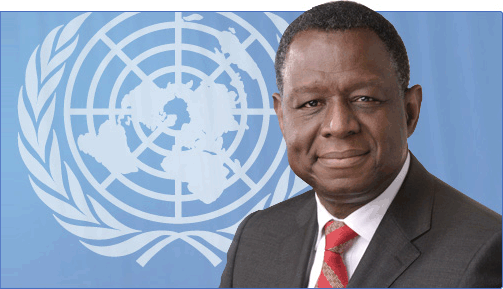
Babatunde Osotimehin Answers Seven Questions on Population
MOREPSI’s Impact magazine has an interview up with UNFPA Executive Director Babatunde Osotimehin asking him seven questions about population. It’s not likely this will be the last seven-something-themed story as we approach October and the expected seven billion mark for global population, but Karl Hofmann, president and CEO of PSI, asks some good questions, including on the prospect of harnessing the “demographic dividend” and about the barriers facing more integrated development efforts – a critical topic in population, health, and environment (PHE) circles.
On the demographic dividend:Karl Hofmann: Demography can be a key to progress with the right policy environment in place, but it can also be a burden when we don’t have the right framework in place to take advantage of growing populations. Some have described this as the demographic dividend – growing populations as a potent driver of economic growth and development. Give us your perspective on that.
And on integrated development:
Babatunde Osotimehin: I spoke at the 17th African Union Summit this year and one of my messages was that we have the opportunity right now to take advantage of the demographic dividend of young people. It’s important for African governments to understand that they have a youthful population. Most of Africa is under the age of 35. If 85 percent of the African population is under 35, the implication is that you have to have education, social services, housing, all of that, tailored to meet the needs of this population.
Beyond that, given what we’ve seen with the Arab spring uprising and others in many parts of the developing world, young people who are out of work want education and economic opportunities. We want to appeal to member states to provide skills appropriate to development and also ensure that we have continuing conversations with young people about their reproductive health and rights so they can make the choices that will ensure they plan for their families.KH: There are lots of conversations going on in global health circles these days around the synergy of integration. From your perspective, what are the barriers to this integration?
Read the full interview on Impact.
BO: I think it’s bipolar. Some countries are satisfied with vertical programs. Others are resistant to changing their system at the request of a donor. One argument for integration is that you can have the one-stop shop situation where one, two, three trained providers can deliver services at the same time. These include integration of HIV counseling, testing and treatment with family planning, with health education for non-communicable diseases, with immunization for children or with maternity services.
When you look at the components of an integrated system, it is very easy to sell. In terms of investment, it makes sense for the governments to build and put this together. The supervision becomes a lot easier, and the training of health workers would then capture all of the skill sets that would be required. Some countries, like India, Ethiopia and Nigeria have started this kind of integration.
Sources: PSI.
Image Credit: Adapted from UNFPA. -
Friday Podcasts
Rich Thorsten on Water Sanitation, Population, and Urbanization in the Developing World
MORE“For the first time in human history, more than one half of the world’s population now lives in urban areas, and some of the largest and fastest growing population centers in the world – countries like India, China, parts of sub-Saharan Africa – are in areas where water resources are becoming more and more scarce,” said Water.org’s Rich Thorsten in a recent interview with ECSP.
Thorsten serves as director of international programs for Water.org, which partners with local communities, governments, and NGOs across Central America, South Asia, and Africa to bring improved water sanitation to at-need rural and urban populations. He emphasized that ensuring access to clean water has a number of positive spillover effects, ranging from improved prospects for economic development to greater social stability, since access to non-polluted water supplies removes one potential source of tension within and between communities.
Community Health
The greatest benefit of improved sanitation services, however, comes in the form of enhanced public health outcomes. “I would definitely say there is a strong correlation” between the two, Thorsten asserted. “Water and sanitation-related diseases are related to the deaths of at least 3.5 million people every year in the developing world – not to mention millions of hours and dollars that are lost to treating health problems and coping with health problems as a result of poor [water] access and hygiene practices.”
Thorsten said that community participation has been a key aspect of ensuring the sustainability of Water.org’s projects. To pave the way for continued gains in economic development and public health, he said they work alongside water users, engineers, and government officials in target communities to make those parties stakeholders in the infrastructure development process. Fostering a sense of community ownership of sanitation projects helps reduce the likelihood that infrastructure will fall into disrepair or disuse after the initial programming intervention has been conducted.
Given that improving water-sanitation access for the world’s poor is a key element of the UN Millennium Development Goals, Thorsten said he is pleased the subject seems to be attracting more attention within the policymaking and development communities. Despite the positive momentum, however, he acknowledged the fight to ensure clean-water access for the developing world will remain an uphill battle.
“When one considers that….about 2.6 billion people lack access to basic sanitation, that there’s more people in the world that have access to a cell phone than a pit latrine or a toilet, it’s still a very daunting task that will require a lot more investment, commitment, and attention in order to improve the situation for billions of people,” Thorsten said.
Sources: UN.
The “Pop Audio” series is also available as podcasts on iTunes.Topics: Africa, Asia, community-based, development, environment, Friday Podcasts, global health, Latin America, podcast, population, South Asia, water -
Watch: Don Lauro on How Integrated Development Deepens Community Involvement
September 7, 2011 // By Schuyler NullMOREPopulation, health, and environment (PHE) projects address an impressive range of issues – natural resource management, family planning, maternal and child health, water, sanitation, nutrition, and strengthening health systems – but perhaps their most important advantage is the level of community involvement elicited, said long-time PHE expert Don Lauro in an interview with ECSP.
“There’s a depth to these programs,” Lauro said. Tools like rural participatory appraisal allow communities to map out their problems and then come up with solutions on their own. “If you get deep enough, it becomes they who own the project, and I think that that’s your ultimate goal,” he explained. “You have a much greater prospect for sustainability of that effort, no matter what happens to the funding.”
Lauro recently visited the USAID-funded BALANCED Project in Tanzania as part of a wider look at integrated development projects. He emphasized that what exactly this integrated approach is called – be it PHE, HELP, or HELPS – is insignificant; what matters is that these disparate elements are combined. -
Family Planning Can Help in Afghanistan
September 6, 2011 // By Wilson Center StaffMOREThe original version of this op-ed, by Jennifer Dabbs Sciubba, appeared in The Philadelphia Inquirer.
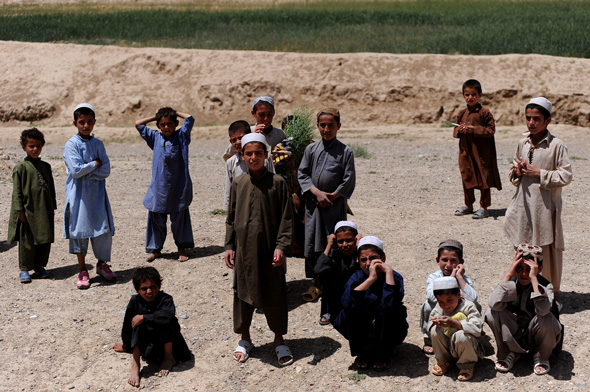
Most experts agree that the mark of long-term success in Afghanistan will be stable governance that allows the economy, democracy, and the people to flourish. Many factors will determine that, but a major one that seems to be left out of most high-level conversations is population.
Afghanistan is a country of 31 million people, but that number will double by 2035, according to the most recent UN projections, and could reach 126 million by midcentury. That’s 95 million more Afghans to govern, clothe, feed, and employ.
Without attention to population, countries like Afghanistan and Pakistan stand a good chance of staying mired in poverty, conflict, and corrupt, repressive government. That is why sustained investment in family planning by the United States and other countries would do more to stabilize the political climate there than any other foreign policy initiative. Though efforts by the Afghan government to provide contraceptives have met some resistance by conservative Muslim groups, the success of family planning in other Muslim states demonstrates that it can be effective.
Continue reading on The Philadelphia Inquirer.
Sources: UN Population Division.
Photo Credit: “100430-F-2616H-050,” courtesy of flickr user Kenny Holston 21 (Kenny Holston). -
Friday Podcasts
Karen Seto on the Environmental Impact of Expanding Cities [Part Two]
MORE“A lot of cities are trying to become green cities,” said Karen Seto in part two of an interview with ECSP about her recently published article, “A Meta-Analysis of Global Urban Land Expansion,” co-authored with Michail Fragkias, Burak Güneralp, and Michael K. Reilly. “I think one of the main policy implications of our study is that how a city urbanizes is critical, because one of the things we are finding is that urban land is growing faster than urban population, and in some cases it is growing much faster.”
Seto said that the cities with the best prospects for implementing green growth and expansion strategies “tend to focus on the low-hanging fruit,” such as planting trees or constructing buildings with green roofs. From the public’s perspective, these types of measures are relatively painless because they “don’t require changing people’s behavior.”
More challenging, said Seto, will be getting rapidly expanding cities to anchor future development around public-transit systems, especially given the changing lifestyle preferences of upwardly mobile urban populations across China and India, for whom private car ownership serves as an important status symbol.
Still, Seto said she is tentatively optimistic about city planners’ ability to grow cities in a sustainable fashion. “We’ve experienced this rapid growth of urban population and urban land areas, but we’re also seeing that over the next 20 years, according to the UN, we’re going to see even more people living in urban areas,” she said.
“We have this window of opportunity to really shape the way in which cities get developed, and I think that’s really one of the big messages of the study.”
Part one of Karen Seto’s interview is available here. The “Pop Audio” series is also available as podcasts on iTunes.
Sources: China Daily, USA Today.Topics: Africa, Asia, demography, environment, environmental health, Friday Podcasts, population, urbanization -
Friday Podcasts
Karen Seto on the Environmental Impact of Expanding Cities [Part One]
MORE“When we think about the environmental impacts of rapid urbanization, we really need to unpack what we mean by ‘urbanization,’” said Karen Seto, an associate professor in Yale University’s School of Forestry and Environment Studies, in this interview with ECSP. “There is the demographic component, where more people are living in cities; there is economic urbanization, which is where livelihoods and economies are becoming more urban rather than rural; and then there is the land component – the conversion of land from agriculture and other ecosystems to become urban.”
Seto is the lead author of a new article, “A Meta-Analysis of Global Urban Land Expansion” (with Michail Fragkias, Burak Güneralp, and Michael K. Reilly), which uses satellite imagery to help document the physical expansion of urban areas in developed and developing nations between 1970 and 2000.
Over that period, the population of cities in the developing world boomed. In 1970, there were roughly the same number of city dwellers in developed nations as in developing nations. By the mid-1990s, however, urban residents of the developing world outnumbered their developed-world counterparts by a factor of two to one. Since then, the gap has continued to grow.
According to the report, urban growth sprawled to cover nearly 60,000 square kilometers of previously non-urban areas during the last three decades of the twentieth-century. One of their most interesting finds, said Seto, was that “urban expansion has been occurring in low-elevation coastal zones more than it has been elsewhere.”
“Essentially what that means is that cities are growing precisely in areas that are highly vulnerable to the impacts of climate change, like sea level rise and storm surges,” she said.
Demography and the Environment
Seto acknowledged that many of the today’s discussions surrounding urbanization focus on the negative impacts for the environment and human security – among them the “loss of agricultural land, conversion of forests, biodiversity loss, changes in hydrology, and climate effects.” Ultimately though, she said, urbanization and its attendant land-use changes shouldn’t be viewed through a black-or-white lens.
“Certainly we think about the oncoming demographic transition of something like three billion more people living in cities,” Seto said, but “that means there’s a lot of efficiency to be gained, whether it is in education, energy, sanitation, or health – urbanization allows for opportunities for really efficient use of resources.”
The real challenge to achieving environmentally sustainable urban development, said Seto, is thoughtful city planning: “How we configure ourselves has a big impact on the environment, so it is not the issue of just whether we are urbanizing – the form in which we urbanize [also] has a huge impact.”
Part two of Karen Seto’s interview is available here. The “Pop Audio” series is also available as podcasts on iTunes.
Sources: Population Reference Bureau, UNFPA.Topics: Africa, Asia, demography, environment, environmental health, Friday Podcasts, population, urbanization
 A Publication of the Stimson Center.