-
Indonesia’s Just Energy Transition Must Not Just Be More of the Same
›China and the Global Energy Transition // China Environment Forum // Vulnerable Deltas // September 19, 2024 // By Jennifer Nguyen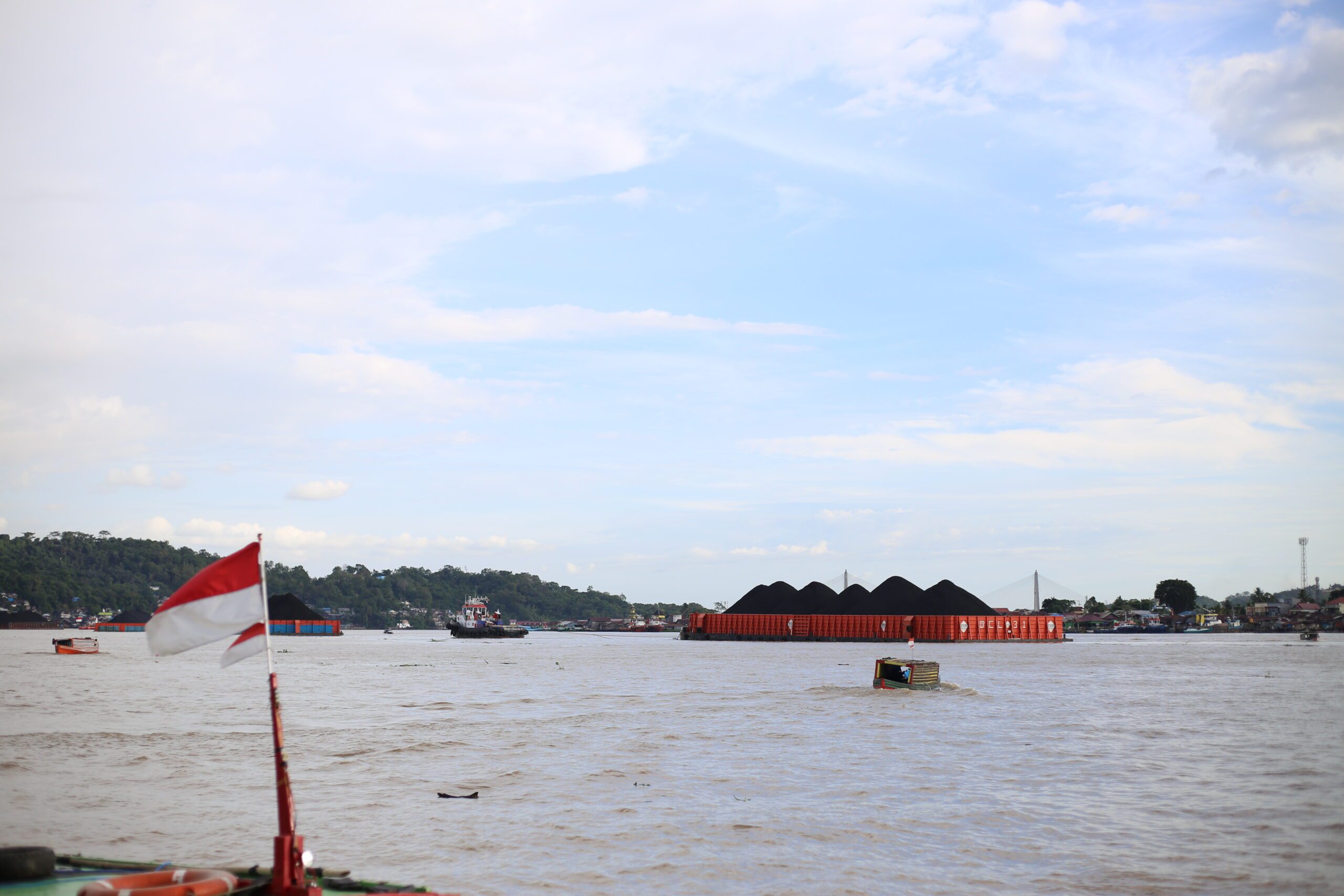
While standing on the banks of the Mahakam River in Samarinda on the island of Borneo, I watched an unending parade of coal barges sail slowly down the river. I was here in East Kalimantan to give a presentation at the Vulnerable Deltas Workshop—a joint project of the East-West Center and the Wilson Center’s China Environment Forum.
-
War and Climate Change Intensify Global Water-related Conflicts
›
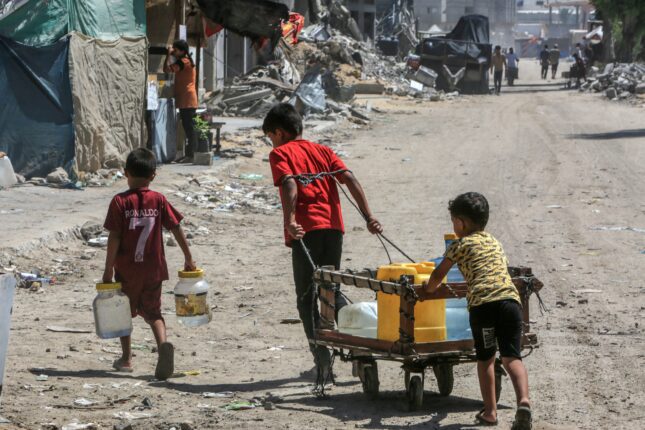
The Pacific Institute recently updated its Water Conflict Chronology—a database of water-conflict events that began to take form in the 1980s. The recent updates include the addition of 300 new entries to the database, highlighting the alarming rise of water-related conflicts in the last few years. Despite this overwhelming evidence of a growing trend in water-related conflicts, global attention toward addressing them remains negligible.
-
ECSP Weekly Watch | September 9 – 13
›A window into what we’re reading at the Wilson Center’s Environmental Change and Security Program
Fukushima Nuclear Clean-up Begins (The Diplomat)
It has been over 13 years since a massive 9.0 earthquake near the coastline of Japan in 2011 triggered a tsunami that irreversibly damaged the Fukushima Daiichi nuclear plant. Failing cooling systems within the plant led to the melting of its radioactive core reactor, which dripped toxic fallout across the plant and in the larger ecosystem. Since that catastrophe, Japan has been devising ways to responsibly clean the waste in Fukushima—and it might be getting closer to a final answer.
-
The Arc | Climate Justice in the Arctic: Part 2
›In today’s episode of The Arc, ECSP’s Claire Doyle and Angus Soderberg interview Dr. Benno Fladvad, Junior Professor for Natural Science Peace Research with a focus on Climate and Security at the University of Hamburg. Dr. Fladvad unpacks the potential environmental justice issues that arise as renewable energy deployment across the globe accelerates. Additionally, he also describes the challenges of balancing the demand for rapid decarbonization with equity and justice considerations, drawing on examples from the Saami communities’ experience with green hydrogen and wind development. We also glean Dr. Fladvad’s insights into how energy projects can move beyond ineffective consultation processes toward peacebuilding and justice for marginalized communities. Select quotes from the interview are featured below. -
Can the UPR Advance Global Women’s Rights? Lessons from Sub-Saharan Africa
›At the opening of the Commission on the Status of Women in New York this past March, UN Secretary-General António Guterres underscored the importance of stepping up national and global efforts to advance the rights of women. Guterres observed that “many women and girls are also facing a war on their fundamental rights at home and in their communities. Hard-fought progress is being reversed.”
-
ECSP Weekly Watch | September 3 – 6
›A window into what we’re reading at the Wilson Center’s Environmental Change and Security Program
Proliferation of Icebreakers in the Arctic (Foreign Policy)
As climate change-induced melting of ice sheets clears new pathways, the fast-melting Arctic now has a new strategic race: icebreakers. Russia covers over half of what is defined as “Arctic” territory, and it has the largest number of icebreakers in the region. Russia’s attempt to consolidate and expand has led the US and its NATO allies to redefine their own Arctic security strategy.
-
Climate Security in South Sudan: A Conversation with Ratia Tekenet
›In today’s episode of New Security Broadcast, ECSP Director Lauren Risi interviews Ratia Tekenet, a Climate Security Expert with the UN Mission in South Sudan (UNMISS) and a former ECSP staff member. In their conversation, Ratia explores how climate change is intensifying South Sudan’s security challenges, creating an immense humanitarian crisis. She also discusses the efforts of UN agencies, the South Sudanese government, and local communities to build resilience and respond to ongoing climate disasters, as well as the need for greater integration of the humanitarian-development-peace (HDP) nexus. Select quotes from the interview are featured below. -
Mpox and the Question of Pandemic Preparedness
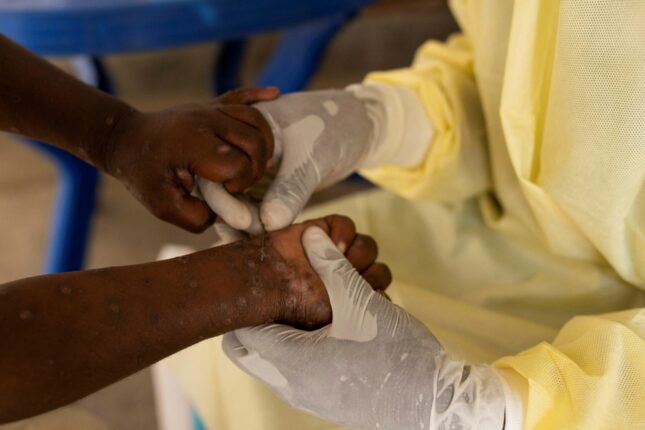
›Two years ago, the World Health Organization (WHO) declared a public health emergency after a multi-country outbreak of mpox (formerly known as monkeypox). Now, in the summer of 2024, mpox is on the rise again. On August 14, The WHO declared a new public health emergency due to a recent outbreak in the Democratic Republic of the Congo (DRC) and other African countries.
 A Publication of the Stimson Center.
 In today’s episode of
 In today’s episode of New Security Broadcast, ECSP Director Lauren Risi interviews Ratia Tekenet, a Climate Security Expert with the UN Mission in South Sudan (UNMISS) and a former ECSP staff member. In their conversation, Ratia explores how climate change is intensifying South Sudan’s security challenges, creating an immense humanitarian crisis. She also discusses the efforts of UN agencies, the South Sudanese government, and local communities to build resilience and respond to ongoing climate disasters, as well as the need for greater integration of the humanitarian-development-peace (HDP) nexus. Select quotes from the interview are featured below.