

-
Who Does Development? Civil-Military Relations (Part I)
› USAID convened a study group to determine the future civil-military relationship between USAID and the Department of Defense. Two members of the study group, Dr. Frederick Burkle and Dr. Gene Bonventre, offer their thoughts.
In the first decade of the new millennium, the relationship between the Department of Defense and civilian governmental agencies and NGOs has been a rollercoaster ride. At the high point of civil-military cooperation—the response to the Kurdish refugee crisis after the first Iraq war—the U.S. military provided security, access, and logistics, while USAID and NGOs provided direct assistance and expert advice to the 800-pound uniformed gorilla.
-
Who Does Development? Civil-Military Relations (Part II)
›USAID convened a study group to determine the future civil-military relationship between USAID and the Department of Defense. Two members of the study group, Dr. Frederick Burkle, Jr., and Dr. Eugene Bonventre, offer their thoughts.
The success of all interventions and relief efforts in conflict and post-conflict situations is dependent on politics and political action. For the United States, political action translates into military action. During my career, I’ve been involved in five conflict situations with the U.S. military, and each one made a different claim and set different restrictions for intervening with “aid.”
In the 1990s, after several frustrating years of failures, many in government believed that humanitarian assistance without political solutions achieved nothing. In good Wilsonian fashion, they saw political action—and the military interventions that followed—as a means to project, influence, and spread U.S. values. As such, the military became the security and protection tool of political humanitarianism, especially among those who considered that the convergence of humanitarian actors with the military ensured that the duty to provide assistance and the right to receive it was guaranteed.
The Kurdish crisis after the Persian Gulf War was instrumental for many reasons. One, it was the first time the Security Council did not veto a resolution to protect vulnerable populations within a sovereign state. Two, it was considered in most circles to be a success, because the coalition led by the U.S. military was considered by the humanitarian community to have been an ally in the struggle to provide security and assistance. The military presence allowed the humanitarians to work in an austere environment and to save lives.
What happened afterwards is a different story. Influenced by the post-9/11 global war on terrorism, increasingly insecure conflict environments, and the unilateral approach to conflict management, the military began to provide direct assistance to the population themselves. Liberties were taken: NGOs were recruited as “force multipliers,” “a second front,” or “part of our combat team.” The traditional leaders of humanitarian assistance and disaster relief, the Red Cross and the UN’s Office for Coordination of Humanitarian Affairs, were ignored. A “partnership” of the U.S. military-political command, the World Bank, corporate contractors, and like-minded NGOs dominated the scene.
In the last four months I’ve been confronted by two retired generals. One strongly insisted that the military must “stay within their lane” or risk destroying the military and supporting the perception of a U.S. politico-military “empire.” The other strongly insisted that the only entity in the world that could do humanitarian assistance and disaster relief is the U.S. military
So who should be leading these efforts for the United States? USAID, which was decimated in the 1980s, has never come back. The more than 12,000 USAID professionals during the 1960s-70s now number only 2,000. Reestablishing USAID’s place in development and relief will take much money, time, and expertise.
In the meantime, the only show in town, DoD, grows even larger and stronger. Gates’ statement that more civilians are needed in Afghanistan and Pakistan was actually a request for more “civilians” to be coordinated by the military.
It is not unusual to find those who think that the politico-military “relief and reconstruction complex” is impossible to change, especially when they are favored by Congress over USAID and State to solve these problems. But if “outcome indicators” rather that the current DoD-dominated “achievement indicators” were used to measure success, they would tell a totally different story.
In the last few years, the argument that such efforts are essential to “winning the hearts and minds” of a population has come out of nowhere. This claim is not grounded in accepted measures that monitor and evaluate such success. Yet the defense budgets that are heavily supported by Congress are based on achievement indicators alone.
President Obama does not come to the table with a strong and substantive knowledge or experience with the nuances of foreign assistance and the critical importance of the traditional humanitarian community. He is currently hearing only voices from the military and industry on this issue. We owe it to both the humanitarian community and the military to ensure that evaluation of their effectiveness is transparent, accountable, and evidence-based.
Current USAID leadership, short of a named Administrator, must speak up. The opportunity to reestablish USAID’s role in development and humanitarian assistance may never come this way again.
Dr. Frederick M. Burkle, Jr., is a professor and senior fellow with the Harvard Humanitarian Initiative, Harvard University; a senior public policy scholar at the Woodrow Wilson Center; and a retired Navy Reserve Captain and combat decorated for service with the U.S. Marines. -
Weekly Reading
›“The natural resources are being depleted at an alarming rate, as population pressures mount in the Arab countries,” says the 2009 Arab Human Development Report, which was published this week by the UN Development Programme. A launch event in Washington, DC, features New York Times columnist Tom Friedman and Wilson Center scholar Robin Wright.
A special issue of IHDP Update focuses on “Human Security in an Era of Global Change,” a synthesis report tied to the recent GECHS conference. Articles by GECHS members, including Karen O’Brien and Alexander Lopez, address water and sanitation, the global financial crisis, poverty, and transborder environmental governance in Latin America.
An op-ed by Stanley Weiss in the New York Times argues that the best way to bring water–and peace–to the Middle East is to ship it from Turkey. A response by Gabriel Eckstein in the International Water Law Project blog argues that “transporting water from Turkey to where it is needed will require negotiations of Herculean proportion.”
CoCooN, a new international program sponsored by The Netherlands on conflict and cooperation over natural resources, recently posted two powerpoint presentations explaining its goals and the matchmaking workshops it will hold in Addis Ababa, Bogota, and Hanoi. The deadline for applications is August 5.
Two new IFPRI research papers focus on the consequences of climate change for poor farmers in Africa and provide policymakers with adaptation strategies. “Economywide Impacts of Climate Change on Agriculture in sub-Saharan Africa” analyzes two possible options for the region. “Soil and Water Conservation Technologies: A Buffer Against Production Risk in the Face of Climate Change?” investigates the impact of different soil and water conservation technologies on the variance of crop production in Ethiopia. -
Conflict, Cooperation, and Kabbalah: Lessons for Environmental Negotiations
›June 10, 2009 // By Wilson Center Staff
Often during tough negotiations, an “ah-ha” moment transforms the parties’ thinking and enables them to move forward. Recognizing that such moments are also common to many spiritual traditions, Oregon State University Geography Professor Aaron Wolf decided to study several world religions for insights that could be applied to disputes over water resources, and to negotiation processes in general. Although Western cultures tend to view spirituality as a purely private matter—a legacy of the Enlightenment—in a June 3 invitation-only meeting at the Wilson Center, Wolf argued that much of the rest of the world understands spirituality as integrated with all parts of life.
According to Wolf, spiritual traditions can illuminate two aspects of water negotiations:
1. Understanding Conflict- Could addressing the ethical aspect of negotiations supplement the more common focuses on economic development, ecosystem protection, or environmental security, which have shown only partial success?
- How does personal faith impact decision-making; can universal values be more explicitly invoked to facilitate negotiations?
- How does global water management address the spiritual needs of stakeholders?
2. Process Techniques
- Might spiritual transformation have tools or approaches that could improve the difficult dynamics of international environmental negotiations?
- How could the tools of personal transformation—such as guided imagery, prayer, ceremony, silence, and transformative listening—aid the mediation process and/or group dynamics?
Wolf drew parallels between Maslow’s hierarchy of needs (physical, emotional, intellectual, and spiritual), the criteria for water allocations (based on rights, needs, interests, and equity), and the four stages of negotiations (adversarial, reflexive, integrative, and action).
By Comparative Urban Studies Project Program Assistant Lauren Herzer.
Wolf argued that, while semantics may vary, certain concepts’ universality makes them an effective means of communicating across cultures. For instance, the Jewish mystical tradition of Kabbalah highlights the importance of bringing justice (din) and mercy (chesed) together in a partnership that promotes compassion (rachamim): that is, being partly rooted in one’s own needs while having the ability to recognize and care for the needs of others.
This concept of compassion has an important role in Islam, as well. The Arabic word for reconciliation, musalaha, means that hostilities are ended, honor is re-established, and peace (sulha) is restored in the community. Wolf also stressed the concept of tarrahdin—resolving a conflict without humiliating either party—as key to a sustainable negotiation and peace.
But how to apply these spiritual concepts to real-life negotiations? Wolf suggests that mediators employ transformative listening skills and help parties move from a stance based on rights or needs to one based on interests or equity. Wolf also suggests that instead of being seated across from one another, which is the most adversarial arrangement, parties should be seated side by side, in a manner more reflective of prayer than argument. Another effective technique is structuring introductions so that personal narratives are shared, helping create connections between individuals.
Although the union of spiritual and rational processes is a somewhat foreign concept in the West, Wolf hopes that reaching across cultural divides will lead to the more effective resolution of environmental and other disputes. - Could addressing the ethical aspect of negotiations supplement the more common focuses on economic development, ecosystem protection, or environmental security, which have shown only partial success?
-
Weekly Reading
›The International Institute for Sustainable Development has released two reports on climate change and security: Rising Temperatures, Rising Tensions: Climate change and the risk of violent conflict in the Middle East and Climate Change and Security in Africa.
In “The Changing Face of Israel,” a Foreign Policy web exclusive, Richard Cincotta and Eric Kaufmann explain how Israel’s demographics are influencing the country’s politics.
CNN’s Inside Africa reports on a bill in the U.S. Congress that seeks to quell the violence in the Democratic Republic of the Congo by forcing American companies to disclose the sources of their minerals.
Population Action International’s Kathleen Mogelgaard reports from international climate change negotiations in Bonn, Germany, on how climate change disproportionately affects women and the poor.
A Christian Science Monitor op-ed on global demographic trends cites Wilson Center Senior Scholar Martin Walker.
On Grist, Earth Policy Institute Founder Lester Brown explores the massive migration that would be precipitated by even partial melting of the Antarctic and Greenland ice sheets. -
Land Grab: The Race for the World’s Farmland
›The world is experiencing a grain rush. With increasing frequency, wealthy, food-importing, and water-scarce countries—particularly the Arab Gulf states and the rich countries of East Asia—are investing in farmland overseas to meet their food-security needs. Similarly, the private sector is pursuing farmland deals abroad, with many investors perceiving land as a safe investment in an otherwise-shaky financial climate.
These investments are sparking both hope and fear. Some believe the deals can boost global agricultural productivity and farm yields, thereby bringing down global grain costs. Others, however, point to the land acquisitions’ negative impacts on small-scale farmers. On May 5, the Asia Program and four other Wilson Center programs hosted a half-day conference that considered the implications for investors, host countries, and food security, highlighting case studies from Asia, Africa, Europe, and the former Soviet Union.
Global Trends
The private sector—including private firms, agribusiness and trading houses, and sovereign wealth funds—now plays a key role in overseas land investment, noted David Hallam of the Food and Agriculture Organization. These investors come from China, the Arab Gulf states, South Korea, and Japan, and they have mainly targeted Africa. Hallam asserted that these investors could potentially benefit developing countries through asset and advanced-technology transfers, employment opportunities, and economic and infrastructure development.
Alexandra Spieldoch of the Institute for Agriculture and Trade Policy examined the “lopsided” power relations that prevail in foreign land acquisitions. Smallholders in poor countries like Sudan, Ethiopia, Madagascar, Zimbabwe, and Pakistan “have no political voice,” making them vulnerable to exploitation. The loss of land invites political conflict and violence, as exemplified by the public outcry in Madagascar over that country’s proposed land deal with South Korea’s Daewoo. Gary R. Blumenthal of World Perspectives, Inc., acknowledged that displacing small farmers in favor of large agribusiness activities generates “social push-back,” but contended that modern farms and private-sector funding are necessary to feed the world’s hungry and growing population.
Ruth Meinzen-Dick of the International Food Policy Research Institute discussed prospects for a “code of conduct” to regulate foreign land deals. She proposed that such a code have teeth and be modeled after the European Union’s code of conduct on bribery. Meinzen-Dick argued that questions regarding land use, land tenure, property rights, environmental concerns, and transparency should be settled before finalizing land deals. She also underscored the key role of governments in safeguarding and monitoring people’s rights, and of the media and civil society in increasing transparency and keeping up the pressure against “unjust expropriations.”
Case Studies: Asia, Africa, Europe
Raul Q. Montemayor noted that in Asia, some local people are facilitating land deals on behalf of foreign investors. In the southern Philippines, “goons and rogue elements” have been “let loose” to terrorize farmers, compelling the latter to lease their land—or evacuate. Montemayor argued that Asian farmers stand to benefit little financially from leasing their land to agribusiness enterprises. Those who have done so are receiving rental payments between 50 cents and a dollar per day. Yet he argued that any Asian farmer with his or her own standard two-hectare plot can generate the same, if not higher, daily income without renting out land.
Chido Makunike, a Senegalese agricultural commodities exporter, declared that without understanding local conditions, agribusiness investments in Africa are destined to fail. Like Spieldoch, he singled out the deal between Daewoo and the Malagasy government, which would have given Daewoo a 99-year lease on 1.3 million hectares of land—with Madagascar receiving little in return. The deal collapsed after it triggered political unrest. “It’s not enough to look at risk factors,” Makunike argued. “You must look at the sentiments of the people.” In Africa, far from being perceived as a mere “economic resource,” land has cultural, sentimental, and political meanings, and its loss was “one of the strongest symbols of dispossession” during the colonial era.
Carl Atkin of Bidwells Agribusiness highlighted investment opportunities in Central and Eastern Europe and the former Soviet Union. Land in these areas boasts high-performing and resilient soil, and production costs are low. However, there are also considerable challenges. Infrastructure is lacking, and grain storage is problematic. Obtaining land titles can be “complex,” and land tenancy laws can be “very archaic.” According to Atkin, however, the biggest challenge is local management: “Can people on the ground get things done?”
Though they indicated varying levels of support for overseas farmland acquisitions, all panelists agreed that international investment in agriculture can be a good thing—if done the right way.
While Meinzen-Dick and others lobbied for an international code of conduct to govern the transactions, other panelists insisted that foreign land investment must respect regulations in host countries. Montemayor, for example, called for “clear rules consistent with national policy goals,” and implored foreign investors to respect local laws.
Michael Kugelman is a program associate with the Wilson Center’s Asia Program; and Susan L. Levenstein is a program assistant -
In Yemen, Water’s Role in the War on Terror
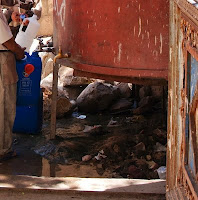
›March 27, 2009 // By Will Rogers“Sana’a might very well become the first capital in the world to run out of water,” write Gregory D. Johnsen and Christopher Boucek in a February 2009 article in Foreign Policy. With massive population growth, rapidly shrinking freshwater availability, and weak governance, Yemen’s unsustainable water management policies are exacerbating the threat of international terrorism as the state devolves into a sanctuary for al Qaeda jihadists and other transnational criminals.
Today, Yemen is among the world’s most water-scarce countries. According to the most recent data collected in 2005, Yemen’s freshwater availability has dropped to a mere 186 cubic meters per capita per year – well below the international water poverty line of 1,000 cubic meters per capita per year. Below that, water begins to severely limit “economic development and human health and well-being.”
And since the latest data collection, according to Johnsen and Boucek, overexploitation of groundwater aquifers to satisfy a burgeoning population has resulted in “dramatically falling water tables—up to several meters per year in some places.”
To make matters worse, an annual population growth rate of 3.2 percent, driven by a total fertility rate of 6.2 children per woman, means the population will grow from 22.2 million today to 35.2 million by 2050, putting further pressure on an already-scarce resource.
In Yemen, the “lack of any serious legal oversight, reckless irrigation techniques, and unregulated private exploitation” are clear indicators of poor governance. Nevertheless, the government has begun working with the World Bank to implement an integrated water management program. “Support for the water sector is receiving high priority,” said Nabil Shaiban of Yemen’s Ministry of Planning and International Cooperation, in an interview with IRIN News.
But despite these efforts, the government’s weakness and the country’s “gun-slinging tribal culture” present serious challenges to water management. According to IRIN News, “tribesmen seize control of water projects nearing completion, intending to use them for irrigating their farms.” This occurs with about “80 percent of projects in rural areas,” Ahmed al-Sufi, an information officer with Yemen’s National Water and Sanitation Foundation, told IRIN News.
And so the problems of poor water management and weak governance are circular. As water scarcity worsens, the government’s attempts to mitigate it are undermined by its weak control over the state. But without successful policies to mitigate water scarcity, the government’s legitimacy is further weakened.
With water woes aggravating Yemeni citizens and weakening the government’s authority, al Qaeda and other transnational terror groups are recruiting jihadists and using ungoverned areas as training grounds and safe havens. Forty-five percent of Yemen’s population is under 15 years old—and some claim al Qaeda is now actively recruiting boys as young as 12. With water scarcity worsening economic and human development, Yemen’s youth are particularly susceptible to al Qaeda’s promises of social justice and opportunities for advancement.
Al Qaeda recently made its capabilities in Yemen clear with a September 18, 2008, attack against the U.S. embassy in Sana’a. Several car bombs and rocket-propelled grenades killed 16 people—the deadliest attack against a U.S. target in Yemen since the bombing of the U.S.S. Cole in 2000. According to The Economist, last March “al Qaeda websites posted a message advising members to head for Yemen.”
To be clear, water scarcity is not the only issue plaguing the Gulf state. Falling oil prices and mismanaged oil reserves are making Yemen’s chronic economic and human development problems much worse. But assistance from the international community in implementing effective water-management policies would lend credibility to the government and could bolster its ability to prevent al Qaeda from training terrorists within its borders.
According to the U.S. Army field manual on stability operations, “The greatest threats to our national security will not come from emerging ambitious states but from nations unable or unwilling to meet the basic needs and aspirations of their people.” If Yemen’s government cannot provide even a minimal level of water security for its citizens, it risks becoming a failed state on par with Somalia or Zimbabwe.
Over the long term, a comprehensive approach to development that balances voluntary family planning with effective natural resource management would help reduce pressure on scarce resources and bring lasting stability to the country, while serving U.S. national security interests in the War on Terror.Photo: In Taiz, south of the capital city of Sana’a, children fill up their water jugs outside a mosque. Courtesy of flickr user Osama Al-Eryani.
-
VIDEO: Avner Vengosh on Radioactivity in Jordan’s Fossil Groundwater
›March 18, 2009 // By Wilson Center StaffIn Jordan, “we investigated about forty wells, and in a large number of them we found high levels of naturally occurring radium,” says Avner Vengosh in this short expert interview from the Environmental Change and Security Program (ECSP). “Several studies have shown that long-term exposure to this element in drinking water would increase the probability of bone cancer and leukemia,” and “millions of people are potentially going to be exposed to this level of radium,” he warns. In this short video, ECSP visits Vengosh, associate professor of earth and ocean sciences at Duke University, on location in Durham, North Carolina. Vengosh discusses his recent discovery of naturally occurring radioactivity in Jordan’s fossil groundwater at levels up to 2000 percent higher than the international drinking-water standard.
To learn more about the naturally occurring radioactivity in Jordan’s fossil groundwater, read Vengosh’s original article, “High Naturally Occurring Radioactivity in Fossil Groundwater from the Middle East,” in the peer-reviewed Environmental Science and Technology.
Showing posts from category Middle East.
 USAID convened
  USAID convened
  “Sana’a might very well become the

