

Showing posts from category Middle East.
-
Demographic Trends
›Worldfocus recently featured two pieces on the Arab world’s burgeoning population. “Demographics of the Arab World,” a radio broadcast, brings together Magda Abu-Fadil of the American University in Beirut and Bernard Haykel of Princeton University for a look at the region’s demographic trends. Despite possessing different political systems and being at different levels of economic development, demographic challenges of youth bulges, emigration, and gender gaps are common to countries across the Arab world. “Arab World Experiences Rapid Population Explosion,” a written interview with demographer Patrick Gerland of the United Nations Population Division, tackles similar issues. Topics of discussion include demographic variations between Middle Eastern nations, fertility rates, the consequences of the region’s youth bulge, and best- and worst-case scenarios for the Arab world’s future.
State of the World’s Cities 2010/2011: Bridging the Urban Divide is the most recent edition of UN-HABITAT’s biennial outlook into global population centers. Analyzing the “the complex social, political, economic, and cultural dynamics of urban environments,” the report explores the “ways in which many urban dwellers are excluded from the advantages of city life.” UN Secretary General Ban Ki-Moon draws a connection between cities and climate change in the report’s preface, writing, “With over half the world’s population now living in cities, and cities making a disproportionate contribution to climate change, urbanization is one of the ‘crucial agendas’ of our time.” -
Green Objections to the Green Line: A Struggle for a Shared Environment in the Middle East
›March 4, 2010 // By Julien KatchinoffAn emerging coalition in Israel dramatically illustrates how common environmental concerns can create unexpected partnerships across difficult political barriers. Through programs initiated by Friends of the Earth Middle East, the Israeli and Palestinian residents of Wadi Fukin and Tzur Hassadah (see inset map) have joined together to oppose the construction of a planned security barrier between their two communities.
View Good Water Neighbors in a larger map
The barrier, an element of the Israeli Green Line, threatens to disrupt karstic springs that support traditional agriculture in the Fukin valley. One third of the Israeli residents of Tzur Hadassah petitioned to halt construction, reports Israeli newspaper Haaretz.
“The Israeli community understood that instead of providing them with security, the fence would harm the springs and lands of the village, and will rob the Palestinian farmers of their livelihood and arouse hatred toward their Israeli neighbors,” Friends of the Earth Middle East (FoEME) Director Gidon Bromberg told Haaretz.
On February 24th, Israelis and Palestinians from both communities met to organize their response to the construction of the separation barrier, including preparing to petition to the Israeli High Court of Justice.
“The case of Wadi Fukin is special, because it is the first time that the resistance of the residents is not based on human rights allegations. Objections here are from an environmental organization,” FoEME attorney Michael Sfard told NRG news.Since 2001, FoEME’s Good Water Neighbors project has helped divided communities come together over shared natural resources. By collaborating with community members to improve their water situation, the organization encourages sustainable water management through information sharing, dialogue, and cooperative ventures. While the majority of the communities share common surface water sources, including the Jordan and Zomar rivers, some, as with Wadi Fukin and Tzur Hassadah, rely on common underground aquifers.
This “natural interdependence,” says Bromberg, helps to create trust and solve problems facing both communities.
Photo: Courtesy Friends of the Earth Middle East -
Climate Change and Conflict
›Climate Change and Security in Africa: A Study for the Nordic-African Foreign Ministers Meeting, a collaboration between the International Institute for Sustainable Development and the Institute for Security Studies, examines the spectrum of literature devoted to the security implications of climate change in Africa. In particular, the study focuses on the economic sectors and regions most susceptible to climate change’s threat multiplier effects. It concludes that “climate change presents very real development challenges which, under certain circumstances, may contribute to the emergence and longevity of conflict.”The International Institute for Sustainable Development’s Rising Temperatures, Rising Tensions: Climate Change and the Risk of Violent Conflict in the Middle East determines that “climate change—by redrawing the maps of water availability, food security, disease prevalence, population distribution and coastal boundaries—may hold serious implications for [the Middle East’s] regional security.” The report identifies the Middle East’s history of conflict as a significant challenge to the region’s ability to cope with climate change’s threats of water scarcity, food insecurity, and volatile migration. Rising Temperatures, Rising Tensions also discusses strategies to advance both adaptation and peacemaking in the region.Using the coinciding outbreaks of regional drought and inter-communal violence in Kenya in 2009 as an illustration, Climate Change and Conflict: Lessons from Community Conservancies in Northern Kenya Conservation Development examines climate change’s potential to act as a threat multiplier in Northern Kenya. The study, jointly produced by the Saferworld, concludes “that the threat of increased conflict in northern Kenya as a result of climate change is real” and “that resource scarcity is already contributing to heightened insecurity and conflict in these areas.” The study also provides recommendations for responding to climate change, managing natural resources, and preventing conflict and ensuring security. -
Peace Through Parks on Israel’s Borders – Dream or Reality?
›In areas fraught with conflict, is it possible to advance conflict resolution through environmental discourse? A recent conference hosted by Tel Aviv University’s Porter School of Environmental Studies explored this question through an examination of existing peace parks, as well as possible future preserves.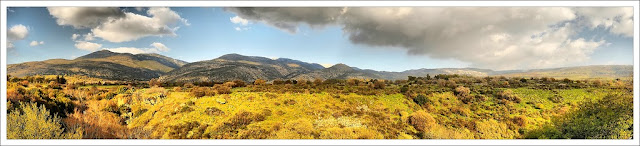
The wide-ranging discussion sought to apply theories of conflict resolution and environmental peacemaking to local conflict in the Middle East. Touching on conservation, conflict resolution, local history, geography, ecology, and diplomacy, the participants underscored the importance of restoration efforts, local environmental maintenance, and the pursuit of peace through environmental cooperation.
For more, watch these presentations on YouTube (in English; with Timestamps):
Event Part One:
0:15:50
“Conservation to Conflict Resolution: Understanding the Theory and Practice of Peace Parks”
Dr. Saleem Ali, Rubenstein School of Environment and Natural Resources, University of Vermont
1:36:28
“Peace Parks on Israel’s Borders: Lessons from South Sinai”
Dr. Dan Rabinowitz, Department of Sociology and Anthropology, Tel Aviv University
1:55:49
“The Jordan River Peace Park: Post-conflict environmental peacebuilding between Israel and Jordan”
Gidon Bromberg, Israeli Director, Friends of the Earth Middle East
Event Part Two:
0:01:12
“The Golan Heights – A critical habitat with global significance”
Dr. Tamar Ron, Ecologist, biodiversity conservation consultant
2:11:01
Session Response:
Valerie Brachya, Director, Environmental Policy Center Jerusalem Institute for Israel Studies
Photo: Golan Heights Panorama, Courtesy Flickr User Vad_Levin. -
Alec Crawford on Climate Change and Conflict in Africa and the Middle East
›January 14, 2010 // By Sajid Anwar“Climate change certainly does pose a risk to the world in terms of violent conflict, but there’s a lot of nuance to that argument and a lot of attention and care has to be put into making that case,” says Alec Crawford, project officer at the International Institute for Sustainable Development (IISD) in this video interview with ECSP Director Geoff Dabelko.
According to Crawford, the argument that climate change will lead directly to violent conflict is overly simplistic, but climate could be one of conflict’s many drivers in both Africa and the Middle East. A recent IISD report discusses the potential security challenges of climate change and how to prevent them. -
An Island of Peace in a Sea of Conflict: The Jordan River Peace Park
›Saleem Ali filmed this video on his visit to the “peace island” between Jordan and Israel, which Friends of the Earth Middle East (FOEME) is working to convert into an international peace park.
FOEME co-Director Gidon Bromberg will be at the Wilson Center today to discuss the peace park and other FOEME water cooperation initiatives in more detail as a panelist participating in “Pathways to Peace: Stories of Environment, Health, and Conflict,” an event discussing field-based lessons for addressing environment, health, development, and conflict.
Video: Filmed by Saleem H. Ali (University of Vermont, editor of the MIT Press book Peace Parks: Conservation and Conflict Resolution) with commentary by Elizabeth Ya’ari (FOEME), January 2010. -
Weekly Reading
›In an Economist.com debate on population growth between John Seager of Population Connection and Michael Lind of the New America Foundation, Seager argues that rapid population growth is “the source of many of the world’s—especially the poor world’s—woes,” as it accelerates environmental degradation and “undermines both security and development.” On the other hand, Lind counters that “countries are not poor because they have too many people,” and asserts that “technology and increased efficiency have refuted what looks like imminent resource exhaustion.”
In Foreign Policy, David J. Rothkopf contends that actions to mitigate climate change—though necessary to avoid very serious consequences—could subsequently spur trade wars, destabilize petro-states, and exacerbate conflict over water and newly important mineral resources (including lithium).
The International Crisis Group (ICG) reports that “the exploitation of oil has contributed greatly to the deterioration of governance in Chad and to a succession of rebellions and political crises” since construction of the World Bank-financed Chad-Cameroon pipeline was completed in 2003. Chad must reform its management of oil resources in order to avoid further impoverishment and destabilization, ICG advises.
The Royal Society and the Institution of Mechanical Engineers (IME)—both based in the United Kingdom—released independent reports on geoengineering the climate. While calling reduction of greenhouse gas emissions “the safest and most predictable method of moderating climate change,” the Royal Society recommends that governments and international experts look into three techniques with the most potential: CO2 capture from ambient air, enhanced weathering, and land use and afforestation. The IME identified artificial trees, algae-coated buildings, and reflective buildings as the most promising alternatives. “Geo-engineering is no silver bullet, it just buys us time,” IME’s Tim Fox told the Guardian.
In “Securing America’s Future: Enhancing Our National Security by Reducing Oil Dependence and Environmental Damage,” the Center for American Progress (CAP) argues that unless the United States switches to other fuels, it “will become more invested in the volatile Middle East, more dependent on corrupt and unsavory regimes, and more involved with politically unstable countries. In fact, it may be forced to choose between maintaining an effective foreign policy or a consistent energy supply.”
The Chinese government is “drawing up plans to prohibit or restrict exports of rare earth metals that are produced only in China and play a vital role in cutting edge technology, from hybrid cars and catalytic converters, to superconductors, and precision-guided weapons,” The Telegraph relates. The move could send other countries scrambling to find replacement sources.
In studying the vulnerability of South Africa’s agricultural sector to climate change, the International Food Policy Research Institute finds that “the regions most vulnerable to climate change and variability also have a higher capacity to adapt to climate change…[and that] vulnerability to climate change and variability is intrinsically linked with social and economic development.” South African policymakers must “integrate adaptation measures into sustainable development strategies,” the group explains. -
Demography and Democracy in Iran
›August 12, 2009 // By Brian KleinPresident Mahmoud Ahmadinejad might have blamed sinister “foreign powers” for fomenting post-election civil unrest in Iran, but some analysts have fingered another culprit: demography. According to Farzaneh (Nazy) Roudi, program director for the Middle East and North Africa at the Population Reference Bureau, two phenomena “provide a backdrop for understanding Iran’s current instability.” First is the country’s youthful population age structure, or “youth bulge”; over 30 percent of Iranians are between the ages of 15 and 29, and 60 percent are under the age of 30. Second is Iran’s surprisingly comprehensive family planning program, which has empowered women to make their own reproductive choices and enter higher education en masse.

 Since 2001, FoEME’s


 President Mahmoud Ahmadinejad might have blamed sinister “

