• woodrow wilson center
  • ecsp

New Security Beat

Subscribe:
  • rss
  • mail-to
  • Who We Are
  • Topics
    • Population
    • Environment
    • Security
    • Health
    • Development
  • Columns
    • China Environment Forum
    • Choke Point
    • Dot-Mom
    • Friday Podcasts
    • Navigating the Poles
    • Reading Radar
  • Multimedia
    • Water Stories (Podcast Series)
    • Backdraft (Podcast Series)
    • Tracking the Energy Titans (Interactive)
  • Films
    • Water, Conflict, and Peacebuilding (Animated Short)
    • Paving the Way (Ethiopia)
    • Broken Landscape (India)
    • Scaling the Mountain (Nepal)
    • Healthy People, Healthy Environment (Tanzania)
  • Publications
  • Events
  • Contact Us

NewSecurityBeat

The blog of the Wilson Center's Environmental Change and Security Program
Showing posts from category India.
  • Hydro-Diplomacy Can Build Peace Over Shared Waters, But Needs More Support

    ›
    Guest Contributor  //  September 22, 2014  //  By Benjamin Pohl & Susanne Schmeier
    outflow

    From Ukraine and the Middle East to sub-Saharan Africa and East Asia, the world is engulfed in a series of significant international crises. But despite such urgent issues, it would be a grave mistake to forget about the structural foreign policy challenges – such as access to water – that could become the crises of the future.

    MORE
  • Overcoming Malnutrition Key to Maternal and Child Health Improvements, Says Dr. Ranu Dhillon

    ›
    Dot-Mom  //  Friday Podcasts  //  August 29, 2014  //  By Sarah Meyerhoff
    Ranu_small

    With less than 500 days until they expire, it’s almost certain that the Millennium Development Goals on child mortality and maternal health will be missed by many countries. Already, work on drafting the MDG successors has begun; but unless policymakers put nutrition at the center of maternal and child health systems, reducing global maternal and child mortality ratios by an appreciable amount will be difficult, says Dr. Ranu Dhillon in this week’s podcast.

    MORE
  • Proven and Promising Solutions to Strengthening Maternal Health Supply Chains

    ›
    Dot-Mom  //  Reading Radar  //  August 28, 2014  //  By Katrina Braxton

    supplychain-frontIn 2012, as part of the Every Women Every Child movement, 13 vital health commodities were identified by a UN panel that could save the lives of more than 6 million women and children over the course of five years. There are often significant cultural and behavioral barriers to these commodities reaching people in low- and middle-income countries, but physical logistics is also a major problem.

    MORE
  • The Intergenerational Cycle of Malnutrition: How Gender and Social Status Doom Many Mothers and Newborns

    ›
    Dot-Mom  //  From the Wilson Center  //  August 13, 2014  //  By Sarah Meyerhoff
    Infant Survival Unit in Indian Hospital

    When Dr. Ranu Dhillon stumbled upon baby Reena during a routine visit to a clinic in India, she was almost comatose and unable to get the care she needed. Dhillon traveled with Reena and her mother from hospital to hospital, but left again and again without finding treatment. [Video Below] 

    MORE
  • Don’t Forget About Governance: The Risk of Tunnel Vision in Chasing Resilience for Asia’s Cities

    ›
    Guest Contributor  //  July 28, 2014  //  By Jim Jarvie & Richard Friend
    jakarta_slum

    Asia is going through an unprecedented wave of urbanization. Secondary and tertiary cities are seeing the most rapid changes in land-use and ownership, social structures, and values as peri-urban and agricultural land become part of metropolitan cityscapes. All the while, climate change is making many of these fast-growing cities more vulnerable to disasters.

    MORE
  • India’s Faltering Energy Production, Damaged Water Resources Demand Modi’s Close Attention

    ›
    Choke Point  //  July 24, 2014  //  By Keith Schneider
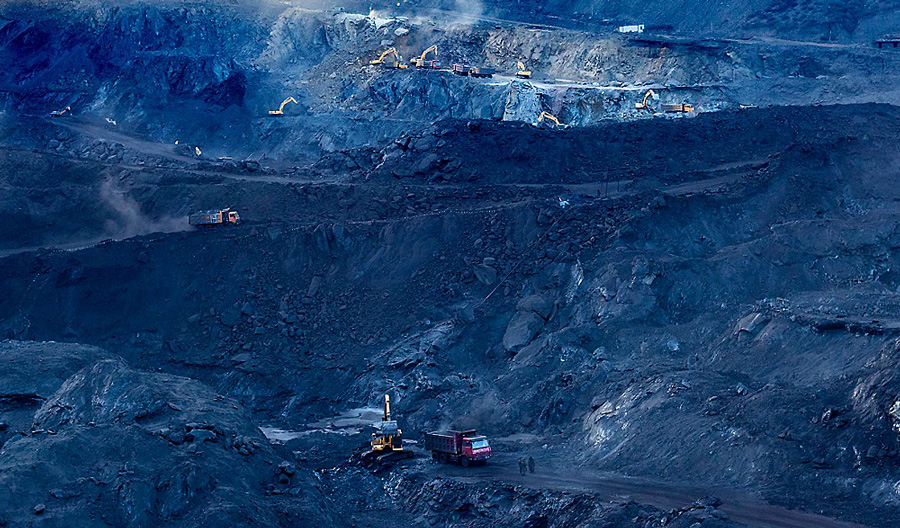
    AParker_India_Coal_MG_8267

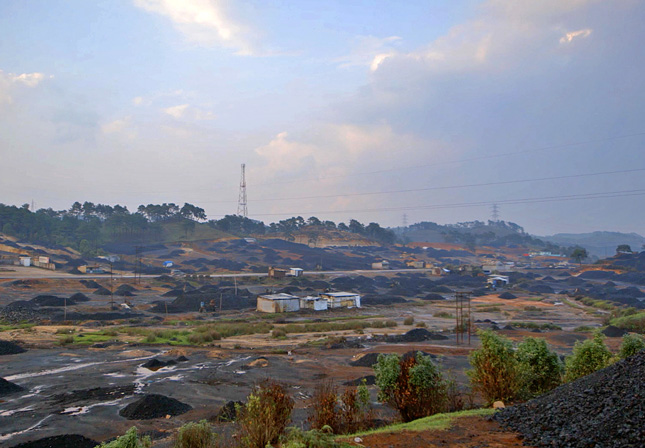
    India’s new prime minister swept into office in May on a message of aspiration and a reputation for action.

    During the nearly 13 years that Narendra Modi served as chief minister of Gujarat before becoming prime minister, his successes included drastically curtailing the number of hours that manufacturers in India’s premier industrial state went without electricity. The state’s transmission grid was strengthened and he promoted the development of 900 megawatts of solar generating capacity (equivalent to a large nuclear plant).

    MORE
  • Climate Change Will Test Water-Sharing Agreements

    ›
    July 15, 2014  //  By Thomas Curran
    red-deer-river

    Many existing water-sharing treaties should be re-assessed in the context of climate change, write Shlomi Dinar, David Katz, Lucia De Stefano, and Brian Blakespoor in a World Bank working paper.

    MORE
  • The New World of Climate Suffering

    ›
    Beat on the Ground  //  Guest Contributor  //  June 24, 2014  //  By Paul Wapner
    Nepal_farmer2

    To date, there have been two proposed responses to climate change: mitigation, aimed at stopping the buildup of greenhouse gases, and adaptation, focused on accommodating ourselves to a warmer world. There is a third option, however, that is increasingly relevant: suffering.

    MORE
Newer Posts   Older Posts
View full site

Join the Conversation

  • RSS
  • subscribe
  • facebook
  • G+
  • twitter
  • iTunes
  • podomatic
  • youtube
Tweets by NewSecurityBeat

Trending Stories

  • unfccclogo1
  • Pop at COP: Population and Family Planning at the UN Climate Negotiations

Featured Media

Backdraft Podcast

play Backdraft
Podcasts

More »

What You're Saying

  • Volunteers,At,The,Lagos,Food,Bank,Initiative,Outreach,To,Ikotun, Pan-African Response to COVID-19: New Forms of Environmental Peacebuilding Emerge
    Rashida Salifu: Great piece 👍🏾 Africa as a continent has suffered this unfortunate pandemic.But it has also...
  • A desert road near Kuqa An Unholy Trinity: Xinjiang’s Unhealthy Relationship With Coal, Water, and the Quest for Development
    Ismail: It is more historically accurate to refer to Xinjiang as East Turkistan.
  • shutterstock_1779654803 Leverage COVID-19 Data Collection Networks for Environmental Peacebuilding
    Carsten Pran: Thanks for reading! It will be interesting to see how society adapts to droves of new information in...

What We’re Reading

  • Rising rates of food instability in Latin America threaten women and Venezuelan migrants
  • Treetop sensors help Indonesia eavesdrop on forests to cut logging
  • 'Seat at the table': Women's land rights seen as key to climate fight
  • A Surprise in Africa: Air Pollution Falls as Economies Rise
  • Himalayan glacier disaster highlights climate change risks
More »
  • woodrow
  • ecsp
  • RSS Feed
  • YouTube
  • Twitter
  • Facebook
  • Home
  • Who We Are
  • Publications
  • Events
  • Wilson Center
  • Contact Us
  • Print Friendly Page

© Copyright 2007-2021. Environmental Change and Security Program.

Woodrow Wilson International Center for Scholars. All rights reserved.

Developed by Vico Rock Media

Environmental Change and Security Program

Woodrow Wilson International Center for Scholars

Ronald Reagan Building and International Trade Center

  • One Woodrow Wilson Plaza
  • 1300 Pennsylvania Ave., NW
  • Washington, DC 20004-3027

T 202-691-4000