• woodrow wilson center
  • ecsp

New Security Beat

Subscribe:
  • rss
  • mail-to
  • Who We Are
  • Topics
    • Population
    • Environment
    • Security
    • Health
    • Development
  • Columns
    • China Environment Forum
    • Choke Point
    • Dot-Mom
    • Friday Podcasts
    • Navigating the Poles
    • Reading Radar
  • Multimedia
    • Water Stories (Podcast Series)
    • Backdraft (Podcast Series)
    • Tracking the Energy Titans (Interactive)
  • Films
    • Water, Conflict, and Peacebuilding (Animated Short)
    • Paving the Way (Ethiopia)
    • Broken Landscape (India)
    • Scaling the Mountain (Nepal)
    • Healthy People, Healthy Environment (Tanzania)
  • Publications
  • Events
  • Contact Us

NewSecurityBeat

The blog of the Wilson Center's Environmental Change and Security Program
Showing posts from category India.

  • Dawn of the Smart City? Perspectives From New York, Ahmedabad, São Paulo, and Beijing (Report Launch)

    ›
    From the Wilson Center  //  June 19, 2014  //  By Schuyler Null
    Sao-Paulo-escalators

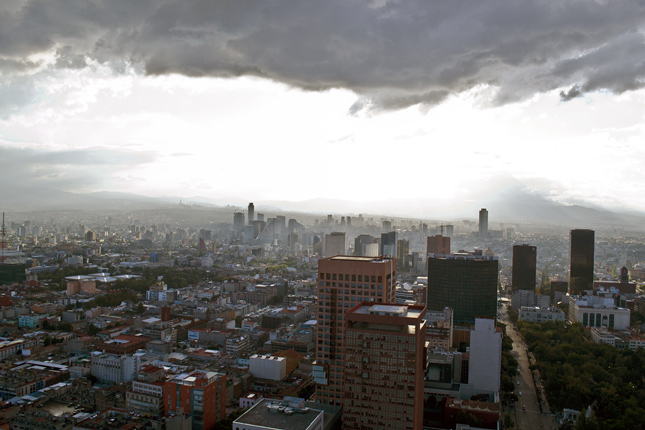
    Rapid growth and environmental change are creating new challenges for urban areas around the world. By 2050, as many as 7 out of 10 people on Earth will live in cities, with the vast majority of growth occurring in today’s developing countries. [Video Below]

    MORE
  • Adil Najam: Pakistan’s Security Problems Distract From Climate Vulnerabilities

    ›
    Eye On  //  June 18, 2014  //  By Kate Diamond

    When Pakistan makes the news, more often than not it’s for one of two things: violent extremism or drone strikes. Adil Najam, a Pakistan expert and a lead author for the UN’s Intergovernmental Panel on Climate Change, says those headlines distract from a far more pressing security concern for the country: climate change.

    MORE
  • Russell Sticklor, CGIAR

    Can Underground Water Storage Mitigate Cross-Basin Tensions?

    ›
    May 16, 2014  //  By Wilson Center Staff
    groundwater_storage

    The original version of this article, by Russell Sticklor, appeared on CGIAR’s Agriculture and Ecosystems Blog.

    As the earth’s surface grows hotter and precipitation becomes more variable due to the impacts of climate change, the world is in need of solutions to more effectively store water supplies. One potential solution is deceptively simple: store water in aquifers below the ground.

    MORE
  • Violent Straw Men? Sex Ratios, Conflict, and a Methodological Disconnect

    ›
    Guest Contributor  //  April 23, 2014  //  By Valerie M. Hudson
    China_sex_ratios

    The emerging subfield of “security demographics” is interested in how demographic trends, such as youth bulges, high or low fertility rates, and sex ratios affect the security and stability of nation-states and regions. In our research, Andrea Den Boer and I have attempted to show that abnormally high sex ratios – situations where there are significantly more men than women – have been a security concern in the past and may affect security and stability in the future.

    MORE
  • Alfred Omenya: Gender-Based Violence Must Be Made More Visible

    ›
    Friday Podcasts  //  April 18, 2014  //  By Moses Jackson
    omenya_small

    Reducing gender-based violence requires turning our attention to what we normally do not see, says Alfred Omenya of Eco-Build Africa. In this week’s podcast, Omenya, who collaborated on a four-year study investigating all types of violence in four cities around the world, explains how certain forms of gender-based violence are “invisible” in conventional research and policy.

    MORE
  • Water Wars? Think Again: Conflict Over Freshwater Structural Rather Than Strategic

    ›
    Guest Contributor  //  April 15, 2014  //  By Cameron Harrington
    Pakistan-flooding

    The global water wars are almost upon us!

    At least that’s how it seems to many. The signs are troubling: Egypt and Ethiopia have recently increased their aggressive posture and rhetoric over the construction of the Great Ethiopian Renaissance Dam in the headwaters of the Blue Nile, Egypt’s major artery since antiquity. India continues to build new dams that are seen by its rival Pakistan as a threat to its “water interests” and thus its national security. Turkey, from its dominant position upstream, has been diverting the Tigris and Euphrates rivers and increasing water stress in the already-volatile states of Iraq and Syria.

    MORE
  • “The Himalayas Are Pushing Back”: Keith Schneider on Why India Needs to Forge Its Own Path to Development

    ›
    Choke Point  //  Friday Podcasts  //  April 11, 2014  //  By Donald Borenstein
    Keith_small

    India has the second largest – soon to be largest – population of any nation on the planet and boasts a rapidly developing economy, yet it consumes only a fraction of the energy of China or the United States. Much like China before it, the Indian government has proposed an ambitious system of hydroelectric projects in an attempt to catch up.

    MORE
  • Uttarakhand’s Furious Himalayan Flood Could Bury India’s Hydropower Program

    ›
    Choke Point  //  April 2, 2014  //  By Keith Schneider
    uttarakhand_flood1

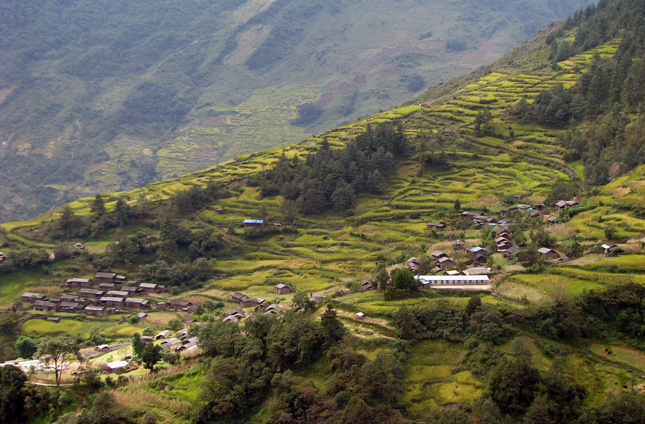
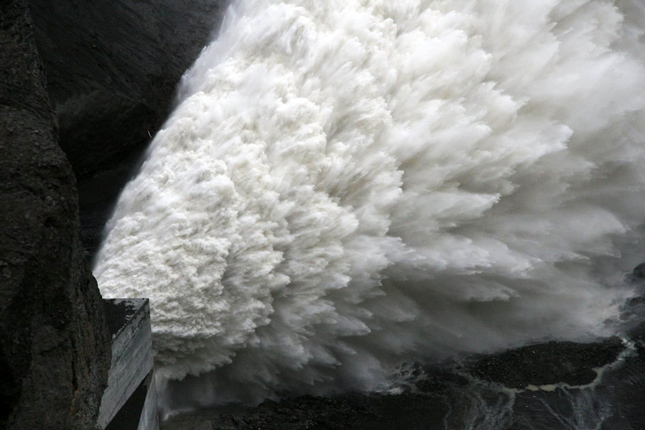
    Despite the inherent risks, India is determined to join China, Bhutan, Nepal, and Pakistan in turning the Himalayas into the Saudi Arabia of hydroelectric energy. Almost 300 big hydropower projects are under construction or proposed for India’s five Himalayan states, according to the Central Electric Authority.

    MORE
Newer Posts   Older Posts
View full site

Join the Conversation

  • RSS
  • subscribe
  • facebook
  • G+
  • twitter
  • iTunes
  • podomatic
  • youtube
Tweets by NewSecurityBeat

Trending Stories

  • unfccclogo1
  • Pop at COP: Population and Family Planning at the UN Climate Negotiations

Featured Media

Backdraft Podcast

play Backdraft
Podcasts

More »

What You're Saying

  • Volunteers,At,The,Lagos,Food,Bank,Initiative,Outreach,To,Ikotun, Pan-African Response to COVID-19: New Forms of Environmental Peacebuilding Emerge
    Rashida Salifu: Great piece 👍🏾 Africa as a continent has suffered this unfortunate pandemic.But it has also...
  • A desert road near Kuqa An Unholy Trinity: Xinjiang’s Unhealthy Relationship With Coal, Water, and the Quest for Development
    Ismail: It is more historically accurate to refer to Xinjiang as East Turkistan.
  • shutterstock_1779654803 Leverage COVID-19 Data Collection Networks for Environmental Peacebuilding
    Carsten Pran: Thanks for reading! It will be interesting to see how society adapts to droves of new information in...

What We’re Reading

  • Rising rates of food instability in Latin America threaten women and Venezuelan migrants
  • Treetop sensors help Indonesia eavesdrop on forests to cut logging
  • 'Seat at the table': Women's land rights seen as key to climate fight
  • A Surprise in Africa: Air Pollution Falls as Economies Rise
  • Himalayan glacier disaster highlights climate change risks
More »
  • woodrow
  • ecsp
  • RSS Feed
  • YouTube
  • Twitter
  • Facebook
  • Home
  • Who We Are
  • Publications
  • Events
  • Wilson Center
  • Contact Us
  • Print Friendly Page

© Copyright 2007-2021. Environmental Change and Security Program.

Woodrow Wilson International Center for Scholars. All rights reserved.

Developed by Vico Rock Media

Environmental Change and Security Program

Woodrow Wilson International Center for Scholars

Ronald Reagan Building and International Trade Center

  • One Woodrow Wilson Plaza
  • 1300 Pennsylvania Ave., NW
  • Washington, DC 20004-3027

T 202-691-4000