• woodrow wilson center
  • ecsp

New Security Beat

Subscribe:
  • rss
  • mail-to
  • Who We Are
  • Topics
    • Population
    • Environment
    • Security
    • Health
    • Development
  • Columns
    • China Environment Forum
    • Choke Point
    • Dot-Mom
    • Friday Podcasts
    • Navigating the Poles
    • Reading Radar
  • Multimedia
    • Water Stories (Podcast Series)
    • Backdraft (Podcast Series)
    • Tracking the Energy Titans (Interactive)
  • Films
    • Water, Conflict, and Peacebuilding (Animated Short)
    • Paving the Way (Ethiopia)
    • Broken Landscape (India)
    • Scaling the Mountain (Nepal)
    • Healthy People, Healthy Environment (Tanzania)
  • Publications
  • Events
  • Contact Us

NewSecurityBeat

The blog of the Wilson Center's Environmental Change and Security Program
Showing posts from category China.
  • Afghanistan’s Mineral Potential, Sustainability of Development Efforts Crucial Questions, Says Wilson Center’s Michael Kugelman

    ›
    From the Wilson Center  //  January 14, 2013  //  By Schuyler Null

    Rich, untapped deposits of gold, iron, copper, lithium, and rare earth minerals have been known in Afghanistan for decades, but recently, extensive reports from the U.S. Department of Defense and U.S. Geological Survey have shed new light on their potential value.

    MORE
  • Water Scarcity, Agriculture, and Energy Are Focus of ‘Choke Point: China Part II’

    ›
    Choke Point  //  December 5, 2012  //  By Carolyn Lamere

    With the start of part two of Circle of Blue and the China Environment Forum’s Choke Point: China series, the focus has broadened from looking more narrowly at water scarcity and energy to including the effects of food security and pollution in China too.

    “From an environmental point of view,” said Circle of Blue Senior Editor Keith Schneider, the question is, “can a nation that big, operating at such a scale maintain its sustainability?”

    MORE
  • ‘The New York Times’ Highlights Converging Development Trends in Brazil’s Amazon

    ›
    On the Beat  //  November 27, 2012  //  By Kate Diamond

    The Amazon is home to some of the world’s most expansive rainforest – and, increasingly, some of Brazil’s fastest growing cities. Urbanization and deforestation are upending the traditional image of the Amazon, turning one of the world’s most biodiverse regions into an economic and demographic explosion, according to an in-depth article by Simon Romero in The New York Times.

    MORE
  • India’s Environmental Security Challenge: Water, Coal, Natural Gas, and Climate Change Fuel Friction

    ›
    November 23, 2012  //  By Michael Kugelman

    The original version of this article appeared in NATO Review.

    Few regions are more environmentally insecure than South Asia.

    The region faces rising sea levels and regularly experiences coastal flooding – of particular concern in a region with heavily populated and arable-land-rich coastal areas. Additionally, it is highly vulnerable to glacial melt. The Western Himalayas, which provide water supplies to much of South Asia, have experienced some of the most rapid melt in the world.

    MORE
  • Liang Jialin and Jiang Han, ChinaDialogue

    Overfishing Pushes 80 Percent of Chinese Fishermen Towards Bankruptcy

    ›
    November 9, 2012  //  By Wilson Center Staff

    The original version of this article, by Liang Jialin and Jiang Han, appeared in English on ChinaDialogue and in Chinese on Economic Information Daily.

    In mid-September, the fishing season got under way as usual in Ningbo, on China’s east coast, after the three-month season when fishing is forbidden. Over 2,000 steel-hulled boats headed out to sea. But, on board, there was little cause for optimism.

    MORE
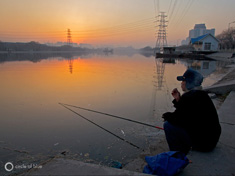
  • Choke Point China Part II: Food Supply, Fracking, and Water Scarcity Challenge a Juggernaut Economy

    ›
    China Environment Forum  //  Choke Point  //  October 25, 2012  //  By Keith Schneider

    The original version of this article, by Keith Schneider, appeared on Circle of Blue. Choke Point: China is a research and reporting initiative produced in partnership between Circle of Blue and the Wilson Center’s China Environment Forum.

    Where the wide, muddy waters of the Songhua River flow north from Jiamusu to the Russian border, just 150 kilometers (90 miles) distant, the whole of China’s largest treeless prairie sweeps to the horizon. This expanse of fertile grasslands endures the dark fright of cold Siberian winters and the raging winds of Mongolian summers. At night, in the scattered villages, the sky fills with stars so thick and bright that walking along unlit streets is easy.

    MORE
  • Who Are the Most Vulnerable to Ocean Acidification and Warming?

    ›
    Eye On  //  October 17, 2012  //  By Carolyn Lamere

    In 2011, a record 34 billion cubic tons of carbon dioxide were emitted from man-made sources. Half the emitted CO2 stays in the atmosphere, about a quarter is absorbed on land (as trees grow, for example), and the remainder is absorbed by the ocean. Unsurprisingly, this incredible amount of carbon dioxide significantly changes the ocean environment. Over time, increased absorption of carbon dioxide in the oceans has led to ocean acidification, and overall warming has also led to warming of ocean waters – both changes impact marine ecosystems and the people who rely on them.

    MORE
  • Russell Sticklor, Stimson Center

    The Race to Harness Himalayan Hydropower

    ›
    October 11, 2012  //  By Wilson Center Staff

    The original version of this article, by Russell Sticklor, appeared at the Stimson Center.

    Spend a day in Kathmandu, Nepal’s sprawling capital of four million people, and you’ll quickly notice what has long been a fact of life in this landlocked Himalayan country, and many other South Asian nations – no reliable electricity supply exists. Up to eight times a day, neighborhoods throughout the city suffer rolling power cuts due to load shedding, causing residents and businesses alike to either carry on in the darkness or rely on expensive, diesel-consuming generators to keep the lights on. Although the country’s civil war ended in 2006, carrying the promise of restored domestic stability and accelerated economic development, Nepal’s economy has remained hamstrung by an inconsistent energy supply, with only 40 percent of the population having access to electricity. This situation persists despite the fact that the country sits on top of a virtual goldmine – an estimated 80,000 megawatts (MW) of untapped hydroelectricity, of which it has harnessed a scant 700 MW.

    MORE
Newer Posts   Older Posts
View full site

Join the Conversation

  • RSS
  • subscribe
  • facebook
  • G+
  • twitter
  • iTunes
  • podomatic
  • youtube
Tweets by NewSecurityBeat

Trending Stories

  • unfccclogo1
  • Pop at COP: Population and Family Planning at the UN Climate Negotiations

Featured Media

Backdraft Podcast

play Backdraft
Podcasts

More »

What You're Saying

  • Volunteers,At,The,Lagos,Food,Bank,Initiative,Outreach,To,Ikotun, Pan-African Response to COVID-19: New Forms of Environmental Peacebuilding Emerge
    Rashida Salifu: Great piece 👍🏾 Africa as a continent has suffered this unfortunate pandemic.But it has also...
  • A desert road near Kuqa An Unholy Trinity: Xinjiang’s Unhealthy Relationship With Coal, Water, and the Quest for Development
    Ismail: It is more historically accurate to refer to Xinjiang as East Turkistan.
  • shutterstock_1779654803 Leverage COVID-19 Data Collection Networks for Environmental Peacebuilding
    Carsten Pran: Thanks for reading! It will be interesting to see how society adapts to droves of new information in...

What We’re Reading

  • Rising rates of food instability in Latin America threaten women and Venezuelan migrants
  • Treetop sensors help Indonesia eavesdrop on forests to cut logging
  • 'Seat at the table': Women's land rights seen as key to climate fight
  • A Surprise in Africa: Air Pollution Falls as Economies Rise
  • Himalayan glacier disaster highlights climate change risks
More »
  • woodrow
  • ecsp
  • RSS Feed
  • YouTube
  • Twitter
  • Facebook
  • Home
  • Who We Are
  • Publications
  • Events
  • Wilson Center
  • Contact Us
  • Print Friendly Page

© Copyright 2007-2021. Environmental Change and Security Program.

Woodrow Wilson International Center for Scholars. All rights reserved.

Developed by Vico Rock Media

Environmental Change and Security Program

Woodrow Wilson International Center for Scholars

Ronald Reagan Building and International Trade Center

  • One Woodrow Wilson Plaza
  • 1300 Pennsylvania Ave., NW
  • Washington, DC 20004-3027

T 202-691-4000