-
Infographic: Conquering China’s Sludge Mountains
›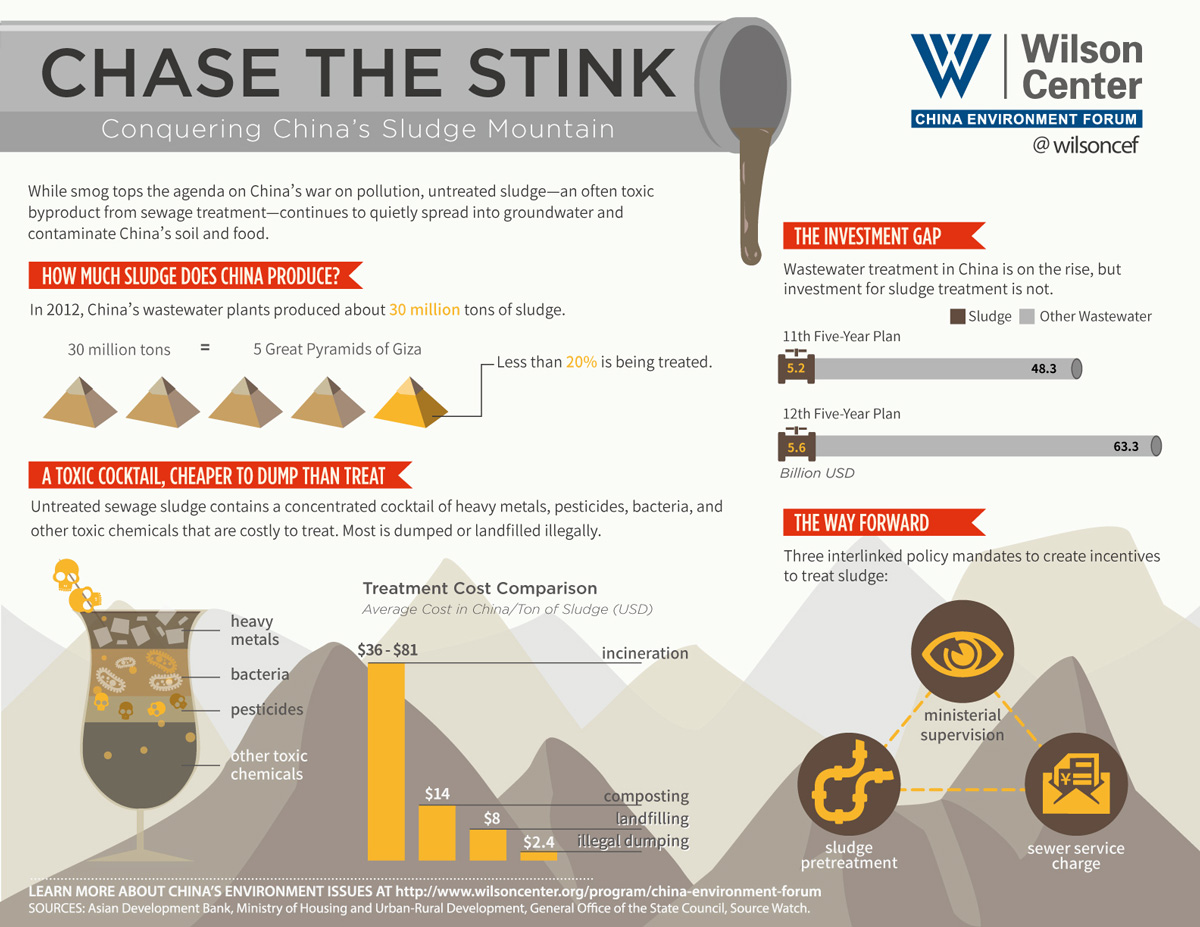
While Chinese officials make full frontal regulatory attacks on smog, untreated sludge, an often toxic byproduct from sewage treatment, continues to quietly spread into groundwater and contaminate soil and food.
-
High Stakes: Understanding Risk and Why This Year’s Climate Negotiations Are So Important
›
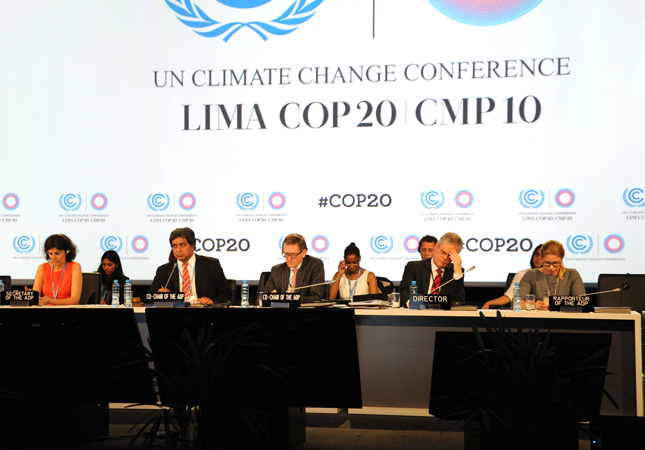
Expectations for the upcoming UN climate change summit in Paris are higher than they’ve been in years. Experts expect it will be the best chance to achieve a binding, universal agreement to limit carbon emissions. But the conference is still not getting the attention it deserves from policymakers and the public, given the stakes – and not just for the environment but for the international system writ large, said Nick Mabey, founding director and chief executive of the UK-based environmental NGO E3G at the Wilson Center on February 12.
-
China’s Water-Energy-Food Roadmap: A New Global Choke Point Report
›The creation of a water-energy research initiative in the landmark U.S.-China climate agreement last fall could be the beginning of a new and different path for Sino-U.S. collaboration.
-
The U.S. Energy Pivot: A New Era for Energy Security in Asia?
›The past decade has brought ground-shaking changes to global energy markets. The unconventional fuel boom has unexpectedly reduced U.S. dependence on oil imports, while in the Asia-Pacific region, energy-constrained nations are increasingly reliant on foreign sources to meet their soaring demand. With the U.S. slated to export liquid natural gas (LNG) to Asia as early as 2017, a new energy era has come.
-
World Water Day: A Wellspring for Sustainable Development
›This year’s World Water Day is taking on a broader theme than years past: sustainable development. The theme makes sense as two major international processes – the drafting of the Sustainable Development Goals to replace the Millennium Development Goals, and the most anticipated UN Climate Summit in years – are taking place in 2015. Decisions made over the next nine months will play a huge role in relationships between nations and global development priorities going forward.
-
Fiona Harvey, Ensia
Everything You’ve Always Wanted to Know About the UN Climate Talks But Were Afraid to Ask
›March 5, 2015 // By Wilson Center StaffClimate change negotiations seem to crawl along interminably at the pace of the glaciers they are meant to protect, with little perceptible progress as meeting follows meeting and conference follows lackluster conference. But this year we are seeing remarkable momentum building toward a historic conference in Paris in the closing days of 2015, by the end of which we will either have a new international agreement on cutting greenhouse gas emissions, or we will have seen the last of truly global efforts to strike a deal on saving our planet.
-
Simulating Transboundary Water Conflict in South Asia, and the Effect of Drought on Civil Conflict in Africa
› Natural resource management is a trust issue. There’s no better illustration of this than a scenario exercise. A new CNA Corporation report, Bone Dry and Flooding, details a simulation they ran for transboundary water management in the Indian sub-continent. Players of the game – nationals of China, Pakistan, India, and Bangladesh who had all previously worked in politics, policy, or development – were given a hypothetical five-year time span to manage shared water resources. -
Reporters Predict Contentious Year Ahead for Environment and Energy
›With the Obama Administration moving forward on emissions reductions, the deadline for drafting the Sustainable Development Agenda, and a highly anticipated global climate summit in Paris, 2015 promises to be a crucial year for climate policy. “In many ways, last year was the year of building momentum, and this is the year of getting the work done,” said Lisa Friedman, deputy editor of ClimateWire, at the Wilson Center on January 5. [Video Below]
Showing posts from category China.