Showing posts from category urbanization.
-
Youth, Aging, and Governance: A Political Demography Workshop at the Monterey Institute of International Studies
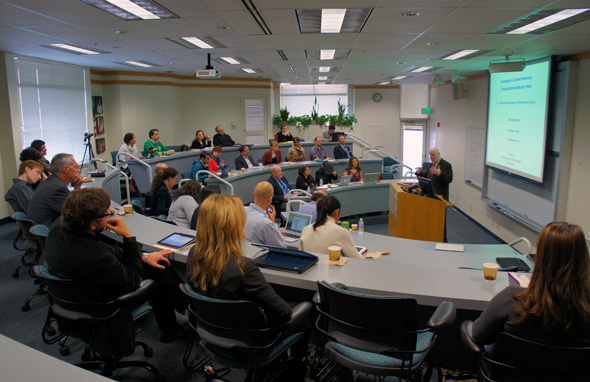
›April 5, 2012 // By Schuyler Null“Demography is sexy – it’s about nothing but sex and death (and migration),” said Rhodes College Professor Jennifer Sciubba at the Monterey Institute of International Studies during a workshop on March 30.
Jack Goldstone of James Madison University, Richard Cincotta of the Stimson Center, and ECSP’s Geoff Dabelko joined Sciubba in a workshop for students and faculty on key developments in political demography. Sciubba and Cincotta were contributors to Goldstone’s recently released edited volume, Demography: How Population Changes Are Reshaping International Security and National Politics.
“Demography is changing the entire economic and strategic divisions of the world,” Goldstone told the room. “We’ve had a 15 year increase in life expectancy just in the last half century,” and today, “90 percent of children under 10 are growing up in developing countries.”
Many countries, said Goldstone, are caught in a difficult race between growth and governance, with governments struggling to provide services and opportunity to their growing populations. This challenge is especially acute in cities, which for the first time in human history are home to the majority of all people.
At the same time, aging is a phenomenon that will affect many developed countries. In the United Sates, the baby boomers are becoming “the grayest generation,” Goldstone said, and similar imbalances between the number of working age people and their dependent elders will soon affect Western Europe, Japan, Korea, Russia, and others.
Re-Examining the Aging Narrative
Some have predicted this “graying of the great powers” will have disastrous consequences for many of the G8, as state pension costs blunt economic growth and innovation, military adventurousness, and global influence, but Jennifer Sciubba presented a case for why fears may be overblown.
When discussing the aging phenomenon in developing countries, many analysts focus too closely on the fiscal environment, argued Sciubba. This creates tunnel vision that ignores the potential coping mechanisms that states have at their disposal. Alliances, for example, are under-accounted for, she said, and closer European Union and even NATO integration could help ameliorate the individual issues faced by aging countries like Germany, France, and Italy.She also pointed to evidence that the developing world’s declining fertility may be have been “artificially depressed” by large proportions of women that delayed pregnancy starting in the 1990s. But now the average age of childbearing has stopped rising. The UN total fertility rate projections for industrialized states for the period 2005 to 2010 was revised upward from 1.35 children per woman in 2006 to 1.64 in 2008 and 1.71 in 2010.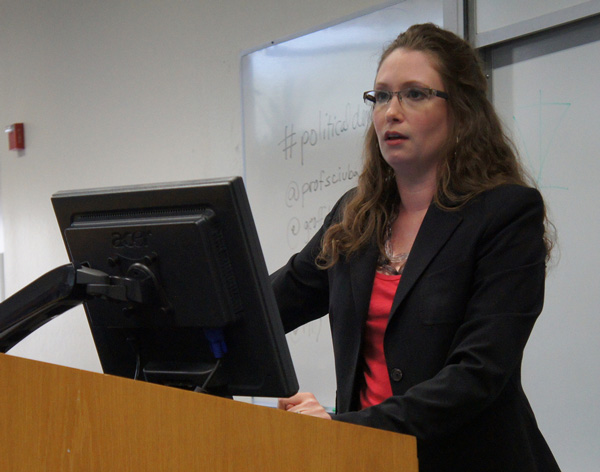
This brings into focus a key leverage point for many developed countries that is not often discussed in traditional conversations about aging: making the workplace friendlier for women. Offering money to couples to have children does not work, said Sciubba – women do not make a simple monetary cost-benefit analysis when they decide to have children. Much more likely is a calculation about the cost to their professional career. Therefore, instituting more liberal leave policies and making it harder for employers to fire both men and women for taking maternity or paternity leave is more likely to have a real impact on fertility rates.
The growing efficiency – and retirement age – of today’s workers can blunt the effect of older workforces on developed economies, said Sciubba. And the stability, strong institutions, and legal protections for innovation are all advantages that will continue to attract the best and the brightest from developing countries.
The competing phenomena of aging in the developed world and continued growth in the developing – which some have dubbed the “demographic divide” – will likely make immigration a very important, possibly friction-inducing issue in the coming decades. Goldstone pointed to the challenges Europe is having today coping with immigrants from North Africa and the Middle East as a possible harbinger of things to come.
Applying Demographic Theory: The Age Structural Maturity Model
While many regions will continue to experience population growth for the next two decades, including sub-Saharan Africa, the Middle East, and parts of East and South Asia and Latin America, the overall global trend is towards older populations. This is good news for democracy, according to Richard Cincotta.
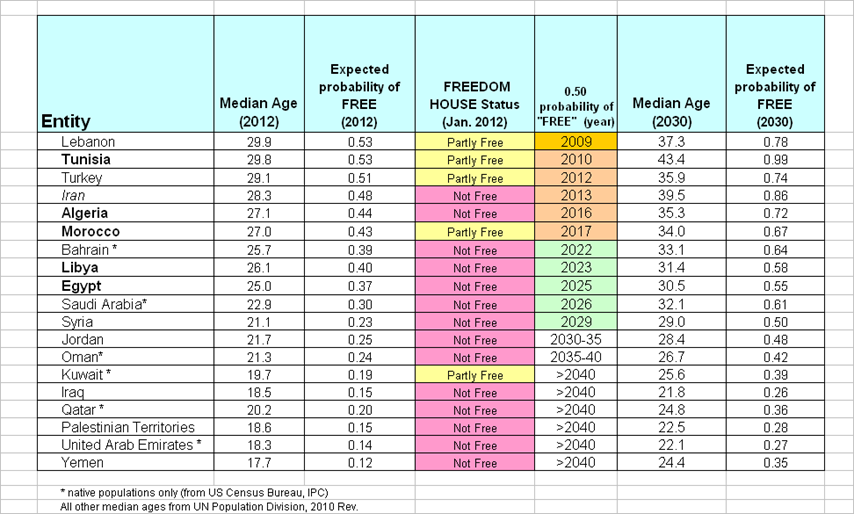
Cincotta, who consults with the National Intelligence Council on demographic issues, explained his “age structural maturity” model, which finds a historical correlation between the median age of countries and their Freedom House scores (an annual global assessments of political rights and civil liberties). Older populations tend to have more liberal regimes, while the opposite is true in younger populations. Combining this model with demographic projections, one can predict when it will become likely for democracy to emerge as a country ages. Before the Arab Spring – to some disbelief at the time – Cincotta used the model to predict that Tunisia would reach a 50/50 chance of achieving liberal democracy in 2011 (see more on this in his posts about Tunisia and the Arab Spring).
For those youthful countries that do achieve some level of liberal democracy, the model predicts they have a high likelihood of falling back towards authoritarianism (Mali is a tragic recent example).
This model, said Cincotta, can be a useful tool for analysts to challenge and add to their assessments. For example, it paints a bleak picture for democracy in Afghanistan (median age 16.6 years old), Iraq (18.5), or Yemen (17.7) and a comparatively rosier one for Tunisia (29.8), Libya (26.1), and Egypt (25.0). Some other observations may useful as well: no monarch has survived without some limits of power being introduced after countries reach a median age of 35, and military rulers too never pass that mark.
The age structural maturity model is, however, not perfect, Cincotta said. The most common outliers are autocracies (Freedom House score of “not free”) and partial democracies (“partly free”) with one-party regimes (China, North Korea), regimes led by charismatic “founder figures” (Cuba, Singapore), or those that where the regime is either supported or intimidated by a nearby autocratic state (Belarus).
Like all analyses, the model has its limitations, said Cincotta, but if used as a tool to generate “alternative hypotheses,” it can help predict dramatic political changes, like the Arab Spring. The research also suggests that the “third wave” of democratization is not over and will in fact continue to expand as countries with younger populations mature.
In conclusion, the panelists recommended the students find ways to include political demography in their work moving forward. “Consider it an alternative tool that may be useful,” said Geoff Dabelko. Policymakers today are overburdened with information and conventional analyses can sometimes become stuck in familiar lines of thought – demography can supplement these or shake them up by providing alternative narratives.
Sources: UN Population Division.
Photo Credit: Schuyler Null/Wilson Center; chart courtesy of Richard Cincotta. -
Taking Stock of Past and Current Demographic Trends
›March 29, 2012 // By Kayly OberECSP is at London’s 2012 Planet Under Pressure conference following all of the most pertinent population, health, and security events.
“Demography is a science of assumptions,” said Sarah Harper, a demographer at the University Oxford, during a panel at the Planet Under Pressure conference. Thirty years ago, she said, demographers believed the world would reach 24 billion by 2050, now the latest UN median projections predict 10 billion. That means a lot of progress has been made for families and development as a whole, but there are some obstacles yet.
Harper stressed that the development community should focus on parts of the world with stubbornly high fertility rates, particularly sub-Saharan Africa. If total fertility rates came down there by 2050, below the expected four children per woman, the region could be home to as many as a billion fewer people than current projections. The earlier we acknowledge this growth, the easier it will be to offer interventions like family planning and reproductive health to hedge it, she said.
Additionally, demographers need worry about important changes in modern population and environment dynamics.
As Harper notes in an interview with ECSP (video below):There has been so much hype around population growth that I think we’ve ignored the other characteristics of population…that it’s changing in its density – we’re all becoming more urban; it’s changing in its distribution – we’re becoming more mobile; and it’s also changing in its composition – the world is getting older.
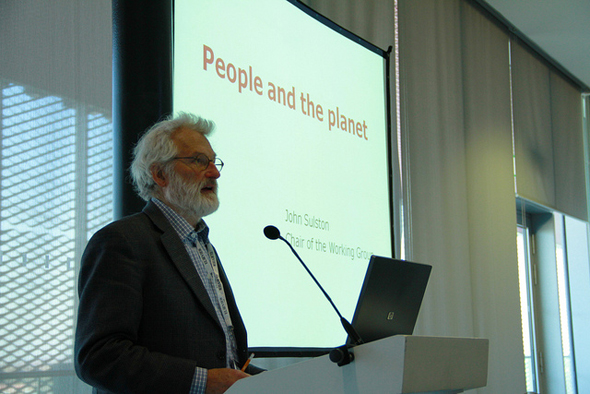
Sir John Sulston of the Royal Society agreed: population is a more-nuanced subject than many can digest. “Population has been much too ignored because it’s difficult,” he said.
I think it’s very clear that these changes are going to interact with the environment and be affected by environmental change but are also going to impact upon future environmental change.
Sulston urged us to look not just at the diversity of the world, but also the inequity. Today, there is “inequity in countries, between countries, and between generations.”
There is no silver bullet – the international community need to look at three components in concert if we want to make a difference, he said: first, bring down infant mortality; second, invest in family planning; and third, emphasize education for women.“It’s not about surviving, it’s about flourishing,” Sulston said.
When the ECSP delegation isn’t attending plenary and breakout sessions here at the conference, we’re manning our Wilson Center information booth. And over the last few days, we’ve had the pleasure of introducing our work to a number of new faces, including curious faculty, energetic students, and hopeful doctoral candidates. If you’re attending please feel free to stop by.
Expect more updates from East London, including more short video interviews, in the next three days as ECSP highlights the unique perspectives coming out of the Planet Under Pressure conference.
Pictures from the event are available on our Facebook and Flickr pages, and you can join the conversation on Twitter (#Planet2012) or watch the livestream here.
Photo Credit: Sean Peoples/Woodrow Wilson Center, -
Demography, Climate in the Spotlight at Planet Under Pressure
›March 27, 2012 // By Kayly OberLondon’s 2012 Planet Under Pressure conference, on all things global change – including climate, population, global risks, and food security – kicked off with a bang on March 26 and ECSP was there to cover it. We’ll be here throughout the week following all of the most pertinent population, health, and security events – we invite you to visit our booth if you happen to be in London, join the conversation on Twitter (#Planet2012), and/or watch the livestream.
During the opening plenaries, UK Scientific Advisor and all-around environmental all-star Sir John Beddington was the first to introduce population into the discussion.
Speaking on “The Planet in 2050” panel, Beddington immediately noted that really 2050 is too far out and instead we should focus on the next two decades. Within these 20 years the trajectory of greenhouse gas emissions and climate change will be determined by the extent and manner of urbanization and demographic changes, particularly in Africa.
“How are we going to generate an infrastructure to feed 500 million Africans in the next 13 years?” Beddington asked.
Beddington’s talk could be considered a rejoinder to his famous “perfect storm” analogy, outlined in The Guardian in 2009:Our food reserves are at a 50-year low, but by 2030 we need to be producing 50 percent more food. At the same time, we will need 50 percent more energy, and 30 percent more freshwater.
In a later session, “Securing Global Biodiversity,” Simon Stuart, chair of the species survival commission of the International Union for Conservation of Nature (IUCN), expanded on this “perfect storm” analogy.
There are dramatic problems out there, particularly with water and food, but energy also, and they are all intimately connected. You can’t think about dealing with one without considering the others. We must deal with all of these together.
He agreed that the global challenge of our day hinged on how human needs add pressures to the natural environment. Rising demand for energy, food, and freshwater not only influences climate change but also exerts unprecedented pressure on soil quality and biodiversity.
But although we’re impeded by major challenges, including “unsustainable economic models,” a lack of public support, and a massive need for investment in conservation, we have made some strides, Stuart said. The Convention on Biological Diversity’s strategic plan for biodiversity, established in 2010, sets 20 targets for biodiversity conservation by 2020. Stuart believes this is the beginning of acknowledging the urgency of addressing the threat to biodiversity.
Tim Coulson, professor of population biology at Imperial College London, compared the efficiency of either reducing fertility rates or per capita consumption to determine the best way to reduce humanity’s impact on the planet.
Coulson ran two simple simulations using India and the United States as case studies. In one model, he changed fertility rates by one percent per year for 50 years. In the other, he decreased per capita consumption by one percent per year for 50 years. What he found in both cases was that decreasing per capita consumption achieved the most rapid change in human impact on the environment. Nevertheless, he acknowledged that a longer-term course of action of declining fertility rates was needed to keep impact stable.
Readers beware, however – this type of experiment is an incredibly simplified exercise in the intersection of people and the environment. A more varied set of scenarios would produce more useful results. As Beddington mentioned, populations in sub-Saharan Africa have both the highest growth rates and the most direct impact on the environment due to their higher reliance on natural resources for livelihoods.
And, perhaps most importantly, as one commentator noted, these scenarios do not take into account cost factors. For instance, in order to reduce greenhouse gas emissions through more energy efficient buildings and transport, the United States would need to invest $1.1 trillion through 2030. Alternatively, the cost to provide for the 215 million women in developing countries who want to avoid pregnancy but are not using an effective means of contraception is estimated at $3.6 billion. Using the “wedge” climate model, meeting unmet family planning needs would be equivalent to the amount of greenhouse gas emissions saved by converting entirely to electric vehicles – at a fraction (about five percent) of the cost.
Stay tuned for more updates from ECSP at the Planet Under Pressure Conference. We’ll also be posting pictures from the conference to our Facebook and Flickr pages.
Video Credit: “Welcome to the Anthropocene,” commissioned by the Planet Under Pressure Conference. -
PBS ‘NewsHour’ and Pulitzer Center Examine Water Shortage and Health Issues in Ghana and Nigeria
›The PBS NewsHour continued its collaboration with the Pulitzer Center on Crisis Reporting on international reporting last week with an episode on water infrastructure in Ghana and Nigeria. The coverage is especially apropos on World Water Day.
Correspondent Steve Sapienza spoke to reporters in Ghana and Nigeria to highlight long-running access and sanitation issues in both countries caused by poor infrastructure that has not kept up with growth.
Ameto Akpe is a local reporter for Nigeria’s BusinessDay, where her stories “target the contradiction of a country with immense oil wealth and great water resources that are not reaching their citizens.” In the city of Makurdi, capital of the north-central Benue State, she reports on the hundreds of thousands of people who rely on either high-priced water delivery or untreated water drawn straight from the Benue River.
“The previous attempt to build a water treatment plant ended in scandal in 2008,” says Sapienza, “with an unfinished treatment facility and city officials unable to account for $6 million.”
“Unfortunately, the waterworks is only half of the solution to Makurdi’s water problem,” writes Akpe on the Pulitzer Center. “The other half is a system of pipes to deliver the water to the people – and that project is just a twinkle in the eye of a handful of contractors and bureaucrats.”
In Ghana, metro TV reporter Samuel Agyemang explains similar access and sanitation issues in the capitol of Accra and its suburb of Teshie, where some residents have waited decades for piped water, despite substantial foreign investments.
The Pulitzer Center’s Peter Sawyer explains in a companion piece that “the population of Accra has grown enormously in the past several decades. But the water supply system has not grown with it.” As a result, the Ghana Water Company is constantly playing catch-up to provide water to communities, many of whom do not understand how to demand accountability from their officials, says Agyemang.
According to UN estimates, Ghana’s population has increased by more than 10 million people since 1990. Nigeria is one of the fastest growing countries in the world, with 158 million people currently and the UN medium projection estimating a possible 389 million by mid-century.
Reporter Ameto Akpe will be speaking about Nigeria’s water and sanitation problems at an upcoming all-day event on Nigeria at the Wilson Center, scheduled for April 25.
Sources: PBS NewsHour, Pulitzer Center for Crisis Reporting, UN Population Division. -
USAID’s New Climate Strategy Outlines Adaptation, Mitigation Priorities, Places Heavy Emphasis on Integration
›February 29, 2012 // By Kathleen MogelgaardIn January, the U.S. Agency for International Development released its long-awaited climate change strategy. Climate Change & Development: Clean Resilient Growth provides a blueprint for addressing climate change through development assistance programs and operations. In addition to objectives around mitigation and adaptation, the strategy also outlines a third objective: improving overall operational integration.
The five-year strategy has a clear, succinct goal: “to enable countries to accelerate their transition to climate-resilient low emission sustainable economic development.” Developed by a USAID task force with input from multiple U.S. agencies and NGOs, the document paints a picture of the threats climate change poses for development – calling it “among the greatest global challenges of our generation” – and commits the agency to addressing both the causes of climate change and the impacts it will have on communities in countries around the world.
These statements are noteworthy in a fiscal climate that has put development assistance under renewed scrutiny and in a political environment where progress on climate change legislation seems unlikely.
Not Just Challenges, But Opportunities
To make the case for prioritizing action on climate change, the strategy cites climate change’s likely impact on agricultural productivity and fisheries, which will threaten USAID’s food security goals. It also illustrates the ways in which climate change could exacerbate humanitarian crises and notes work done by the U.S. military and intelligence community in identifying climate change as a “threat multiplier” (or “accelerant of instability” as the Quadrennial Defense Review puts it) with implications for national security.
Targeted efforts to address climate change, though, could consolidate development gains and result in technology “leap-frogging” that will support broader development goals. And, noting that aggregate emissions from developing countries are now larger than those from developed countries, the strategy asserts that assisting the development and deployment of clean technologies “greatly expands opportunities to export U.S. technology and creates ‘green jobs.’”
In addition to providing a rationale for action, the strategy provides new insights on how USAID will prioritize its efforts on climate change mitigation and adaptation. It provides a clear directive for the integration of climate change into the agency’s broader development work in areas such as food security, good governance, and global health– a strong and encouraging signal for those interested in cross-sectoral planning and programs.
Priorities Outlined, Tough Choices Ahead
President Obama’s Global Climate Change Initiative, revealed in 2010, focuses efforts around three pillars: clean energy, sustainable landscapes, and adaptation. USAID’s climate strategy fleshes out these three areas, identifying “intermediate results” and indicators of success – such as the development of Low Emission Development Strategies in 20 partner countries, greenhouse gas sequestration through improved ecosystem management, and increasing the number of institutions capable of adaptation planning and response.
In laying out ambitious objectives, however, the authors of the strategy acknowledge constrained fiscal realities. The strategy stops short of identifying an ideal budget to support the activities it describes, though it does refer to the U.S. pledge to join other developed countries in providing $30 billion in “fast start financing” in the period of 2010 to 2012 and, for those USAID country missions that will be receiving adaptation and mitigation funding, establishes “floors” of $3 million and $5 million, respectively.
The final section of the strategy lists over thirty countries and regions that have already been prioritized for programs, including Bangladesh, India, Kenya, Malawi, and Peru. But “we are unable to work in every country at risk from climate change impacts or with the potential for low carbon sustainable growth,” the strategy asserts. An annex includes selection criteria to guide further funding decisions, including emission reduction potential, high exposure to physical climate change impacts, a suitable enabling environment, coordination with other donors, and diplomatic and geographic considerations.
“Integration” Central to Strategy
The concept of integration figures prominently throughout the 27-page document. For those of us working in the large and growing space where the global challenges of climate change, food security, health, livelihoods, and governance overlap, this attention is heartening. While it may sometimes seem simply fashionable to pay lip service to the idea of “breaking out of stovepipes,” the strategy identifies concrete ways to incentivize integration.
“Integration of climate change into USAID’s development portfolio will not happen organically,” the strategy says. “Rather, it requires leadership, knowledge and incentives to encourage agency employees to seek innovative ways to integrate climate change into programs with other goals and to become more flexible in use of funding streams and administrative processes.”
To this end, USAID plans to launch a group of pilot activities. USAID missions must submit pilot program proposals, and selected programs will emphasize integration of top priorities within the agency’s development portfolio (including Feed the Future and the Global Health Initiative). Among other criteria, pilots must demonstrate buy-in from multiple levels of leadership, and will be selected based on their potential to generate integration lessons and tools over the next several years.
This kind of integration – the blending of key priorities from multiple sectors, the value of documented lessons and tools, the important role of champions in fostering an enabling environment – mirrors work carried out by USAID’s own population, health, and environment (PHE) portfolio. To date, USAID’s PHE programs have not been designed to address climate challenges specifically, and perhaps not surprisingly they aren’t named specifically in the strategy. But those preparing and evaluating integration pilot proposals may gain useful insights on cross-sectoral integration from a closer look at the accumulated knowledge of more than 10 years of PHE experience.
Population Dynamics Recognized, But Opportunities Not Considered
Though not a focus of the strategy, population growth is acknowledged as a stressor – alongside unplanned urbanization, environmental degradation, resource depletion, and poverty – that exacerbates growing challenges in disaster risk reduction and efforts to secure a safe and sufficient water supply.
Research has shown that different global population growth scenarios will have significant implications for emissions growth. New analysis indicates that the fastest growing populations are among the most vulnerable to climate change and that in these areas, there is frequently high unmet need for family planning. And we have also clearly seen that in many parts of the world, women’s health and well-being are increasingly intertwined with the effects of changing climate and access to reproductive health services.
In its limited mention of population as a challenge, however, the strategy misses the chance to identify it also as an opportunity. Addressing the linked challenges of population growth and climate change offers an opportunity to recommit the resources required to assist of the hundreds of millions of women around the world with ongoing unmet need for family planning.
The strategy’s emphasis on integration would seem to be an open door to such opportunities.
Integrated, cross-sectoral collaboration that truly fosters a transition to climate-resilient, low-emission sustainable economic development will acknowledge both the challenge presented by rapid population growth and the opportunities that can emerge from expanding family planning access to women worldwide. But for this to happen, cross-sectoral communication will need to become more commonplace. Demographers and reproductive health specialists will need to engage in dialogues on climate change, and climate specialists will need both opportunities and incentives to listen. USAID’s new climate change integration pilots could provide a new platform for this rare but powerful cross-sectoral action.
Kathleen Mogelgaard is a writer and analyst on population and the environment, and a consultant for the Environmental Change and Security Program.
Sources: FastStartFinance.org, International Energy Agency, Maplecroft, Population Action International, The White House, U.S. Department of Defense, USAID.
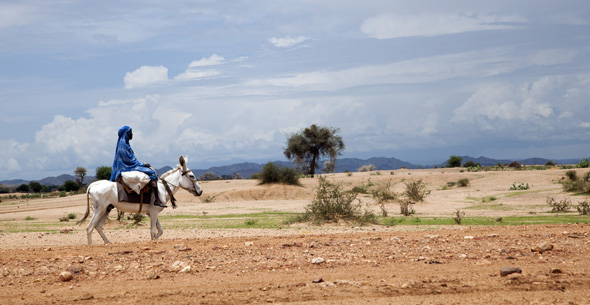
Photo Credit: “Displaced Darfuris Farm in Rainy Season,” courtesy of United Nations Photo. -
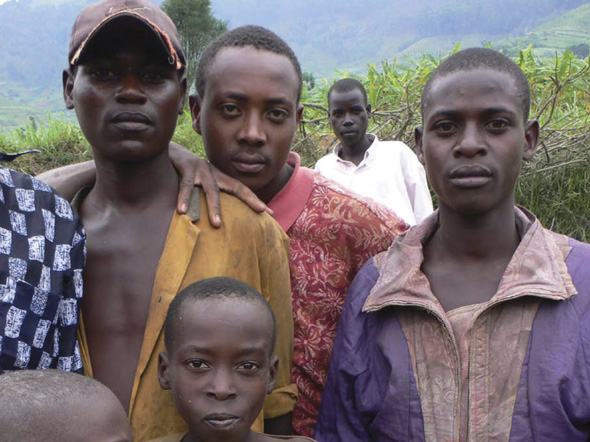
Stuck: Rwandan Youth and the Struggle for Adulthood (Book Preview)
›Several years ago, I wrote that the central irony concerning Africa’s urban youth was that “they are a demographic majority that sees itself as an outcast minority.” Since that time, field research with rural and urban youth in war and postwar contexts within and beyond Africa has led me to revise this assertion. The irony appears to apply to most developing country youth regardless of their location.
-
P.H. Liotta, Salve Regina University
The Real Population Bomb: Megacities, Global Security, and the Map of the Future (Book Preview)
›February 8, 2012 // By Wilson Center StaffThere was a time when the city was the dominant political identity. Centuries and even millennia ago, the most advanced societies in the Mediterranean, the Near East, and South America revolved around cities that were either states in themselves or were the locus of power for larger empires and kingdoms. The time of the city is coming again, though now in a considerably less benign way.From the introduction to The Real Population Bomb:There was a time when the city was the dominant political identity. Centuries and even millennia ago, the most advanced societies in the Mediterranean, the Near East, and South America revolved around cities that were either states in themselves or were the locus of power for larger empires and kingdoms. The time of the city is coming again, though now in a considerably less benign way.
This book is about where and how geopolitics will play out in the twenty-first century. Cumulatively it represents two decades of work from authors with seemingly dissimilar backgrounds: one is a poet, novelist, and translator; the other is a security analyst and expert in disaster response and management who has worked for two presidential administrations. Both were colleagues at the U.S. Naval War College in the early 2000s.
With the rise of massive urban centers in Africa and Asia, cities that will matter most in the twenty-first century are located in less-developed, struggling states. A number of these huge megalopolises – whether Lagos or Karachi, Dhaka or Kinshasa – reside in states often unable or simply unwilling to manage the challenges that their vast and growing urban populations pose. There are no signs that their governments will prove more capable in the future. These swarming, massive urban monsters will only continue to grow and should be of great concern to the rest of the world.
We have traveled widely and conducted fieldwork in places as disparate as the Altiplano of Bolivia; Caracas, Venezuela; Guayaquil, Ecuador; the autonomous Altai Republic in deep Siberia; and the massive slums of Egypt, India, Kenya, South Africa, and Brazil. What we share from this experience is the recognition that the world has changed before our eyes. Terms such as the “developed” and “developing” world – phrases that were always dangerous and loaded with false value – no longer have the relevance they seem to have had once. Concepts such as “first world” and “third world” are stubborn relics of Cold War thinking – just as our “mental maps” are grounded in the often difficult but known past. We must change our ways of seeing the world.
Traditionally there have been two general approaches to understanding societies and states. One is the humanitarian or ecological perspective in which the focus is on society – how people live and are affected by war, pollution, and economic globalization. The other is a realist perspective in which the focus is on the economic, political, and military relations among major powers such as the European Union, the United States, China, and Russia.
What these traditional approaches underemphasize is the overlap and natural alignment between them. To understand the map of the future, we need to critically appreciate how astonishing population growth in cities – particularly fast-growing megalopolises in weak or failing states in Africa, the Middle East, and Asia – is impacting ecology and ecosystems, human security, and the national security of Western states, as well as allies and trading partners.
For both better and worse, globalization and urban population growth have changed political and economic dynamics in ways that previous conceptions of how the world works cannot do justice. In this book we examine how developments below the nation-state level – at the municipal level – affect how we must see the world of the future. While this work is anything but a travelogue, we do visit some of the most alarming locations on the earth. Often these places have been viewed in impressionistic terms, as distant locations where “others” live – with whom “we” have little interaction. But we are far more connected than we think; whether Nigeria or Pakistan, Bangladesh or Egypt, their future is also ours. The odds seem stacked against those who live there. In the dense, overgrown neighborhoods and shantytowns of Lagos, Kinshasa, Cairo, Karachi, Lahore, or Dhaka, government authorities have failed to provide infrastructure and public services. We need urgent, collective, and innovative actions to help critical megacities weather the gathering storm.
But there is hope and strength. Though time is running short, solutions are still possible. In the end, this book is about the power and resilience of the human spirit.
P. H. Liotta’s latest book is The Real Population Bomb: Megacities, Global Security, and the Map of the Future, with James F. Miskel. As a member of the United Nations Intergovernmental Panel on Climate Change UN’s IPCC, he shared the 2007 Nobel Peace Prize.
Photo Credit: “Urban View: the Republic of Korea’s Second Largest City,” courtesy of United Nations Photo. -
Water and Population: Limits to Growth?
›February 3, 2012 // By Laurie MazurWater – essential, finite, and increasingly scarce – has been dubbed “the new oil.” Experts debate whether human societies are approaching “peak water,” beyond which lies a bleak future of diminishing supplies and soaring demand. Others observe that, for many, the water crisis has already arrived.