• woodrow wilson center
  • ecsp

New Security Beat

Subscribe:
  • rss
  • mail-to
  • Who We Are
  • Topics
    • Population
    • Environment
    • Security
    • Health
    • Development
  • Columns
    • China Environment Forum
    • Choke Point
    • Dot-Mom
    • Friday Podcasts
    • Navigating the Poles
    • Reading Radar
  • Multimedia
    • Water Stories (Podcast Series)
    • Backdraft (Podcast Series)
    • Tracking the Energy Titans (Interactive)
  • Films
    • Water, Conflict, and Peacebuilding (Animated Short)
    • Paving the Way (Ethiopia)
    • Broken Landscape (India)
    • Scaling the Mountain (Nepal)
    • Healthy People, Healthy Environment (Tanzania)
  • Publications
  • Events
  • Contact Us

NewSecurityBeat

The blog of the Wilson Center's Environmental Change and Security Program
Showing posts from category natural resources.
  • Africa’s Demography, Environment, Security Challenges Entwined, Says Roger-Mark De Souza at Africa Center for Strategic Studies

    ›
    Eye On  //  October 3, 2013  //  By Donald Borenstein

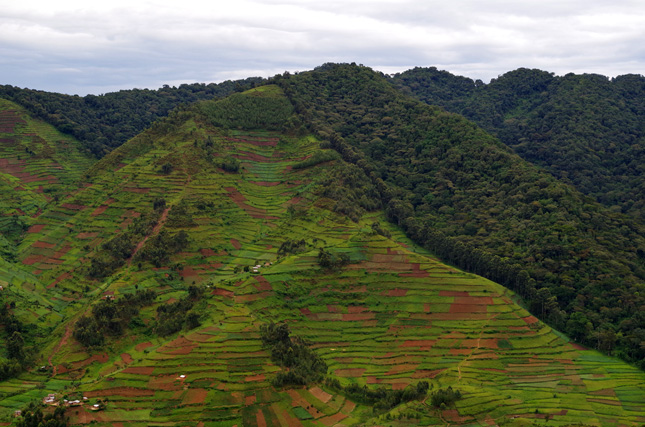
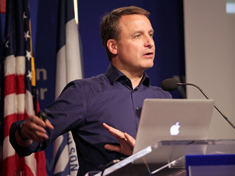
    Sub-Saharan Africa is not only the fastest growing region of the world demographically but is also one of the most vulnerable to climate changes, according to many measures, and already facing natural resource scarcity in many areas. These factors combine with existing development challenges to create security threats that African governments and the United States should be concerned with, says ECSP Director Roger-Mark De Souza in a presentation for the Africa Center for Strategic Studies’ introductory course on demography and the environment at the National Defense University.

    MORE
  • ECC Platform

    Data for Peace: Inventory of Shared Waters in Western Asia

    ›
    October 1, 2013  //  By Wilson Center Staff
    Shared-Waters-Western-Asia

    The original version of this article appeared on the Environment, Conflict, and Cooperation (ECC) Platform.

    The Environment, Conflict, and Cooperation team talked to Eileen Hofstetter from the Swiss Agency for Development and Cooperation. She is co-author of the Inventory of Shared Water Resources in Western Asia released at this year’s World Water Week in Stockholm. The Inventory was prepared by the United Nations Economic and Social Commission for Western Asia and the German Federal Institute for Geosciences and Natural Resources.

    MORE
  • BALANCED Project Final Survey Results in Tanzania and Philippines

    ›
    Reading Radar  //  September 30, 2013  //  By Donald Borenstein

    The BALANCED Project just completed a five year run of supporting population, health, and environment (PHE) projects in South Asia and East Africa,  and recent survey results indicate that the project has helped to increase access to family planning and cultivate more environmental awareness in several ecologically vulnerable areas.

    BALANCE-tanzinia-reportThe BALANCED initiative in Tanzania’s Saadani National Park, “the only terrestrial park in the country with a contiguous marine area,” released the results of a 2012 progress survey on its efforts to create community champions for sustainable natural resource management and family planning awareness. Compared to the last survey in 2009, they found increased family planning awareness, higher contraceptive distribution and usage, and improved discussion and acceptance of contraceptive use from male partners. BALANCED-trained community-based distributors provided contraception to “31 percent of all pill users and 21 percent of all condom users.” Survey results also show a greater community awareness of the impact of individual and collective actions on the surrounding biosphere. The report calls for the continued training of community-based distributors and PHE “champions,” along with outreach to the private sector in order to ensure training and distribution can continue without the permanent presence of the BALANCED Project.

    MORE
  • Five Years of Population, Health, and Environment Programs: What Works and What’s Next?

    ›
    From the Wilson Center  //  September 26, 2013  //  By Laura Henson
    mahija_BALANCED

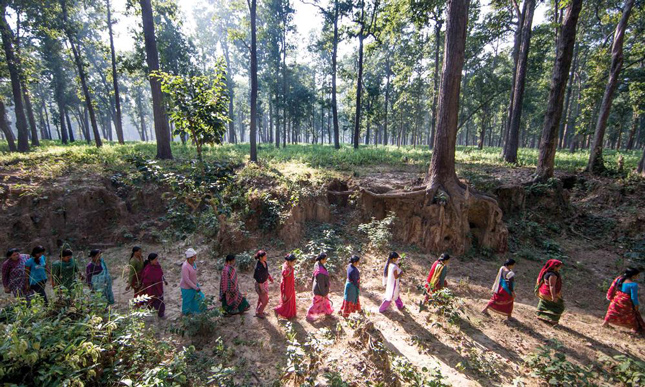
    More than 20 percent of the world’s population live in ecological hotspots, places rich in biodiversity but often lacking basic government services. Population, health, and environment – or PHE – programs address compounding stresses in these areas by helping to meet people’s needs for basic health services, including reproductive health care; promoting food security and poverty reduction; and teaching sustainable natural resource management. [Video Below]

    MORE
  • China’s Environmental Crisis Through the Lens: Interview With Photojournalist Sean Gallagher

    ›
    China Environment Forum  //  September 24, 2013  //  By Susan Chan Shifflett
    deserts

    China is one of the world’s 12 “mega-biodiversity” countries, but its incredible natural landscapes, from Sichuan’s sparkling, turquoise-colored lakes to Guilin’s dramatic karst topography, are bearing the cost of rapid economic development, writes British environmental photojournalist and videographer Sean Gallagher in a new multimedia e-book.

    MORE
  • Southeast Asia’s Haze Problem a Harbinger of Challenges to Come

    ›
    Guest Contributor  //  September 19, 2013  //  By Robert Hathaway
    singapore-haze

    The original version of this article first appeared on The Globalist.

    Haze may be the new weapon of mass destruction. Not in the narrow sense of an incoming ballistic missile, of course, but for millions in Southeast Asia, this summer’s sooty haze poses a threat more dire than a nuclear-tipped missile.

    MORE
  • To Build Peace, Confront Afghanistan’s Natural Resource Paradox

    ›
    Guest Contributor  //  September 16, 2013  //  By Shamim Niazi
    UNEP_Afghanistan_NRM_guidan

    There’s a popular saying in Afghanistan reflecting the value of water: “Let Kabul be without gold, but not without snow.”

    Living in a refugee camp across the border in Pakistan during the Soviet occupation, my father, who worked as a doctor in Samangan, Bamyan, Kunar, and Balkh provinces, used to tell me about the importance of our country’s natural wealth. He was optimistic that it was Afghanistan’s land, water, forests, and minerals that would help the country re-emerge as a strong nation. However, he also knew that the mismanagement of our natural resources is partly to blame for the instability, insecurity, and vulnerability that have gripped our country for so many years. This is the paradox of the natural resource wealth in Afghanistan.

    MORE
  • Why Do Climate Changes Lead to Conflict? Provocative New Study Leaves Questions

    ›
    Guest Contributor  //  September 12, 2013  //  By Josh Busby
    AMISOM-Somalia

    In August, Solomon Hsiang, Marshall Burke, and Edward Miguel published a provocative piece in Science in which they sought to demonstrate a correlation between climate extremes and violence across a range of time periods, countries, and different levels of conflict. It’s a massive undertaking and one that predictably has evoked some criticism – some of it warranted.

    MORE
Newer Posts   Older Posts
View full site

Join the Conversation

  • RSS
  • subscribe
  • facebook
  • G+
  • twitter
  • iTunes
  • podomatic
  • youtube
Tweets by NewSecurityBeat

Trending Stories

  • unfccclogo1
  • Pop at COP: Population and Family Planning at the UN Climate Negotiations

Featured Media

Backdraft Podcast

play Backdraft
Podcasts

More »

What You're Saying

  • Volunteers,At,The,Lagos,Food,Bank,Initiative,Outreach,To,Ikotun, Pan-African Response to COVID-19: New Forms of Environmental Peacebuilding Emerge
    Rashida Salifu: Great piece 👍🏾 Africa as a continent has suffered this unfortunate pandemic.But it has also...
  • A desert road near Kuqa An Unholy Trinity: Xinjiang’s Unhealthy Relationship With Coal, Water, and the Quest for Development
    Ismail: It is more historically accurate to refer to Xinjiang as East Turkistan.
  • shutterstock_1779654803 Leverage COVID-19 Data Collection Networks for Environmental Peacebuilding
    Carsten Pran: Thanks for reading! It will be interesting to see how society adapts to droves of new information in...

What We’re Reading

  • Rising rates of food instability in Latin America threaten women and Venezuelan migrants
  • Treetop sensors help Indonesia eavesdrop on forests to cut logging
  • 'Seat at the table': Women's land rights seen as key to climate fight
  • A Surprise in Africa: Air Pollution Falls as Economies Rise
  • Himalayan glacier disaster highlights climate change risks
More »
  • woodrow
  • ecsp
  • RSS Feed
  • YouTube
  • Twitter
  • Facebook
  • Home
  • Who We Are
  • Publications
  • Events
  • Wilson Center
  • Contact Us
  • Print Friendly Page

© Copyright 2007-2021. Environmental Change and Security Program.

Woodrow Wilson International Center for Scholars. All rights reserved.

Developed by Vico Rock Media

Environmental Change and Security Program

Woodrow Wilson International Center for Scholars

Ronald Reagan Building and International Trade Center

  • One Woodrow Wilson Plaza
  • 1300 Pennsylvania Ave., NW
  • Washington, DC 20004-3027

T 202-691-4000