• woodrow wilson center
  • ecsp

New Security Beat

Subscribe:
  • rss
  • mail-to
  • Who We Are
  • Topics
    • Population
    • Environment
    • Security
    • Health
    • Development
  • Columns
    • China Environment Forum
    • Choke Point
    • Dot-Mom
    • Friday Podcasts
    • Navigating the Poles
    • Reading Radar
  • Multimedia
    • Water Stories (Podcast Series)
    • Backdraft (Podcast Series)
    • Tracking the Energy Titans (Interactive)
  • Films
    • Water, Conflict, and Peacebuilding (Animated Short)
    • Paving the Way (Ethiopia)
    • Broken Landscape (India)
    • Scaling the Mountain (Nepal)
    • Healthy People, Healthy Environment (Tanzania)
  • Publications
  • Events
  • Contact Us

NewSecurityBeat

The blog of the Wilson Center's Environmental Change and Security Program
Showing posts from category mitigation.
  • Global Stories From the Nexus of Gender and Climate Change Vulnerability

    ›
    March 21, 2016  //  By Gracie Cook
    darfur-water-roller

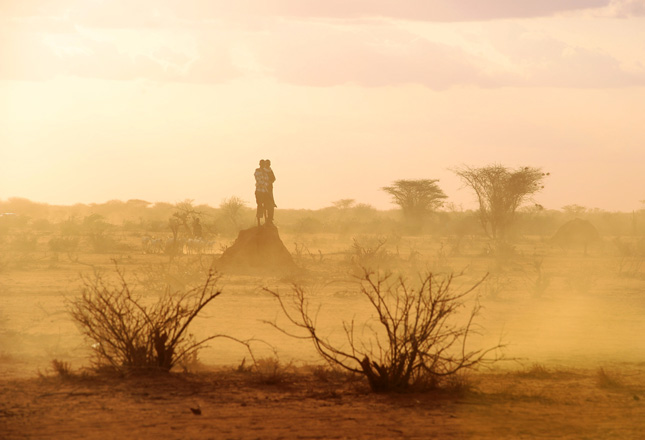
    Developing countries are in a pitched fight against the effects of climate change, and women, playing prominent roles in agriculture and household resource collection, are “at the front lines in the battle,” writes UN Framework Convention on Climate Change Executive Secretary Christiana Figueres, in a new report.

    MORE
  • Trudeau’s White House Visit Sets Stage for U.S.-Canada Climate Cooperation

    ›
    March 10, 2016  //  By Schuyler Null
    Trudeau1

    Canadian Prime Minister Justin Trudeau visits the White House this week and climate change is expected to be one of the highest profile topics of conversation.

    MORE
  • 1.3 Meters of Sea-Level Rise By 2100, and the Effects of Belo Monte’s Forced Displacement

    ›
    Reading Radar  //  March 9, 2016  //  By Haodan "Heather" Chen

    RR2_2A study published by the Proceedings of the National Academy of Sciences projects future sea-level rise with a new model, providing crucial information for coastal planning and further impetus to cut carbon emissions. Sifting through data on thermal expansion and retreating glaciers, the two leading causes of sea-level rise in the past century, the authors confirm that sea level is rising at an unprecedented rate.

    MORE
  • Did Paris Address the Climate Challenges Faced by African Communities?

    ›
    Guest Contributor  //  February 29, 2016  //  By Robert Muthami Kithuku
    mopti-mali1

    Since its adoption after COP-21 in December 2015, the Paris Agreement has received mixed reviews. Some stakeholders, mostly industrialized countries, see the climate deal as a success. Developing countries have generally been more cautiously optimistic, welcoming the agreement as the best option under the circumstances.

    MORE
  • Cleaning up China’s Ports: Shenzhen Explores Fuel Switching and Onshore Power

    ›
    China Environment Forum  //  Choke Point  //  February 24, 2016  //  By Zhou Yang & Xiaoli Mao
    shenzhen-port

    China’s “strictest air protection law” yet took effect on January 1, 2016, promising to bring big changes to its smog-filled cities. But some municipal governments have been ahead of the curve, working to clean up the air through experimentation and innovation. Shenzhen, China’s first special economic zone and which recently passed its neighbor Hong Kong to lead China’s most competitive cities, is one of these.

    MORE
  • India’s Thirst for Palm Oil, New South-South Trade Patterns Cast Doubt on Sustainability Initiatives

    ›
    Guest Contributor  //  February 3, 2016  //  By Philip Schleifer
    palm-oil-clearance

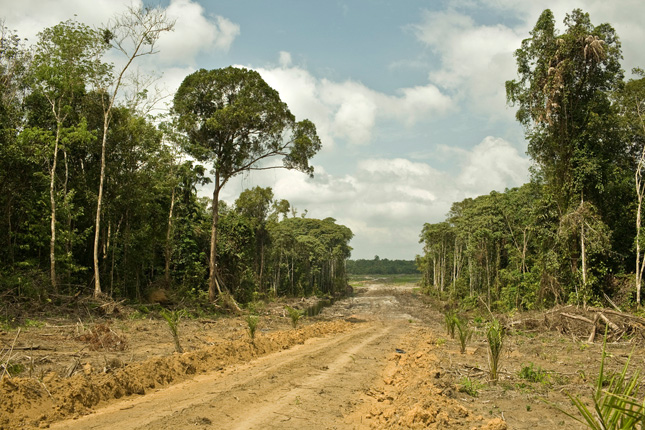
    Patterns of trade and consumption in the global food system are shifting. In the past, most trade in agricultural commodities occurred between developed and developing countries. But, in recent years, the volume of South-to-South trade has increased significantly. Today, some of the most problematic crops in terms of their effect on the environment, such as soy and palm oil, are predominantly traded amongst developing and fast-rising countries.

    MORE
  • Breaking Out of the Dome: Can Energy Efficiency Help Chinese Cities Conquer Air Pollution?

    ›
    China Environment Forum  //  February 2, 2016  //  By Qinnan Zhou
    Huzhou-Power-Plants

    In December 2015, Beijing issued its first-ever “red alert” for smog, its highest air pollution warning, which closed schools and restricted the number of cars on the road. Less than two weeks later, it issued its second.

    MORE
  • Mogelgaard, McGray, Amerasinghe, World Resources Institute

    What Does the Paris Agreement Mean for Climate Resilience and Adaptation?

    ›
    January 14, 2016  //  By Wilson Center Staff
    Dhaka Bangladesh

    The original version of this article, by Kathleen Mogelgaard, Heather McGray, and Niranjali Manel Amerasinghe, appeared on the World Resources Institute.

    Climate change impacts, such as severe drought, sea-level rise, and shifting seasonal patterns, will affect people everywhere. So it’s fitting that the new Paris Agreement places unprecedented importance on actions needed – both nationally and globally – to help people adapt, and solidifies expectations that all countries will do their part to promote greater climate resilience. It also recognizes that even the greatest resilience may not completely prevent harm to life and property, and that the global community must find ways to address “loss and damage” in cases where impacts are beyond the limits of adaptation.

    MORE
Newer Posts   Older Posts
View full site

Join the Conversation

  • RSS
  • subscribe
  • facebook
  • G+
  • twitter
  • iTunes
  • podomatic
  • youtube
Tweets by NewSecurityBeat

Trending Stories

  • unfccclogo1
  • Pop at COP: Population and Family Planning at the UN Climate Negotiations

Featured Media

Backdraft Podcast

play Backdraft
Podcasts

More »

What You're Saying

  • Volunteers,At,The,Lagos,Food,Bank,Initiative,Outreach,To,Ikotun, Pan-African Response to COVID-19: New Forms of Environmental Peacebuilding Emerge
    Rashida Salifu: Great piece 👍🏾 Africa as a continent has suffered this unfortunate pandemic.But it has also...
  • A desert road near Kuqa An Unholy Trinity: Xinjiang’s Unhealthy Relationship With Coal, Water, and the Quest for Development
    Ismail: It is more historically accurate to refer to Xinjiang as East Turkistan.
  • shutterstock_1779654803 Leverage COVID-19 Data Collection Networks for Environmental Peacebuilding
    Carsten Pran: Thanks for reading! It will be interesting to see how society adapts to droves of new information in...

What We’re Reading

  • Rising rates of food instability in Latin America threaten women and Venezuelan migrants
  • Treetop sensors help Indonesia eavesdrop on forests to cut logging
  • 'Seat at the table': Women's land rights seen as key to climate fight
  • A Surprise in Africa: Air Pollution Falls as Economies Rise
  • Himalayan glacier disaster highlights climate change risks
More »
  • woodrow
  • ecsp
  • RSS Feed
  • YouTube
  • Twitter
  • Facebook
  • Home
  • Who We Are
  • Publications
  • Events
  • Wilson Center
  • Contact Us
  • Print Friendly Page

© Copyright 2007-2021. Environmental Change and Security Program.

Woodrow Wilson International Center for Scholars. All rights reserved.

Developed by Vico Rock Media

Environmental Change and Security Program

Woodrow Wilson International Center for Scholars

Ronald Reagan Building and International Trade Center

  • One Woodrow Wilson Plaza
  • 1300 Pennsylvania Ave., NW
  • Washington, DC 20004-3027

T 202-691-4000