• woodrow wilson center
  • ecsp

New Security Beat

Subscribe:
  • rss
  • mail-to
  • Who We Are
  • Topics
    • Population
    • Environment
    • Security
    • Health
    • Development
  • Columns
    • China Environment Forum
    • Choke Point
    • Dot-Mom
    • Friday Podcasts
    • Navigating the Poles
    • Reading Radar
  • Multimedia
    • Water Stories (Podcast Series)
    • Backdraft (Podcast Series)
    • Tracking the Energy Titans (Interactive)
  • Films
    • Water, Conflict, and Peacebuilding (Animated Short)
    • Paving the Way (Ethiopia)
    • Broken Landscape (India)
    • Scaling the Mountain (Nepal)
    • Healthy People, Healthy Environment (Tanzania)
  • Publications
  • Events
  • Contact Us

NewSecurityBeat

The blog of the Wilson Center's Environmental Change and Security Program
Showing posts from category mitigation.
  • The Climate Community Turns to Pragmatism, Mostly

    ›
    January 14, 2016  //  By Ruth Greenspan Bell
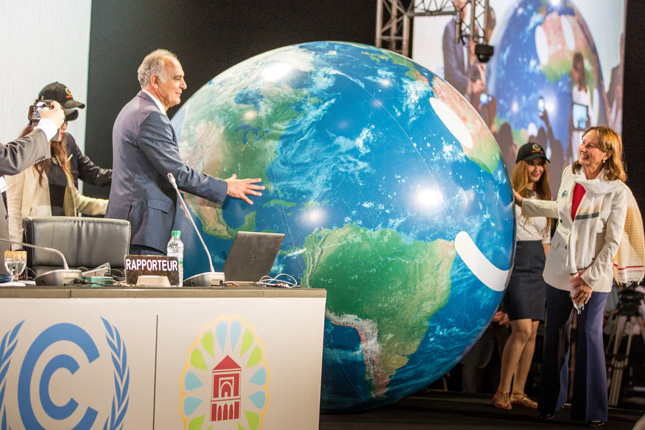
    COP-21-celebration

    “Wilson Perspectives: The Paris Climate Agreement” is a series of short essays exploring the key issues that emerged during the 21st Conference of Parties that originally appeared on WilsonCenter.org.

    The good news out of Paris is that the world is finally getting serious about reducing greenhouse gas emissions. Here are a few reasons to cheer and one quibble.

    MORE
  • Michael Kugelman, Foreign Affairs

    4 Myths About Climate Change in South Asia

    ›
    December 9, 2015  //  By Wilson Center Staff
    Trees cocooned in spiders webs, an unexpected side effect of the

    The original version of this article, by Michael Kugelman, appeared on Foreign Affairs.

    Climate change is a very real threat. It will have major implications for every country and region in the world, but South Asia is particularly vulnerable. To appropriately address the challenges there, the world will have to confront four misconceptions about climate change in South Asia. With world leaders convening in Paris to hash out a new agreement on climate change, now is the right time to do it.

    MORE
  • Can the “World’s Largest Urban Area” Clean Up Its Act? Shenzhen and the Pearl River Delta

    ›
    China Environment Forum  //  Choke Point  //  December 8, 2015  //  By Keith Schneider
    Streets of Shenzhen

    SHENZHEN, China – In 1980, the year Deng Xiaoping established Shenzhen as China’s first special economic zone, opening its mercantile sectors to market capitalism and free trade principles, an attractive, tree-shaded commercial district known as Dongmen was home to 30,000 residents near the center of a metropolitan region of 300,000.

    Thirty-five years later, Dongmen is a crowded commercial neighborhood of 300,000 residents at the edge of a metropolitan region of 18 million, China’s fourth largest.

    MORE
  • The Long Tail of Paris and What to Watch for Next

    ›
    December 4, 2015  //  By Schuyler Null
    Paris-opening-plenary

    The most important and anticipated climate change conference in years is finally underway. In some ways, as Bill McKibben and Andrew Revkin have pointed out, its success is relatively assured thanks to the number of major commitments countries have already made. But that doesn’t mean there’s nothing to see here. “The conference isn’t the game – it’s the scoreboard,” writes McKibben. To extend the metaphor even more, you might call it the league scoreboard, giving us a glimpse of many different storylines playing out.

    MORE
  • Will China’s New Air Law Solve its Pollution Crisis?

    ›
    China Environment Forum  //  November 25, 2015  //  By Cai Jingjing & Joyce Tang
    anyang china smog

    The recent news that China has been underreporting its already globe-leading coal consumption by nearly 20 percent for the last decade underscores the scale of its air pollution crisis.

    MORE
  • Ruth Greenspan Bell and Barry M. Blechman, Foreign Affairs

    Turning Down the Heat: Progress in the Fight Against Climate Change

    ›
    November 24, 2015  //  By Wilson Center Staff
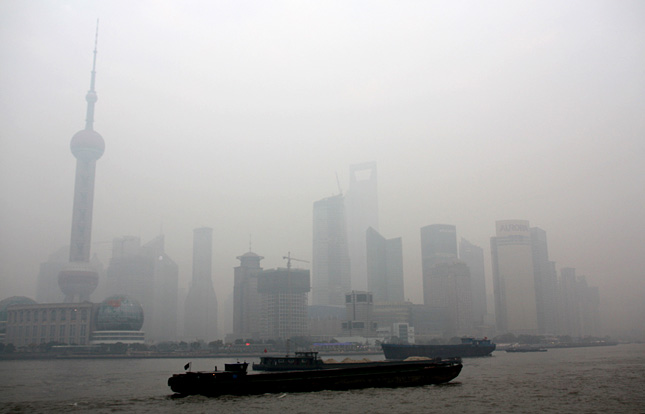
    shanghai-smog

    The original version of this article, by Ruth Greenspan Bell and Barry M. Blechman, appeared on Foreign Affairs.

    Last week, at a meeting of the Organization for Economic Cooperation and Development in Paris, the United States, Japan, and several other nations reached an agreement that will restrict financing for overseas coal projects. The deal will limit investment in the dirtiest, coal-fired power plants but will allow some continued investment in more efficient coal technology. Japan is one of the major sources of finance for the coal industry, so the agreement is an important moment in the effort to reduce global emissions.

    MORE
  • Will a Welcome Peace Derail Colombia’s Sustainable Development Plans?

    ›
    Guest Contributor  //  November 23, 2015  //  By Rocio Rodriguez Granados
    A soldier of the Seventh Division of the Colombian National Army looks on during an operation to eradicate coca crops at a plantation in Yali

    When Colombia is in the news, it’s not necessarily for the reasons we Colombians would like. We have lived through 50 years of violent conflict. Peace is a very abstract idea to most of us. Despite this we are still some of the happiest people on Earth.

    MORE
  • Why Canada Is an Energy Titan and How Its Hydropower Can Help the U.S.

    ›
    Choke Point  //  From the Wilson Center  //  November 20, 2015  //  By Andrew Finn
    Manic Cinq

    The United States: The world’s lone remaining superpower, home of the world’s largest economy and military, the world’s largest producer and consumer of natural gas, and soon the leading producer and consumer of oil.

    MORE
Newer Posts   Older Posts
View full site

Join the Conversation

  • RSS
  • subscribe
  • facebook
  • G+
  • twitter
  • iTunes
  • podomatic
  • youtube
Tweets by NewSecurityBeat

Trending Stories

  • unfccclogo1
  • Pop at COP: Population and Family Planning at the UN Climate Negotiations

Featured Media

Backdraft Podcast

play Backdraft
Podcasts

More »

What You're Saying

  • Volunteers,At,The,Lagos,Food,Bank,Initiative,Outreach,To,Ikotun, Pan-African Response to COVID-19: New Forms of Environmental Peacebuilding Emerge
    Rashida Salifu: Great piece 👍🏾 Africa as a continent has suffered this unfortunate pandemic.But it has also...
  • A desert road near Kuqa An Unholy Trinity: Xinjiang’s Unhealthy Relationship With Coal, Water, and the Quest for Development
    Ismail: It is more historically accurate to refer to Xinjiang as East Turkistan.
  • shutterstock_1779654803 Leverage COVID-19 Data Collection Networks for Environmental Peacebuilding
    Carsten Pran: Thanks for reading! It will be interesting to see how society adapts to droves of new information in...

What We’re Reading

  • Rising rates of food instability in Latin America threaten women and Venezuelan migrants
  • Treetop sensors help Indonesia eavesdrop on forests to cut logging
  • 'Seat at the table': Women's land rights seen as key to climate fight
  • A Surprise in Africa: Air Pollution Falls as Economies Rise
  • Himalayan glacier disaster highlights climate change risks
More »
  • woodrow
  • ecsp
  • RSS Feed
  • YouTube
  • Twitter
  • Facebook
  • Home
  • Who We Are
  • Publications
  • Events
  • Wilson Center
  • Contact Us
  • Print Friendly Page

© Copyright 2007-2021. Environmental Change and Security Program.

Woodrow Wilson International Center for Scholars. All rights reserved.

Developed by Vico Rock Media

Environmental Change and Security Program

Woodrow Wilson International Center for Scholars

Ronald Reagan Building and International Trade Center

  • One Woodrow Wilson Plaza
  • 1300 Pennsylvania Ave., NW
  • Washington, DC 20004-3027

T 202-691-4000