-
What’s Next? Two Decades Tracking the Environment-Security-Population Nexus
›
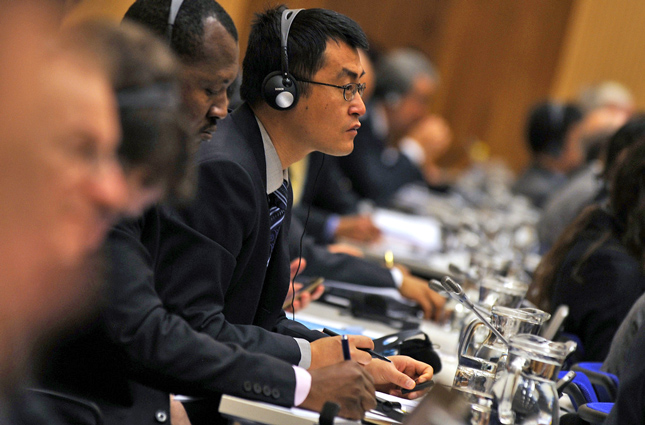
Global crises like the Ebola outbreak force us to consider what “security” really means, said Sharon Burke, senior advisor for the New America Foundation. “Is security getting our kids to school and food on the table…or are you talking about military security and defense threats that require a weapon to counter?”
-
UK Global Trends Report Forecasts Security Threats in Face of Growth, Climate and Technological Change
›October 22, 2014 // By Heather Randall
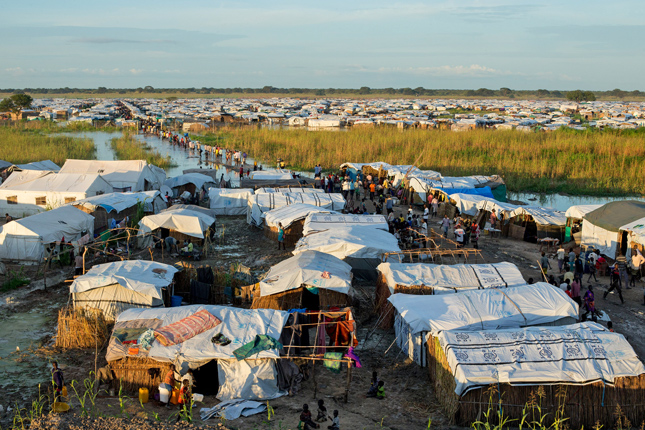
By 2045, global population will be north of 9 billion with increased urbanization and migration, natural resource stress, improved medical technologies, greater use of robotic labor, and a shift towards lifelong (and increasingly online) learning, according to a recent report from the UK Ministry of Defense.
-
Pentagon Releases New Climate Roadmap, Plans for Constrained Training, Challenged Infrastructure, Expanding Missions
›October 13, 2014 // By Schuyler NullA series of executive orders signed by President Obama since his first year in office requires all federal agencies to begin planning for climate change and produce an updated adaptation plan by May of this year. The Pentagon is a little late, but today they released their second-ever climate roadmap.
-
Not All Security Questions Have Military Answers, Says Sharon Burke
›
The U.S. military has historically relied on its capacity for technological innovation to respond to new risks and crises. But, as Sharon Burke explains in this week’s podcast, the Pentagon has had to invent a new role for itself in response to a changing world.
-
Climate Change a National Security Issue, Say Local and National Leaders From Pacific Northwest
›The effects of climate change “are here now” and pose a “serious challenge” for the United States, said Alice Hill, White House senior advisor for preparedness and resilience, at the Wilson Center on July 29. [Video Below]
-
What Can the Environmental Community Learn From the Military? Interview With Chad Briggs on Scenario Planning
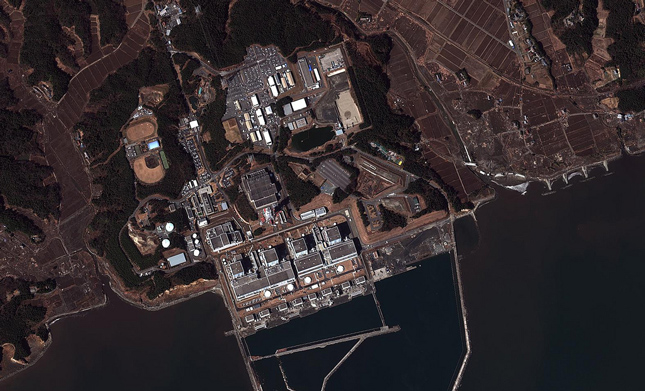
›September 8, 2014 // By Moses JacksonIs it possible to prepare for the unexpected? Could anyone have foreseen, for instance, a nuclear meltdown triggered by an earthquake-induced tsunami? Or a brutal band of transnational militants quickly capturing Iraq’s largest dam while attempting to establish a new Islamic caliphate? Perhaps not exactly, but that shouldn’t stop us from anticipating unlikely events, says Chad Briggs, a risk assessment expert and strategy director of consulting firm GlobalInt.
-
Silver Buckshot: Alternative Pathways Towards Greenhouse Gas Mitigation
›In 1986, global nuclear weapons stockpiles peaked at nearly 70,000 warheads. By the beginning of 2013, there were just over 17,000, with only 4,400 kept operational. This dramatic reduction was the fruit of a negotiation process that began in the late 1940s. In spite of incredible tensions between the United States and the Soviet Union, negotiators were able to make progress once they focused on building trust with small, pragmatic steps, rather than starting with the complete elimination of all weapons. [Video Below]
-
What Can Iraq’s Fight Over the Mosul Dam Tell Us About Water Security?
›The fight for control over “the most dangerous dam in the world” is raging.
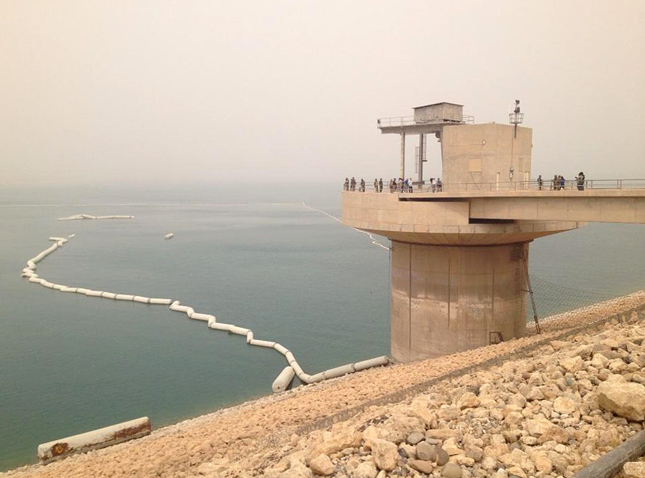
Since its capture by Islamic State (IS) militants on August 7 and subsequent attempts by Iraqi government and Kurdish forces to take it back, Iraq’s Mosul Dam has been one of the central components of the government’s surprising and rapid collapse in the country’s northern and western provinces. In fact, one might see the capture of the Mosul Dam as the moment IS ascended from a dangerous insurgent group to an existential threat to Iraq as a state.
Showing posts from category military.