• woodrow wilson center
  • ecsp

New Security Beat

Subscribe:
  • rss
  • mail-to
  • Who We Are
  • Topics
    • Population
    • Environment
    • Security
    • Health
    • Development
  • Columns
    • China Environment Forum
    • Choke Point
    • Dot-Mom
    • Friday Podcasts
    • Navigating the Poles
    • Reading Radar
  • Multimedia
    • Water Stories (Podcast Series)
    • Backdraft (Podcast Series)
    • Tracking the Energy Titans (Interactive)
  • Films
    • Water, Conflict, and Peacebuilding (Animated Short)
    • Paving the Way (Ethiopia)
    • Broken Landscape (India)
    • Scaling the Mountain (Nepal)
    • Healthy People, Healthy Environment (Tanzania)
  • Publications
  • Events
  • Contact Us

NewSecurityBeat

The blog of the Wilson Center's Environmental Change and Security Program
Showing posts from category military.
  • Africa’s Demography, Environment, Security Challenges Entwined, Says Roger-Mark De Souza at Africa Center for Strategic Studies

    ›
    Eye On  //  October 3, 2013  //  By Donald Borenstein

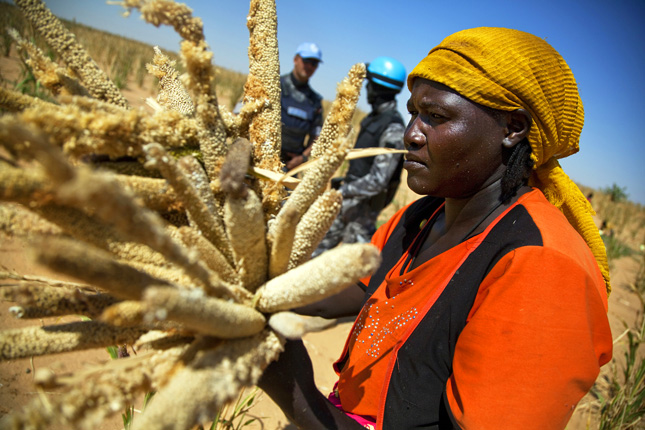
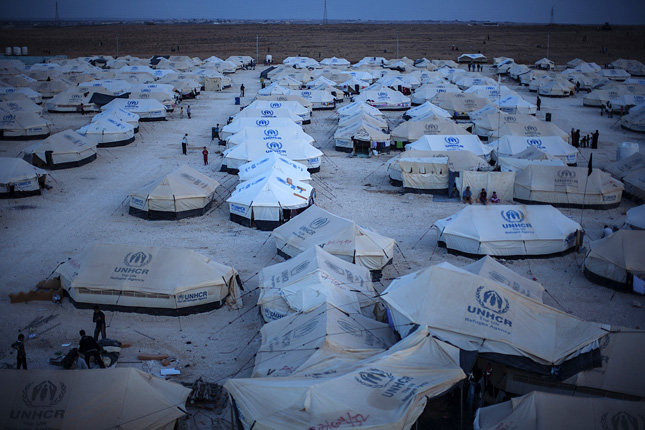
    Sub-Saharan Africa is not only the fastest growing region of the world demographically but is also one of the most vulnerable to climate changes, according to many measures, and already facing natural resource scarcity in many areas. These factors combine with existing development challenges to create security threats that African governments and the United States should be concerned with, says ECSP Director Roger-Mark De Souza in a presentation for the Africa Center for Strategic Studies’ introductory course on demography and the environment at the National Defense University.

    MORE
  • Geoff Dabelko on Avoiding Conflict From Climate Adaptation

    ›
    Friday Podcasts  //  September 6, 2013  //  By Jacob Glass
    dabelko_small

    Although major global action remains stymied in many respects, policymakers around the world are increasingly at least recognizing the need to increase resilience to the effects of climate change. But are the consequences from hastily implemented initiatives being adequately considered? Perhaps not.

    MORE
  • DOD’s Daniel Chiu: Climate, Energy Concerns Emblematic of Future Security Challenges

    ›
    Friday Podcasts  //  August 30, 2013  //  By Jacob Glass
    daniel-chiu-podcast

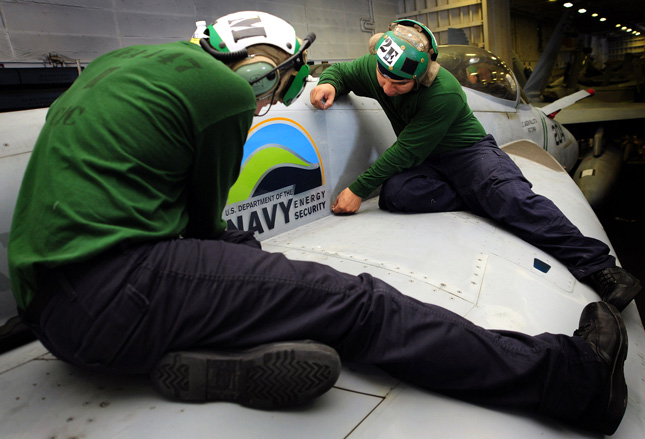
    Factoring in the costs of fuel in operations, both in terms of the monetary and battlefield effect, is a relatively new development for the U.S. military. “Our view was, when we were at war, we would bear those costs,” says U.S. Deputy Assistant Secretary of Defense for Strategy Daniel Chiu in this week’s podcast. “However, as we have started to appreciate the nature of the kinds of military challenges we face, we’ve realized this is not a sustainable approach.”

    MORE
  • Prospects for Gender Parity in UN Peacekeeping Forces, Evaluating Girls’ Empowerment Efforts

    ›
    Dot-Mom  //  Reading Radar  //  August 29, 2013  //  By Jacob Glass
    Population Council Report Cover

    The Population Council’s annual report highlights new work from one of the largest organizations doing research on the lives of adolescent girls in the developing world. Of particular note is the Council’s Adolescent Girls Empowerment Program, a four-year study launched in May which will involve 42,000 girls in seven countries – Bangladesh, Burkina Faso, Ethiopia, Guatemala, India, Tanzania, and Zambia. The aim is to evaluate successful strategies for helping girls avoid child marriage, sexually transmitted infections, and unintended pregnancies at a critical juncture in their lives. Council President Peter Donaldson writes that young girls are “one of the potentially most influential figures in the developing world.” A typical 12-year-old girl “in the next few years…will either abandon or continue her schooling, be pushed into marriage and childbearing, or develop a sense of proud ownership of her physical self… As her future is reconfigured, so is ours.”

    MORE
  • Flooding in Uttarakhand Shows Why India Needs to Take Environmental Security More Seriously

    ›
    Guest Contributor  //  August 19, 2013  //  By Dhanasree Jayaram
    Uttarkhand Flooding

    The disastrous flooding in the Himalayan state of Uttarakhand this summer, which claimed more than 6,000 lives, was the outcome of a changing climate and poorly planned development. It was also another case in point of the increasing importance of environmental security in India – especially for the military.

    MORE
  • Rear Admiral Neil Morisetti on Opportunities for Transatlantic Cooperation on Climate Change, Energy

    ›
    Friday Podcasts  //  August 16, 2013  //  By Jacob Glass
    Morisetti-Podcast

    “We’ve got real pressure on key natural resources: food, water, energy, and land,” says Rear Admiral Neil Morisetti, the U.K. Foreign and Commonwealth Office’s special representative on climate change, in this week’s podcast. “But what we haven’t got, if I can use the words of Winston Churchill, we haven’t got ‘action this day.’”

    “Morisetti spoke at the Wilson Center on June 6 for the launch of The Climate and Energy Nexus: Challenges and Opportunities for Transatlantic Security, by CNA and the Royal United Services Institute. As climate change threatens stability in some places, energy security has emerged as a key vulnerability to Western militaries’ abilities to respond to conflict and assist in disaster relief operations, says Morisetti.

    MORE
  • Backdraft: Flipping the Frame on Conflict and Climate Change

    ›
    Guest Contributor  //  July 29, 2013  //  By Michael Svoboda

    Fire needs oxygen to burn. When a fire starts inside a building, the floors, ceilings, walls, doors, and windows can constrict the flow of air. Breaking in to fight the fire thus carries the risk of opening a new airway. If that happens, a smoldering fire can expand explosively, bursting into roaring flames as it sucks air in through the new passageway. This sudden inrush of air to fuel a burst of fire has a name: backdraft.

    MORE
  • Afghanistan’s Youth and the Risks of Taliban Return [Part One]

    ›
    Dot-Mom  //  From the Wilson Center  //  July 25, 2013  //  By Jacob Glass
    Afghanistan Beyond the Headlines Part 1

    As the United States approaches its 2014 deadline for military withdrawal from Afghanistan, one often overshadowed aspect of the conflict is the hard-won progress made by previously marginalized segments of the Afghan population, particularly women, girls, and young people.[Video Below]

    MORE
Newer Posts   Older Posts
View full site

Join the Conversation

  • RSS
  • subscribe
  • facebook
  • G+
  • twitter
  • iTunes
  • podomatic
  • youtube
Tweets by NewSecurityBeat

Trending Stories

  • unfccclogo1
  • Pop at COP: Population and Family Planning at the UN Climate Negotiations

Featured Media

Backdraft Podcast

play Backdraft
Podcasts

More »

What You're Saying

  • Volunteers,At,The,Lagos,Food,Bank,Initiative,Outreach,To,Ikotun, Pan-African Response to COVID-19: New Forms of Environmental Peacebuilding Emerge
    Rashida Salifu: Great piece 👍🏾 Africa as a continent has suffered this unfortunate pandemic.But it has also...
  • A desert road near Kuqa An Unholy Trinity: Xinjiang’s Unhealthy Relationship With Coal, Water, and the Quest for Development
    Ismail: It is more historically accurate to refer to Xinjiang as East Turkistan.
  • shutterstock_1779654803 Leverage COVID-19 Data Collection Networks for Environmental Peacebuilding
    Carsten Pran: Thanks for reading! It will be interesting to see how society adapts to droves of new information in...

What We’re Reading

  • Rising rates of food instability in Latin America threaten women and Venezuelan migrants
  • Treetop sensors help Indonesia eavesdrop on forests to cut logging
  • 'Seat at the table': Women's land rights seen as key to climate fight
  • A Surprise in Africa: Air Pollution Falls as Economies Rise
  • Himalayan glacier disaster highlights climate change risks
More »
  • woodrow
  • ecsp
  • RSS Feed
  • YouTube
  • Twitter
  • Facebook
  • Home
  • Who We Are
  • Publications
  • Events
  • Wilson Center
  • Contact Us
  • Print Friendly Page

© Copyright 2007-2021. Environmental Change and Security Program.

Woodrow Wilson International Center for Scholars. All rights reserved.

Developed by Vico Rock Media

Environmental Change and Security Program

Woodrow Wilson International Center for Scholars

Ronald Reagan Building and International Trade Center

  • One Woodrow Wilson Plaza
  • 1300 Pennsylvania Ave., NW
  • Washington, DC 20004-3027

T 202-691-4000