Showing posts from category population.
-
Michael Kugelman, Sustainable Security
The Global Land Rush: Catalyst for Resource-Driven Conflict?
›July 31, 2012 // By Wilson Center StaffThe original version of this article, by Michael Kugelman, appeared on SustainableSecurity.org.
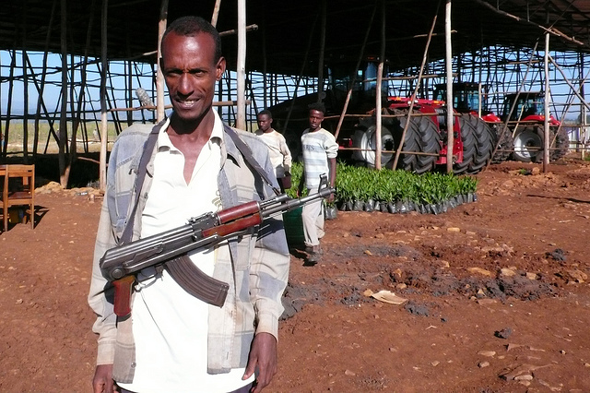
On May 11, the UN approved new international rules to govern how land is acquired abroad. These Voluntary Guidelines (VGs), the outcome of several years of protracted negotiations, are a response to growing global concern that nations and private investors are seizing large swaths of overseas agricultural land owned or used by small farmers and local communities for food, medicinal, or livelihood purposes. FAO head Jose Graziano da Silva describes the VGs as “a starting point that will help improve the often dire situation of the hungry and poor.”
It’s hard to quibble with the intent of the guidelines. They call for, among other things, protecting the land rights of local communities; promoting gender equality in land title acquisition; and offering legal assistance during land disputes.
Unfortunately, however, any utility deriving from the VGs will be strictly normative. As their name states explicitly, they are purely optional. A toothless set of non-obligatory rules will prove no match for a strategy that is striking both for its scale and for the tremendous power of its executioners.
Oxfam estimates that nearly 230 million hectares of land (an area equivalent to the size of Western Europe) have been sold or leased since 2001 (with most of these transactions occurring since 2008). According to GRAIN, a global land rights NGO, more than two million hectares were subjected to transactions during the first four months of 2012 alone. One of the largest proposed deals – an attempt by South Korea’s Daewoo corporation to acquire 1.3 million hectares of farmland in Madagascar – failed back in 2009. Still, even larger investments are being planned today, including a Brazilian effort to acquire a whopping six million hectares of land in Mozambique to produce corn and soy (Mozambique offered a concession last year).
Continue reading on SustainableSecurity.org.
Sources: BBC, Food and Agriculture Organization, GRAIN, MercoPress, Oxfam, Reuters.
Photo Credit: “Garde armé,” courtesy of flickr user Planète à vendre. -
PBS ‘NewsHour’ Reports on Reasons for Optimism Amid Niger’s Cyclical Food Crises
›Set in the middle of the arid region between the Sahara desert and the equatorial savannas of Africa known as the Sahel, Niger is no stranger to drought. In recent years, however, droughts have hit more often, started earlier in the season, and lasted longer, creating a cycle of food insecurity that is becoming more difficult to break.
-
Nine Strategies to Stop Short of Nine Billion
›Although most analysts assume that the world’s population will rise from today’s seven billion to nine billion by 2050, it is quite possible that humanity will never reach this population size.
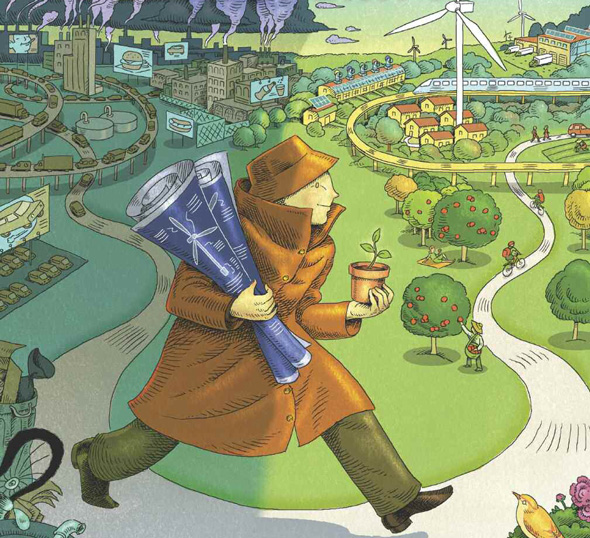
My chapter in this year’s State of the World 2012: Moving Toward Sustainable Prosperity, “Nine Population Strategies to Stop Short of 9 Billion,” outlines a series of strategies that would prompt significant declines in birth rates. Based purely on the intention of women around the world to have small families or no children at all, these initiatives, policies, and changes in attitude could end population growth before mid-century at fewer than nine billion people.
Examples from around the world demonstrate effective policies that not only reduce birth rates, but also respect the reproductive aspirations of parents and support an educated and economically active society that promotes the health of women and girls. Most of these reproduction policies are relatively inexpensive to implement, yet in many places they are opposed on the basis of cultural resistance and political infeasibility.
In creating this list, I sought to eschew the language and approaches of “population control” or the idea that anyone should pressure women and their partner on reproduction. Instead, I hoped to highlight strategies that could put human population on an environmentally sustainable path:- Provide universal access to safe and effective contraceptive options for both sexes. With two in five pregnancies reported as mistimed or never wanted, lack of access to good family planning services is among the biggest gaps in assuring that each baby will be wanted and welcomed in advance by its parents.
- Guarantee education through secondary school for all, especially girls. In every culture surveyed to date, women who have completed at least some secondary school have fewer children on average, and have children later in life, than do women who have less education.
- Eradicate gender bias from law, economic opportunity, health, and culture. Women who can own, inherit, and manage property; divorce; obtain credit; and participate in civic and political affairs on equal terms with men are more likely to postpone childbearing and to have fewer children compared to women who are deprived of these rights.
- Offer age-appropriate sexuality education for all students. Data from the United States indicates that exposure to comprehensive programs that detail puberty, intercourse, options of abstinence and birth control, and respecting the sexual rights and decisions of individuals can help prevent unwanted pregnancies and hence reduce birth rates.
- End all policies that reward parents financially based on the number of children they have. Governments can preserve and even increase tax and other financial benefits aimed at helping parents by linking these not to the number of children they have, but to parenthood status itself.
- Integrate lessons on population, environment, and development into school curricula at multiple levels. Refraining from advocacy or propaganda, schools should educate students to make well-informed choices about the impacts of their behavior, including childbearing, on the environment.
- Put prices on environmental costs and impacts. In quantifying the cost of an additional family member by calculating taxes and increased food costs, couples may decide that the cost of having an additional child is too high. Such decisions, freely made by women and couples, can decrease birth rates without any involvement by non-parents in reproduction.
- Adjust to an aging population instead of boosting childbearing through government incentives and programs. Population aging must be met with the needed societal adjustments, such as increased labor participation, rather than by offering incentives to women to have more children.
- Convince leaders to commit to stabilizing population through the exercise of human rights and human development. By educating themselves on rights-based population policies, policymakers can ethically and effectively address population-related challenges by empowering women to make their own reproductive choices.
Kathleen Mogelgaard assisted with research for this piece.
Robert Engelman is the president of the Worldwatch Institute and contributing author to State of the World 2012: Moving Toward Sustainable Prosperity.
Sources: Bloom et al. (2011), Guttmacher Institute, Kohler et al. (2008), Population Reference Bureau, UN, UNFPA, The Wall Street Journal, Yadava and Yadava (1999).
Image Credit: Worldwatch Institute, State of the World 2012: Moving Toward Sustainable Prosperity. -
Pop at Rio+20: Despite Failure Narrative, Progress Made at Rio on Gender, Health, Environment Links
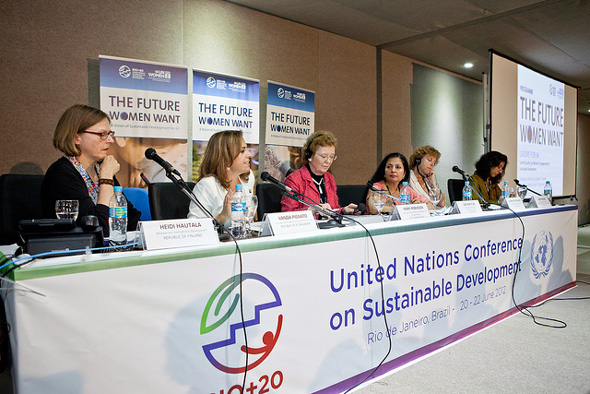
›July 13, 2012 // By Sandeep BathalaA month ago this weekend I boarded a plane to Rio de Janeiro for the UN Conference on Sustainable Development. Over the past few weeks, I have had some time to reflect on the amazing (and exhausting) experience afforded to me. Unfortunately, the final Rio+20 outcome document (considered by some to be misnamed as “The Future We Want”) failed to recognize the connections between reproductive rights and sustainability. However, since I returned I’ve also found myself in conversations with colleagues eager to celebrate the successes of the conference.
Jason Bremner, program director at Population Reference Bureau, reminds me that the initial “zero draft document” that was circulated prior to Rio had absolutely no mention of reproductive health, family planning, or population. “Though the ultimate conference document wasn’t a success by many measures, I commend the efforts of the many advocacy organizations that resulted in the inclusion of reproductive health and family planning as a key aspect of sustainable development,” he said.
Other wins were recognized at Rio as well. On a panel organized by the International Planned Parenthood Federation, Brazilian Minister of Policies for Women Eleonora Menicucci de Oliveira pointed out that the presence of women this year was much stronger than at the 1992 conference. And she stressed that the overall importance placed on the reduction of poverty will have a big impact for women.
Though the official language was weakened in the final outcome document, there was much more support expressed at side events and off the record conversations. Speaking at the same event as Oliveira, Christian Friis Bach, Minister for Development Cooperation in Denmark, said that “one leader after another has stood up for reproductive rights, and we’ve started a campaign which will go on until ICPD+20.”
In fact, as the Wilson Center’s Brazil Institute Director Paulo Sotero points out, there was a great deal of progress made by non-government representatives alongside the main conference:I left Rio more hopeful about the future than the official part of Rio+20 would allow. As governments clearly fumbled in the face of the complex challenges of imagining and building a more equitable and sustainable economic growth model in the decades ahead, I saw senior business executives and leaders of civil society engaged in intelligent and productive dialogue about difficult issues at hundreds of thematic panels held at the Corporate Sustainability Forum and other sessions held in Rio.
I felt the same energy. And many groups there seemed to already be planning for next steps.
On the first day of side events I attended, members of the Population and Climate Change Alliance discussed strategies to ensure that in the post-2015 (i.e. post-Millennium Development Goals) international development agenda sexual and reproductive health and rights are explicitly recognized as core to sustainable development. The panel included Mialy Andriamahefazafy of Blue Ventures Madagascar, Joan Castro of PATH Foundation Philippines, Inc., and Negash Teklu of PHE Ethiopia Consortium, who all shared examples of efforts in their countries to integrate reproductive health with other sustainable development programs.Joan Castro on PATH Foundation’s work in the Philippines
The Rio+20 conference was, at the very least, a re-affirmation of the tenets set down by the ‘92 Earth Summit – that is, that there is middle ground between full-tilt economic development and uncompromising environmentalism, called “sustainable development,” and we ought to be moving towards it. It was also a fantastic gathering place for disparate groups of people to come together on to similar issues and to build momentum and networks on their issues.
For those hoping to see a stronger link recognized between reproductive rights, population, and the environment, the good news is that elsewhere, awareness and momentum seems to be growing. Just this week, The Bill and Melinda Gates Foundation joined the United Kingdom, United States, France, Germany, the Netherlands, South Korea, Norway, Sweden, and Australia to pledge more than $2.6 billion towards meeting global unmet for contraceptives. And the connection to development was explicit: “Contraceptives are one of the best investments a country can make in its future,” reads the summit website.
Coincidence to have followed so closely behind a “disappointing” Rio outcome? Perhaps not.
Sources: The Bill and Melinda Gates Foundation, Estado, UN Conference on Sustainable Development.
Photo Credit: “UN Women Leaders Forum at Rio+20,” courtesy of UN Women. -
Gates Foundation Spearheads London Summit on Family Planning
›July 12, 2012 // By Carolyn Lamere“Given the option, [women in developing countries] will have fewer children,” said Melinda Gates in a TEDxChange talk in April. “The question is: are we going to commit to helping them get what they want now? Or are we going to condemn them to some century-long struggle, as if this were still revolutionary France and the best method was still coitus interruptus?”
Wednesday, The Bill and Melinda Gates Foundation followed through on Gates’ pledge, helping to raise more than $2.6 billion at the London Summit on Family Planning as part of an ambitious goal of helping 120 million additional women in developing countries gain access to contraception by 2020. The summit was co-hosted by the UK Department for International Development and garnered support from other foundations and governments, including the United States, France, Germany, the Netherlands, South Korea, Norway, Sweden, and Australia.
To quote the Population Institute’s Robert Walker on Dot Earth, this is a big deal:Many of the challenges that we face (hunger, severe poverty, energy, food, carbon emissions) are seemingly intractable. Population growth, which is a challenge multiplier, is not intractable. Far from it. There are proven highly cost-effective means of lowering fertility rates: providing access to contraceptives, keeping girls in school, ending child marriage practices, and changing social norms (including attitudes toward women and desired family size) through entertainment media.
The focus on family planning for the Gates Foundation – one of the largest philanthropic organizations in the world – is relatively new (though their commitment to global health and development is not). Melinda Gates announced a commitment to maternal health in 2010, and the foundation first issued a family planning strategy in April of this year.
The move has been unwelcome by some, particularly some Catholic institutions who object to family planning. But Gates has been adamant that contraceptives “should be a completely non-controversial topic.” She argues that 90 percent of Americans find contraceptives “morally acceptable,” including herself and many other Catholics, so there is no reason for the taboo around international aid for family planning to continue.
“We’re not going to agree about everything, but that’s OK,” said Gates in a recent interview with CNN.
In the TEDxChange talk, which helped launch this year’s push, she credits her upbringing for instilling a strong sense of social justice. During her travels with the Gates Foundation, one woman from a slum in Nairobi told her, “I want to bring every good thing to this child before I have another.” That statement resonated with Gates: “We all want to bring every good thing to our children,” she said. “But what’s not universal is our ability to provide every good thing for our children.” Gates pointed to contraception as a way for families to plan for their future and manage their resources. She recognized the controversial history of family planning as population control, but argued that this new initiative is about providing choices to individuals, not imposing values.
Gates remains confident that as long as the foundation makes its mission clear, people will rally behind the cause.
“We’re not talking about abortion. We’re not talking about population control. What I’m talking about is giving women the power to save their own lives, to save their children’s lives, and to give their families the best possible future.”
Sources: BBC, The Bill and Melinda Gates Foundation, CNN, Catholic Family and Humans Rights Institute, Catholics For Choice, Dot Earth.
Video Credit: TEDxChange. -
World Population Day 2012: Looking Beyond Reproductive Health
›How should the seven billion or so of us on Earth mark World Population Day? Today, major global players are focusing on increasing access to family planning around the world. But there are other important aspects to population that also deserve our sustained attention.
The links between demography and development have come into the limelight over the last few months, first as advocates decried the last minute removal of reproductive rights language from the Rio+20 outcome document and now as the Bill and Melinda Gates Foundation prepares a massive funding push for reproductive health (starting today, not coincidentally).
“Multiple crises – food, fuel, and financial – have caused significant suffering and served as a wake-up call about the need to pay far more attention to the building blocks of sustainable development,” UN Secretary-General Ban Ki-moon says in an address for today. “Reproductive health is an indispensable part of the sustainable development equation.”
The sustainable development connection is fairly obvious. Environmental destruction in some of the most biodiversity-rich parts of the world has complex but significant population drivers, as Wilson Center consultant Laurie Mazur explains:Human impact on the environment is mediated by a host of factors, including culture, technology, institutions, and market forces. And inequitable socioeconomic systems mean that some human beings have far greater impact than others.
“Often, the value of biodiversity becomes apparent only when it is lost,” Mazur continues. “For example, with the global decline of honeybee populations, growers can now calculate the monetary value of pollination services that were once provided for free by nature. ‘Bee pollination is worth $190 billion,’ said Pavan Sukhdev, a Yale environmental economist, in an interview with Bloomberg. ‘But when did a bee ever send you an invoice?’”
But some generalizations can be made. We live on a planet dominated and transformed by human activity. As we have become more numerous, we have also become more adept at altering ecosystems for human use, replacing species-rich natural landscapes with simpler monocultures.
In other areas, population drivers threaten more basic scarcities: food and water, which in turn impede development and cost human lives. Some of the most successful efforts to address these relationships have combined women’s empowerment, family planning, and basic health interventions with site-based conservation and livelihood efforts.
But besides reproductive rights, there are other important aspects of population that deserve attention on this day.
The demographic dividend – a concept that marries population dynamics and development economics – requires more than just fertility decline to take effect in countries. Economic and social policies that prepare and enable young people to enter the workforce are just as important.
And the Arab Spring helps illustrate the complex relationship between population and democracy. “Among the five countries where revolt took root, those with the earliest success in ousting autocratic leaders also had the most mature age structures and the least youthful populations,” writes Wilson Center consultant and demographer Elizabeth Leahy Madsen. The work of fellow Wilson Center consulting demographer Richard Cincotta shows that countries with very young age structures are prone both to higher incidence of civil conflict and undemocratic governance. What happens next in Egypt, Libya, Yemen, and Syria will further test the connection between youth and democracy.
In South Asia, Madsen finds that as Afghanistan and Pakistan’s political circumstances have become more entwined, their demographic paths are more closely parallel than expected. “For Afghanistan, given its myriad socioeconomic, political, cultural, and geographic challenges, this is good news. But for Pakistan, where efforts to meet family planning needs have fallen short of capacity, it is not,” she writes in the first issue of the newly re-launched ECSP Report, “Afghanistan, Against the Odds: A Demographic Surprise.”
In more developed countries, population aging is a concern. At the Wilson Center last year, economists Andrew Mason and Ronald Lee explained the challenges that those on the other side of the “demographic divide” will face in the near future. From 2010 to 2015, 85 countries are projected to witness the largest absolute increase in history of their populations aged 60 and over, straining public welfare systems and reducing labor forces. It’s not the “catastrophe” that it has been portrayed to be in the media, they said, but like many demographic issues, it is a challenge that will require planning for.
These connections demonstrate the wide importance of population dynamics to understanding how the world works today. Demography is the study of us – all seven billion of us. Demography affects – and is affected by – economics, political stability, health, the environment, food security, foreign policy, development, and conflict. Let’s not overlook that breadth on this World Population Day 2012.
For more, be sure to read some of our additional resources from the recent archives:- Food Security in a Climate-Altered Future: More Than a Supply Problem
- Taming Hunger in Ethiopia: The Role of Population Dynamics
- Uganda’s Demographic and Health Challenges Put Into Perspective With Newfound Oil
- New Surveys Generate Mixed Demographic Signals for East and Southern Africa
- In Building Resilience for a Changing World, Reproductive Health Is Key
- Demographic Security 101 (video)
- Yemen: Revisiting Demography After the Arab Spring
- Hania Zlotnik Discusses Latest Changes to UN Population Projections (audio)
- Book Review: ‘World Population Policies’
- Tunisia’s Shot at Democracy: What Demographics and Recent History Tell Us
- Joel E. Cohen on Solving the Resource-Population Equation in the Developing World (video)
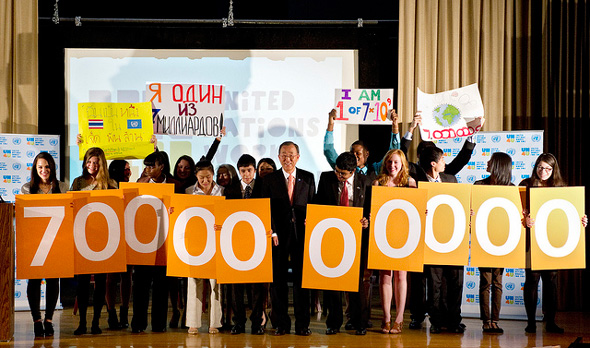
Photo Credit: UN Day Secretary-General Ban Ki-moon with students in October celebrating the seven billion mark, courtesy of Eskinder Debebe/UN Photo. -
Hania Zlotnik Discusses Changes to Latest UN Population Projections
›Former UN Population Division Director Hania Zlotnik spoke recently at the Wilson Center discussing last year’s highly-publicized UN world population projections and explaining the methodology behind the figures. “The latest projections are very special,” she said, adding that “we think that this methodology is a lot better than what we had before.”
What accounts for such improvement? Zlotnik said it has a lot to do with greater availability of data. “The UN has been…mandated by governments to produce population estimates since the 1950s,” she stated, and they have refined their projections process over the years based on an increasing record of data and identification of some “patterns that can inform the future.”Former UN Population Division Director Hania Zlotnik spoke recently at the Wilson Center discussing last year’s highly-publicized UN world population projections and explaining the methodology behind the figures. “The latest projections are very special,” she said, adding that “we think that this methodology is a lot better than what we had before.”
What accounts for such improvement? Zlotnik said it has a lot to do with greater availability of data. “The UN has been…mandated by governments to produce population estimates since the 1950s,” she stated, and they have refined their projections process over the years based on an increasing record of data and identification of some “patterns that can inform the future.”
The increasingly large dataset accumulated during this process is particularly important because of what Zlotnik called “inertia” in population change. “There’s something called ‘population momentum,’ where the population changes on the basis of how many people have already been accumulated on the planet,” she explained, pointing out that many of the people included in the UN’s population projections for 2050 have already been born.
This inertia helps make population projections fairly accurate, but last year’s projections differed from previous efforts in two significant ways.
First, the UN Population Division provided projections not just to 2050 but also to 2100. These more long-term projections estimated an end-of-century population of more than 10 billion – notably higher than previous reports, which had predicted that population would stabilize mid-century at around nine billion.
Second, the underlying methodology used shifted from a deterministic to a probabilistic approach that, according to Zlotnik, does a better job capturing variability in each country’s fertility rate over the next century. “Essentially,” she explained, “a model was developed for every country that takes into account the past path of fertility change [and] also takes into account changes that have happened in other countries…Then [it] does a simulation for the future for every country, in which 100,000 paths are projected, essentially by throwing dice, and then the central path of those 100,000 is used to project the future.”
Zlotnik cautioned that projecting so far into the future is an inexact – albeit necessary – science: “Of course, as we go further into the future, the numbers are more subject to uncertainty. But [the long-term projections] help us give people a better feeling of how important it is to change trends from here to 2050, so that we ensure that, at the end of the century, the number of people on the planet is sustainable.”
“In order to make sure that the population projections made by the United Nations [are realized],” Zlotnik said, “it’s very important that fertility continues to decline, and especially that fertility decline happens in the countries that still have very high fertility.”
“Fertility decline happens in many ways,” she continued, “but the immediate reason why fertility can be reduced is that more people use modern methods of contraception.” -
An Update on PRB’s Population, Health, and Environment Project Map
›As reproductive rights advocates reflect on their disappointment with the outcome of last week’s Rio+20 summit, it is encouraging to see that population, health, and environment (PHE) projects – which fundamentally connect women’s health with sustainable development – continue to sprout up around the world. The Population Reference Bureau (PRB) launched their community-supported PHE Project Map in March 2010, and since then, the map has grown to include 76 projects across three continents, and has been viewed more than 82,000 times.
The goal of the map is to show which organizations are doing what PHE work where and when. While the map highlights expected hotspots like Ethiopia, Madagascar, and the Philippines, it also brings into focus countries that may not necessarily come to mind when thinking about PHE – South Africa, Venezuela, and Vietnam being among them. The map is updated on a rolling basis, and has grown substantially during its first two years.
These numbers should offer encouragement to reproductive rights and sustainable development advocates. Even if world leaders are still struggling to integrate these issues into a global development framework, NGOs, local nonprofits, and development agencies across the world are moving full-speed ahead to improve healthcare, strengthen ecosystems, and empower women and men across Latin America, sub-Saharan Africa, and South Asia.
To add a project to the map, contact PRB’s Rachel Yavinksy at ryavinsky@prb.org.