Showing posts from category population.
-
Jennifer Dabbs Sciubba, The Huffington Post
Global Threats Exist, But Also Many Global Demographic Opportunities for the United States
›July 3, 2012 // By Wilson Center StaffThe original version of this article, by Jennifer Dabbs Sciubba, appeared on The Huffington Post.
Events like the Arab Spring gave birth to a generation of demographic converts in the national security community. Many are now convinced that demography matters because demographers today can clearly show how youthful population profiles in the developing world could lead to conflicts over the next 20 years – a major concern for policymakers.
Too much focus on demography and conflict, though, means policymakers miss opportunities for cooperation.
We are used to thinking of the wealthy and stable “Global North” and the poor and tumultuous “Global South,” but a demographic divide within the developing world is emerging, a third category of states that are growing older, more urban, more prosperous, more peaceful, and active in international affairs. These states – particularly India, Brazil, and South Africa – represent opportunities for building U.S. and world security.
Even as it maintains its longstanding relationships in Europe and elsewhere in the developed world, the U.S. should be more assertive in seeking partnerships with India as both a counterbalance to China and as a global security partner in addressing piracy and terrorism and in distributing international aid.
Continue reading on The Huffington Post.
Photo Credit: Tahrir 2011, courtesy of flickr user Denis Bocquet. -
Book Review: ‘World Population Policies’ Offers Sweeping Overview of a Complex Field
›July 2, 2012 // By Elizabeth Leahy MadsenWith much attention in the international family planning community directed to the impending anniversary of the 1994 International Conference on Population and Development and the closing date of the Millennium Development Goals, the fact that 2012 is the 60th anniversary of two other milestones in population programming may have escaped notice. In 1952, the International Planned Parenthood Federation was created, and India became the first country to formulate a national policy to reduce population growth.
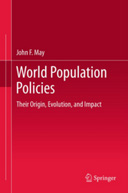
These and many other landmarks are highlighted in World Population Policies: Their Origin, Evolution and Impact, a new book by demographer John May that reviews several decades of policies, advocacy, and program interventions addressing the full range of diverse demographic trends seen globally.May, who spent more than two decades working on population issues at the World Bank and other international institutions before recently assuming a fellowship at the Center for Global Development, is well-positioned to provide such an ambitious overview. Although the breadth of material included in the book means that some topics receive less coverage than a specialist might wish, it serves as a sound introduction to this diverse field, and offers some particularly interesting case studies.
The book’s main chapters begin with a summary of current population trends, including a comprehensive array of figures and statistics about population size, distribution, and projections. Some important concepts, such as the demographic transition and dividend, are perhaps covered too quickly, and in such cases the book would have benefited from more than a handful of figures, charts, and graphs. May classifies regions and countries as demographic “hotspots,” where the number of people outstrips available resources, and “coldspots,” which have too few residents. He makes an ambitious suggestion that high-density countries facing resource challenges, such as Bangladesh, should consider promoting rapid fertility decline below replacement level to stop population growth, then reverse course and increase to a rate that promotes a stable population – but such a reversal from low fertility is a feat that has stymied several countries in Europe and East Asia.
Evolution of the “Population Movement”
In addition to summarizing the ways that demographic issues have been framed in the past several decades, May briefly describes the long-running debate between demographers and economists about the ways in which population is theorized to affect economic development.
Three points in this chapter were particularly striking: First, the concept of family planning as a human right dates from well before the 1994 International Conference on Population and Development. In 1968, the Tehran International Conference on Human Rights defined the ability to choose family size and spacing as a fundamental right; still, some programs, such as India’s under the Emergency-era government of the late 1970s, adopted coercive practices. Second, population policies are not limited to official initiatives targeting fertility, mortality, and migration, but also encompass implicit or “passive” policy measures that arise without advance planning or that have an unintended effect on demographic trends. Related to this, May suggests that “contextual variables” such as education, health, gender, culture, and religion can have a greater impact on population policies’ effectiveness and demographic outcomes than government structures or funding.
Although population policies are most often designed at the national level, May’s discussion of the “population movement” highlights the influence of international networks and donors on such policies. By the late 1960s, the U.S. Agency for International Development had begun funding family planning programs overseas, and the United Nations Population Fund (UNFPA) was active. Although the United States has become less dominant over time, population programming remains a Northern-driven movement.
Beginning with a meeting in Belgrade in 1965, a series of international population conferences successfully raised the prominence of population issues on the global development agenda and built consensus around international goals, while also becoming increasingly political.
May’s cautions about such conferences are timely given this month’s London Family Planning Summit: “Consensus-building through international conferences and their preparatory meetings is often inefficient as a process, whereas such events could be used to promote learning among policymakers and experts…The gap between the conferences’ resolutions and the actual policies implemented at country level is important to remember” (110).
Growth and Aging Distinguish the Demographic Divide
In his chapter focusing on the developing world, May notes that population policies have become broader in the nearly 20 years since the Cairo conference, incorporating a reproductive rights framework while also addressing new issues such as the environment, HIV/AIDS, and poverty. But under this more holistic approach, national policies are susceptible to becoming overly diffuse, with an ambitious agenda not matched by concrete action plans.
The challenges expand to policy implementation as well. Kenya is profiled as emblematic of the difficulties facing population programs in fast-growing sub-Saharan Africa, particularly political disinterest, mismanagement, opposition from some religious groups, and commodity shortages. But when implemented well, such policies can be very successful. The book offers a thorough summary of research findings on the common features of effective family planning programs (such as leadership, monitoring performance data, and opening access to contraceptive methods at lower levels of the health system), as well as their demographic impact. Several country examples are cited to show that family planning programs reduce lifetime fertility rates by 0.5 to 1.5 children per woman, while also benefiting individual and social health, income, and well-being.
While population policies have been often effective at shaping demographic trends in high-fertility settings, even in changing cultural norms about family size, May notes that their impact has been notably weaker in reversing the trajectory of declining fertility in developed countries. While countries such as France have maintained a fertility rate close to, albeit still below, replacement level thanks to generous paid parental leave, housing initiatives and public child care facilities, policies that try to boost low fertility through financial compensation have been particularly ineffective.
Developed countries are less likely to have formal population policies and tend to address demographic issues through incentives and disincentives implemented by multiple agencies. Aging and immigration are receiving greater attention in such countries, along with low fertility rates. Population aging raises policy concerns that are both economic and social, and May focuses largely on the benefit of reducing incentives for early retirement. He notes that thanks to improvements in health and life expectancy, “today’s 65-year-old persons are young compared to their counterparts” of previous generations (180). Despite their economic soundness, government efforts to raise retirement ages are widely unpopular, and France’s newly elected president has promised to cut the retirement age from 62 to 60 for some workers.
What Comes Next
Some observations are intriguing and could have been further detailed. For example, May notes a recent “fragmentation” of organizations working on population issues, and suggests that “too many institutions and NGOs appear to support their own limited mandates as they also struggle for resources that are less abundant” (5). Decentralization and integration within health systems is a growing trend that could have been discussed in more detail, along with the legacy of pronatalist laws and attitudes by colonial powers in Africa, the effect of recent European efforts to tighten immigration policies, and the achievements of forums designed for collaboration on population policy issues (for example, the United Nations Commission on Population and Development or the Reproductive Health Supplies Coalition).
Looking towards the future, May foresees continued integration of demography with related development issues, such as poverty reduction and equitable growth, gender and youth perspectives, environmental issues, and conflict prevention. He notes a few challenges, including sub-Saharan Africa’s lag in fertility decline and the overall ineffectiveness of policies aimed at addressing the pressures of urbanization on infrastructure and resources.
In high-fertility settings, May recommends that instead of framing reproductive health writ large, policies should more specifically target family planning and women’s empowerment, including education and income-generation opportunities as well as legal rights. Bangladesh is presented as a model for other countries, as a setting where cultural change and economic development laid the groundwork for successful family planning outreach efforts. Most of all, May entreats government leaders to maintain a policy focus on population issues, regardless of where they stand in the demographic divide.
Elizabeth Leahy Madsen is a consultant on political demography for the Wilson Center’s Environmental Change and Security Program and senior technical advisor at Futures Group.
Photo Credit: “Crowded Shopping District,” courtesy of flickr user EnvironmentBlog. -
Gwen Hopkins, Aspen Institute Global Health and Development
Aspen Ideas Festival Takes on “The Population Challenge”
›The original version of this article, by Gwen Hopkins, appeared on the Aspen Ideas Festival blog.
The pictures flash quickly: lush sea vegetation replaced by empty grey-blue seabed as carbon bubbles out of undersea vents. Reservoirs depleted too quickly, never to refill. Forests and mountains leveled for coal, deep sea oil rigs ablaze, the arctic ice cap visibly retreating. Dennis Dimick is answering the question posed to him with a litany of evidence collected by National Geographic: Does population matter?
Yes, he says – a lot.
Kicking off the Our Planet: The World at Seven Billion track, on a panel called “The Population Challenge,” Washington Post staff writer Joel Achenbach moderated a conversation between Dimick and Helene Gayle, president and CEO of CARE USA, following Dimick’s presentation about how the earth’s human population has made its presence known.
Dimick explains that this new geologic era has been dubbed Anthropocene, the age of man, as we “transform the planet to perpetuate our lifestyle.” That’s a lifestyle powered first and foremost by what he calls “the new sun” – coal, oil, and gas, or in Dimick’s words, “ancient plant goo.” These transformations are deep and widespread – and according to Dimick, growing worrisome in their magnitude. While there is searing inequity – “few have a lot, and a lot have few” – those that lead the consumption have, for example, caught 90 percent of the big fish in the sea already, and burn in one year a quantity of fuel that took a million years to coalesce underground. “If everyone in the world lived like Americans do, we’d need four planets.”
Continue reading on the Aspen Ideas Festival blog.
Photo Credit: Aspen Institute. -
IPPF and Partners Connect Reproductive Rights With the Environment and Development
›A new framework for sexual and reproductive health is needed, argued panelists in a recent event at the Wilson Center, and the Rio+20 conference on sustainable development would have been the place to start. An international consensus around women’s human rights was developed at the International Conference on Population and Development in Cairo in 1994, but Carmen Barroso, director of the International Planned Parenthood Federation’s Western Hemisphere Region, said there has been slow implementation, little funding, and furthermore the world has changed significantly since then.
Barroso was joined by Latanya Mapp Frett, vice president of Planned Parenthood Global, as well as two representatives of Planned Parenthood partner organizations, Marco Cerezo of FUNDAECO and Ben Haggai of Carolina for Kibera.
New challenges to the reproduce rights landscape include the rapid spread of HIV/AIDS and decreased funding for international programs. But new opportunities include rapid dissemination provided by the internet and globalization and a subsequent mobilization of youth. “Young people are the largest cohort in history,” Barroso said in an interview with ECSP, both in absolute numbers and in percent of the population. “We have a historical opportunity [to incorporate] them in these decision-making processes.” Additionally, gender and health issues are incresaingly seen by many as linked with the environment and development.
Intersection of Health and the Environment
Marco Cerezo’s FUNDAECO (Foundation for Ecodevelopment and Conservation) is an example of Planned Parenthood’s partnership with other organizations. Based, in rural Guatemala, they shifted from primarily focusing on conservation and sustainable development to incorporating women’s health after finding a vicious cycle of poverty, high fertility, and environmental degradation in the places they worked.
Women’s health was so dire it was holding development back, Cerezo said. “Sustainable community development will not be possible without the education, empowerment, and support to rural women,” they write in their mission statement.
FUNDAECO now acts as a model for the intersection between reproductive health and the environment. Cerezo reported that once women are healthy and empowered through clinics established by FUNDAECO, they become more active in all aspects of the community, including ecological preservation.
Building Healthy Communities
Ben Haggai, who works in Nairobi’s biggest slum, Kibera, further reiterated the need for integrated programs. Carolina for Kibera has a number of programs to improve the quality of life for residents, he said, and has a particular focus on youth with sports associations and education programs.
Youth are the best reproductive health educators, Haggai said, as they are able to talk frankly with their peers. The NGO trains peer youth educators to reach out to community members about reproductive health and other issues like substance abuse. Since the young people work as volunteers, Haggai said, they are motivated only by a desire to improve their communities.
A Natural Intersection
Latanya Mapp Frett agreed that sexual and reproductive health aligns quite naturally with issues of sustainability. “We try to work in the countries overseas in Latin America and Africa where we focus particularly on non-traditional health sectors,” she said in an interview with ECSP following the panel. “One of those sectors is the environment.”
While emphasizing that contraceptive use is a cost-effective way to ensure sustainable development, Mapp Frett cautioned against framing sexual and reproductive health only in the context of reducing fertility. While this may have been common in the past, she noted, it’s important to ensure that women have the right to make childbearing choices for themselves.
Mapp Frett also urged policymakers in the United States to look to developing countries for intersections between development, the environment, and reproductive health. She said that Planned Parenthood’s partner organizations, including FUNDAECO and Carolina for Kibera, have found these connections and successfully partnered with already existing networks like churches to more effectively reach the community.
Translating Into Effective Action
Each member of the panel spoke about the challenge of articulating the need for sexual and reproductive health programs to people outside the field. Barroso mentioned research conducted by Brian O’Neill which found that meeting the current unmet need for contraception would slow population growth enough to reduce emissions by 17 percent.
Cerezo emphasized the importance of consensus among the staff of a given organization, saying it is difficult to make a case to agronomists and farmers if a culture clash exists within the institution. Haggai agreed, adding that focusing on reproductive issues is an important measure of prevention which helps protect both the environment and the health of women in a community.
For Mapp Frett, women’s reproductive and sexual health is indivisible from other aspects of development. “As you talk about sustainable development, you talk about ensuring that women are empowered to make sure that our earth is sustainable,” she said.
Assessing Rio+20
The panel took place before the UN Conference on Sustainable Development got underway in Rio. Participants had high hopes for a renewed focus on gender and reproductive rights at the conference. Unfortunately, language on reproductive rights was first weakened and then omitted entirely from the final outcome document (see the account written by ECSP’s Sandeep Bathala at Rio for more on the conference).
While pressure from the Vatican and the G-77 kept reproductive health out of the outcome document, it was not entirely forgotten at the conference. A number of side events highlighted the importance of reproductive rights, especially in the context of the environment and development.
Hillary Clinton also re-affirmed U.S. commitment to access to contraception and reproductive health care. “Women must be empowered to make decisions about whether and when to have children,” she said at the conference on Friday. “And the United States will continue to work to ensure that those rights are respected in international agreements.”
Clinton shared the urgency expressed by the panelists at the Wilson Center. “There is just too much at stake, too much still to be done,” she said. “We simply cannot afford to fail.”
Event Resources:Sources: FUNDAECO, UN Conference on Sustainable Development, U.S. Department of State.
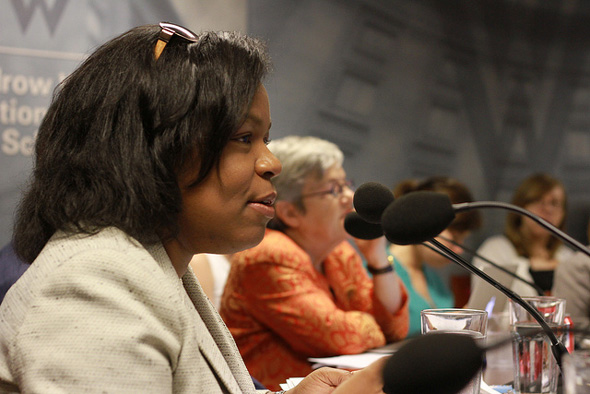
Photo Credit: Sean Peoples/Wilson Center. -
The Economist
Afghanistan’s Demography: A Bit Less Exceptional
›The original version of this article appeared in The Economist, and is based on ECSP Report 14, Issue 1.
This is a story from Afghanistan which is not about fighting, bombs, or the Taliban. It even contains a modicum of good news. It is about demography.
Afghanistan has long been seen as a demographic outlier. In 2005-10, according to the United Nations Population Division, its fertility rate was 6.6 – the second-highest in the world after Niger (the fertility rate is the number of children a woman can expect to have during her lifetime). The contrast with the rest of South Asia is extreme: fertility ranged from four (in Pakistan) to below three (in Bangladesh, India, and Sri Lanka). Afghanistan’s sky-high fertility seems consistent with a view of the country as trapped in an exceptional and dysfunctional mode of development, marked by war, religious extremism, tribal honor codes, and the subjugation of women.
But this fertility rate was always a bit of a guess. The last census was taken in 1979, the year of the Soviet invasion. A whole generation has grown up since then, amid pervasive violence and uncertainty. It has been extremely hard to know how fertility has been changing.
Hence the significance of the Afghanistan Mortality Survey. Based on interviews with 48,000 women and girls aged 12 to 49, it is the nearest thing the country has had to a national census for 30 years (there were smaller surveys in 2003 and 2007-08, but their coverage was not national).
Continue reading on The Economist.
Read more about the Afghanistan Mortality Survey here on the blog with Elizabeth Leahy Madsen’s original posts here and here.
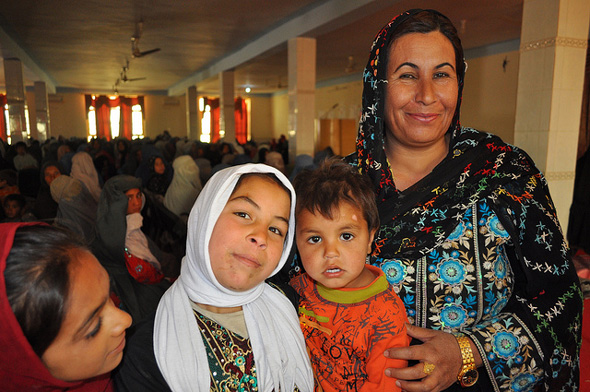
Photo Credit: “Celebrating International Women’s Day in Afghanistan,” courtesy of the U.K. Department for International Development. -
IFPRI Launches First ‘Global Food Policy Report’
›June 27, 2012 // By Carolyn Lamere“The Global Food Policy Report is the first publication that represents the major, major food policy developments in the past year and the outlook for 2012,” said Director of the International Food Policy Research Institute (IFPRI) Shenggen Fan in a video to promote the launch of the institute’s most comprehensive policy publication yet. The report is focused on regional developments, new research, debates, and legislation regarding food security both within individual states and at the international level.
A Guidebook for Policy
The 2008 global food crisis launched food security back onto the global agenda. A rapid rise in food prices contributed to instability around the world, and policymakers began to realize that access to food is an important security issue (high food prices have been linked to riots, for example).
“For 2012, food prices will remain very high and volatile, and some of the long-term trends like climate change, population growth, and demographic shifts towards more urbanized and higher income [populations] will continue to put pressure on global food security,” predicted Fan.
But the report notes that much of the fluctuation in global food prices is due to a lack of knowledge, not necessarily scarcity. The authors point to issues of preparedness and regulation as exacerbating factors and suggest that more detailed information, like that provided in the report, can help provide better solutions to policymakers.
Fan said that, by design, the report is “nontechnical, so the nontechnical person such as politicians, policymakers, practitioners, or anybody else who is interested in food security can use it as a comprehensive handbook.”
Making Connections Between Disciplines
The report draws on the expertise of dozens of authors who discuss topics ranging from biofuels to climate change. Rajul Pandya-Lorch, head of IFPRI’s 2020 Vision Initiative, spoke about the utility of collaboration among different disciplines in an interview with IFPRI: “I think for me 2011 was the time when we began to realize that we cannot think of agriculture simply for agriculture; we need to think of agriculture as a way in which we can impact on other development outcomes, especially nutrition and health,” she said.
Kathy Spahn, president and CEO of Helen Keller International, a speaker at the launch event, agreed. “The development community is beginning to realize that achieving food security is about more than just growing more food. It is also about growing more nutritious foods and making sure these foods are available and accessible to the families in need,” she wrote for Helen Keller International.
Fan emphasized that although agriculture has become more prominently featured in discussions of development, it is important to continue to link it to other outcomes. “We must find new ways to exploit the links between agriculture and other sectors, including health, nutrition, water, and energy,” he wrote in the overview of the report.
Past Developments and Future Outlook
Several key developments are highlighted that shaped food security in 2011. Food prices were particularly volatile – rising for the first half of the year then dropping – which caused a renewed global emphasis on food from policymakers.
New players ranging from emerging economies to the private sector “are increasingly reshaping the structure and nature of the global food landscape,” write the authors. The G-20 is “claiming a growing role” to help manage economic issues, and states like China, Brazil, and India are becoming more vocal regarding global food policy. Partnerships between governments and private companies have also become more common.
These and other developments described in the report will have an impact into 2012 and beyond. The report points out that “food emergencies” caused by natural disasters like the 2011 drought in the Horn of Africa will likely occur in 2012 as well, but also emphasizes that these cannot overshadow more long-term drivers of food insecurity, like land degradation.
The report describes four “high-priority areas of action” for this year. First, the G-20 should try to reduce price volatility (although some have argued volatility is less a problem than consistently high prices). Second, policymakers should work to improve agricultural production specifically through strategies like soil nutrient management which provide high yields but are more sustainable than high use of fertilizers. States should also ensure that the infrastructure necessary to make these strategies successful is in place. The next target is based on the Rio+20 conference, namely that participants should “integrate economic, social, and environmental sustainability efforts” to improve outcomes like nutrition and health. There were in fact several seminars on cross-discipline partnerships at the conference, and the importance of integration was mentioned in the outcome text that emerged.
Finally, the report calls for further collaboration across disciplines, in emulation of the internal IFPRI effort for the report which included a wide variety of expertise. The authors emphasized that though progress has been made, the challenge of achieving global food security will remain a concern for the near future, and cooperation across communities will be critical.
“The idea and the impact of the report is to make people aware of the problems that we are facing and the concerns…clearly the problem is not resolved and it’s something that we need to take very seriously,” said contributor Maximo Torero in an interview with IFPRI. “There’s a lot of work to be done to try to do this.”
Sources: Bill & Melinda Gates Foundation, CNN, Hellen Keller International, International Food Policy Research Institute, UN Conference on Sustainable Development.
Video Credit: IFPRI. -
Poor Planning, Population Boom Stress Abuja’s Water System, Says Pulitzer Center
›June 26, 2012 // By Graham NorwoodNigerian journalist Ameto Akpe, who recently spoke as part of the Wilson Center’s “Nigeria Beyond the Headlines” event, has published a new article on water scarcity in Abuja, Nigeria’s capital city, for the Pulitzer Center on Crisis Reporting’s “Waiting for Water” series.
Abuja faces acute shortages due to insufficient government planning and a major population boom, she writes:The FCT [Federal Capital Territory] has seen an unprecedented population growth in the last 10 to 15 years. In 2006, population growth rate was pegged at 9.3 percent, the highest rate in the country and way above what the city’s planners envisaged. Recently, increased migration to the city has been spurred by terrorism attacks in the North, numerous incidences of kidnappings in the South, and the generally high unemployment rate in the country as millions of young graduates pour into the city in search of the very elusive promise of a “government job.”
Read the full article on the Pulitzer Center website.
Jibril Ibrahim, the Director of the FCT water board, the agency solely responsible for the production and supply of water in the territory, admits that the authorities did not see this coming. He says this unexpected population growth has overwhelmed existing water infrastructure and ruined the careful plans for water service delivery in the territory.
“This is what has made nonsense of the design we have in the city,” Ibrahim says. “Nobody believed that we were going to have this huge number of people and not even within this space of time.”
Patience Achakpa, executive secretary for the Women’s Environment Programme, believes that the government should have foreseen the potential attraction a city like Abuja presents to the urban migrant and should have put in place more efficient plans.
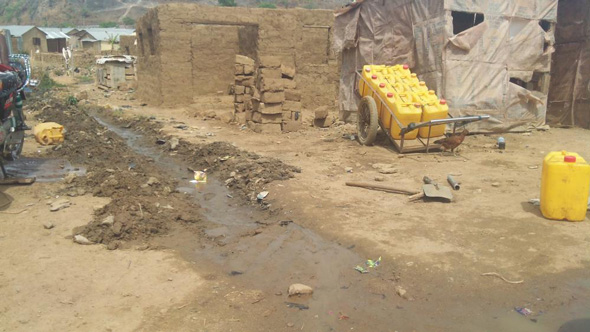
This lack of foresight means there is no pipe reticulation in many districts, particularly in peripheral areas. Even government housing projects are routinely built without being connected to the grid, simply lacking the crucial distribution network that would bring water to individual homes. Thus each household is forced to sink its own borehole, which in the long run has obvious implications on ground water.
Photo Credit: A water point in Gishiri, Abuja, courtesy of Ameto Akpe/Pulitzer Center. -
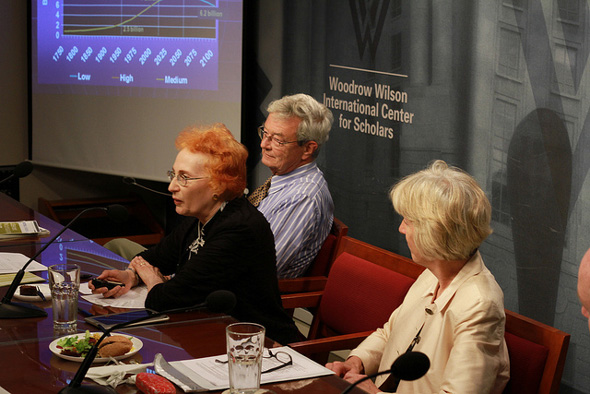
Population Projections: Breaking Down the Assumptions
›“The seventh billion [person] was added in 12 years, and that could be the story for the eighth billion – and that gets people who think that growth has stopped,” said Carl Haub, senior demographer at the Population Reference Bureau. Haub was joined by Hania Zlotnik, former director of the UN Population Division, and Rachel Nugent of the University of Washington’s Department of Global Health on June 5 to speak about the assumptions behind the UN population projections. While each of the panelists noted the utility of projections, they also cautioned against seeing them as inevitable. [Video Below]
Meeting the Projections
As a former top official in the UN’s Population Division, Zlotnik spoke about how much is riding on the projections. “The experts tell me that to feed nine billion people, living better than the standards of living that we have today, one needs to increase agricultural production or all the production of food by about 70 percent and that is a challenge, but it might be feasible. But if the numbers go higher…I think it’s impossible,” she said.
The medium variant projection by the UN that gets the world to that nine billion figure is not a given – it builds in expected action on and improvement of many demographic indicators. Zlotnik pointed to the global unmet need for family planning, for example, which “is especially high in the high fertility countries,” and suggested that the current rate of increase in contraceptive use is insufficient.
She calculated the number of years it would take many of these countries to meet their unmet need at their current rate of uptake and found “the number of years for a lot of these poorer countries that have high fertility would be very long – 40 years, some of them, 80 years, 100 years – because the increased contraceptive prevalence has been so small.” At that rate, population growth in these countries will far surpass the UN medium variant.
The perception that population growth is no longer an issue contributes to the problem, Zlotnik said. People see that only 18 percent of the world population lives in countries with high population growth and assume “there’s no longer a population problem.” But she emphasized the power of exponential growth, arguing that even a small proportion growing at a rapid rate can have a large impact.
Questioning Assumptions
Haub pointed out several instances where assumptions in the methodology behind the projections create uncertainty.
For example, there is a lack of data in many low-income countries. “A date, let’s say 2000, 2005 – it’s the past, but it may be a projection. It may be based on a census in 1990,” he said. If it’s wrong, that error may not be corrected until another census, but it will still be relied on for country-level projections.
He also noted that certain assumptions about desired family size sometimes do not bear out on the ground. One of the key methods to slowing population growth is to provide women and couples with the means to choose how many children they wish to bear. But in many fast-growing countries, women wish to have large numbers of children. In Niger, for example, women say their ideal family size is over nine children. Such women are less likely to use contraception, no matter how accessible it is, as they value larger families.
“It has been – I guess conventional is a good word – to assume that birth rates are going to come down the way they did in the rich countries,” Haub noted. But there has been a “stall” for many developing countries, which he suggests is caused by fast initial uptake from urban women followed by much slower uptake by rural women. These dynamics, however, are relatively new and therefore are not always well incorporated into current projections.
The Economic Impact of Population Changes
While Haub and Zlotnik looked at the assumptions made before the projections are made and the importance and means to reach these projections, Nugent focused on the economic implications of lower fertility and the demographic transition.
She suggested that increased control over fertility can positively impact a country’s economy. Women are given the opportunity to “invest their time in acquiring skills and investing time in the labor market and that affects their earnings…[and] their ability to control resources and make decisions within the household” as they spend less time caring for children, she said.
The labor market changes as well, as fewer children are born into a given generation. This can reduce “demand on economic resources [and] demand on environmental resources,” and the increased investment in human capital allowed by smaller family sizes can lead to a healthier population.
Nugent concluded by pointing out key areas of intervention most likely to decrease both fertility and mortality and allow countries to reap the positive economic benefits of fertility decline. She suggested a focus on “complementary investments in education and health,” especially with regard to “poor and marginalized populations,” which can in fact impact the country as a whole. Finally, she recommended focusing on proven “evidence-based programs [and] service-delivery programs.”
Educating Policymakers
Each of the panelists cautioned against relying on population projections without taking action to make them come true.
“Maybe the best thing to do if you’re giving a presentation is to show the UN’s constant fertility variant first and scare people half to death and then say, ‘but if 117,000 things go right, [the medium variant projection] is what will happen,” said Haub, addressing the common tendency to view the UN projections as destiny.
Similarly, Nugent warned against viewing the demographic transition as inevitable. “There’s a certain sense…that [the demographic dividend] is kind of an automatic thing that happens, and that really has to be addressed,” she said, adding that “it’d be quite interesting to show some scenarios of what would need to be done…in order to get some benefits from that dividend.” (See also Elizabeth Leahy Madsen’s recent article on achieving the dividend.)
Zlotnik reiterated that the UN does not in fact know what the future will bring. “It’s not that we know what the world is going to do, but we hope that [the projections] will get the message out – if this doesn’t happen, you’re in trouble.”
Event ResourcesPhoto Credit: Sean Peoples/Wilson Center.