• woodrow wilson center
  • ecsp

New Security Beat

Subscribe:
  • rss
  • mail-to
  • Who We Are
  • Topics
    • Population
    • Environment
    • Security
    • Health
    • Development
  • Columns
    • China Environment Forum
    • Choke Point
    • Dot-Mom
    • Friday Podcasts
    • Navigating the Poles
    • Reading Radar
  • Multimedia
    • Water Stories (Podcast Series)
    • Backdraft (Podcast Series)
    • Tracking the Energy Titans (Interactive)
  • Films
    • Water, Conflict, and Peacebuilding (Animated Short)
    • Paving the Way (Ethiopia)
    • Broken Landscape (India)
    • Scaling the Mountain (Nepal)
    • Healthy People, Healthy Environment (Tanzania)
  • Publications
  • Events
  • Contact Us

NewSecurityBeat

The blog of the Wilson Center's Environmental Change and Security Program
Showing posts from category livelihoods.
  • Do Population, Health, and Environment Projects Work? A Review of the Evidence

    ›
    Guest Contributor  //  June 11, 2015  //  By Carolyn Lamere
    map-small

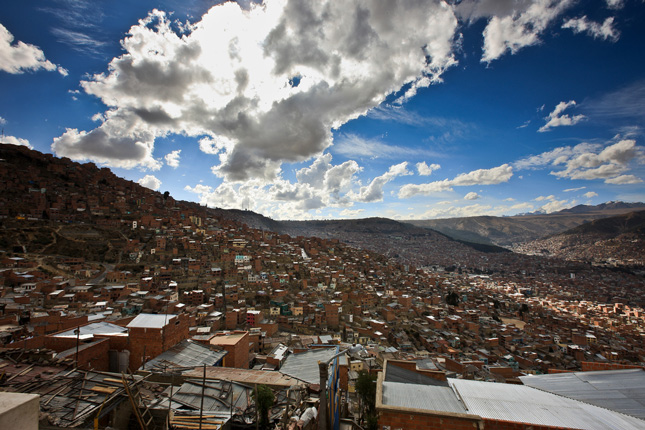
    Frequent readers of New Security Beat are no strangers to the PHE approach to development – projects, often community-based, that integrate population, health, and environmental programming in a single intervention. Practitioners suggest that such integrated programming is more effective and efficient than running simultaneous siloed projects, each focusing on a narrower objective. But does the evidence support this conclusion? How effective is the PHE approach?

    MORE
  • The Sahel Beyond the Headlines: Underlying Demographic, Environmental Trends Erode Resilience

    ›
    From the Wilson Center  //  June 8, 2015  //  By Carley Chavara, Theo Wilson & Schuyler Null
    Bandiagara1

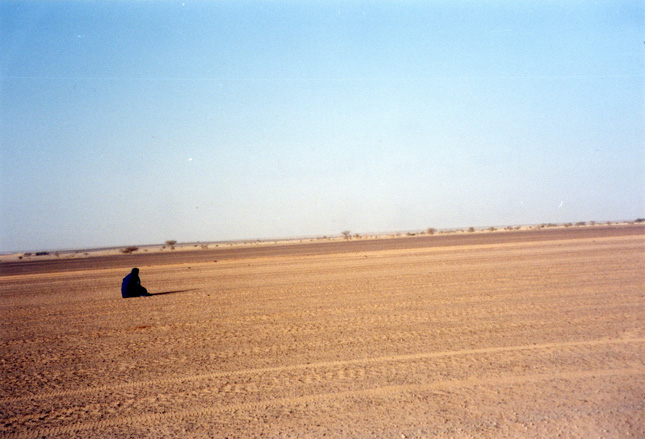
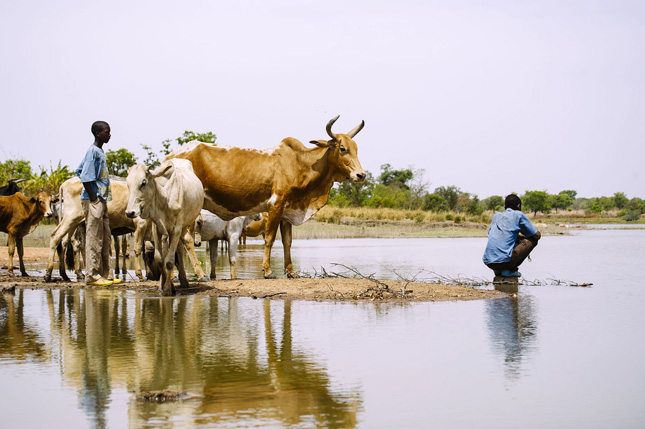
    Between the Sahara to the north and savanna to the south lies the semi-arid Sahel, a region stretching from Senegal to Sudan that has experienced desperate poverty, climate change, malnutrition, and violence. While every context is different, the Sahelian countries share some common challenges, including a pattern of recurring crises and fluid borders. Boko Haram’s reign of terror in northern Nigeria and Mali’s coup have both had cross-border components. [Video Below]

    MORE
  • Jack Goldstone: Preventing Violence in the Sahel Starts With More Inclusive Governance

    ›
    Friday Podcasts  //  June 5, 2015  //  By Carley Chavara
    goldstone_small

    “The Sahel faces huge problems,” says Jack Goldstone, Virginia E. and John T. Hazel professor of public policy at George Mason University and Wilson Center global fellow, in this week’s podcast. “It is facing massive population growth. It is facing environmental decay. It has a history of violent conflict.”

    MORE
  • Parfait Eloundou-Enyegue: Generational Inequality in the Sahel a Security Risk

    ›
    Friday Podcasts  //  May 29, 2015  //  By Linnea Bennett
    Parfait1

    Rapid population growth, which many Sahelian countries are experiencing, is often associated with an increased risk of sociopolitical violence. But in this week’s podcast, Cornell University Professor Parfait Eloundou-Enyegue argues there is another factor related to demographic change that governments and development organizations should account for: inequality.

    MORE
  • USAID’s Sylvia Cabus on the Sahel: “We Help Farmers…and Their Husbands”

    ›
    Friday Podcasts  //  May 22, 2015  //  By Carley Chavara
    cabus

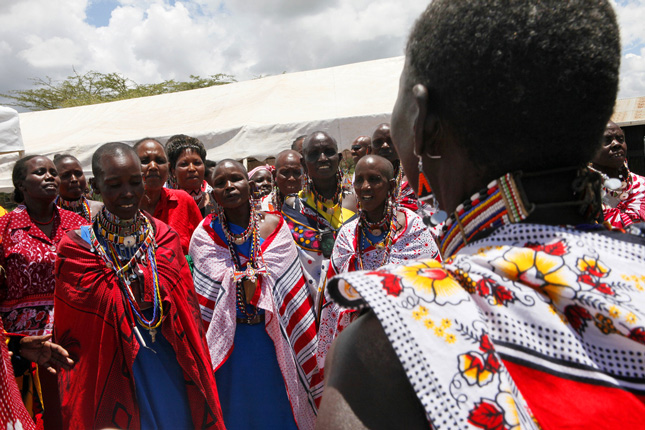
    In the Sahel, one of the most food-stressed regions of the world, “women bear the brunt in terms of coping mechanisms that are employed at the community level,” says Sylvia Cabus, gender advisor for USAID’s Bureau for Food Security, in this week’s podcast.

    MORE
  • Cooperation Is Not Enough: Why We Need to Think Differently About Water

    ›
    Guest Contributor  //  May 19, 2015  //  By Naho Mirumachi
    Mekong-dam

    In 2003, the United Nations General Assembly declared 2005 to 2015 to be the decade of “water for life” as a way to encourage countries to reach their water-related targets under the Millennium Development Goals. In summing up the last 10 years, it was noted that water cooperation had been promoted widely, featuring at international fora and in government initiatives and development agendas. Water cooperation is described as having the potential to enable peace and sustainable development. However, just as focusing on “water wars”  might undermine the everyday challenges of securing safe and adequate supplies of water, focusing only on “more cooperation” may well simplify the problem at hand.

    MORE
  • The Dark Side of Development: Displacement, Eviction in World Bank Projects and Ethiopia

    ›
    Reading Radar  //  May 13, 2015  //  By Theo Wilson

    OaklandWith the help of international aid, foreign land grabs in the Gambella region of Ethiopia have resulted in environmental degradation, more severe economic and social inequality, and human rights abuses, according to a new study by the Oakland Institute. We Say The Land Is Not Yours collects testimony from victims of “villagization,” a policy of forced displacement started under the military Derg dictatorship and, according to many, continued to this day under the guise of land investment.

    MORE
  • Blood Teak: Changing the Calculus of Myanmar’s Ethnic Conflicts

    ›
    Guest Contributor  //  April 28, 2015  //  By Jay Benson
    teak-myanmar

    On March 30, the government of Myanmar and an umbrella group of 16 ethnic minority groups agreed to a draft agreement for a “nationwide ceasefire” to end decades of conflict in the country’s northern reaches. But even as the latest ceasefire was being made, two armed groups, the Myanmar National Democratic Alliance Army (MNDAA) and the Kachin Independence Army (KIA), were in open conflict with the Burmese military. Fighting in Kokang and Kachin has led to casualties in the triple digits and displaced an estimated 100,000 civilians.

    MORE
Newer Posts   Older Posts
View full site

Join the Conversation

  • RSS
  • subscribe
  • facebook
  • G+
  • twitter
  • iTunes
  • podomatic
  • youtube
Tweets by NewSecurityBeat

Trending Stories

  • unfccclogo1
  • Pop at COP: Population and Family Planning at the UN Climate Negotiations

Featured Media

Backdraft Podcast

play Backdraft
Podcasts

More »

What You're Saying

  • Volunteers,At,The,Lagos,Food,Bank,Initiative,Outreach,To,Ikotun, Pan-African Response to COVID-19: New Forms of Environmental Peacebuilding Emerge
    Rashida Salifu: Great piece 👍🏾 Africa as a continent has suffered this unfortunate pandemic.But it has also...
  • A desert road near Kuqa An Unholy Trinity: Xinjiang’s Unhealthy Relationship With Coal, Water, and the Quest for Development
    Ismail: It is more historically accurate to refer to Xinjiang as East Turkistan.
  • shutterstock_1779654803 Leverage COVID-19 Data Collection Networks for Environmental Peacebuilding
    Carsten Pran: Thanks for reading! It will be interesting to see how society adapts to droves of new information in...

What We’re Reading

  • Rising rates of food instability in Latin America threaten women and Venezuelan migrants
  • Treetop sensors help Indonesia eavesdrop on forests to cut logging
  • 'Seat at the table': Women's land rights seen as key to climate fight
  • A Surprise in Africa: Air Pollution Falls as Economies Rise
  • Himalayan glacier disaster highlights climate change risks
More »
  • woodrow
  • ecsp
  • RSS Feed
  • YouTube
  • Twitter
  • Facebook
  • Home
  • Who We Are
  • Publications
  • Events
  • Wilson Center
  • Contact Us
  • Print Friendly Page

© Copyright 2007-2021. Environmental Change and Security Program.

Woodrow Wilson International Center for Scholars. All rights reserved.

Developed by Vico Rock Media

Environmental Change and Security Program

Woodrow Wilson International Center for Scholars

Ronald Reagan Building and International Trade Center

  • One Woodrow Wilson Plaza
  • 1300 Pennsylvania Ave., NW
  • Washington, DC 20004-3027

T 202-691-4000