

-
Backdraft #6: Jesse Ribot on Why It’s So Important for Climate Interventions to Work Through Local Democracy
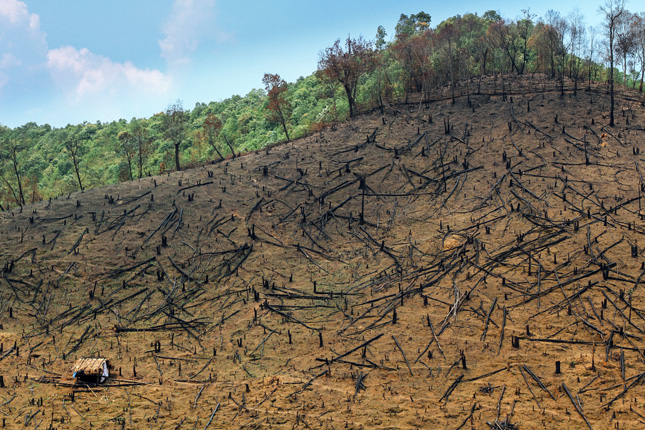
› In a research project spanning more than two dozen case studies on environmental governance in 13 sub-Saharan African countries, Jesse Ribot, professor at the University of Illinois, and colleagues found that while many forest management projects claimed to be working with communities, they were in fact undermining local democracy in various ways.
 -
15 Years of Environmental Peacemaking: Overcoming Challenges and Identifying Opportunities for Cooperation
›
As the 1990s drew to a close, there was a sense that much of the momentum gained at the first Earth Summit on sustainable development, a positive, affirming environmental narrative, was waning.
-
Can We Save the World’s Remaining Forests? A Look at ‘Why REDD Will Fail’
›As climate change threatens the stability of ecosystems around the world, the preservation of forests is seen as a “win-win” solution to curbing planet-warming emissions while producing value for developing country economies.
-
Backdraft Episode #3: Kimberly Marion Suiseeya on Voice, Justice, and Representation
›“If we think sustainable development is the goal we want to achieve, we have to be radical in elevating those who have been traditionally excluded,” says Northwestern University’s Kimberly Marion Suiseeya in this week’s “Backdraft” episode. “We have to approach conservation and global environmental governance from the perspective of the invisible and the marginalized people.” -
Reaching Accord on Land Grabs, and Household Perceptions of Climate-Conflict Vulnerability
›Large-scale land acquisitions, otherwise known as “land grabbing,” are often believed to lead to resistance from affected local communities. According to an article by Ruth Hall et al. in The Journal of Peasant Studies, however, “political reactions ‘from below’ to global land grabbing have been vastly more varied and complex than is usually assumed.” -
Torn Social Fabric: Water, Violence, and Migration in Central America
›In the first half of last year, 26,000 unaccompanied children were apprehended by U.S. law enforcement trying to cross the southern border. Most came from Central American states like El Salvador, Guatemala, and Honduras. Such displacement is just the tip of the iceberg in terms of migration in the region. Many more are moving from rural to urban areas and into neighboring countries seeking opportunity and fleeing violence.
-
New “Backdraft” Podcast Series, on the Peace and Conflict Consequences of Climate Responses
›The science is clear: To prevent major disruption, the global community must take steps to address climate change. But it is also increasingly clear that efforts to address climate change can have major effects on societies that are not always anticipated. -
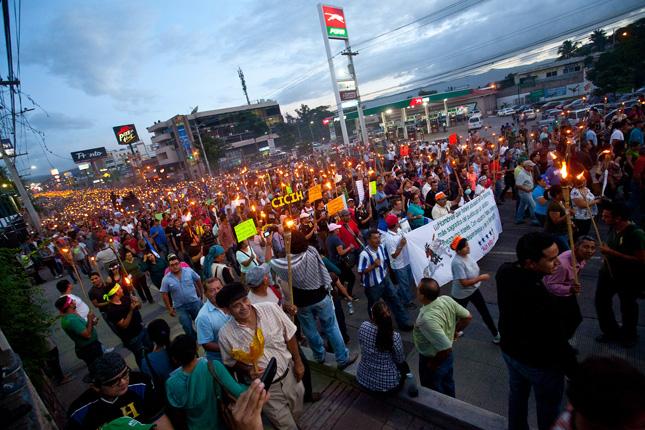
Environmental Defenders Under Attack: Second Goldman Prize Winner Killed in Less Than a Year
›Despite recent press coverage about the violence against international environmental defenders, another prominent figure has been murdered in cold blood.
Showing posts from category land.
 In a
In a 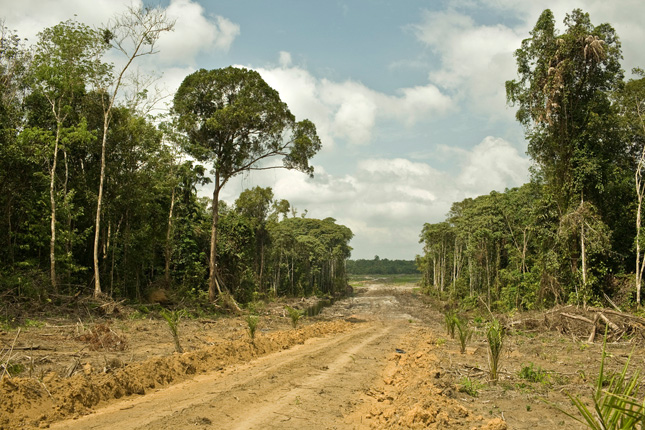
 “If we think sustainable development is the goal we want to achieve, we have to be radical in elevating those who have been traditionally excluded,” says Northwestern University’s Kimberly Marion Suiseeya in this week’s “Backdraft” episode. “We have to approach conservation and global environmental governance from the perspective of the invisible and the marginalized people.”
 The science is clear: To prevent major disruption, the global community must take steps to address climate change. But it is also increasingly clear that efforts to address climate change can have major effects on societies that are not always anticipated.


