-
Two Divergent Paths for Our Planet Revealed in New IPCC Report on Oceans and Cryosphere
›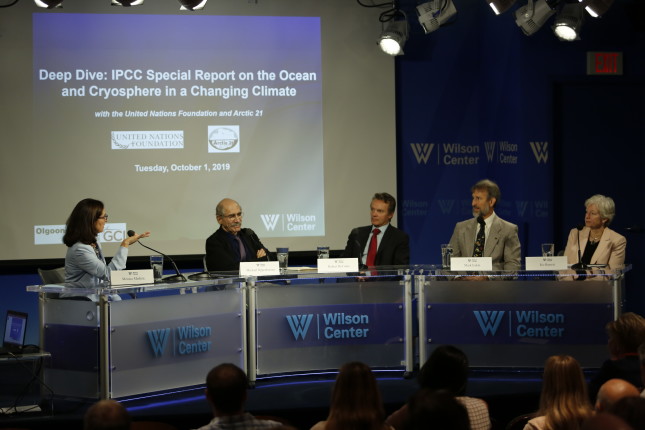
The world’s ocean and cryosphere have been absorbing the heat from climate change for decades, said Intergovernmental Panel on Climate Change (IPCC) Vice Chair Ko Barrett at a recent Wilson Center event on the IPCC’s Special Report on Oceans and Cryosphere. “The consequences for nature and humanity are sweeping and severe,” she said.
-
Gordon Mumbo on Water and Livelihoods in the Mara River Basin
›Friday Podcasts // Water Security for a Resilient World // Water Stories (Podcast Series) // November 15, 2019 // By Benjamin Dills This article is part of ECSP’s Water Security for a Resilient World series, a partnership with USAID’s Sustainable Water Partnership and Winrock International to share stories about global water security.
“If you live in the developed world or in some urban centers, then the supply of water is guaranteed,” said Gordon Mumbo, team leader for Sustainable Water for the Mara River Basin, a project of Winrock International and USAID’s Sustainable Water Partnership, in this week’s Water Stories podcast. When you wake up, you expect water to flow from your tap. “If you don’t find it flowing, you get upset and will probably call the utility company.” But people living in the Mara River Basin don’t have that luxury. “They have to walk to the river to get water and bring it home,” said Mumbo.
-
Hydro-Nationalism: Future Water Woes Call for Radical New Borders
›International political boundaries are arbitrary creations. Today’s borders are better described as imaginary lines on maps, rather than hard barriers between states. Often using mountains, rivers, or other geographical landmarks, modern borders are entrenched in historic tradition rather than logic and fact. As a result, today’s international borders are poorly equipped to handle modern challenges, in particular climate change, which has already begun to threaten the most important state resource, fresh water.
-
Defying Boundaries: Using Climate Risks to Forge Cross-Border Agreements
›Climate change is a risk, said Maurice Amollo, a Mercy Corps Chief of Party in Nigeria Mercy Corps. “But it is also an opportunity if people come together.” He spoke at a recent USAID Adaptation Community Meeting, “Tackling the threat multiplier: Addressing the role of climate change in conflict dynamics.” The discussion focused on USAID’s Peace III initiative that Amollo and Mercy Corps implemented in the Karamoja region along the borders of Kenya, Ethiopia, Somalia, and Uganda, where climate and conflict shocks are part of daily life for pastoralist ethnic groups. Addressing climate and conflict issues in these regions will require using the environment to build cooperation and peace, said Eliot Levine, the Director of Mercy Corps’ Environment Technical Support Unit.
-
Research in a Changing Arctic Must be Prioritized
›The Arctic is changing, and it’s changing fast, even faster than models had predicted. The most recent Intergovernmental Panel on Climate Change (IPCC) report found with strong confidence that the Arctic is warming two to three times faster than the global average.
-
Nothing Marvelous About Plastic Waste: China’s Pollution Endgame
›Our world is drowning in plastic pollution with nearly 8 million tons of single-use plastic and some 700,000 tons of abandoned fishing gear leaking into marine ecosystems each year. Plastic waste endangers marine species. For example, animals become entangled in abandoned nets. Marine birds, fish, whales and sharks are sickened or die when they accidentally ingest plastic. According to a 2017 study, around 90 percent of single-use plastic that pollutes our oceans comes from 10 rivers, 6 of which are in China. No Avenger superheroes can make this problem go away; rather the world needs heroic efforts by consumers, businesses, and governments to curb these plastic leaks. Encouragingly, China’s war on pollution has catalyzed new bottom-up activism and top-down policies that are starting to spur action to reduce plastic leakage.
-
Concerns Rise Over Governance Gap in Arctic
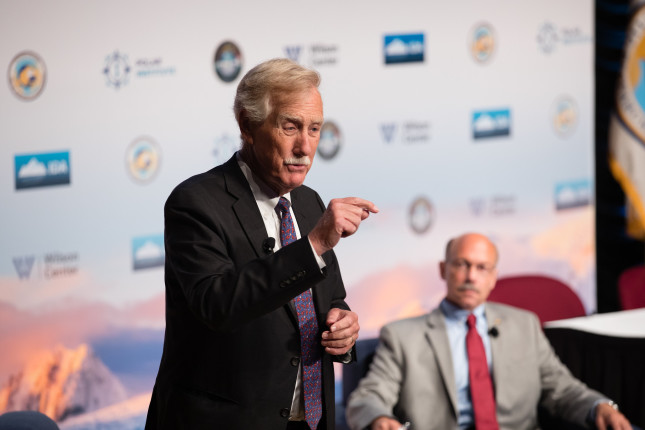
›“We’re attempting to do something that’s never been done before in world history,” said Senator Angus King (I-ME). “The peaceful development of a major new physical asset.” He spoke of the Arctic Ocean at the 8th Symposium on the Impacts of an Ice-Diminishing Arctic on Naval and Maritime Operations. The symposium was hosted by the Wilson Center’s Polar Institute, in partnership with the U.S. Arctic Research Commission, U.S. National Ice Center, Arctic Domain Awareness Center, Patuxent Partnership, St. Mary’s College of Maryland, and the Ronald Reagan Building and International Trade Center.
-
Lost in Translation: How Building “Strong” Institutions can Diminish Human Security in the Global South
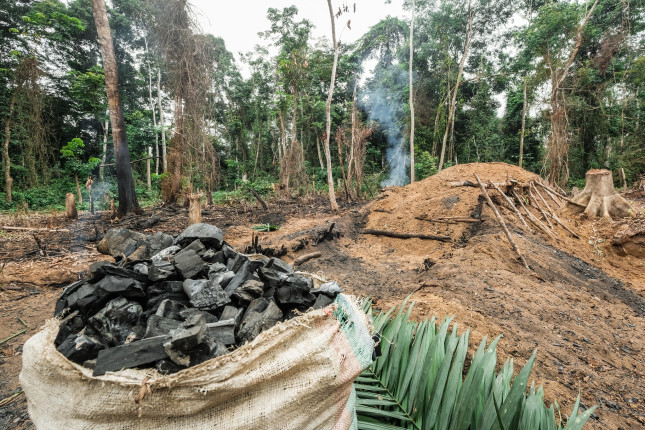
›In the Global South, natural resource conflict has largely been considered a consequence of poor governance and weak political institutions. The international community’s solution? Build “green” governance capacity as a way to mitigate violent conflict and improve environmental outcomes. For the international development community, this has meant introducing laws, policies, and practices based on international standards of best practice, and training local regulators to adhere to those standards.
Showing posts from category international environmental governance.
 This article is part of ECSP’s