-
High Seas Biodiversity Treaty Would Prioritize Conservation
›
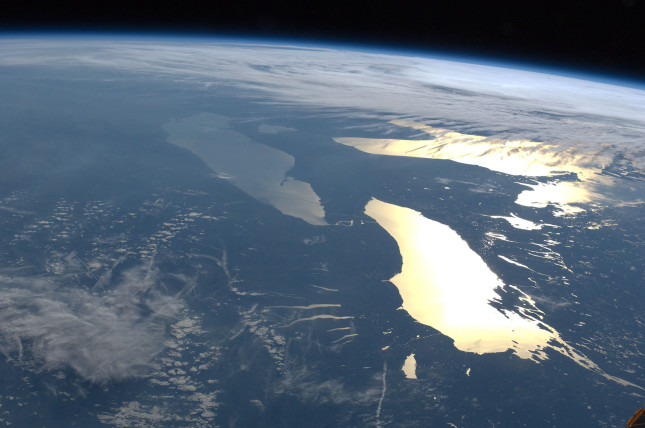
Roughly 20 organizations wield some management authority in the high seas, but none of them have conservation as their core mandate, said Liz Karan, Senior Manager of the Protecting Ocean Life on the High Sea Campaign at the Pew Charitable Trusts. She spoke at a recent Wilson Center event hosted by the Polar Institute and Environmental Change and Security Program. The discussion revolved around aspects of a proposed global treaty on conservation and sustainable use of biodiversity in areas beyond the jurisdiction of any country. “The high seas treaty comes in as an opportunity to put conservation at the focus of the discussion of how we manage the high seas,” said Karan.
-
To Reach Global Climate Targets, Wildlife and Nature Must Be Protected, Report Warns
›April 22, 2019 // By Amanda King
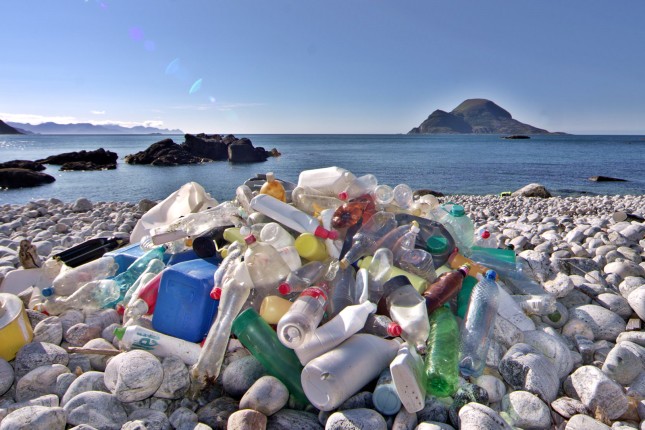
The Paris Agreement in December 2015 set targets to limit global climate change. To prevent average global temperatures from rising 2°C above preindustrial levels, it recommends limiting the temperature increase to 1.5°C above preindustrial levels. “But the Paris Agreement is only a half-deal; it will not alone save the diversity of life on Earth or conserve ecosystem services upon which humanity depends,” say the authors of a new article published in Science Advances. Their article proposes a Global Deal for Nature (GDN), a time-bound, science-driven plan to save the diversity and abundance of life on Earth.
-
Lower Mekong Governments and Development Partners Seek to Improve Water Data Sharing
›In the Mekong region, there is a general push to strengthen water data management and ultimately make evidence-based infrastructure development and water resources management decisions. The efforts of the region’s governments and development partners will ideally help mitigate the cumulative impacts of infrastructure development on water resources; save lives, livelihoods, and property from potentially devastating floods and droughts; and help natural resources be used sustainably. The challenge will involve navigating potential pitfalls related to technical know-how and harmonization of standards as they develop effective water data sharing platforms.
-
How Building Political Will in Asia Could Improve Environmental Governance
›A high degree of political will is one of several pre-conditions needed for good environmental management, said Kim DeRidder, Regional Director for Environmental Programs at the Asia Foundation. He spoke at a round-table on Advancing Environmental Governance Across Asia hosted by the Asia Foundation. While he emphasized the need to promote political will within Asia, he questioned whether the bold pledges that some Asian countries made in the Paris Agreement, such as the Philippines’ pledge to reduce emissions by 70 percent by 2030 and Indonesia by 26 percent, were realistic given the significant disconnect between what a country claims it is going to do and what it can actually do.
-
From Resolution to Solution: UNEA’s Unique Opportunity to Tackle Environmental Dimensions of Armed Conflicts
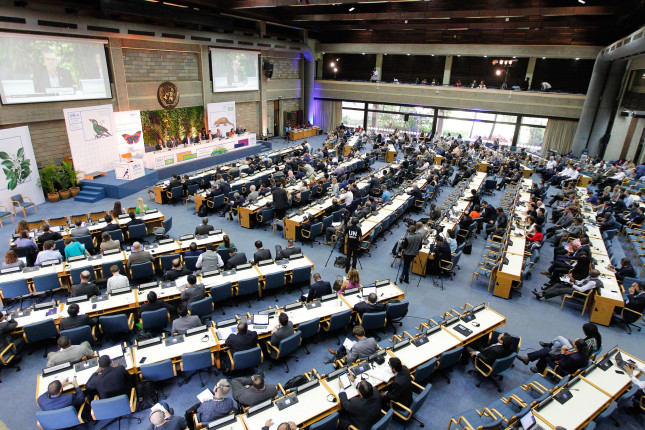
›When the Fourth Session of the UN Environment Assembly (UNEA-4) takes place in Nairobi starting March 11, governments, international organizations, and civil society organizations will discuss issues on the theme of innovative solutions for environmental challenges and sustainable consumption and production with over 30 draft resolutions submitted for discussion. With few international forums where the environmental dimensions of conflict can be properly discussed, we were optimistic about the past resolutions tackling this topic.
-
Ken Conca on Transboundary Water Basin Management
›Friday Podcasts // Water Stories (Podcast Series) // January 18, 2019 // By Linsey Edmunds & Truett Sparkman“When we start talking about water in the context of security, we’re immediately drawn to a conversation about conflict. And that’s often framed in terms of scarcity of water and a real zero-sum game around water, where scarcity begets grievances, which beget instability and conflict,” says Ken Conca, Professor at American University’s School of International Service, in this week’s Water Stories podcast. Of the world’s 276 transboundary water basins, fewer than half are governed by an agreement or accord that allocates use of the shared water between countries—and less than a quarter of these accords include all the riparian states in a basin. -
Snow and Ice Melt Patterns Help Predict Water Supply for Major Asian River Basins
›“For the longest time we thought that water was forever renewable and that it would always be there,” said Gloria Steele, Acting Assistant Administrator for Asia with USAID, at a recent Wilson Center event on water security in High Asia. “We now know that is not the case, and we need to protect it and manage it effectively.”
-
Panelists Call for Creation of World Commission to Handle Solar Radiation Management
›“Right now, it’s the Wild West in regard to governance with geoengineering,” said Paul Wapner, a professor at the School of International Service at American University at a recent panel about solar radiation management (SRM) at the Arizona State University’s Washington Center. According to the Governing Solar Radiation Management report which was the focus of the event, SRM, which theoretically would cool the planet by reflecting sunlight back into space, may be a viable last-resort option if climate change mitigation and adaptation efforts fail. Wapner said that “there’s a danger in SRM, there’s a danger in climate change. And, balancing those risks is part of the exercise and will continue to be part of the exercise.”
Showing posts from category international environmental governance.
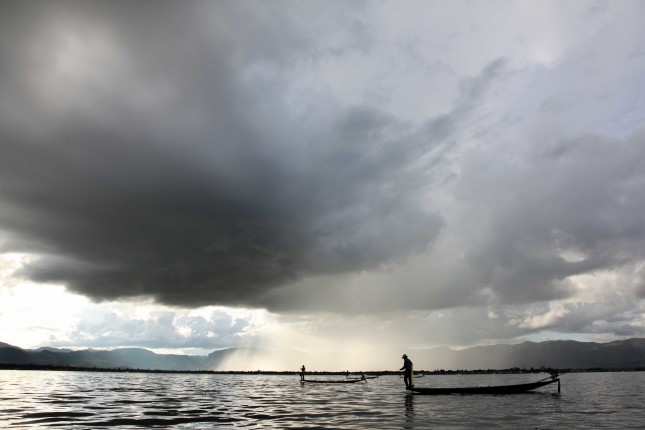
 “When we start talking about water in the context of security, we’re immediately drawn to a conversation about conflict. And that’s often framed in terms of scarcity of water and a real zero-sum game around water, where scarcity begets grievances, which beget instability and conflict,” says Ken Conca, Professor at American University’s School of International Service, in this week’s Water Stories podcast. Of the world’s 276 transboundary water basins, fewer than half are governed by an agreement or accord that allocates use of the shared water between countries—and less than a quarter of these accords include all the riparian states in a basin.