

-
Toward a New Regional Approach to Water Security and Governance in the Horn of Africa
›Guest Contributor // April 7, 2020 // By Anniek Barnhoorn, Florian Krampe, Luc van de Goor, Elizabeth Smith & Dan Smith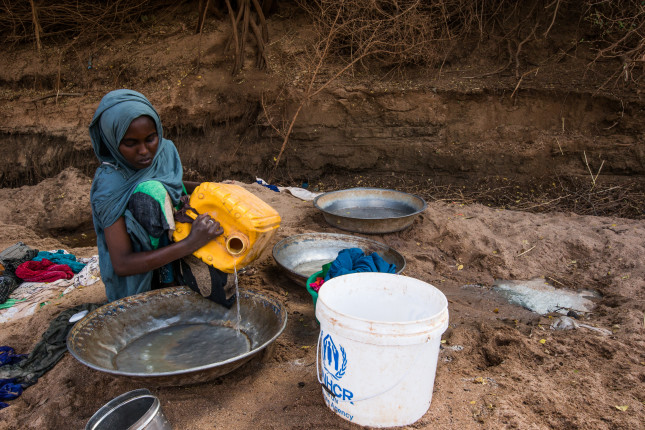
As the global climate changes, climate-related security risks are making the existing political, social, and economic challenges even more complicated. The 230 million people who live in the Horn of Africa are highly vulnerable to the impacts of climate change such as droughts and floods. Political fragility and transnational complexities make water governance a matter of regional high-level politics as well as geopolitical tensions. In short, sustainable water governance is critical for achieving resilient peace.
-
From Arms to Farms: A Conversation with Casimiro Olvida
› “This project is serious,” Casimiro Olvida said. “It will help the community. If you do not believe me, you can kill me anytime.” He recalled saying this in 1995 to Communist rebels in Mindanao who were suspicious that his USAID-funded team was supporting the Philippine government. We have the same goals, he told them, to help the poor and protect the environment. Apparently, he was convincing. Now Watershed Protection Project Manager of the Sarangani Energy Corporation, Olvida spoke in this week’s podcast with ECSP’s Lauren Risi, at the International Conference on Environmental Peacebuilding in October 2019, describing his decades of work in forest management in the Philippines.
 -
Dr. Mishkat Al-Moumin on the Importance of Women & the Environment to Sustainable Peace
›“I believe if you acknowledge women as primary users of environmental resources, if you draft the policy with women [at] the table, offering you their unique perspective and unique feedback, you’re going to have a more stable policy. A policy that gets implemented,” says Mishkat Al-Moumin, scholar in residence at the Environmental Law Institute, in this week’s Friday Podcast, and second in a series of interviews recorded at the First International Conference on Environmental Peacebuilding. -
Black Coal to White Trash
›Coal has long been China’s “black gold,” supplying over half of the nation’s electricity. Yet as coal’s energy share decreases due to domestic action to reduce air pollution and greenhouse gas emissions, a new coal industry is emerging. In China’s arid northwest, eight plants are pulverizing coal chunks and “cooking” coal powder into something more valuable than power—or maybe even gold. These coal conversion plants, soon numbering over 20, churn out chemicals to produce plastic.
-
Fisheries Management: A Possible Venue for Navigating Fisheries Conflicts in the Indian Ocean
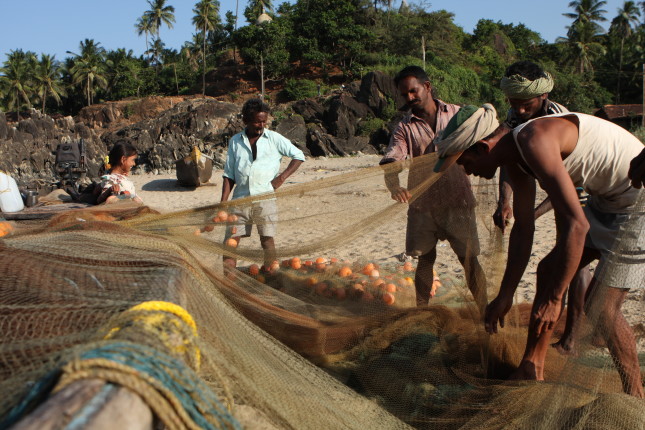
›A significant increase in fisheries-related conflicts in the Indian Ocean since 2000 is heightening regional tensions. These conflicts have ranged from purely verbal and diplomatic disputes to armed attacks on fishing vessels by coast guards and navies. These disputes are most often low-intensity, but constitute true “wild card” scenarios in which competing powers’ navies reach the brink of engagement due to the actions of third parties that they neither command nor control.
-
Where Do the Plastic Miners Go When the “Mine” Disappears?
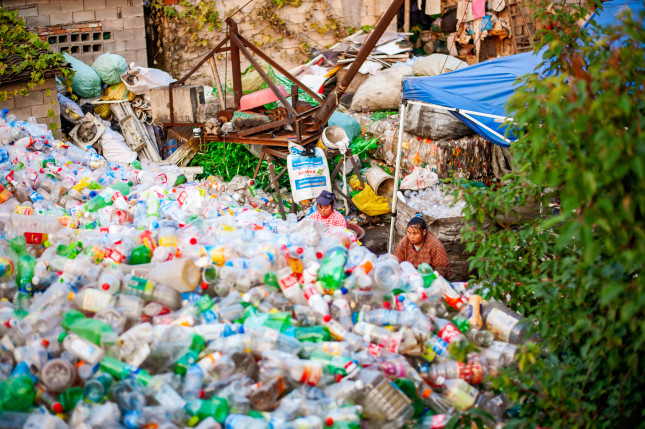
›Usually after dinner, Mr. Ma would take off his shirt, shut the door, and begin work making plastic pellets from scrap. But tonight, he sits in his darkened yard staring at two SUV-sized plastic processing machines and a bundle of colorful scrap plastic. No lights are on, no machines grind, and no familiar theme song of CCTV-1 plays in the background. Walking through other villages in Wen’an County, more men meander around their yards filled with the same idle processing machines and mini-mountains of scrap plastic. Most have never studied English, but they are fluent in the language of plastics, sprinkling words like ABS, PP, and PVC into their conversations. They are the owners of small plastic scrap recycling workshops that were once booming—but are now silent.
-
To Help Save the Planet, Stop Environmental Crime
›Since the dawn of the Industrial Revolution, humans have so vastly altered Earth’s systems that we’re now in the midst of what many are calling the Anthropocene Epoch. Human activity has become the dominant influence on climate and the environment, inflicting changes that may persist for millennia.We are razing the planet’s last intact wild lands, degrading, deforesting, carving up, and destroying huge swathes of habitat. We’re overfishing and poisoning our rivers and oceans. We continue to pump greenhouse gases into the atmosphere, raising CO2 levels and hastening climatic changes that are already affecting all life on Earth.
-
To Address Climate Risks, Advance Climate Security in the United Nations
›Climate change is widely recognised as one of the major forces shaping the future. Climate impacts illustrate in stark clarity how human actions fundamentally affect the basic physical processes of the planet with vast and, in the worst cases, disastrous consequences for communities around the world. Given these profound impacts, climate change is increasingly treated as a security risk. As a changing climate is causing and will continue to cause diverse impacts across the globe, the associated security challenges are multifaceted. They involve human, community, state, and international security risks, and will require responses across all levels of decision-making, from the local to international.
Showing posts from category international environmental governance.
 “This project is serious,” Casimiro Olvida said. “It will help the community. If you do not believe me, you can kill me anytime.” He recalled saying this in 1995 to Communist rebels in Mindanao who were suspicious that his USAID-funded team was supporting the Philippine government. We have the same goals, he told them, to help the poor and protect the environment. Apparently, he was convincing. Now Watershed Protection Project Manager of the Sarangani Energy Corporation, Olvida spoke in this week’s podcast with ECSP’s Lauren Risi, at the International Conference on
  “I believe if you acknowledge women as primary users of environmental resources, if you draft the policy with women [at] the table, offering you their unique perspective and unique feedback, you’re going to have a more stable policy. A policy that gets implemented,” says Mishkat Al-Moumin, scholar in residence at the Environmental Law Institute, in this week’s Friday Podcast, and second in a series of interviews recorded at the First International Conference on Environmental Peacebuilding.
 Since the dawn of the Industrial Revolution, humans have so vastly altered Earth’s systems that we’re now in the midst of what many are calling the
  Climate change is widely recognised as one of the major forces shaping the future. Climate impacts illustrate in stark clarity how human actions fundamentally affect the basic physical processes of the planet with vast and, in the worst cases, disastrous consequences for communities around the world. Given these profound impacts, climate change is increasingly treated as a security risk. As a changing climate is causing and will continue to cause diverse impacts across the globe, the associated security challenges are multifaceted. They involve human, community, state, and international security risks, and will require responses across all levels of decision-making, from the local to international.

