• woodrow wilson center
  • ecsp

New Security Beat

Subscribe:
  • rss
  • mail-to
  • Who We Are
  • Topics
    • Population
    • Environment
    • Security
    • Health
    • Development
  • Columns
    • China Environment Forum
    • Choke Point
    • Dot-Mom
    • Friday Podcasts
    • Navigating the Poles
    • Reading Radar
  • Multimedia
    • Water Stories (Podcast Series)
    • Backdraft (Podcast Series)
    • Tracking the Energy Titans (Interactive)
  • Films
    • Water, Conflict, and Peacebuilding (Animated Short)
    • Paving the Way (Ethiopia)
    • Broken Landscape (India)
    • Scaling the Mountain (Nepal)
    • Healthy People, Healthy Environment (Tanzania)
  • Publications
  • Events
  • Contact Us

NewSecurityBeat

The blog of the Wilson Center's Environmental Change and Security Program
Showing posts from category global health.
  • Building a Global Network of Maternal Health Policymakers

    ›
    Dot-Mom  //  January 18, 2013  //  By Sandeep Bathala

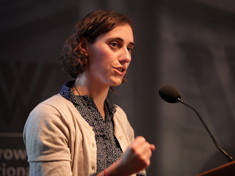
    On day three of the 2013 Global Maternal Health Conference here in Arusha, Tanzania, I was joined by the Global Health Initiative’s partners to present the results of the Wilson Center’s four-year-old Advancing Dialogue on Maternal Health Series. This series is unique in its convening power, helping to bring together experts and policymakers from around the world to collaborate on a shared goal: healthier mothers and children.

    MORE
  • Delivering Solutions to Improve Maternal Health and Increase Access to Family Planning (Policy Brief)

    ›
    Dot-Mom  //  From the Wilson Center  //  January 18, 2013  //  By Sandeep Bathala

    The Wilson Center Policy Briefs are a series of short analyses of critical global issues facing the next administration that will run until inauguration day.

    According to the World Health Organization (WHO), approximately 800 women die daily from preventable causes related to pregnancy and childbirth. Almost all of these deaths occur in developing countries, with higher rates for women living in rural areas and among poorer communities.

    MORE
  • Should Maternal Health Goals Be Combined With WASH?

    ›
    Dot-Mom  //  January 17, 2013  //  By Lauren Herzer Risi

    Does access to quality water and sanitation have an effect on maternal health outcomes? That was a surprising topic of discussion on day one of the second-ever Global Maternal Health Conference hosted this week in Arusha, Tanzania.

    Surprising because, to be honest, I did not think there would be strong disagreements over the relationship between water and sanitation (WASH) and maternal health. In my work with the Comparative Urban Studies Project, the two seem to be clearly linked.

    MORE
  • Measuring Sustainable Development in Ethiopia’s Guraghe Zone

    ›
    Guest Contributor  //  January 11, 2013  //  By Alexon Ayele

    This miniseries focuses on the monitoring and evaluation of PHE projects in Ethiopia.

    Despite progress over the years, Ethiopia’s Guraghe zone, located in the Southern Nations, Nationalities, and People’s Region, faces many development challenges. As senior monitoring and evaluation officer in the Guraghe People’s Self-help Development Organization (GPSDO), I have been working in this region for more than five years trying to reduce poverty and improve socio-economic development. The organization as a whole has been here for more than 50.

    MORE
  • Five Questions for Population, Health, and Environment Projects in Ethiopia

    ›
    Guest Contributor  //  January 10, 2013  //  By Kristen Stelljes

    This miniseries focuses on the monitoring and evaluation of PHE projects in Ethiopia.

    Since the integrated population, health, and environment (PHE) approach is relatively new in international development, donors, partners, and implementers want to know how it’s improving people’s lives. In the PHE community, we believe that combining efforts to address natural resource management, reproductive health, and livelihoods is making a difference in places where rapid population growth combines with poverty and environment degradation. But to know for sure and be able to convince others, we need to have data to support those beliefs.

    MORE
  • Stronger Evidence Base Needed to Demonstrate Added Value of PHE

    ›
    Guest Contributor  //  January 9, 2013  //  By Laurel Hamilton

    This miniseries focuses on the monitoring and evaluation of PHE projects in Ethiopia.

    It is well known that public health issues that affect the world’s most vulnerable populations – food insecurity, maternal and child health, water- and sanitation-related disease, and resource scarcity – are inextricably linked. Where these linkages are strongest, experience on the ground has shown that community-based integrated approaches to development provide more effective and sustainable solutions over vertical, sector-based programs. But so far, there are very few comprehensive evaluations providing strong quantitative evidence of this advantage.

    MORE
  • New Support for International Family Planning: The Significance of the London Summit

    ›
    December 21, 2012  //  By Carolyn Lamere

    At a major summit in London this summer the Bill and Melinda Gates Foundation launched one of the most significant efforts yet to revitalize commitments around the world towards providing universal access to family planning. More than 220 million women around the world – mostly in developing countries – want to delay or avoid pregnancy but are not using effective methods of contraception. Meeting the unmet needs of these women could save the lives of hundreds of thousands of mothers and millions of infants, not to mention significantly impact the future of human development. But the last decade has been a period of relative neglect by international donors.

    MORE
  • Beyond Carbon Credits: TIST Combines Reforestation, Health, and Livelihood Efforts

    ›
    Beat on the Ground  //  December 17, 2012  //  By Carolyn Lamere

    Carbon offsets have fallen in and out of favor since they were established with the Kyoto Protocol in 1997. Critics say they allow wealthy organizations to placate consumers and claim their products are “green” without making any real, lasting changes. But, if the scheme works properly, some action is supposed to be taken somewhere, so what is it like at one of these credit-producing organizations?

    MORE
Newer Posts   Older Posts
View full site

Join the Conversation

  • RSS
  • subscribe
  • facebook
  • G+
  • twitter
  • iTunes
  • podomatic
  • youtube
Tweets by NewSecurityBeat

Trending Stories

  • unfccclogo1
  • Pop at COP: Population and Family Planning at the UN Climate Negotiations

Featured Media

Backdraft Podcast

play Backdraft
Podcasts

More »

What You're Saying

  • Volunteers,At,The,Lagos,Food,Bank,Initiative,Outreach,To,Ikotun, Pan-African Response to COVID-19: New Forms of Environmental Peacebuilding Emerge
    Rashida Salifu: Great piece 👍🏾 Africa as a continent has suffered this unfortunate pandemic.But it has also...
  • A desert road near Kuqa An Unholy Trinity: Xinjiang’s Unhealthy Relationship With Coal, Water, and the Quest for Development
    Ismail: It is more historically accurate to refer to Xinjiang as East Turkistan.
  • shutterstock_1779654803 Leverage COVID-19 Data Collection Networks for Environmental Peacebuilding
    Carsten Pran: Thanks for reading! It will be interesting to see how society adapts to droves of new information in...

What We’re Reading

  • Rising rates of food instability in Latin America threaten women and Venezuelan migrants
  • Treetop sensors help Indonesia eavesdrop on forests to cut logging
  • 'Seat at the table': Women's land rights seen as key to climate fight
  • A Surprise in Africa: Air Pollution Falls as Economies Rise
  • Himalayan glacier disaster highlights climate change risks
More »
  • woodrow
  • ecsp
  • RSS Feed
  • YouTube
  • Twitter
  • Facebook
  • Home
  • Who We Are
  • Publications
  • Events
  • Wilson Center
  • Contact Us
  • Print Friendly Page

© Copyright 2007-2021. Environmental Change and Security Program.

Woodrow Wilson International Center for Scholars. All rights reserved.

Developed by Vico Rock Media

Environmental Change and Security Program

Woodrow Wilson International Center for Scholars

Ronald Reagan Building and International Trade Center

  • One Woodrow Wilson Plaza
  • 1300 Pennsylvania Ave., NW
  • Washington, DC 20004-3027

T 202-691-4000