• woodrow wilson center
  • ecsp

New Security Beat

Subscribe:
  • rss
  • mail-to
  • Who We Are
  • Topics
    • Population
    • Environment
    • Security
    • Health
    • Development
  • Columns
    • China Environment Forum
    • Choke Point
    • Dot-Mom
    • Friday Podcasts
    • Navigating the Poles
    • Reading Radar
  • Multimedia
    • Water Stories (Podcast Series)
    • Backdraft (Podcast Series)
    • Tracking the Energy Titans (Interactive)
  • Films
    • Water, Conflict, and Peacebuilding (Animated Short)
    • Paving the Way (Ethiopia)
    • Broken Landscape (India)
    • Scaling the Mountain (Nepal)
    • Healthy People, Healthy Environment (Tanzania)
  • Publications
  • Events
  • Contact Us

NewSecurityBeat

The blog of the Wilson Center's Environmental Change and Security Program
Showing posts from category global health.
  • National Intelligence Council Releases ‘Global Trends 2030’: Prominent Roles Predicted for Demographic and Environmental Trends

    ›
    December 11, 2012  //  By Schuyler Null & Kate Diamond

    “We are at a critical juncture in human history, which could lead to widely contrasting futures,” writes the chairman of the National Intelligence Council (NIC) Christopher Kojm in the council’s latest forward-looking quadrennial report, Global Trends 2030: Alternative Worlds, released yesterday.

    This year, principal author Mathew Burrows and his colleagues focus on a series of plausible global scenarios for the next 20 years and the trends or disruptions that may influence which play out. Among the most important factors in these projections are demography and the environment.

    MORE
  • Water Scarcity, Agriculture, and Energy Are Focus of ‘Choke Point: China Part II’

    ›
    Choke Point  //  December 5, 2012  //  By Carolyn Lamere

    With the start of part two of Circle of Blue and the China Environment Forum’s Choke Point: China series, the focus has broadened from looking more narrowly at water scarcity and energy to including the effects of food security and pollution in China too.

    “From an environmental point of view,” said Circle of Blue Senior Editor Keith Schneider, the question is, “can a nation that big, operating at such a scale maintain its sustainability?”

    MORE
  • Climate Change’s Health Impacts, and the Rights-Based Argument for Family Planning

    ›
    Reading Radar  //  November 30, 2012  //  By Payal Chandiramani

    UNFPA’s recently released State of World Population 2012 brings family planning to the center of the development debate. “There is indisputable evidence that when family planning is integrated into broader economic and social development initiatives, it can have a positive multiplier effect on human development and the well-being of entire nations,” the authors write. The report employs a rights-based approach to make the case for universal access to family planning – a goal which we are far from as 222 million women from the developing world currently have an unmet need for modern contraceptives. Meeting this need and improving quality of reproductive healthcare elsewhere would cost an additional $4.1 billion a year, but save approximately $5.7 billion in maternal and newborn health services. Other recommendations include increasing financial support and political commitment to ensure that family planning is of high quality, reducing the number of unintended pregnancies and abortions, including emergency contraception in family planning services, and engaging boys and men.

    MORE
  • Linking the Environment and Women’s Health at the World Conservation Congress

    ›
    November 30, 2012  //  By Payal Chandiramani

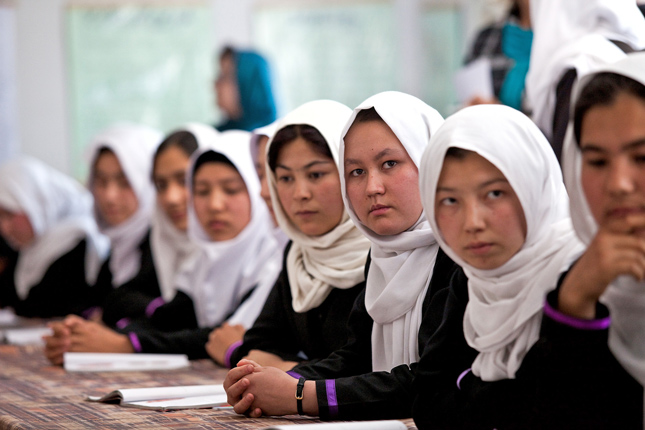
    People don’t often think of gender issues when they think of the environment, but in fact sustainable development in many of the world’s most bio-diverse regions has a lot to do with women’s health and well-being.

    At this year’s World Conservation Congress, where the theme was improving the inherent resilience of nature, ECSP’s Sandeep Bathala presented alongside Blue Ventures’ Gildas Andriamalala about the connections between women’s health and the environment – specifically on the potential of population, health, and environment (PHE) approaches as an effective sustainable development strategy.

    MORE
  • Does Climate Change Kill Five Million People A Year? DARA’s 2012 Climate Vulnerability Monitor

    ›
    November 27, 2012  //  By Carolyn Lamere & Schuyler Null

    Five million people die each year due to climate- or carbon-related causes, and total mortality by 2030 could total 100 million people, according to new report from DARA, a nonprofit organization that works to improve aid to those affected by conflict and climate change and quantify the global cost of climate change and carbon use. But the report has drawn some fire for being too alarmist.

    MORE
  • Feminized Development in Latin America: Understanding the Confluence of Gender Equity and Cultural Tensions

    ›
    From the Wilson Center  //  November 26, 2012  //  By Payal Chandiramani

    Poverty in Latin America has become increasingly “feminized,” said John Coonrod, executive vice president of The Hunger Project, at the Wilson Center on October 22. As a result, many governments and NGOs are starting to focus on the needs of women, especially indigenous women. [Video Below]

    MORE
  • Ravao’s Story: A Health and Environment Champion From Madagascar’s Mikea Forest

    ›
    Beat on the Ground  //  Guest Contributor  //  November 21, 2012  //  By Vik Mohan

    The original version of this article, by Vik Mohan, appeared on Blue Ventures’ blog.

    I recently spent a hectic and intense couple of weeks in the village of Andavadoaka, where Blue Ventures’ community health project is based, during my annual visit to Madagascar. Although I founded our Safidy (meaning “choice”) health program several years ago, each return visit brings new and inspiring stories and lessons from our team on the ground.

    MORE
  • Three Critical Maternal Health Medicines That Could Save Women’s Lives

    ›
    Dot-Mom  //  From the Wilson Center  //  November 15, 2012  //  By Carolyn Lamere

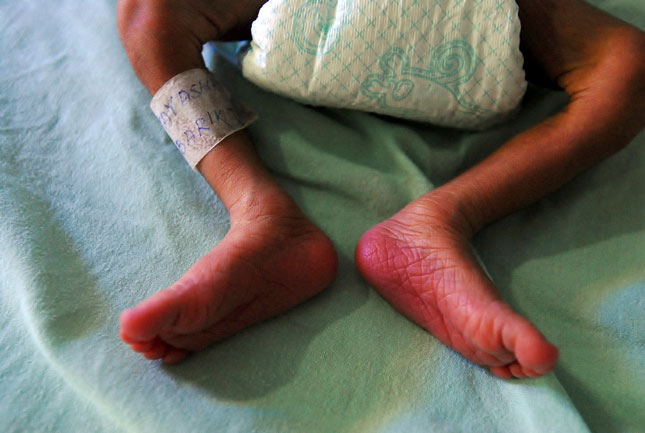
    “We know maternal health medicines are safe, we know they’re effective, we know they’re essential to keeping women healthy throughout pregnancy and childbirth,” said Kristy Kade at the Wilson Center on October 23. But lack of supply, poor quality, and misuse means they do not always help the women who need them. [Video Below]

    MORE
Newer Posts   Older Posts
View full site

Join the Conversation

  • RSS
  • subscribe
  • facebook
  • G+
  • twitter
  • iTunes
  • podomatic
  • youtube
Tweets by NewSecurityBeat

Trending Stories

  • unfccclogo1
  • Pop at COP: Population and Family Planning at the UN Climate Negotiations

Featured Media

Backdraft Podcast

play Backdraft
Podcasts

More »

What You're Saying

  • Volunteers,At,The,Lagos,Food,Bank,Initiative,Outreach,To,Ikotun, Pan-African Response to COVID-19: New Forms of Environmental Peacebuilding Emerge
    Rashida Salifu: Great piece 👍🏾 Africa as a continent has suffered this unfortunate pandemic.But it has also...
  • A desert road near Kuqa An Unholy Trinity: Xinjiang’s Unhealthy Relationship With Coal, Water, and the Quest for Development
    Ismail: It is more historically accurate to refer to Xinjiang as East Turkistan.
  • shutterstock_1779654803 Leverage COVID-19 Data Collection Networks for Environmental Peacebuilding
    Carsten Pran: Thanks for reading! It will be interesting to see how society adapts to droves of new information in...

What We’re Reading

  • Rising rates of food instability in Latin America threaten women and Venezuelan migrants
  • Treetop sensors help Indonesia eavesdrop on forests to cut logging
  • 'Seat at the table': Women's land rights seen as key to climate fight
  • A Surprise in Africa: Air Pollution Falls as Economies Rise
  • Himalayan glacier disaster highlights climate change risks
More »
  • woodrow
  • ecsp
  • RSS Feed
  • YouTube
  • Twitter
  • Facebook
  • Home
  • Who We Are
  • Publications
  • Events
  • Wilson Center
  • Contact Us
  • Print Friendly Page

© Copyright 2007-2021. Environmental Change and Security Program.

Woodrow Wilson International Center for Scholars. All rights reserved.

Developed by Vico Rock Media

Environmental Change and Security Program

Woodrow Wilson International Center for Scholars

Ronald Reagan Building and International Trade Center

  • One Woodrow Wilson Plaza
  • 1300 Pennsylvania Ave., NW
  • Washington, DC 20004-3027

T 202-691-4000