• woodrow wilson center
  • ecsp

New Security Beat

Subscribe:
  • rss
  • mail-to
  • Who We Are
  • Topics
    • Population
    • Environment
    • Security
    • Health
    • Development
  • Columns
    • China Environment Forum
    • Choke Point
    • Dot-Mom
    • Friday Podcasts
    • Navigating the Poles
    • Reading Radar
  • Multimedia
    • Water Stories (Podcast Series)
    • Backdraft (Podcast Series)
    • Tracking the Energy Titans (Interactive)
  • Films
    • Water, Conflict, and Peacebuilding (Animated Short)
    • Paving the Way (Ethiopia)
    • Broken Landscape (India)
    • Scaling the Mountain (Nepal)
    • Healthy People, Healthy Environment (Tanzania)
  • Publications
  • Events
  • Contact Us

NewSecurityBeat

The blog of the Wilson Center's Environmental Change and Security Program
Showing posts from category global health.
  • Top U.S. Leaders: Global Health Is a Bridge to Security

    ›
    November 14, 2012  //  By Carolyn Lamere

    “During my career, my viewpoint changed significantly in the understanding and definition of what security really is,” said retired Admiral William J. Fallon at the Center for Strategic and International Studies (CSIS) on November 2. “My current appreciation of it is that it’s much more fundamental, much more personal, much more at the individual human level than I had thought in earlier years.”

    MORE
  • From Dirty Wells to Endocrine Disrupters: Covering Women, Water, and Health at SEJ 2012

    ›
    On the Beat  //  October 28, 2012  //  By Schuyler Null

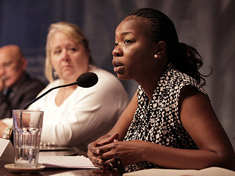
    Access to safe water is often taken for granted in developed countries. But last week at the 22nd annual conference of the Society of Environmental Journalists, panelists argued that the impact of dirty water on women’s health is an important but neglected story, not only in developing countries like Nigeria, but also in the United States.

    MORE
  • Youth Bulge, Public Policy, and Peace in Pakistan

    ›
    October 26, 2012  //  By Payal Chandiramani

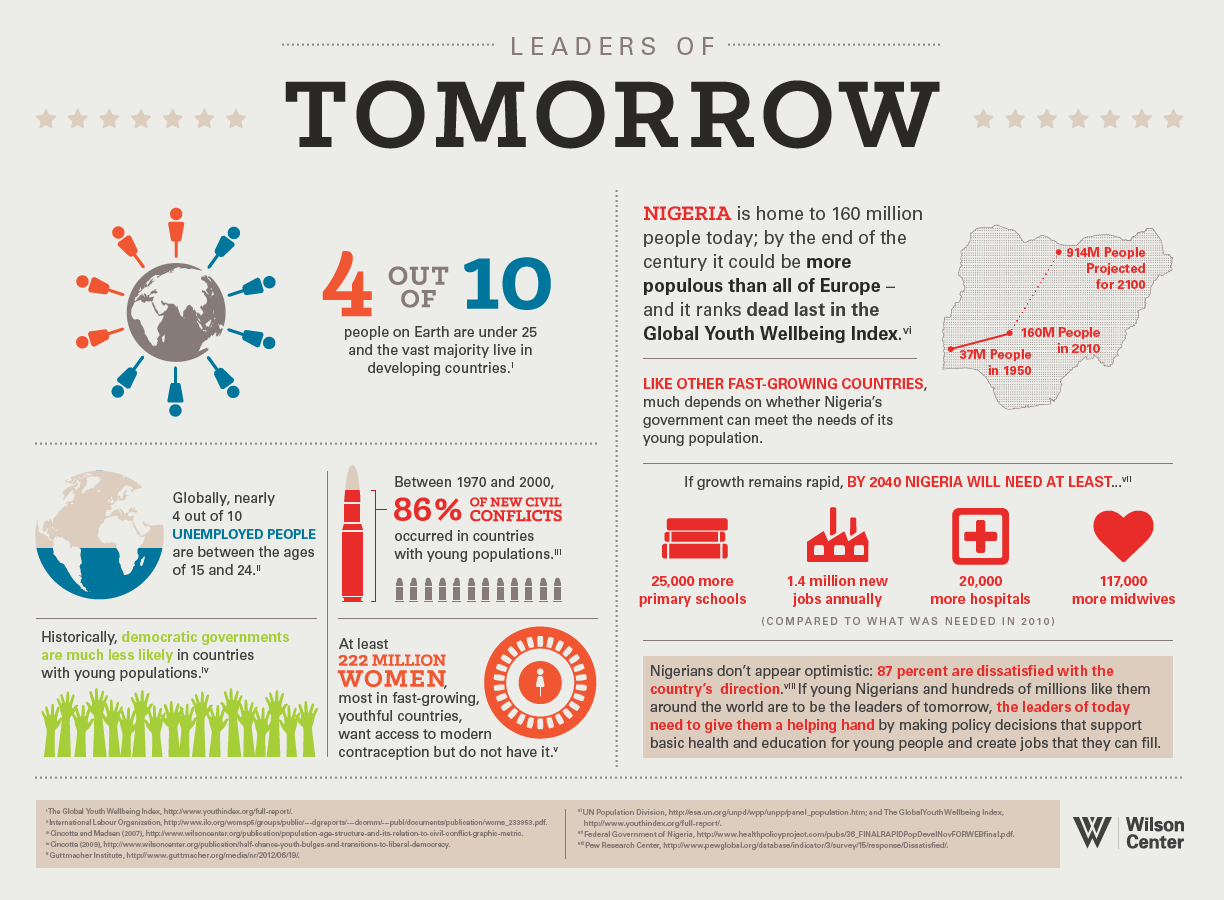
    While Pakistan’s demographic challenges are perhaps well known – two-thirds of the population of 180 million is under 30 years old – increasing security concerns have prompted discussions about exactly how much the country’s youthfulness is affecting its prospects for peace. On October 10, the U.S. Institute of Peace and George Mason University’s School of Public Policy hosted a day-long conference on “Youth Bulge, Public Policy, and Peace in Pakistan” to tackle this question.

    MORE
  • Programmatic and Policy Recommendations for Addressing Obstetric Fistula and Uterine Prolapse

    ›
    Dot-Mom  //  From the Wilson Center  //  October 18, 2012  //  By Payal Chandiramani

    Obstetric fistula is “not just a medical issue, but a human issue,” said Dr. Luc de Bernis, senior maternal health advisor at UNFPA, during a September 27 panel discussion at the Wilson Center. Obstetric fistula, a hole in the birth canal that can develop between the vagina and the bladder and/or rectum during prolonged labor without proper medical intervention, is preventable and treatable but continues to affect more than two million women worldwide, mostly in developing countries where women lack access to cesarean services. Women stricken with it face severe pain and suffering, social stigmatization, and usually give birth to a stillborn child.

    MORE
  • 2012 Aid Transparency Index

    ›
    Eye On  //  October 15, 2012  //  By Payal Chandiramani

    Publish What You Fund recently released its 2012 Aid Transparency Index, an annual review of 43 indicators assessing to what degree information about policies, strategies, and individual projects are published for public consumption by aid donors. These indicators include things like disclosing the type of aid given (e.g., grant, loan, export credit, debt relief), the quality of disclosure policies, and the online presence of centralized, public databases of all the organization’s activities.

    MORE
  • International Day of the Girl Child: Recognizing the Unique and Complex Vulnerability of Young Girls

    ›
    October 11, 2012  //  By Schuyler Null

    Today is the first “International Day of the Girl Child” – a day established last year by the United Nations to acknowledge the rights and unique challenges faced by young girls around the world.

    The latest UN projections put the number of women under the age of 19 at about 1.18 billion today. Especially in developing countries (though not only) these young girls often face outsized barriers to happy, healthy, and productive lives.

    MORE
  • Immediate Action Needed for Gaza to be Livable in 2020, Says UN Report

    ›
    October 3, 2012  //  By Kate Diamond

    Eight years from now, the Gaza Strip will have “virtually no reliable access to sources of safe drinking water, standards of healthcare and education will have continued to decline, and the vision of affordable and reliable electricity for all will have become a distant memory for most,” according to a United Nations report released last month. The bleak assessment concludes that without immediate action to address immense and interconnected economic, demographic, environmental, infrastructure, and social challenges facing Gazans, “the already high number of poor, marginalized and food-insecure people depending on assistance will not have changed, and in all likelihood will have increased.”

    MORE
  • Maintaining the Momentum: Highlights From the 2012 London Summit on Family Planning

    ›
    From the Wilson Center  //  October 2, 2012  //  By Kate Diamond

    This summer, 26 countries and private donors met at the London Summit on Family Planning to pledge $2.6 billion to expand family planning services to 120 million more women in the poorest countries around the world. But while the summit renewed focus on reproductive health with its ambitious target, “we’re now at that point where we have to really sit down and work through” how to achieve that goal, said Julia Bunting of the UK’s Department for International Development at the Wilson Center on September 17. [Video Below]

    MORE
Newer Posts   Older Posts
View full site

Join the Conversation

  • RSS
  • subscribe
  • facebook
  • G+
  • twitter
  • iTunes
  • podomatic
  • youtube
Tweets by NewSecurityBeat

Trending Stories

  • unfccclogo1
  • Pop at COP: Population and Family Planning at the UN Climate Negotiations

Featured Media

Backdraft Podcast

play Backdraft
Podcasts

More »

What You're Saying

  • Volunteers,At,The,Lagos,Food,Bank,Initiative,Outreach,To,Ikotun, Pan-African Response to COVID-19: New Forms of Environmental Peacebuilding Emerge
    Rashida Salifu: Great piece 👍🏾 Africa as a continent has suffered this unfortunate pandemic.But it has also...
  • A desert road near Kuqa An Unholy Trinity: Xinjiang’s Unhealthy Relationship With Coal, Water, and the Quest for Development
    Ismail: It is more historically accurate to refer to Xinjiang as East Turkistan.
  • shutterstock_1779654803 Leverage COVID-19 Data Collection Networks for Environmental Peacebuilding
    Carsten Pran: Thanks for reading! It will be interesting to see how society adapts to droves of new information in...

What We’re Reading

  • Rising rates of food instability in Latin America threaten women and Venezuelan migrants
  • Treetop sensors help Indonesia eavesdrop on forests to cut logging
  • 'Seat at the table': Women's land rights seen as key to climate fight
  • A Surprise in Africa: Air Pollution Falls as Economies Rise
  • Himalayan glacier disaster highlights climate change risks
More »
  • woodrow
  • ecsp
  • RSS Feed
  • YouTube
  • Twitter
  • Facebook
  • Home
  • Who We Are
  • Publications
  • Events
  • Wilson Center
  • Contact Us
  • Print Friendly Page

© Copyright 2007-2021. Environmental Change and Security Program.

Woodrow Wilson International Center for Scholars. All rights reserved.

Developed by Vico Rock Media

Environmental Change and Security Program

Woodrow Wilson International Center for Scholars

Ronald Reagan Building and International Trade Center

  • One Woodrow Wilson Plaza
  • 1300 Pennsylvania Ave., NW
  • Washington, DC 20004-3027

T 202-691-4000