Showing posts from category family planning.
-
The Future of Sub-Saharan Africa’s Tentative Fertility Decline
›August 25, 2010 // By Richard Cincotta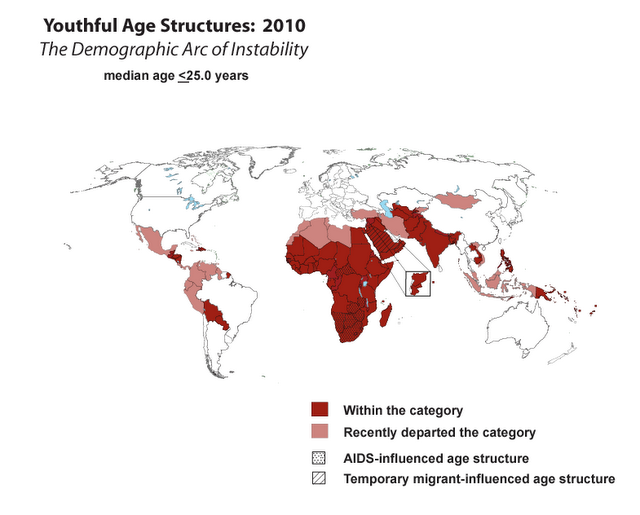
In her recent post on The New Security Beat, Jennifer Sciubba argues that the medium-fertility variant projection published in the UN Population Division’s biennial projections — the source of most future data published in the Population Reference Bureau’s 2010 World Population Data Sheet — forecasts an unrealistically low total fertility rate (TFR) for sub-Saharan Africa in 2050, at a rate of 2.5 lifetime childbirths per woman.
-
‘UK Royal Society: Call for Submissions’ “People and the Planet” Study To Examine Population, Environment, Development Links
›August 12, 2010 // By Wilson Center StaffBy Marie Rumsby of the Royal Society’s In Verba blog.
In the years that followed the Iranian revolution, when Ayatollah Khomeini returned from exile to Tehran and the country went to war against Iraq, the women of Iran were called upon to provide the next generation of soldiers. Following the war the country’s fertility rate fell from an average of over seven children per woman to around 1.7 children per woman – one of the fastest falls in fertility rates recorded over the last 25 years.
Iran is an interesting example but every country has its own story to tell when it comes to population levels and rates of change. The global population is rising and is set to hit 9 billion by 2050. And whilst fertility rates in Ethiopia are on the decline, its total population is projected to double from around 80 million today, to 160 million in 2050.
Earlier this month, the Royal Society announced it is undertaking a new study which will look at the role of global population in sustainable development. “People and the Planet” will investigate how population variables – such as fertility, mortality, ageing, urbanization, and migration – will be affected by economies, environments, societies, and cultures, over the next 40 years and beyond.
The group informing the study is chaired by Nobel Laureate Sir John Sulston FRS, and includes experts from a range of disciplines, from all over the world. With names on the group such as Professor Demissie Habte (President of the Ethiopian Academy of Sciences), Professor Alastair Fitter FRS (Professor Environmental Sciences, University of York) and Professor John Cleland FBA (Professor of Medical Demography, London School of Hygiene and Tropical Medicine), there’s bound to be some lively discussions.
Linked to the announcement of the study, the Society held a PolicyLab with Fred Pearce, environmental journalist, and Jonathon Porritt, co-founder of Forum for the Future, to discuss the significance of population in sustainable development.
Both speakers have been campaigning against over-consumption for many years. Jonathon Porritt has been a keen advocate for fully funded, fully engaged voluntary family planning in every country in the world that wants it.
“In my opinion, that would allow us to stabilize global population at closer to 8 billion, rather than 9 billion. And if we did it seriously for forty years, that is an achievable goal.” Porritt thinks that stabilizing global population at 8 billion rather than 9 billion would save a large number of women’s lives, and suggests “you cannot ignore the gap between 8 billion and 9 billion if you are thinking seriously about climate change.”
Fred Pearce acknowledges that population matters, but stresses that it is consumption (and how we produce what we produce) that we need to focus on. He feels it is too convenient for us to focus on population.
According to Fred, the global average is now 2.6 children per woman – that’s getting close to the global replacement level of 2.3 children per woman.
“It is no longer human numbers that are the main threat……It’s the world’s consumption patterns that we need to fix, not its reproductive habits,” said Pearce.
The Society will be taking a long look at some of these issues, assessing the latest scientific evidence and uncertainty around population levels and rates of change. The “People and the Planet” study is due for publication in early 2012, ahead of the Rio+20 UN Earth Summit. The Society is currently seeking evidence to inform this study from a wide-range of stakeholders.
The deadline for submissions is October 1, 2010. For more information on submissions, please see the Royal Society’s full call for evidence announcement.
Image Credit: “In Verba” courtesy of the Royal Society. -
Misguided Projections for Africa’s Fertility
›By assuming that sub-Saharan Africa’s total fertility rate will decrease to 2.5 children per woman by 2050, the most recent population projections issued by the Population Reference Bureau likely continue to underestimate fertility for Africa. Though northern Africa has significantly lowered fertility, sub-Saharan Africa’s TFR is still 5 children per woman. Achieving the levels projected by PRB or the United Nations will largely depend on whether the conditions that led to past fertility declines for other states can be established in sub-Saharan Africa.
Demographers have identified numerous factors associated with fertility decline, including increased education for females, shifting from a rural agricultural economy to an industrial one, and introduction of contraceptive technology. Sub-Saharan Africa is only making slow progress in each of these areas.
Surveying Obstacles to Development
Primary school enrollment is up, but the pace of improvement is declining. Meanwhile, gender gaps persist: Enrollment for boys remains significantly higher than for girls. Girls’ education is associated with lower fertility, partly because education helps women take charge of their fertility and also because education influences employment opportunities. Increased female labor force participation has been shown to increase the cost of having children, and is therefore associated with initial fertility declines.
Disease is one wildcard for Africa that limits the utility of past models of demographic transition in the African context. HIV/AIDS is decimating sub-Saharan Africa’s adult workforce and creating shortages of teachers that will impede future efforts to boost primary school enrollment. According to the United Nations, the number of teachers in sub-Saharan Africa needs to double in the next five years to reach Millennium Development goals.
Development that would shift the region’s economies from agriculture to industry is also lagging. While several West African countries are seeing some gains, the African continent on the whole faces major structural impediments to development. In The Bottom Billion, Paul Collier points out that many of these countries may have “missed the boat” to attract investment and industry that would pull the region out of poverty, partly because the least developed countries are still not cost-competitive enough when compared with current centers of manufacturing, like China.
Finally, there remains a high unmet need for family planning. One in four women aged 15 to 49 who are married or in union –- and who have expressed an interest in using contraceptives — still do not have access to family planning tools. In general, maternal mortality remains high and adolescents in the poorest households are three times more likely to become pregnant and give birth than those in the richest households, according to the most recent UN Millennium Development Goals report.
Sub-Saharan Africa: Off the Radar?
Sub-Saharan Africa suffers from a lack of attention by the international community and lack of political capacity at home. Many countries in the region are plagued by civil strife and poor governance, and developed countries continue to fall short of development assistance pledges. There is not the same sense of urgency today among developed countries about the global population explosion as there once was. Cold War politics and the environmental and feminist movements motivated much of the study of fertility and funding of population programs during the second half of the 20th century. Attention by governments and NGOs sped the fertility transition among many countries.
Today, the world’s wealthiest countries are not concerned primarily with Africa’s problems, but rather are more concerned with their own population decline and with the national security implications of population trends in areas associated with religious extremism. The recession has further hindered the flow of development funds.
Fertility is the most difficult population component to predict, and demographers must draw on the experiences of other regions to inform assessments of Africa’s population patterns. Demographers seem to be overconfident that Africa’s fertility will follow the pattern of recent declines, particularly in Latin America, which were more rapid than Western Europe’s decline due to the diffusion of technology and knowledge.
Once states begin the demographic transition towards lower fertility and mortality, they have tended to continue, with few exceptions. Therefore, most projections for Africa assume the same linear pattern of decline will hold. Yet, the low priority of Africa’s population issues among the world’s wealthiest states, combined with shortfalls in education, development, and contraception, may mean that the demographic transition in Africa will be slower than predicted.
Projections are useful to give us a picture of what the world could look like if meaningful policy changes are made. In the case of sub-Saharan Africa, prospects for these projections are dim.
Jennifer Dabbs Sciubba is the Mellon Environmental Fellow in the Department of International Studies at Rhodes College in Memphis, Tenn. She is also the author of a forthcoming book, The Future Faces of War: Population and National Security.
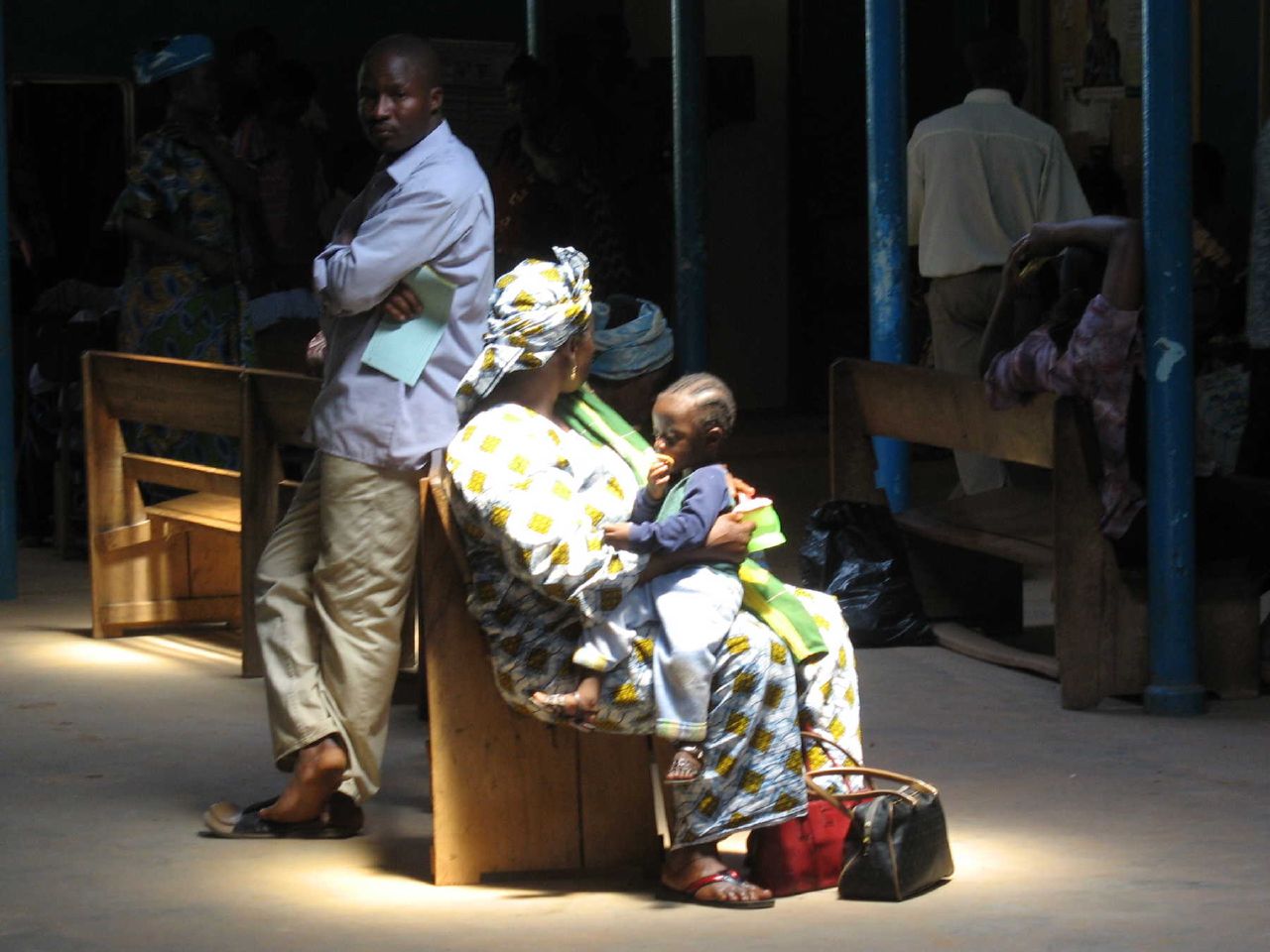
Photo Credit: “Waiting,” ECWA Evangel Hospital, Jos, Nigeria, courtesy of flickr user Mike Blyth. -
Land, Education, and Fertility in Rural Kenya
›August 10, 2010 // By Wilson Center StaffExcerpted from a summary on the Population Reference Bureau‘s website, by Karina Shreffler and F. Nii-Amoo Dodoo. The original version of this article appeared in Population and Environment 30, no. 3 (2009): 75-92.
Little is known about the role of land inheritance in the link between land availability and fertility. The recent transition from high to lower levels of fertility in some African countries presents an opportunity to clarify the underlying causes of this decline, since the individuals involved in the transitions are still alive.
Using data from focus group discussions with people whose childbearing occurred before and during the rapid and unexpected fertility decline in Nyeri District in rural Kenya, we examined the impact of diminishing land availability, farm size, and inheritance patterns on fertility decisionmaking and behavior. The results shed new light on the role of education, long considered the key determinant of fertility transition.
Our research suggests that rather than inheritance being an external factor affecting fertility behavior, parents in Nyeri District chose to educate their children after realizing they would not be able to bequeath a sufficient amount of land. Our work provides evidence of the importance of considering the influence of environmental factors on demographic processes, particularly in regions of resource dependence.
Continue reading on PRB.
For more on Kenya’s youth, see New Security Beat‘s interview with Wilson Center Scholar Margaret Wamuyu Muthee.
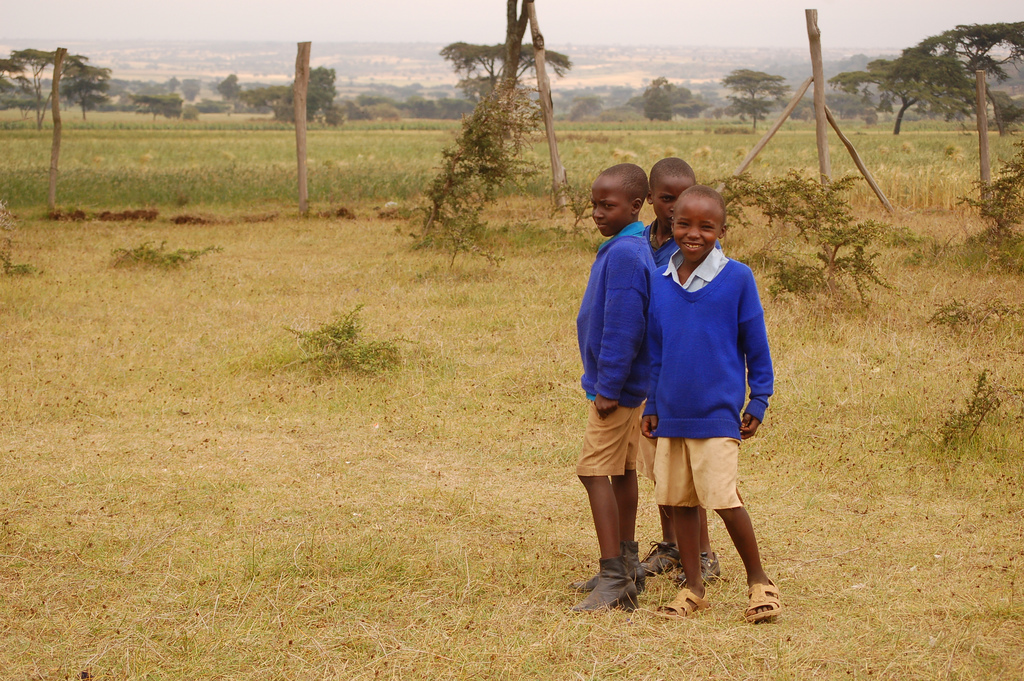
Photo Credit: “Olaimutiai Primary School (Maasai Land, Kenya),” courtesy of flickr user teachandlearn. -
“There Is No Choice:” Climate, Health, Water, Food Security Must Be Integrated, Say Experts
›August 9, 2010 // By Russell SticklorBureaucratic stovepipes plague international development efforts, and aid for pressing environmental and human security concerns—such as climate change, food shortages, fresh water access, and global health threats—rarely matches the reality on the ground in the developing world, where such health and environmental problems are fundamentally interconnected.
Instead, development efforts in the field—whether spearheaded by multilaterals, bilaterals, or NGOs—are commonly devoted to single sectors: e.g., the prevention and treatment of a single disease; the implementation of irrigation infrastructure in a specific area; or the introduction of a new crop in a certain region. The reasons for such a narrow focus can come from multiple sources: finite resources, narrowly constructed funding streams, emphasis on simple and discrete indicators of success, and institutional and professional development penalties for those who conduct integrated work. But some experts argue that integrating problem-solving initiatives across categories would not only improve the efficacy of development efforts, but also better improve lives in target communities.
As part of the USAID Knowledge Management Center‘s 2010 Summer Seminar Series, a recent National Press Club panel on integration featured a frank discussion of both the opportunities and challenges inherent in breaking down barriers within and between development agencies. Panelists from the World Bank’s Environment Department, the White House Council on Environmental Quality, and the Woodrow Wilson Center’s Environment Change and Security Program weighed in on the prospects for cross-sectoral integration.
Addressing the impacts of a global problem like climate change “requires multilevel approaches,” and necessitates that we “think multisectorally along the lines of agriculture, water, transportation, energy, [and] security,” said Loren Labovitch of the White House Council on Environmental Quality. The four topics under discussion—climate change, food security, water, and health—are all Obama administration priorities, as reflected by dedicated programs and special initiatives. Finding ways to practically integrate these interrelated challenges (through efforts like the Feed the Future Initiative or the Global Health Initiative) is getting more attention from policy analysts and policymakers with each passing year.
Integration in Practice: Success Stories
While there may be an emerging willingness to discuss and even experiment with holistic programming, what does it actually look in practice? Panelist Geoff Dabelko, director of the Woodrow Wilson Center’s Environmental Change and Security Program, singled out integrated development programs in the Philippines, the Democratic Republic of Congo, and Asia as examples.
Philippines: The PATH Foundation Philippines’ Integrated Population and Coastal Resource Management (IPOPCORM) initiative uses an integrated approach to address health and environmental concerns in coastal communities. Their “basket of services” includes establishing a locally managed protected marine sanctuary to allow local fish stocks to recover, promoting alternative economic livelihoods outside of the fishing industry, and improving access to local health services and commodities, said Dabelko. To date, IPOPCORM has yielded several notable improvements, among them reduced program costs and improved health and environmental outcomes as compared to side-by-side single sector interventions. A forthcoming peer-reviewed article will appear in Environmental Conservation, and will detail the controlled comparison study of the IPOPCORM project.
Democratic Republic of Congo: Mercy Corps has also successfully pursued cross-sectoral programming as part of a larger effort to be more holistic in its humanitarian and development responses. In war-torn eastern DRC, Mercy Corps brought practitioners with expertise in natural resource management into the fold of what has historically been an emergency relief mission. In particular, the Mercy Corps mission has fused humanitarian assistance with longer-term development efforts such as enhanced environmental stewardship. For example, promoting the use of fuel-efficient cookstoves eases pressure on local forest resources by lowering the need for firewood, and improves respiratory health by lowering air pollution. The project scaled up the effort through resources from further integration, with carbon credits from avoided emissions being sold through a local broker to the European cap and trade market. These resources in turn helped finance more cook stoves, which now total 20,000 for this project.
“The lesson is we have no excuse for not doing this anywhere in the world and saying some place is too unstable,” Dabelko said. “If we can do it [integrated projects] in eastern DRC, we should be able to do it anywhere.”
Asia: Tackling programmatic integration starts with better understanding the interconnections between environmental and health challenges. Dabelko cited a recent effort of the environment and natural resources team within USAID’s Asia Bureau as an example of breaking out of narrow bureaucratic stovepipes.
USAID staff recognized that a wide set of climate, energy, economic, governance, and conflict issues affected their core biodiversity and water portfolios, even if they did not have the time, expertise, or resources to investigate those issues in detail. Trends that appeared to be in the periphery were not viewed as peripheral to planning and designing programs for long-term success.
Working with the Woodrow Wilson Center, the USAID Asia Regional Bureau engaged experts on a diverse set of topics normally considered outside their portfolios. The resulting workshop series and report led to a deeper understanding of the possible impacts of increased Himalayan glacier melt and Chinese hydropower plans on food security and biodiversity programs in the lower reaches of the Mekong River. Bringing analysis from these topically and geographically remote areas into local-level development planning is a process that will require a similar willingness to go outside the typical bounds of one’s brief.
More Integration Ahead?
These case studies provide a glimpse of what integrated programming can look like on the ground. Still, significant hurdles remain standing in the way of regular and effective integration. Cross-sectoral programming demands that old problems be addressed in innovative and perhaps unfamiliar ways, requiring the addition of new capacity in development organizations and better coordination within and between agencies. That can be a complicated process, noted Dabelko, since efforts to pursue greater programming integration can be “hamstrung by earmarks and line items.”
Integration can also prove tricky because it requires a greater willingness to accept multiple indicators of success unfolding over different time frames—health gains may occur quickly, for example, while progress on environmental conservation may unfold less speedily. This means existing programs might need to be reshaped and reoriented to accommodate these divergent time frames, which could prove somewhat difficult. “Integration can be a challenge, both from a programming perspective and from an organizational perspective,” acknowledged moderator Tegan Blaine, climate change advisor for USAID’s Africa Bureau.
Further, the temptation remains strong among appropriators and implementers alike to maintain control over authority and resources in their traditional portfolios. Getting long-time practitioners in particular issue areas to willingly cede some of their turf in the pursuit of greater integration has historically been the “real world” that stands in the way of such integrated work.
But, as shown by the standing-room-only crowd at the seminar, momentum is slowly starting to build in pursuit of breaking down old programming walls and finding new approaches to addressing emerging challenges in human and environmental security.
“There is no choice” but to fuse development agendas with climate change adaptation efforts, asserted Warren Evans, director of the World Bank’s Environment Department. “It can’t be a parallel process anymore.”
Photo Credit: “2010 Summer Seminar Series – July 15th Panel Discussion on Food Security, Climate Change, Water and Health,” used courtesy of USAID and the National Press Club. -
Population Reference Bureau Releases New Projections
Seven Billion and Counting
›August 6, 2010 // By Russell SticklorThe Population Reference Bureau recently released its annual World Population Data Sheet, and lo and behold, the world is getting more crowded. By next year, the global total is expected to top seven billion, as we march toward upwards of nine billion by mid-century.
Much of that growth, of course, will be unfolding across Asia — China and India already account for more than 35 percent of the world’s population, and the two countries will continue to drive global demographic change. But the PRB report emphasized that Africa will also contribute significantly to world’s shifting demographics in the coming decades. By 2050, the continent’s population is slated to double, reaching the neighborhood of two billion. In that time span, the Democratic Republic of Congo and Ethiopia are expected to knock Russia and Japan off the list of the world’s top 10 most populous nations.
The Young Continent
Africa’s population growth through 2050 could actually be even greater than PRB predicts, since current projections assume that total fertility rate in sub-Saharan Africa will drop from 5.2 to 2.5 in that time span. The assumption is that as the region’s countries travel farther down the path to economic modernization, access to family planning services will become more widespread, resulting in smaller average family sizes—a trend well-documented in other parts of the developing world.
A slower than expected decrease in total fertility rate (TFR) across sub-Saharan Africa over the next 40 years could render current predictions inaccurate, however. While TFR has dropped significantly over the past 50 years in countries like Ghana (where it is now 4.0), just 17 percent of married women in sub-Saharan African utilize a modern type of family planning. That is one of the reasons Africa as a whole maintains a high average TFR of 4.7 children per woman, and why countries like Niger and Uganda sport some of the highest TFRs in the world (at 7.4 and 6.5, respectively).
According to the 2010 PRB Data Sheet, Africa is also notable for its demographic youth bulge. Of the world’s 10 countries with the highest percentage of their populations aged 15 or younger, nine of them—Niger, Uganda, Burkina Faso, the DRC, Zambia, Malawi, Chad, Somalia, and Tanzania—are on the continent. The question facing these countries is whether their young populations will yield a “demographic dividend” during the coming decades, whereby the large youth bulges translate into a sizeable and productive workforce. Harnessing the economic potential of the younger generation could help accelerate the development process in many of the region’s nations, but it will require significant investment in health and education infrastructure—funding that may prove hard to come by for many cash-strapped governments.
Persistent Divides
Other findings featured in the report involved sanitation and wastewater treatment, where some headway is being made at the global level. The PRB Data Sheet reveals that 43 percent of urban populations in sub-Saharan Africa (and 24 percent of the region’s rural populations) now have access to improved sanitation, while 86 percent of urban populations (and 55 percent of rural populations) have better sanitation services in Latin America and the Caribbean. The figures highlight progress, but reveal the significant divide that persists between urban and rural areas in terms of access to quality sanitation. According to the PRB, some 2.7 billion people—40 percent of the world’s total—still do not enjoy adequate sanitation facilities, and most live in rural areas of the developing world.
Finally, an interesting trend that will impact developed and developing nations alike involves elderly support ratios, or the number of active workforce members between the ages of 15 and 64 available to support a nation’s non-working, 65-and-older population. While rapidly growing countries in the developing world will continue to enjoy high elderly support ratios, a number of countries across the developed world will face a potential financial crisis, as comparatively low support ratios combine with rapidly aging populations to strain available financial resources earmarked for covering pension payments and healthcare infrastructure costs. To make up for the shortfall over the coming decades, the PRB report predicts that some developed nations may be inclined to further throw open the doors to immigration to bolster workforce ranks—a step recommended by Jack Goldstone in ECSP Report 13.
Sources: New York Times, Population Reference Bureau, Population Council, PR Newswire, United Nations Population Division, WHO/UNICEF Jointing Monitoring Programme for Water Supply and Sanitation
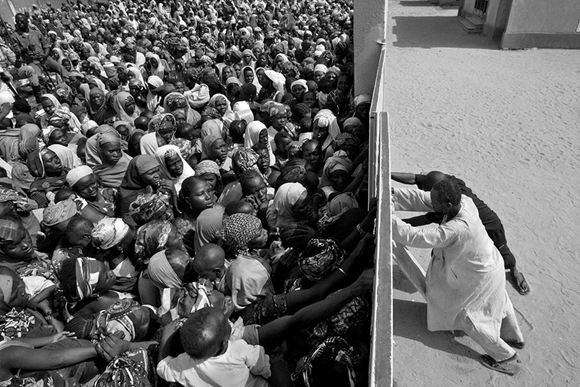
Photo Credit: “Famine in Niger, Africa,” courtesy of flickr user liquidslave. -
Boosting the U.S. Role in the Global Health Arena
›A new video from the Commission on Smart Global Health Policy, which was established by the Center for Strategic & International Studies, reviews the commission’s progress towards its goal of encouraging the U.S. government to embrace global health as a pillar of U.S. foreign policy.
The video reviews the recommendations from the commission’s March 2010 report, A Healthier, Safer and More Prosperous World: 1) Maintain robust U.S. support for the fight against HIV/AIDS, malaria, and tuberculosis; 2) Prioritize maternal and child health, especially in sub-Saharan Africa and South Asia; 3) Help other nations improve their capacity to prevent and respond to outbreaks of contagious disease; 4) Expand U.S. capacity to fund future global health initiatives by securing long-term investments for such efforts; and 5) Step up U.S. funding for multilaterals engaged in the global health field, including the World Health Organization, Global Fund, UNICEF, the World Bank, and the GAVI Alliance.
In the months ahead, commission members will be participating in public forums throughout the United States to discuss and promote the recommendations included in the report, before gathering in January to review the Obama administration’s progress on global health as the administration begins its third year. To date, the centerpiece of the administration’s health outreach efforts has been the six-year, $63 billion Global Health Initiative, designed to promote an enhanced U.S. role in addressing public health issues overseas.
The CSIS Global Health Policy Center will also be launching a year-long debate series called “Fault Lines in Global Health,” focusing on controversial topics in the global health field. The series’ kick-off event will center on U.S. AIDS funding, and is scheduled for Friday, August 6, 2010, from 9:30-11:00 a.m. -
PRB Maps the PHE World
›The Population Reference Bureau (PRB) has created an interactive Google map that highlights population, health, and environmental programs in Africa, Asia, and Latin America. The Population, Health, and Environment (PHE) Map shows the locations of projects that combine improved health services, sustainable natural resource management, and ecosystem conservation.
According to PRB’s Maura Graff and Jason Bremner, “the map aims to give viewers both a sense of the scale of current PHE integration efforts, and specific information about individual organizations, projects, and their location.”
Clicking on a marker will reveal the title of a PHE program, a short description of its goals and outcomes, a link to its website, and the occasional picture of the project in action. A list on the left alphabetically catalogs all the projects based on region.
The map also provides the opportunity for those working on PHE projects in the field to find nearby projects in order to share experiences. For example, in Ethiopia, Population Media Center and DSW’s Youth to Youth could share lessons learned about disseminating information on the reduction of female genital mutilation, the importance of providing family planning services to young married couples, and the linkage between reduced family size and enhanced stewardship of social and natural resources.
Communities that understand how population, health, and environment are intertwined are more engaged and energized to make a difference. In a video interview with ECSP, Roger-Mark De Souza, director of foundation and corporate relations at the Sierra Club, explains that PHE projects are so effective because solutions to a community’s liked problems demand this logical integration. For example, while learning about the health benefits of birth spacing, father and mothers also learn how their family planning decisions can improve the economic and environmental prospects of the community.
Just like PHE projects themselves, the map is a work in progress; PRB is seeking to add PHE projects that are still active or ended after 2005. Please contact Maura Graff if you would like to add a project.
Josephine Kim is a cadet at the United States Military Academy at West Point, and an intern with the Woodrow Wilson Center’s Environmental Change and Security Program.