Showing posts from category family planning.
-
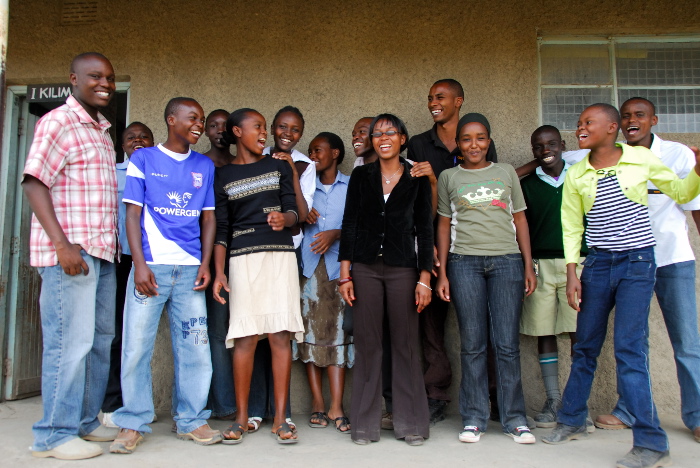
Interview With Wilson Center Scholar Margaret Wamuyu Muthee: Envisioning a New Future for Kenya’s Next Generation
›July 29, 2010 // By Wilson Center StaffYouth in sub-Saharan Africa constitute a large and growing portion of the region’s population, yet remain underserved by family planning and reproductive health programs. New Security Beat recently interviewed Margaret Wamuyu Muthee, an Africa Program Scholar at the Woodrow Wilson Center, about this problem. Muthee is currently working on a project documenting both the opportunities and challenges for young people growing up in Kenya.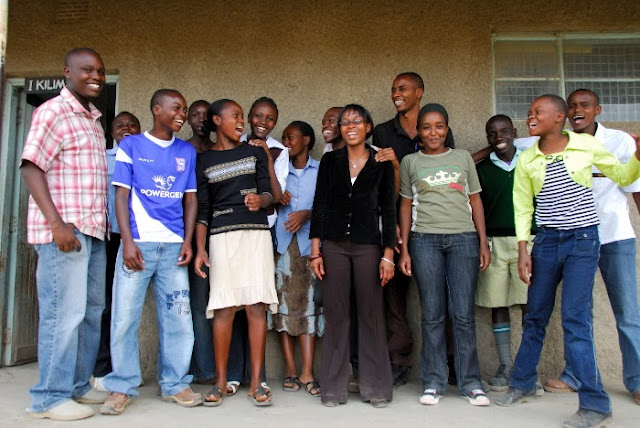
New Security Beat: How do you define youth?Margaret Wamuyu Muthee: The African Union has defined youth as every person between the ages of 15 to 35 years, while the United Nations defines youth as persons between the ages of 15 and 24. I will be concentrating on the age group defined by the African Union.
NSB: What are some opportunities and challenges facing youth in Kenya?
However, I will not only be relying on age. There are other aspects that I must take into consideration. Many children assume the roles of an adult or a care-taker when they are at an early age. Children in African nations face different challenges [compared to children in Western countries], as there are fewer opportunities for transition in Africa.MWM: This is a very important stage for exposing youth to the available support and teaching them about the social economy. Some of the difficulties lie in the lack of resources and corruption, such as misuse of funds that are provided to the government by outside sources.
NSB: Which programs are taking actions to empower youth in Kenya?
On a more positive outlook, youth are very resilient. They have a wide range of potential and capacity that can be utilized right away. African nations, just like China, have an enormous population that can be a human resource. All we have to do is positively tap into their potential to make good changes.MWM: The Youth Enterprise Development Fund (YEDF) works to increase economic opportunities for Kenyan youth in nation-building through enterprise development. YEDF also works to lower the unemployment rate and teach certain skills for future employment. One downside of this fund is that even though it provides money, it does not provide mentorship for the youth who execute the programs.
NSB: Are these programs enough to address youth challenges?
Another program is Yes Youth Can! This $45 million initiative was created by the U.S. ambassador to Kenya and USAID. The program is designed to create local and national networks of youth leaders to advocate peaceful economic and governmental reforms. The wonderful thing about this organization is that it is completely youth-driven.MWM: Sometimes these programs are seen as too small and too late. Youth are seen as violent, and these programs are made to keep them busy. Programs need to address all the facts, from start to finish.
NSB: Are there programs specifically targeted at female youth?MWM: We need programs that address pregnancies, HIV/AIDS, and education for young women. These education programs not only need to teach them about pregnancies and HIV/AIDS, but also educate women about their rights: how to say “no” and object to certain actions.
NSB: Are family planning and reproductive health incorporated into youth education?
However, there are complications when it comes to female rights. There are sexual offense laws that females do not even know about. The implementation of these laws can be non-existent. Either the police system is flawed or accessing lawyers is too expensive for females. And even if a lawyer is hired, the rapist can pay off a judge, so the judge will not convict him.MWM: There are already reproductive health campaigns in Kenya. One example is the ABC program: Abstinence, Be faithful, Condom use. Everyone these days, in rural and urban environments, knows about HIV/AIDS. There needs to be more programs regarding family planning and health; there is only a limited amount of knowledge getting passed around about those two issues.
Margaret Wamuyu Muthee is the Programs Manager for Kenya’s University of Nairobi Center for Human Rights and Peace, and a current scholar in the Woodrow Wilson Center’s Africa Program.
There is a new proposed Kenyan constitution that bans abortion unless a doctor permits the abortion due to health reasons, or if the mother’s health is in critical danger. Many females die because they cannot legally get an abortion and try to abort their baby on their own, or accept services from a backstreet clinic.
We also have cultural practices that put up barriers to the spread of family planning and health. One such example is the practice of early female marriages. Girls as young as 10 years old will be forced to marry a much older man. These girls have not had proper education on reproductive health or family planning.
In addition, adults are still too shy to address youth that are having sex, and are embarrassed to talk about their health if they have HIV/AIDS. We need to educate more youth and provide the means for them to live safer lives.
Josephine Kim and Marie Hokenson are cadets at the United States Military Academy at West Point and interns with the Woodrow Wilson Center’s Environmental Change and Security Program.
Photo Credit: “The Mentees and their mentors,” used courtesy of flickr user The Advocacy Project. -
Stephanie Hanson Reports on PHE in Agricultural Development and Rwanda’s ‘One Acre Fund’
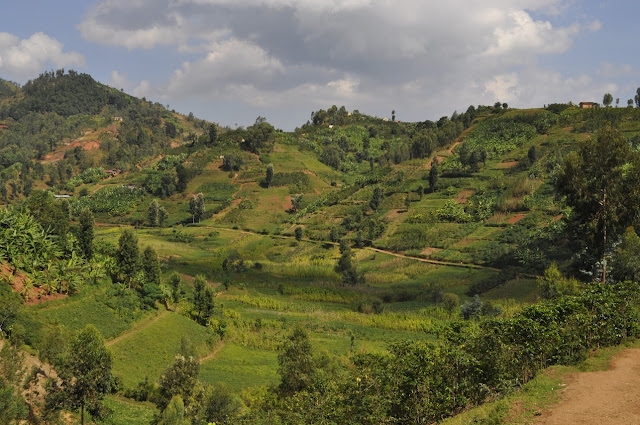
›Driving from Kigali into rural Rwanda, the hills that flank either side of the paved road are covered with bananas, maize, coffee, and beans under cultivation. Most Rwandans are farmers, using any bit of available land to feed their families and generate income. In this country—the most densely populated in Africa—little arable land is left untended.
My organization, One Acre Fund, offers loans and education to smallholder farmers in Kenya and Rwanda. We work with 18,000 farmers in three districts in the southwestern and western part of Rwanda, where we are know as Tubura, which means “multiply” in Kinyarwanda.
Though One Acre Fund is not a traditional population, health, and environment (PHE) project, agricultural development work inherently is PHE work, particularly in Rwanda, which faces significant population and environment challenges.
Our farmers have small plots of land because Rwanda’s population density is so high—375 people per square kilometer, higher than Japan—leaving only .13 hectares of arable land per person. They struggle to grow enough food because it’s difficult to support a big family on a small piece of land, especially without access to high-quality seed and fertilizer.
When farmers don’t grow enough to ensure basic food security for their families, their children are malnourished, which makes them more susceptible to illness.
Finally, agriculture both depends on and affects the environment. Farmers need favorable growing conditions—good soil and adequate rainfall—for a good harvest. Sustainable agriculture practices, such as composting and preventing soil erosion, ensure the environment remains healthy to support future farming.One Acre Fund is acutely aware of the challenges that our farmers face due to high population density, food insecurity, and environmental degradation. We offer a service model that addresses all the needs of a smallholder farmer: financing, farm inputs, education, and market access.
When a farmer enrolls with One Acre Fund in Rwanda, she joins as part of a group of 6-15 farmers. She receives an in-kind loan of seed and fertilizer, which is guaranteed by her group members. One Acre Fund delivers this seed and fertilizer to a market point within two kilometers of where she lives. A field officer provides in-field training on composting, techniques to prevent soil erosion, land preparation, planting, fertilizer application, and weeding.
Over the course of the season, the field officer monitors the farmer’s fields. At the end of the season, he trains her on how to harvest and store her crop. One Acre Fund also offers a harvest buyback program that farmers can choose to participate in.
On average, One Acre Fund farmers double their farm income per acre in one growing season. Ninety-eight percent of our farmers repay their loans, which are due several weeks after harvest.
With their increased harvests, One Acre Fund farmers are able to feed their children, which reduces malnutrition. Anecdotally, we also know that One Acre Fund children experience less illness; this year, we are working to incorporate health indicators into our monitoring and evaluation work.
At a harvest buyback last month, I met many farmers who had benefited from One Acre Fund’s services. One woman, Tamar, had sold 400 kilograms (880 pounds) of beans at the previous season’s buyback, which earned her roughly 132,000 Rwandan francs ($235 USD). She told me that she was using the money to build a bigger home for the six of her ten children who lived at home.However, Tamar really wanted to buy a cow, but she knew that she would not earn enough money this year to afford one. With so many children, she struggled to earn enough money to invest in something that might generate additional income for her and her family.
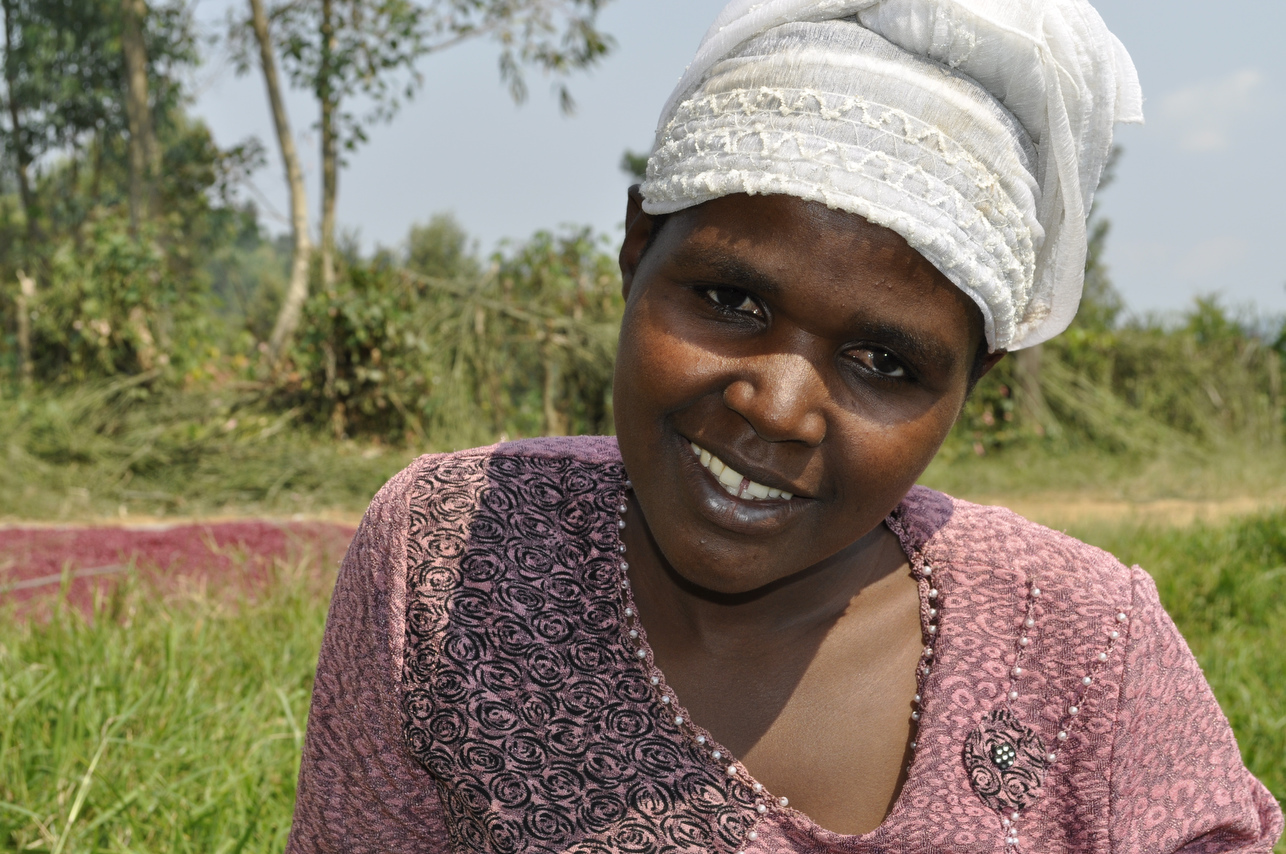
Another woman, Medeatrice, had also made $235 USD from the sale of her beans. With that income, she had opened a small shop with her husband in a nearby market. Unusually for Rwanda, where the average woman has 5.5 children, Medeatrice only had one, a three-year old boy named Prince. I asked her if she planned to have more children.
“I only want one more child,” she told me. “If I only have two children, it is easy to educate and to take care of them.”
The Rwandan government has invested in educating its population on family planning, but it will take time for birth rates to drop. For now, families with five, six, or nine children are not uncommon.
However, research shows that when women have increased access to economic opportunities, birth rates drop. One Acre Fund is focused on helping Rwanda’s families increase their harvests so that they not only have enough to eat, but they can start investing in their futures.
Guest Contributor Stephanie Hanson is the director of policy and outreach at One Acre Fund.
Photo Credit: Rwanda’s hills and Medeatrice, courtesy of Stephanie Hanson. -
In Pakistan, Clinton Calls for Human Security; USAID’s Shah Commends Birth Spacing
›July 20, 2010 // By Russell SticklorIn Islamabad yesterday, Secretary of State Hillary Clinton acknowledged longstanding Pakistani concerns that the U.S.’s ongoing mission in the country is solely military in nature. However, Clinton asserted at the opening of the second U.S.-Pakistan Strategic Dialogue that the “future demands a comprehensive human security, a security based on the day-to-day essentials like jobs, schools, clinics, food, water, fuel, equal access to justice, [and] strong, accountable public institutions.” To that end, she announced a $500 million assistance package earmarked largely for new agricultural and hydroelectric infrastructure development, as well as the construction of new hospitals and other health infrastructure.
Family planning was another key element in this week’s U.S-Pakistani talks. A U.S. delegation headed by USAID Administrator Rajiv Shah met with top Pakistani health officials to discuss the strategic importance of birth spacing. Both sides agreed that encouraging women to extend the interval between bearing children would not only improve maternal and child health, but also start to bring Pakistani’s population growth rate down to a more sustainable level—a goal fully explored at a recent Wilson Center conference on Pakistan’s population challenge.
As Pakistani demographer Zeba Sathar told New Security Beat in an interview at the conference, educating young women and empowering them to control their own reproductive health will allow them to “take care of their fertility and their family size themselves”—a development that could ease Pakistan’s resource crunch and reduce traditional gender inequities in the years to come.
Sources: Daily Times (Pakistan), International Business Times (U.K.), Los Angeles Times, Times of India, U.S. Agency for International Development.
Photo Credit: “Secretary Clinton Travels to Pakistan,” courtesy of the State Department. -
In Kampala, African Leaders Discuss Maternal Health While Attacks Renew Concern over Somalia
›July 19, 2010 // By Schuyler NullLeaders from 49 African countries are meeting today in Kampala, Uganda, at the start of a scheduled week-long African Union (AU) summit on maternal and child health. Uganda is a fitting location, as it faces some of the toughest health and demographic challenges in Africa, including a very young and rapidly growing population and poor maternal health services. However, with the memory of last week’s twin bomb blasts still fresh, peace and security issues will surely be on the agenda as well.
Somalia’s lead insurgency group, Al Shabab, took responsibility for the attacks in Kampala, which killed more than 70 people. Al Shabab’s first prominent cross-border attack is only the latest sign that Somalia’s issues – which also include a very young and rapidly growing population – are starting to spill over its borders. For more on Somalia’s deepening crisis and its effects on the East African region, see New Security Beat’s recent analysis: “As Somalia Sinks, Neighbors Face a Fight to Stay Afloat.”
Sources: AP, Washington Post.
Photo Credit: Adapted from “Ugandan African Union contingent in Mogadishu, Nov. 25, 2007” courtesy of flickr user david axe. -
Local Case Studies of Population-Environment Connections
›“The role of intergenerational transfers, land, and education in fertility transition in rural Kenya: the case of Nyeri district” in Population & Environment by Karina M. Shreffler and F. Nii-Amoo Dodoo, explores the reasons for a dramatic and unexpected decline in fertility in rural Kenya. In one province, total fertility rate (TFR) declined from 8.4 to 3.7, from 1978 to 1998. The study found numerous contributing factors for this decline, which occurred more quickly and earlier than demographers expected, but land productivity seemed to be the primary motivator. A growing population and the tradition of dividing family land among sons made continuing to have large families unrealistic for these Kenyan families. “Family planning is, therefore, not the primary causal explanation for limiting the number of children, but rather serves to help families attain their ideal family sizes,” the authors conclude.Also in Population & Environment, “Impacts of population change on vulnerability and the capacity to adapt to climate change and variability: a typology based on lessons from ‘a hard country,’” by Robert McLeman, explores the potential for human communities to adapt to climate change. The article centers on a region in Ontario that is experiencing changes in both local climatic conditions and demographics. The study finds that demographic change can have both an adverse and positive effect on the ability of a community to successfully adapt to climate change and highlights the importance of social networks and social capital to a community’s resilience or vulnerability. McLeman also presents a new typology that he hopes will “serve the purpose of drawing greater attention to the degree to which adaptive capacity is responsive to population and demographic change.”
SpringerLink offers free access to both these articles through August 15. -
An “Aye” for an “Aye”: Everyone Has a Right to Be Counted
›July 12, 2010 // By Kayly Ober Around the world, countries from Afghanistan to Papua New Guinea to the United States are taking part in their decadal census, leading the UN Population Fund (UNFPA) to select the theme “Everyone Counts” for World Population Day 2010, which was celebrated on July 11.
Everyone has the right to be counted, because “censuses and population data play a critical role in development and humanitarian response and recovery,” said UNFPA Executive Director Thoraya Ahmed Obaid in her World Population Day message. Obaid added that “with quality data we can better track and make greater progress to achieve the Millennium Development Goals, and promote and protect the dignity and human rights of all people,” especially among vulnerable populations like women, girls, the poor, and the marginalized.
USAID similarly supports quality data collection, which it says plays a critical role in advancing voluntary family planning in the developing world. For the last 25 years, USAID has funded the Demographic and Health Surveys (DHS) program, which collaborates with national health ministries to collect data on family planning, child and maternal health, disease prevalence, and other health indicators.
This invaluable data is made freely available for public use, which can foster new research in the field and stimulate innovative approaches to addressing public health issues. Praising the DHS program, Gapminder Foundation Director Hans Rosling told a Wilson Center audience last year that “statistics should be the intellectual sidewalks of a society, and people should be able to build businesses and operate on the side of them.”
Accurate census counts are also important elements of “good governance, transparency and accountability,” said UN Secretary-General Ban Ki Moon in his World Population Day message. “Population data helps leaders and policy-makers to make informed decisions about policies and programmes to reduce poverty and hunger, and advance education, health and gender equality,” he said.
But no one is suggesting that coming up with reliable population data is an easy task. As Sean Peoples and Elizabeth Leahy point out in the May/June 2009 issue of World Watch magazine, issuing population projections can be a risky business:In the 2008 Revision of World Population Prospects, the UN Population Division projects that our planet will grow to 9.15 billion people by 2050. Yet this medium-variant projection is just one of several possible scenarios released in this latest round of number crunching. The low- and high-variant projections—7.96 billion and 10.5 billion, respectively—could instead become reality, given uncertainties in the developing world due to factors such as inconsistent data collection, weak health system infrastructure, and low government capacity.
The goal, then, is to make sure everyone counts. -
New Film Looks at Sub-Saharan Africa’s Unmet Need for Family Planning
›A new documentary film released recently by Population Action International brings attention to the plight of women across sub-Saharan Africa who lack access to basic reproductive health supplies, such as condoms and contraceptives. Funded with the support of the Reproductive Health Supplies Coalition, “Empty Handed” documents the unmet need for family planning services in the region, which has some of the world’s highest fertility rates.
PAI filmmaker Nathan Golon shot the film in Uganda earlier this year. The film’s focus on Ugandan women’s struggles in particular is with good reason, as the country has a well-documented history of providing insufficient family planning services. According to the CIA’s World Factbook, Uganda has the world’s second highest total fertility rate at 6.73 children per woman.
“Empty Handed” examines how a lack of family planning tools and services can lead to a slippery slope of unintended consequences, from unplanned pregnancies to the rampant spread of sexually transmitted diseases. The film revolves around interviews conducted with women who share common hardships as they try to access family planning from under-resourced local healthcare clinics, often traveling long distances only to find upon arrival that no contraceptives or condoms are available.
In addition to identifying past and current issues with reproductive healthcare access in sub-Saharan Africa, “Empty Handed” also puts forward some ideas for better meeting family planning needs of the more than 200 million women throughout the world without access to even basic contraception.
To watch the full film online, visit the “Empty Handed” website.
Sources: C.I.A., FHI, Population Action International, Reproductive Health Supplies Coalition -
USAID Head Calls for Integrating Health Services in New Global Health Initiative
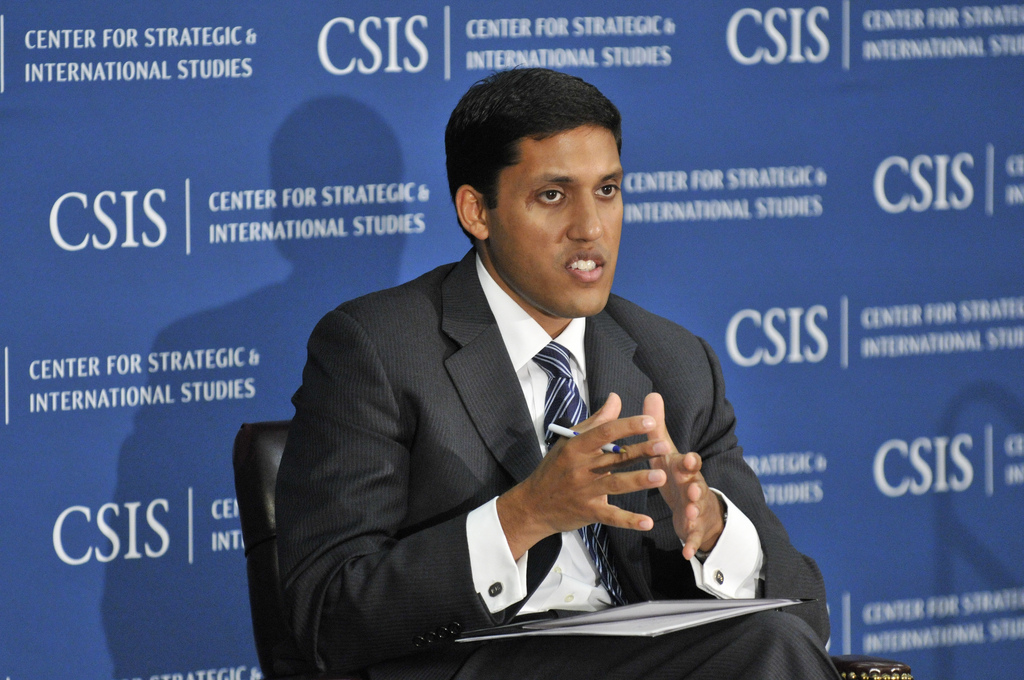
›July 2, 2010 // By Russell SticklorThis Tuesday, Dr. Rajiv Shah, administrator for U.S. Agency for International Development gave a major speech at the Center for Strategic & International Studies on USAID’s Global Health Initiative. With $63 billion earmarked for GHI over the next six years, there are high expectations for the program.
Shah laid out some details of GHI’s main priorities, which include improving family planning services, enhancing nutrition initiatives, and building stronger and broader-based healthcare systems across the developing world, with special attention paid to the health needs of mothers and their young children. He offered a number of examples of the benefits of integrating family planning with other health services for women and children, including maternal health and nutrition.
Shah did not, however, mention integrating family planning with environmental programs, the benefits of which USAID-funded programs have amply demonstrated. He also did not delve into the emerging nexus of family planning, population growth, and climate change, a subject of much discussion at last month’s Women Deliver conference in Washington, D.C.
On the other hand, Shah did say that GHI’s emphasis on improving nutrition for the world’s poor will complement another major Obama administration outreach effort, the Feed the Future initiative—repeating a point he made at the recent launch of the food security effort.
Shah also highlighted the need for establishing benchmarks for measuring success that revolve around people, not diseases. He suggested one way of achieving this would be to ensure that clinics—particularly in rural areas—broaden their mandate to offer a variety of health-prevention services, rather than providing resources that treat primarily one type of illness.
For a full transcript of Shah’s speech, click here.
More analysis of Shah’s speech and USAID’s Global Health Initiative to come in the weeks ahead.
Photo Credit: “Statesman Forum: Dr. Rajiv Shah, USAID Administrator,” courtesy of flickr user CSIS: Center for Strategic & International Studies.