Showing posts from category family planning.
-
‘Interview:’ Educate Girls, Boys, To Meet the Population Challenge, Say Pakistan’s Leading Demographers
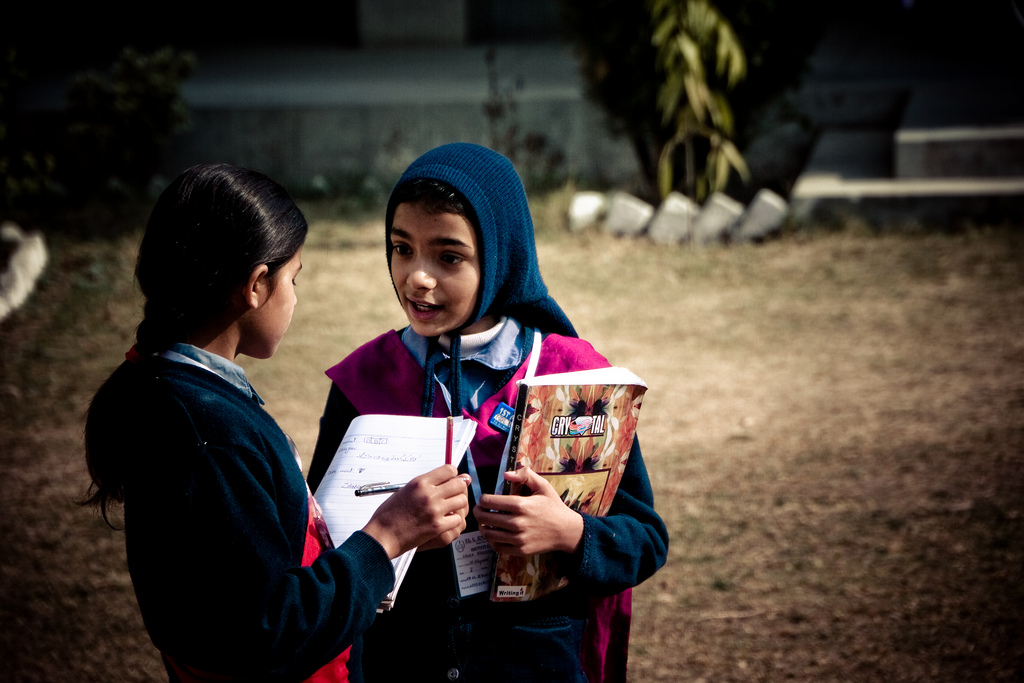
›June 25, 2010 // By Russell SticklorPakistan is at a major demographic crossroads. With a youth-heavy population of some 180 million and an annual population growth rate around 2 percent, the country’s population is projected to swell to roughly 335 million by mid-century. Such explosive growth raises major questions about Pakistan’s future, from looming food and water scarcity, to yawning inequalities in the nation’s educational and economic systems. Some warn that these problems threaten to drive a new generation of disaffected Pakistani youth toward political and religious radicalization.
Recently, I asked a number of leading Pakistani demographers visiting the Wilson Center how their country could best achieve more sustainable population growth rates and effectively harness the economic potential of Pakistani youth.
Educate Girls
Zeba Sathar, Pakistan country director for the Population Council in Islamabad, told me empowering girls through education represents one of the most important means of reducing the total fertility rate, which currently stands at four. “When children are educated—particularly when girls are educated—they take care of their fertility and their family size themselves,” Sathar said.
Yet securing educational opportunity for Pakistani girls has often been an uphill battle, largely due to entrenched social norms. Yasmeen Sabeeh Qazi, Karachi-based senior country adviser for the David and Lucile Packard Foundation’s Population Program in Pakistan, pointed out that a traditional preference for male children in Pakistani society has meant girls do not often receive the same level of family resources as males. This phenomenon has historically fed gender inequality, she said.
“Since boys are preferred, girls are not given the same kind of attention and nutrition, especially in the poorer and less-educated families,” Qazi told me. “But as the education level goes up, you see that this divide starts narrowing.” For Qazi, one of the keys to heightening educational access for girls is to increase both the quantity and quality of schools in rural districts, where two-thirds of Pakistanis live.
Decentralize Family Planning Services
Others I spoke with emphasized improving access to reproductive health and family planning services in rural and urban areas. The federal government’s relatively recent move to delegate operational authority for family planning services to the provincial or district level has encouraged many, such as Dr. Tufail Muhammad with the Pakistan Pediatric Association’s Child Rights & Abuse Committee in Peshawar.
Muhammad said the ongoing decentralization—which he described as “a major paradigm shift”—is meant to increase ownership of population planning policies at the local level, and therefore lead to more effective implementation because “the responsibility will be directly with the provincial government.” Once capacity is established at the local level to design and implement those policies, Muhammad added, “supervisors, administrators, and policymakers will be very close to [family planning] services.”
Manage the “Youth Bulge”
Yet despite the fact that both the public and private sectors are taking steps to address Pakistan’s growth issues, the population crunch will intensify before it potentially eases. Even assuming that greater educational opportunity for girls and increased local control over family planning services help drop Pakistan’s total fertility rate, the sheer size of the current youth bulge—two-thirds of the country’s population is under age 30—means population issues will inform every aspect of Pakistani society for decades to come.
In discussing the current state of Pakistan’s education system, some speakers also asserted that the influence of madrassas, or religious schools, over the student-aged population has often been overstated. Shahid Javed Burki, Pakistan’s former finance member and recent senior scholar at the Wilson Center, said during the panel discussion that inaccurate enrollment estimates created “the impression that the system is now dominated” by those institutions. He noted that more recent figures place madrassa enrollment at just five percent of the total student population.
With a majority of Pakistani students enrolled in regular public schools, he insisted that “public policy in Pakistan has to focus on public education” in order to prevent those students from slipping through the cracks. The problem, he added, was that “the education that they are receiving is pretty bad. It really does not prepare them to be active participants in the workforce and contribute to the economic development of the country.”
Still, most of the experts sounded optimistic about Pakistan’s potential to mitigate some of the adverse effects associated with the near-doubling of the country’s population during the next 40 years. By starting to more openly address an issue that the government and the powerful Pakistani media have long preferred to ignore, they seemed to agree the country is taking a big step in dealing head-on with its looming demographic challenges.
“I don’t look at the Pakistani population as a burden, but rather as an asset,” remarked Burki. “But it has to be managed.”
Photo Credit: “School Girls Talk in Islamabad,” courtesy of flickr user Documentally. -
‘Dialogue Television’ Explores Pakistan’s Population Challenge
›It’s difficult to imagine a scenario for a stable and peaceful world that doesn’t involve a stable and peaceful Pakistan. The country is among the world’s most populous and is also home to the world’s second largest Muslim population, making it the only Muslim majority nuclear state. Its history has been characterized by periods of military rule, political instability, and regional conflicts. This week on dialogue host John Milewski explores the nation’s changing demographics and what they may tell us about near and long term prospects for this vital U.S. ally with guests Michael Kugelman, Zeba Sathar, and Mehtab Karim.
Watch above or on MHz Worldview.
Michael Kugelman is program associate with the Wilson Center’s Asia Program. Much of his recent research and programming focus has involved demographics in Pakistan. He is a regular contributor to Dawn, one of Pakistan’s major English language newspapers.
Zeba Sathar is Pakistan country director at the Population Council in Islamabad. Prior to joining the council, she was chief of research in demography at the Pakistan Institute of Development Economics and a consultant with the World Bank.
Mehtab Karim is a distinguished senior fellow and affiliated professor with the School of Public Policy at George Mason University. Additionally, he is a senior research fellow at the Pew Research Center’s Forum on Religion and Public Life, specializing in global Muslim demographics. Previously, he was a professor of demography at Aga Khan University in Karachi.
Note: A QuickTime plug-in may be required to launch the video. -
Women Deliver in the Climate Change Debate
›One of the hottest topics at the “Women Deliver” conference earlier this month—where panels ran the gamut from HIV prevention and family planning to gender-based violence and maternal health—was the intersection of women’s reproductive health, global population growth, and climate change.
As panelists at three of the conference’s climate-focused events noted, women in poor, rural areas are especially vulnerable to the impacts of climate change. In many developing countries across Africa, Asia, and Latin America, women take on much of the burden of farming, gathering fuel, and supplying fresh water for their communities. As a result, they bear the brunt of hardships when climate change alters seasonal precipitation patterns, or increases scarcity of key natural resources.
In addition, “the more assets, the less vulnerable one person is,” said Lorena Aguilar of the International Union for Conservation of Nature. “Worldwide, compared to men, women tend to have more limited access to resources that would enhance their capacity to adapt to climate change—including land, credit, agricultural inputs, decision-making bodies, technology, and training services.”
Women’s hardship in the face of climate change can also have a negative effect on reproductive health. Aguilar remarked that during the dry season in parts of rural India and Africa, 30 percent or more of women’s daily caloric intake is spent on fetching water alone. The enormous physical strain placed on women’s bodies because of those tasks has resulted in higher miscarriage rates among those populations, she noted.
Educating Girls to Protect the Environment
Organizations like the United Nations and the Global Gender and Climate Alliance have been working in recent years to bridge the gap between women’s rights and climate change, and reframe climate change in terms of human development. But to date, women’s struggles with climate change have not translated into meaningful economic, educational, or healthcare support at the local government level, with women’s welfare “at the very bottom of the priority list” for most developing countries, according to Nickie Imanguli with Advocates for Youth.
The unmet need for family planning tools and services is perhaps the movement’s principal challenge going forward. With an estimated 200 million women having an unmet need for family planning, unintended pregnancies could be exacerbating environmental problems such as depletion of forests, water, and other finite resources. But most panelists expressed optimism that the growing recognition of a connection between climate change and women’s reproductive health might lead to a boost in funding for family planning initiatives in underserved areas of the world.
Speakers at Women Deliver emphasized that reproductive health can be bolstered by improving educational opportunities for girls in poor rural areas. Joy Nayiga with Uganda’s Ministry of Finance Planning Economic Development noted that “girls are more likely than boys to drop out of school to help their mothers gather fuel, wood, and water.” This trend, she said, robs females of an opportunity for educational advancement, and heightens the likelihood they will end up starting families of their own while very young.
Nayiga and other panelists asserted that empowering females through education leads them to take greater control over their own sexual health, making it easier for them to start their families later in life, or perhaps have a smaller number of children.
Encouraging women to take a more active role in family planning in this regard serves as “a win-win situation for women, their communities, and the nations of the world,” by “bending down the overall trajectory of population growth,” asserted the Worldwatch Institute’s Robert Engelman.
Some speakers also argued that enabling women to delay motherhood if they want could yield direct environmental benefits for nations of the Global South that are struggling to adapt to climate change. Since women are often responsible for overseeing agriculture and forest resource management practices in their communities, they help create localized carbon sinks across the developing world.
“Women pull carbon out of the atmosphere and bury it, in farm soils, in trees that they grow,” noted the Worldwatch Institute’s Engelman, who even suggested women’s aggregate impact removing carbon could be more effective than cap-and-trade plans.
Moving Slowly From Talk to Action
Given both their vulnerability to the effects of climate change—and their potential to help offset those same impacts—“women are critical stakeholders in climate change moving forward,” said Population Action International’s Kathleen Mogelgaard. So far, however, while there may be growing discussion about giving women a more prominent seat at the table when developing climate change adaptation and mitigation plans, that has not yet happened.
“We’re not seeing big government investment in empowering women on the issue of climate change,” remarked Leo Bryant, with Marie Stopes International, a U.K.-based NGO specializing in sexual and reproductive health. Instead, Bryant said, it has been NGOs that have been doing much of the heavy lifting of bringing women into the conversation.
But many panelists felt that, in time, governments will recognize it is in their enlightened self-interest to link issues of gender rights and climate change. “By upholding women’s rights,” concluded the IUCN’s Lorena Aguilar, “we are in fact making one of the most crucial preparations associated to climate change that any society can make.”
Click here for additional New Security Beat coverage of reproductive health talks at the Women Deliver conference, or here for more coverage of the interplay between traditional gender roles and family planning.
Sources: International Institute for Sustainable Development, International Union for the Conservation of Nature, Marie Stopes International, Population Action International, Population Reference Bureau, The Times (U.K.), United Nations Development Programme, Women Deliver, Worldwatch Institute.
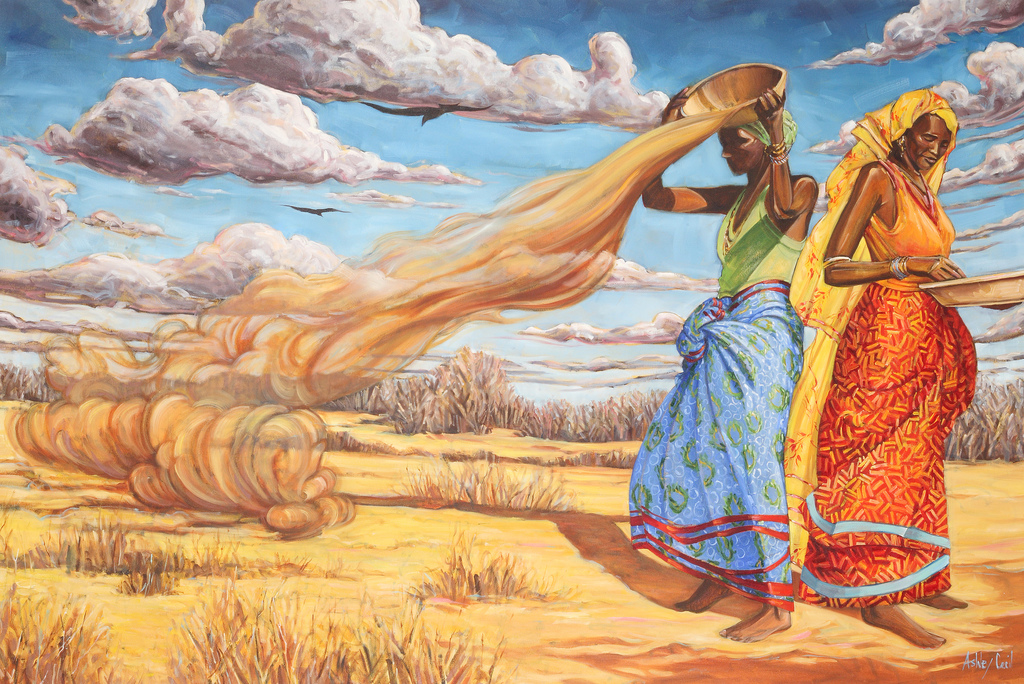
Photo Credit: “Climate Change Canvas” courtesy of Amnesty International. -
Defusing the Bomb: Overcoming Pakistan’s Population Challenge
›According to the UN’s latest mid-range demographic projections for Pakistan, the country’s population–currently about 185 million–will rise to 335 million by 2050. This explosive increase, however, represents the best-case scenario: Should fertility rates remain constant, the UN estimates this figure could approach 460 million. Such soaring population growth, coupled with youthful demographics, a dismal education system, high unemployment, and a troubled economy, pose great risks for Pakistan. Predictably, many observers depict Pakistan’s population situation as a ticking time bomb.
At the same time, some demographers contend that the country’s population profile can potentially bring great benefits to the country. If young Pakistanis can be properly educated and successfully absorbed into the labor force, such experts explain, then the country could experience a “demographic dividend” that boosts social well-being and sparks economic growth. On June 9, the Wilson Center’s Asia Program, Environmental Change and Security Program, and Comparative Urban Studies Project, along with the Karachi-based Fellowship Fund for Pakistan, hosted a day-long conference to examine both the challenges and opportunities of Pakistan’s demographics, and to discuss how best to tackle the former and maximize the latter.
Pakistan at a Crossroads
In her opening address, Zeba A. Sathar of the Population Council declared that Pakistan is “at a crossroads.” Demography will play a key role in determining the country’s future trajectory, she said, yet there is presently little discussion about demographics in Pakistan. Sathar’s presentation traced Pakistan’s recent demographic trends. Despite its high population growth, Pakistan’s fertility rates have actually been in decline since the early 1990s–a fact that Sathar attributed to progressively higher ages at marriage (for both men and women), but also to the “reality” of abortion. However, Pakistan’s pace of fertility decline has slowed in the last few years–a consequence, Sathar argued, of Islamabad’s failure to promote social development (particularly education) and of the international donor community’s prioritizing of HIV/AIDS funding over that of family planning since 2000. Sathar concluded that achieving Pakistan’s “demographic dreams” will require more educational and employment opportunities (particularly for women) and better access to family planning in rural areas.
In the following panel, Wilson Center Senior Scholar Shahid Javed Burki noted the long-standing failure of demographers and economists in Pakistan to work together on the country’s population issues. This failure, Burki asserted, has resulted in poor choices and bad policy. He also criticized officials and scholars for being reactive in their population proposals, rather than proactive. Burki emphasized that good policy choices can produce favorable results. If, for instance, the population policies launched in Pakistan’s early decades had been sustained to the present, the country today would have 30 million fewer people. Similarly, had Pakistan followed the Bangladeshi approach and concentrated on the economic empowerment of women, today there would be more than 40 million fewer Pakistanis. Good policies matter, Burki repeatedly asserted, and Pakistan’s large and growing population, if dealt with wisely, can be an asset rather than a burden.
Development Through the Bangladeshi Model and Education
Like Burki, Yasmeen Sabeeh Qazi of the Packard Foundation pointed to Bangladesh as a relative success story. She highlighted Bangladesh’s reproductive health services system, which has served to increase the health of Bangladeshis and reduce their poverty. Indonesia and Iran, whose fertility rates are one-half Pakistan’s, provide other examples in the Muslim world where official policy has made a significant difference. Qazi’s presentation emphasized the linkages between family planning, reproductive health, and development. Noting that one-third of pregnancies in Pakistan are unplanned, she underscored the correlation between smaller family size and higher gross national income. She urged the government to fashion a population policy that expands access to reproductive health services, strengthens the health system generally, promotes education (especially for girls), and creates more jobs.
Moeed Yusuf of the U.S. Institute of Peace examined the prospects for radicalization of Pakistan’s youth. Pakistan’s stratified education system, Yusuf cautioned, is not training productive, employable members of society. Only graduates of elite private schools or of foreign schools are prepared for the economy of the 21st century. Meanwhile, the economy is not producing the quality jobs the young expect, leading to an “expectation-reality disconnect” that fosters not only un- or underemployment, but also anger and alienation. Moreover, the state, by deliberately cultivating the ultra-right elements in Pakistani society who most want to radicalize the country’s youth, is part of the problem. Still, Yusuf added, echoing the hopefulness of other speakers, it is not too late. These disturbing trends can be reversed, with help from outside friends like the United States, which, Yusuf counseled, should focus on assisting Pakistan’s education system, support rural private schools, and allow more Pakistani students to study in the United States.
Plugging Public Sector Holes with Private Initiatives
Saba Gul Khattak focused her luncheon address on the work of the Pakistan government’s Planning Commission, of which she is a member. In recent years, Pakistan’s population programs have been devolved from the federal to the provincial and sub-provincial levels. This decentralization, she averred, has opened the way for a genuine reform agenda. But it has also contributed to a situation where no one at the federal level feels any “ownership” over the country’s population programs. Implementation has always been the most vulnerable point in the policy process–and the lack of “ownership” only accentuates this problem today. Khattak emphasized the linkages between population, health, education, and development. Today, she asserted, children are seen by their parents as a source of old age security. Only when the government fills this void through the establishment of an effective social security structure will Pakistan be able to reduce its fertility rates. Development must accompany a truly effective population program.
In the afternoon panel, Sohail Agha of Population Services International discussed the role of the private sector in family planning in Pakistan. He argued that this sector has made a “substantial contribution” to Pakistan’s increased use of condoms: In 2006-07, a period when condom use spiked by nearly 8 percent, about 80 percent of this increase was covered by contraceptives provided by the private sector. Additionally, he noted that a 2009 survey found that urban Pakistanis exposed to social marketing campaigns about condom utilization increased their use of the contraceptive by 10 percent. Furthermore, he described private-sector-led health financing plans for women’s fertilization–a method of contraception that, like condoms, has increased over the last 30 years in Pakistan.
Engaging Youth and Political and Religious Leaders
Shazia Khawar of the British Council discussed the “Next Generation” report, a 2009 Council study about Pakistan’s youth. The report, based on a survey of 1,500 young people across both rural and urban Pakistan, concludes that young Pakistanis are deeply disillusioned about their country and its institutions, with three-quarters of those surveyed saying they regard themselves as “primarily” Muslims, not Pakistanis. The report’s “critical point,” said Khawar, is that Pakistani youth participation in policy development is nonexistent. To this end, the British Council has spearheaded several initiatives to engage the country’s youth in Pakistani politics and to spark dialogue between young Pakistanis and policymakers. Khawar concluded, however, that success is possible only if Pakistan’s top political leaders “pledge themselves to this agenda.”
Mehtab S. Karim of the Pew Research Center offered a comparative perspective, discussing demographics in the broader Muslim world, with particular emphasis on Bangladesh and Iran. Why, he asked, has Pakistan experienced less fertility decline than most of its fellow Muslim-majority nations? He suggested that the answer lies in the failure of Pakistan’s political and religious leaders to make early and sustained commitments to family planning. In Bangladesh, he explained, the country’s very first government made lower population growth rates a “prime goal.” And in Iran, spiritual leader Ayatollah Khomeini issued a fatwa in support of contraceptive use soon after the Islamic Revolution. Yet in Pakistan, according to Karim, religious figures have consistently opposed Islamabad’s family planning efforts, and the government has proven unwilling or unable to combat this resistance.
Scott Radloff of USAID discussed his agency’s family planning and reproductive health (FP/RH) projects in Pakistan. FP/RH aid to Pakistan was largely cut off during much of the 1990s due to the Pressler Amendment–a 1985 modification to the U.S. Foreign Assistance Act that banned most U.S. military and economic assistance to Pakistan unless the U.S. president certified that Pakistan had no nuclear weapons. President George W. Bush waived this prohibition in 2001, and since then USAID FP/RH assistance has risen to nearly $45 million. Current interventions focus on strengthening services within Pakistan’s Ministry of Health and Ministry of Population Welfare; improving contraceptive supplies and logistics; expanding community-based services; and increasing awareness and commitment, including among religious leaders.
Participants concurred that Pakistan’s demographic situation is fraught with risk. Yet they also highlighted a series of hopeful signs. Yusuf noted the absence of an “imminent” danger of youth radicalization; Khawar pointed to the testimonies of “many young leaders determined to do their part” that flow from the “Next Generation” report; and both Karim and Qazi cited Bangladesh and Iran as proof that successful family planning programs are possible even in countries marked by deep poverty or conservative Islam. The presenters were also in accord about the necessary policies moving forward: more extensive family planning and reproductive health services, better education, and more job opportunities (particularly for women). At the same time, speakers repeatedly underscored the profound challenges facing the implementation of such policies. Still, for all the talk about major obstacles and challenges, there was recognition that more modest and simple steps can be taken as well–such as promoting more discussion about demographics within Pakistan, and especially among experts from different disciplines.
Michael Kugelman is program associate and Robert M. Hathaway is director of the Wilson Center’s Asia Program.
Photo credit: Traffic in downtown Karachi, courtesy Flickr user Ali Adnan Qazalbash. -
Women Deliver: Real Solutions for Reproductive Health and Maternal Mortality
›The landmark Women Deliver conference, which concluded last week, reinvigorated the global health community’s commitment to improve reproductive health at both the grassroots and global levels. Providing a major boost was the Gates Foundation’s announcement that it will commit an additional $1.5 billion over the next five years to support maternal and child health, family planning, and nutrition programs in developing countries.
“We haven’t tried hard enough,” said Gates Foundation co-founder Melinda Gates. “Most maternal and newborn deaths can be prevented with existing, low-cost solutions.” Examples of these efficient and effective solutions were presented at the three-day conference’s dozens of panels on a wide range of issues, including climate change, contraceptive commodities, fistula, gender inequities, adolescent family planning, communications and technology, and much more.
Empowering Young Girls to Access Family Planning
“When we speak about adolescents we typically think of prevention. However, we must also think about providing access to safe abortions and supporting young women who want to be mothers and empower young women to make choices,” said Katie Chau, a consultant at International Planned Parenthood Federation.
In Nigeria, “there is not much attention on adolescent sexual and reproductive health, even though a majority of rapes occur before the age of 13, and the rate of teenage pregnancy and abortions is high,” said Bene Madunagu, chair of the Girls’ Power Initiative (GPI) in Nigeria. GPI teaches girls about their rights to make decisions, including those regarding sex and reproductive health, as well as improving their critical thinking skills, self-esteem, and body image. “Girls develop critical consciousness and question discriminatory practices, while also learning about the legal instruments to take up their concerns,” he said.
Sadaf Nasim of Rahnuma Family Planning said child marriages are common in his country, Pakistan. “Marriage is an easy solution for poor families. Once a girl is married she is no longer the responsibility of the family,” he explained.
While laws in Pakistan and other parts of the developing world condemn child marriage, the prevalence of child marriage remains high: 49 percent of girls are married by age 18 in South Asia, and 44 percent in West and Central Africa. Nasim said birth registration at the local and national levels should be improved to prevent parents from manipulating their daughter’s age.
In Kyrgyzstan, “community-based efforts worked to galvanize media attention and disseminate information to demonstrate the need for improved adolescent family planning,” said Tatiana Popovitskaya, a project coordinator with Reproductive Health Alliance of Kyrgyzstan. Such community-based approaches use grassroots education to mobilize community leaders, which is a critical step in overcoming child marriage and other harmful traditions.
Cell Phones and Maternal Health
“There is a lot of information being collected, but it is not necessarily going where it needs to because of fragmentation,” said Alison Bloch, program director at mHealth Alliance. In developing countries, the people most in need are often the most isolated, but mobile technology is emerging as a way to bridge the gaps.
According to a recent report by mHealth Alliance, 64 percent of mobile phone users live in developing countries and more than half of people living in remote areas will have mobile phones by 2012. The potential for improving global health with cell phones and PDAs is significant, and can address a wide range of health issues, such as human resource shortages and information sharing problems between clinics and hospitals.
“Mobile technology provides benefits to individuals, institutions, caregivers, and the community. It reduces travel time and costs for the individual, improves efficiency of health service delivery, and streamlines information to health workers to reduce maternal mortality,” said Elaine Weidman, vice president of sustainability and corporate responsibility at Ericsson.
“Mobile technology is the most rapidly adopted technology in history and represents an existing opportunity to reach the un-reached,” said Fabiano Teixeira da Cruz, a program manager for the Inter-American Development Bank, speaking of the benefits of using mobile technology to train field-based healthcare workers in Latin America.
While mobile phones are indeed reaching parts of the world not currently equipped with quality healthcare, the lack of systematic coordination and infrastructure at the district and regional levels must also be addressed, as highlighted during a recent Wilson Center event, Improving Transportation and Referral for Maternal Health.
Read about our first impressions of Women Deliver 2010 here.
Calyn Ostrowski is program associate with the Wilson Center’s Global Health Initiative
Photo credit: Woman and child in South African AIDS clinic, courtesy Flickr user tcd123usa. -
The Feed for Fresh News on Population
›June 9, 2010 // By Wilson Center StaffChanging Chinese demographics of labor force connected to worker protests from today’s
New research on desired family size and child mortality in Reading Radar on @NewSecurityBeat. From #USAID and The #Lancet http://ow.ly/1UgYj
Congrats to Suzanne Ehlers as new head of #PAI. Hoping for cont’d demography & security and population-environment work http://ow.ly/1TAzA
Practical maternal health lessons in transportation and referral w/ examples from #India, #Bolivia, & #Ghana @MHTF #UNFPA http://ow.ly/1TzQZ
Columbia University’s Grace Kodindo on @NewSecurityBeat with video interview on family planning in conflict zones http://ow.ly/1TzQg
Grace Kodindo of “Grace Under Fire” talks family planning in conflict zones. #Chad #refugees #conflict #WilsonCenter http://ow.ly/1TuN1
Follow Geoff Dabelko on Twitter for more population, health, environment, and security updates -
Women Deliver 2010: First Impressions
›Delivering Solutions for Girls and Women
“We know how to intervene; there does not need to be a magical solution,” said Søren Pind, Denmark’s minister for development cooperation, at the June 7 opening ceremony of Women Deliver 2010.
In its second year, the conference has gathered delegates from 146 countries representing hundreds of non-governmental organizations (NGOs), governments, and civil society organizations under the theme “Delivering Solutions for Girls and Women.” Delegates are working to share projects, policies, successes, and innovations in the field of maternal health and to develop strategies to meet Millennium Development Goal 5.
“Recent trends show great progress and this is very encouraging,” said Gamal Serour, president of the International Federation of Gynecology and Obstetrics (FIGO), speaking of a recent study by the Institute of Health Metrics and Evaluation (IHME). The study found that annual maternal mortality has dropped 34 percent–from 526,000 to 342,900–between 1980 and 2008. Nevertheless, Serour maintained that “we are far away from our goal for 2015.”
Overcoming Tradition and Religious Barriers
Investing in women’s health is not only the right thing to do, it is also economically advantageous. When women are healthy, they provide tremendous benefits to their families, communities, and countries. Women contribute to a majority of the small businesses and agricultural activities of developing countries and their unpaid work at home accounts for almost 33 percent of the world’s GDP. Unfortunately, over 215 million of these women do not have access to family planning services, resulting in unwanted pregnancies, childbirth, and maternal deaths.
There are many barriers to family planning in developing countries, not the least of which are cultural and social traditions that can uphold negative gender-based norms. Tailoring campaigns to address these gender inequities was the subject of discussion at the “Cultural Agents of Change Delivering for Women” session, where panelists acknowledged that collaboration and partnership with a wide-range of actors–from members of the local legislature to civil society organizations and actors in the health sector–are necessary to facilitate change.
Graciela Enciso of the Centro de Investigaciones y Estudios Superiores en Antropología Social-Sureste in Mexico, added that advocacy campaigns to increase support for family planning should be “linked with research.” In many traditional societies, strict interpretations of religion are used to control and disempower women; donors and NGOs “need to think outside the religious box at every point,” said Mary E. Hunt, co-director at the Women’s Alliance for Theology, Ethics, and Ritual.
Male Contraception, Gender Roles, and Family Planning
“I think it is important not to hide behind our cultures and religion,” said Ngozi Okonjo-Iweala, managing director of the World Bank. “We need to work with men and work together to overcome gender inequality.” “Male participation” has been a key theme echoed throughout Women Deliver and is often highlighted as a strategy for reducing maternal mortality.
At the “Men Deliver: Men’s Role in Family Planning” breakout session, experts addressed how new and existing technologies in male contraception and shifting gender roles can help to scale up family planning interventions. “Reducing unwanted pregnancies can also be carried out through male contraception,” said John Townsend, vice president of the reproductive health program at the Population Council.
Condoms are traditionally the main method of contraception for men, but usage rates quickly fall over time and to wear a condom “becomes the women’s responsibility,” said Townsend. To address issues around condom usage, development of alternative family planning technologies, such as gels and implants, is underway. As these technologies are being developed, however, it is important for program managers and donors to consider existing gender norms and the willingness of men to utilize new methods.
In researching gender roles in family planning in Zambia, Holo Hochanda, the chief technical administrator of the Planned Parenthood Association of Zambia, determined that there are many entry points for male intervention and increased family planning. “Men are clients, policymakers, and service providers. Each of these roles provides an opportunity to discuss utilization of male contraception and gender inequities in family planning,” he said. “Men can be key mobilizers and agents for change.”
For more coverage on Women Deliver 2010 click here and to learn more about the Wilson Center’s Maternal Health Dialogue Series visit the Global Health Initiative’s website here. -
Shrinking Desired Family Size and Declining Child Mortality
›Desired Number of Children: 2000-2008, a report prepared by Charles Westoff of Princeton University for USAID, reviews family size preferences in 60 countries. Taking its data from a series of Demographic and Health Surveys (DHS), the report found that “the number of children desired is declining in most of the developing world.” The noted exception is western and middle sub-Saharan Africa where, in some countries, 6.0 children remains the desired number. The report found that desire for smaller family sizes, rather than a reduction of unwanted births, was the primary factor behind the declining Total Fertility Rates (TFR) exhibited in most of the countries studied. It noted that men’s preference is close to, but larger than, that of women, and that preference sizes were declining even among women without formal education. The report concluded that preferred family size broadly depended upon “child mortality, Muslim affiliation, women’s education and empowerment, and exposure to the mass media.”In an article appearing in the latest The Lancet, researchers from University of Washington and University of Brisbane found that global child mortality has declined 35 percent since 1990, outpacing initial forecasts. Neonatal, Postneonatal, Childhood, and Under-5 Mortality for 187 Countries, 1970—2010: A Systematic Analysis of Progress Towards Millennium Development Goal 4 found that 31 developing countries are on track to achieve Millennium Development Goal 4 and that in certain regions, including sub-Saharan Africa, declines in mortality are actually accelerating. The report concludes that the positive trends in child mortality “deserve attention and might need enhanced policy attention and resources.”