Showing posts from category family planning.
-
The “Condom King” speaks at TEDxChange on Poverty Reduction and a “9th MDG”
›“We have now found the weapon of mass protection,” said Mechai Viravaidya (a.k.a. the “Condom King”) at the recent TEDxChange event in New York. Viravaidya is the founder and chairman of the Population and Community Development Association and a former senator of Thailand. He spoke about his innovative approaches to addressing Thailand’s once high rates of poverty, child mortality, and HIV through the promotion of family planning and condom use.
-
Wilson Center Scholar Huma Yusuf on Pakistan’s Population Policy: Will it Work?
›October 8, 2010 // By Wilson Center StaffExcerpt from op-ed by Huma Yusuf in Dawn: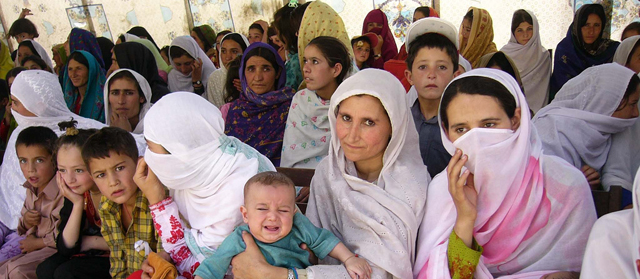
The best news Pakistanis have received in the past week comes in the form of the National Population Policy 2010. The policy recognises that demographics are the key to promoting economic development and security in Pakistan. It also prioritises family planning — particularly in an effort to promote birth spacing — as the best strategy for achieving ambitious population targets (2.1 births per woman in 2025).
In many ways, the story of Pakistan is one of a failure of family planning. Although the Family Planning Association of Pakistan was set up as early as 1952, we have seen a five-fold increase in our population between 1951 and 2009, from 34 million to 171 million.
The urgent need for revamped family planning service delivery cannot be understated. Although 96 per cent of married Pakistani women are aware of at least one modern contraceptive method, only 22 per cent are currently using modern contraceptives, while another eight per cent use less effective traditional methods. One quarter of married women want to wait before having another child, or do not want more children, but are not using contraception. And 24 per cent of married women admit that their last child was mistimed or unwanted.
Many Pakistanis bemoan the prevalence of abortion here (a 2004 Population Council study estimates that there are 890,000 abortions annually), but this too should be understood as a shortcoming of our government’s family planning service delivery. According to the 2006-07 Pakistan Demographic Health Survey, 65 per cent of women who had an abortion were over the age of 30, while 80 per cent had more than three children. In this context, the population policy’s emphasis on family planning is a welcome paradigm shift.
Continue reading on Dawn.
Photo Credit: Adapted from “chitral photos,” courtesy of flickr user groundreporter. -
Nicholas Kristof on Maternal Health Challenges and Opportunities
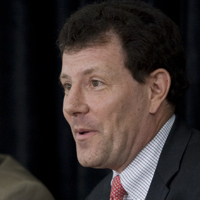
› After a Wilson Center Global Health Initiative event last year, New York Times columnist Nicholas Kristof spoke with ECSP Director Geoff Dabelko about the importance of maternal health issues and what can be done about it.
“You just know that if men had uteruses and were dying at this rate, every country would have a Minister of Paternal Mortality, the Security Council would be meeting…this would be a real international priority,” said Kristof. “It just should not happen that one woman dies a minute for reproducing.” He recently revisited this topic with a column titled, “Birth Control Over Baldness.”
The “Pop Audio” series offers brief clips from ECSP’s conversations with experts around the world, sharing analysis and promoting dialogue on population-related issues. Also available on iTunes. -
Google Data Maps Development Indicators
›If you have not had the (purely wonky) pleasure of playing with Google’s Public Data Explorer, do yourself a favor and direct your browser there now.
Born from Hans Rosling’s Gapminder, Google’s data explorer currently allows the user to choose from 24 different data sets, including information from the World Bank, U.S. Census Bureau, Eurostat, and Energy Information Agency. Users can then customize the dataset’s variables, save their work, and even embed the resulting chart, “unveiling the beauty of statistics for a fact-based world view,” as the Gapminder site puts it.
The example dataset above uses development indicators from the World Bank to show areas of the world where high fertility rate and heavy reliance on subsistence agriculture have persisted over time. It’s worth noting that many of the countries in the upper right of the graph are also where we find persistent conflict, and, if one accepts the predictions that Africa will see some of the most profound effects of climate change, they also face real risk of continuing instability as declining crop yields threaten livelihoods and population growth continues. -
Women, Water and Conflict as Development Priorities Plus Some Geoengineering Context
›September 24, 2010 // By Geoffrey D. DabelkoHere are some useful links to environment, population, and security work that recently crossed my desk.
• NYU’s Richard Gowan dissects UK development minister Andrew Mitchell’s encouraging speech identifying conflict-affected states as special DFID priorities. Gowan pulls out highlights from the speech and parses NGO reaction to it on Global Dashboard.
• Council on Foreign Relations’ Isobel Coleman provides five practical suggestions for tapping into women as the “new global growth engine,” on Forbes.
• The Aspen Institute announced its Global Leaders Council for Reproductive Health this week. Their goal: meeting unmet demand for family planning services by 2015 on the MDG schedule. That is over 200,000,000 women who want services but do not have access.
• I’m heartened to see the U.S. Senate pass the Senator Paul Simon Water for the World Act. Hoping the House will follow suit. Last time Congress passed legislation on water, sanitation, and health priorities, the 2005 Senator Paul Simon Water for the Poor Act enjoyed overwhelming bipartisan support.
• Colby historian Jim Fleming, writing in Slate, puts the increasing fascination with geoengineering as a climate response “option” in some sobering historical context. “Weather as a Weapon: The Troubling History of Geoengineering” is the short read. Tune in to hear Jim present the book length version, Fixing the Sky, at the Wilson Center, October 6th at 10:30 am EST.
Follow Geoff Dabelko (@geoffdabelko) and The New Security Beat (@NewSecurityBeat) on Twitter for more population, health, environment, and security updates. -
UN Millennium Development Goals Summit: PHE On the Side
›September 21, 2010 // By Wilson Center StaffFrom 20-22 September 2010, world leaders will meet in New York City to discuss the United Nations’ “We Can End Poverty 2015” Millennium Development Goals, which include food security, maternal and child health, and environmental sustainability as key objectives, but controversially, make no mention of population. Officially, there is only one small “side session,” organized by Vicky Markham of the Center for Environment and Population, devoted to talking about the MDGs in the integrated context of population, health, and environment (PHE).
Since 2005, annual Millennium Development Goals reports have published data from a large number of international organizations and UN agencies to track progress. According to the 2010 Millennium Development Goals Report, the 2008 economic downturn has stalled momentum to achieve the eight goals. The report also stated that “though progress had been made, it is uneven. And without a major push forward, many of the MDG targets are likely to be missed in most regions.”
While PHE remains somewhat taboo at the UN, The New Security Beat continues to highlight the important linkages between these issues. Check out some of our recent coverage including Calyn Ostrowski’s blogging from the 2010 Global Maternal Health Conference, perspectives on Pakistan’s ongoing environmental and development disaster, the World Bank’s latest report on international land grabs and their effect on food security, and our coverage of all things population, health, and environment.
Sources: AFP, United Nations.
Photo Credit: Adapted from “United Nations,” courtesy of flickr user Ashitakka. -
Joseph Speidel on Population, the Environment, and Growth
›“If we could do something about unintended pregnancies – which are about 80 million a year – we could dramatically reduce population growth,” and reduce pressure on the environment, says Joseph Speidel in this short analysis from the Environmental Change and Security Program. Speidel discusses the connections between population, health, and environment issues, and offers solutions for the way forward.
The “Pop Audio” series offers brief clips from ECSP’s conversations with experts around the world, sharing analysis and promoting dialogue on population-related issues. Also available on iTunes. -
Improving Monitoring, Transparency, and Accountability for Maternal, Newborn, and Child Health
›“There is a knowledge gap between global targets and locally owned goals,” said Sallie Craig Huber, global lead for results management at Management Sciences for Health (MSH). The seventh meeting of the “Advancing Policy Dialogue on Maternal Health” series – cosponsored by the Global Health Council, MSH, and PATH – comes at a critical time as world leaders meet next week at the high-level, plenary UN Summit to review progress toward the Millennium Development Goals (MDGs).
Panelists Marge Koblinsky, senior technical advisor, John Snow Inc., Ellen Starbird, deputy director, U.S. Agency for International Development, and Monique Widyono, program officer of PATH, discussed strategies for improving maternal health evaluation methods while balancing the interests of donors and beneficiaries.
Maternal Health Indicators: Contact vs. Context
“Skilled birth attendants [have] become the strategy [for improving maternal mortality rates], but one size does not fit all,” said Koblinsky. The proportion of births attended by skilled birth attendants is a key maternal health indicator; however, it is not sufficient and says little about what the attendants actually did during the birth.Koblinsky demonstrated how other indicators such as near-miss morbidity, rates of cesarean section, and contraceptive prevalence rates (CPR) are better aligned with maternal mortality outcomes. “CPR is much more closely linked with the outcome we desire as [contraception] reduces pregnancies for those at higher risk and reduces unwanted births and unsafe abortions,” said Koblinsky.
“Are the present benchmarks enough?” asked Koblinsky. “The answer is no….Indicators based on contact with skilled birth attendants focuses attention on contact, not on the quality of care or event context.”
Qualitative Data Is Necessary“When we talk about monitoring and evaluation, transparency and accountability, it’s really critical to engage [in a discussion] on how we gauge progress,” said Widyono. In the field, “collection of data varies widely and depends on the capacity of those collecting, aggregating, and analyzing the information,” said Widyono. Such inconsistencies demand increased investment in local research capacity and qualitative analysis.
Such engagement also provides an opportunity for feedback. This “qualitative data helps to reinforce, illuminate, and deepen the understanding of what this quantitative data is showing on the ground,” said Widyono. Moving forward, policymakers, donors, and program managers will need to find a balance between these two sets of data and work together to galvanize action.
“There is a lack of attention paid to developing local, sustainable research capacity,” said Widyono. “We have an obligation to build local research capacity and disseminate findings in collaboration with the people who are going to be affected by this data,” she said.
Innovation and Research
“We really need to think about monitoring and evaluation and research and innovation as a continuum,” said Starbird. “They reinforce each other and play different roles in helping us understand what makes programs work or why they are not working.”“We have a myriad of indicators that we expect people to monitor, collect data for, and report back to headquarters in a way that has not given countries and programs the freedom to be country-specific,” said Starbird. Therefore, “one of the goals is to minimize the reporting burden and better coordinate around indicator definition with other donors,” she said.
In order to strengthen “M&E;” for maternal health, Starbird called for new indicators as well as new ways of thinking about data analysis. “Having a results framework is really important to do good monitoring and evaluation,” she said. Evaluating the relationship between inputs, outputs, outcomes, and impacts requires a wide range of data resources so we can “get under the numbers” and determine what needs to be improved, she said.
“It’s really important to have realistic goals, otherwise it’s difficult to put programs into place and get where we want to go,” said Starbird. She said that MDG 5.B, which calls for universal access to reproductive health, “is great, but there’s never going to be universal access to reproductive health. If we really want to make progress we need to define something that is achievable and is something we can come together around.”
In conclusion, it is necessary to provide “countries with the room to do what needs to be done locally, so we can better understand these concepts rather than imposing indicators on everybody,” said Starbird.