• woodrow wilson center
  • ecsp

New Security Beat

Subscribe:
  • rss
  • mail-to
  • Who We Are
  • Topics
    • Population
    • Environment
    • Security
    • Health
    • Development
  • Columns
    • China Environment Forum
    • Choke Point
    • Dot-Mom
    • Friday Podcasts
    • Navigating the Poles
    • Reading Radar
  • Multimedia
    • Water Stories (Podcast Series)
    • Backdraft (Podcast Series)
    • Tracking the Energy Titans (Interactive)
  • Films
    • Water, Conflict, and Peacebuilding (Animated Short)
    • Paving the Way (Ethiopia)
    • Broken Landscape (India)
    • Scaling the Mountain (Nepal)
    • Healthy People, Healthy Environment (Tanzania)
  • Publications
  • Events
  • Contact Us

NewSecurityBeat

The blog of the Wilson Center's Environmental Change and Security Program
Showing posts from category environmental peacemaking.
  • Science Diplomacy: An Expectations Game

    ›
    June 19, 2009  //  By Geoffrey D. Dabelko
    In “The Limits of Science Diplomacy,” SciDev.net Director David Dickson argues that scientific collaboration can achieve only very limited diplomatic victories. A conference hosted by the Royal Society in London earlier this month, entitled “New Frontiers in Science Diplomacy” (agenda), seems to have arrived at a similar conclusion.

    But I think this view of science diplomacy is overly pessimistic. It sets unrealistically high expectations such dialogue could never hope to achieve. Science diplomacy is not meant to solve all aspects of conflicts or distrustful relationships, so setting such a high bar is a bit of a straw man. Science, as well as dialogue on the management of shared natural resources, remains an under-utilized and under-studied tool for trust-building, so it is premature to declare it a failure before we have sufficient evidence for evaluation.

    Veterans of Pugwash Conferences on Science and World Affairs and other Cold War-era scientific dialogues might suggest we are neglecting some rich experiences from this era. It bears remembering that Pugwash was awarded the 1995 Nobel Peace Prize (and current U.S. Science Adviser John Holdren delivered the acceptance speech as then executive director of Pugwash).

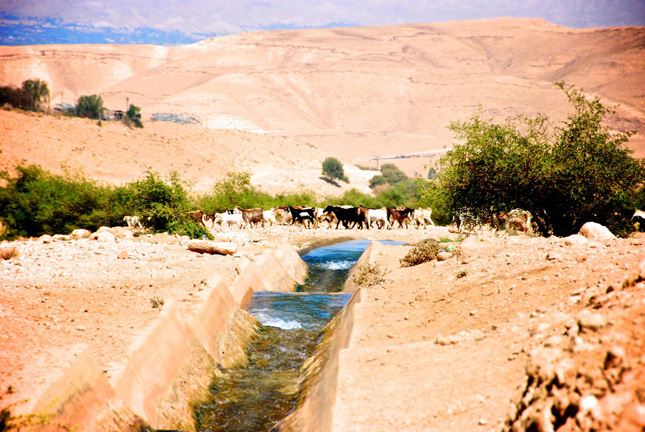
    A distinct but related arena for further policy attempts and research inquiries is environmental peacebuilding, where mutual interdependence around natural resources provides pathways for dialogue in the midst of conflict. The establishment of the Cordillera del Condor Transboundary Protected Area between Ecuador and Peru was a result of integrating joint environmental management structures in the 1998 peace agreement that ended a long-festering border conflict. Negotiation over shared resources, such as water, can be a diplomatic lifeline for otherwise-hostile countries, such as Israel and Jordan, which held secret “picnic table” talks to manage the Jordan River while they were officially at war. And the U.S. military has successfully uses environmental cooperation to engage both friends and adversaries.

    Collaboration on scientific and environmental issues won’t solve all our problems. And defining and identifying success remains a fundamental challenge when success is the absence of something (conflict). But let’s not retreat to the common church-and-state division where scientists fear being “contaminated” by participating in policy-relevant dialogues. And let’s certainly not declare science diplomacy a failure—and stop trying to make it a success—based on unrealistic expectations for the benefits such efforts might produce.
    MORE
  • Conflict, Cooperation, and Kabbalah: Lessons for Environmental Negotiations

    ›
    June 10, 2009  //  By Wilson Center Staff

    Often during tough negotiations, an “ah-ha” moment transforms the parties’ thinking and enables them to move forward. Recognizing that such moments are also common to many spiritual traditions, Oregon State University Geography Professor Aaron Wolf decided to study several world religions for insights that could be applied to disputes over water resources, and to negotiation processes in general. Although Western cultures tend to view spirituality as a purely private matter—a legacy of the Enlightenment—in a June 3 invitation-only meeting at the Wilson Center, Wolf argued that much of the rest of the world understands spirituality as integrated with all parts of life.

    According to Wolf, spiritual traditions can illuminate two aspects of water negotiations:

    1. Understanding Conflict
    • Could addressing the ethical aspect of negotiations supplement the more common focuses on economic development, ecosystem protection, or environmental security, which have shown only partial success?
    • How does personal faith impact decision-making; can universal values be more explicitly invoked to facilitate negotiations?
    • How does global water management address the spiritual needs of stakeholders?

    2. Process Techniques

    • Might spiritual transformation have tools or approaches that could improve the difficult dynamics of international environmental negotiations?
    • How could the tools of personal transformation—such as guided imagery, prayer, ceremony, silence, and transformative listening—aid the mediation process and/or group dynamics?

    Wolf drew parallels between Maslow’s hierarchy of needs (physical, emotional, intellectual, and spiritual), the criteria for water allocations (based on rights, needs, interests, and equity), and the four stages of negotiations (adversarial, reflexive, integrative, and action).

    Wolf argued that, while semantics may vary, certain concepts’ universality makes them an effective means of communicating across cultures. For instance, the Jewish mystical tradition of Kabbalah highlights the importance of bringing justice (din) and mercy (chesed) together in a partnership that promotes compassion (rachamim): that is, being partly rooted in one’s own needs while having the ability to recognize and care for the needs of others.

    This concept of compassion has an important role in Islam, as well. The Arabic word for reconciliation, musalaha, means that hostilities are ended, honor is re-established, and peace (sulha) is restored in the community. Wolf also stressed the concept of tarrahdin—resolving a conflict without humiliating either party—as key to a sustainable negotiation and peace.

    But how to apply these spiritual concepts to real-life negotiations? Wolf suggests that mediators employ transformative listening skills and help parties move from a stance based on rights or needs to one based on interests or equity. Wolf also suggests that instead of being seated across from one another, which is the most adversarial arrangement, parties should be seated side by side, in a manner more reflective of prayer than argument. Another effective technique is structuring introductions so that personal narratives are shared, helping create connections between individuals.

    Although the union of spiritual and rational processes is a somewhat foreign concept in the West, Wolf hopes that reaching across cultural divides will lead to the more effective resolution of environmental and other disputes.

    By Comparative Urban Studies Project Program Assistant Lauren Herzer.
    MORE
  • VIDEO: Environment Key to Resolving Conflicts, Building Peace, Says UN Environment Programme Director Achim Steiner

    ›
    June 2, 2009  //  By Rachel Weisshaar
    “Addressing the issue of the environment in the context of conflict resolution, conflict prevention, peacekeeping, [and] peacebuilding becomes ever more important because we know from everything we have learned—and are learning every day—about climate change that one thing is for certain: The world is going to be under more stress,” says UN Environment Programme (UNEP) Director Achim Steiner in a short expert interview on YouTube.

    Yet in another original Environmental Change and Security Program (ECSP) video, Steiner emphasizes that environmental issues do not lead inexorably to conflict. “History shows that human societies are not prone to looking for conflict but rather for conflict resolution, particularly when it comes to fundamental elements of life support systems, be it water, or be it clean air or other issues—we have seen the model of cooperation emerge.”

    Steiner was at the Wilson Center in March 2009 for the launch of From Conflict to Peacebuilding: The Role of Natural Resources and the Environment, a new report by UNEP’s Disasters and Conflicts Programme. According to From Conflict to Peacebuilding:
    • Forty percent of intrastate conflicts within the past 60 years have been strongly linked to natural resources.
    • Such conflicts are twice as likely to relapse within the first five years of peace.
    • Less than a quarter of peace agreements for these conflicts address natural-resource issues.
    Watch other short expert commentaries—on water, demographic security, climate change and security, and other issues—on ECSP’s YouTube channel.
    MORE
  • Environmental Cooperation Could Boost U.S.-Chinese Military Engagement, Says ECSP Director Dabelko

    ›
    April 23, 2009  //  By Wilson Center Staff
    “Recently, the Defense Department warned that lack of Chinese transparency and dialogue between the Chinese and US militaries could lead to dangerous miscalculations on both sides. The tense confrontation between a US Naval survey vessel and five Chinese ships in the South China Sea in March echoed the rather serious 2001 Hainan Island incident, which was characterized by mutual suspicion and public acrimony. That event affected US-China relations for years.

    To avoid further incidents, the Defense Department desires ‘deeper, broader, more high-level contacts with the Chinese,’ said Pentagon Press Secretary Geoff Morrell. The White House issued a statement stressing the ‘importance of raising the level and frequency of the US-China military-to-military dialogue,’ and President Obama quickly laid the groundwork by meeting with Chinese President Hu Jintao in London and agreeing to work to improve military-to-military relations.

    One such way to begin military dialogue between the United States and China is by using environmental issues.

    Environmental collaboration is unlikely to hit politically sensitive buttons, and thus offers great potential to deepen dialogue and cooperation. Military-to-military dialogue can facilitate the sharing of best practices on a range of environmental security issues.”

    To read the rest of this op-ed, co-authored by ECSP Director Geoff Dabelko and Kent Hughes Butts, director of the National Security Issues Branch of the Center for Strategic Leadership at the U.S. Army War College, please visit the Christian Science Monitor.
    MORE
  • From Assessment to Intervention: Redefining UNEP’s Role in Conflict Resolution

    ›
    April 9, 2009  //  By Will Rogers
    “Can we get beyond the point where environment and conflict always has to be a story of tragedy with no happy ending?” asked Achim Steiner at the March 24, 2009, launch of From Conflict to Peacebuilding: The Role of Natural Resources and the Environment, a new report from the UN Environment Programme (UNEP).

    “I think we actually can provide a critical set of building blocks that would allow us to be not just lamenters on the sidelines,” but active problem-solvers, said Steiner, UNEP’s executive director. UNEP would like to put “green advisers, so to speak, with blue helmets” to examine peacebuilding “from an environmental, natural resource restoration point of view” and “minimize the potential for conflicts to escalate again,” said Steiner, who recently met with Alain Le Roy, UN undersecretary-general for peacekeeping operations, to discuss plans for embedding environmental advisers with UN peacekeeping troops.

    Steiner was joined by Daniel Reifsnyder, deputy assistant secretary for environment at the U.S. State Department, and Andrew Morton, manager of UNEP’s Disasters and Conflicts Programme, to discuss the report’s findings.

    Natural Resources and the Conflict Continuum

    According to From Conflict to Peacebuilding:
    • Forty percent of intrastate conflicts within the past 60 years have been strongly linked to natural resources.
    • Such conflicts are twice as likely to relapse within the first five years of peace.
    • Less than a quarter of peace agreements for these conflicts address natural-resource issues.

    Environmental factors can contribute to conflict and subvert peace in three main ways:

    1. The inequitable distribution of resource wealth, competition for scarce or valuable resources, and environmental degradation can contribute to the outbreak of conflict.
    2. Natural resources can used as “a financing vehicle for conflict—sustaining conflict well beyond the point where conflict has its origin, to actually having become part of an at-war economy, a conflict economy,” Steiner said.
    3. Unresolved environmental issues can subvert peace negotiations, especially when warring parties have a stake in lucrative resources. If we do not understand “how environment and natural resources can undermine very volatile peace agreements,” Steiner warned, we can “find ourselves back where we started off from.”
    Conflicts involving high-value, portable resources—such as timber, oil, and minerals—and those involving scarce resources such as land and water generate “very different conflict dynamics,” emphasized Morton, so it is important to distinguish between them.

    Lessons Learned and the Way Forward

    Natural-resource conflicts have direct impacts—like deforestation and desertification—and indirect impacts—like the disruption of livelihoods—that are devastating to communities, Morton said. They also weaken a government’s capacity to manage its industry and infrastructure, like waste management and water purification, creating new environmental problems—and thus possible future conflict.

    But the environment also offers opportunities, Morton emphasized. In Rwanda, for instance, “we have gorilla tourism going on within a few kilometers of what, essentially, was a war zone.”

    UNEP recommends that peacekeepers:
    • Assess the natural-resource and environmental issues underlying conflicts.
    • Monitor and address natural-resource use in conflict areas.
    • Incorporate resource-sharing agreements into peace deals.
    • When cooperation is not possible, use punitive measures to end resource exploitation.
    “We can and must integrate these [lessons] into peacebuilding, conflict-preventing strategies,” Morton pressed. Demand for environmentally sensitive conflict-prevention and peacebuilding “will increase due to climate change, population growth, and some degradation,” he said. And UNEP is “tooling up to meet the challenge.”

    U.S.-UNEP Cooperation on Environment, Peacebuilding

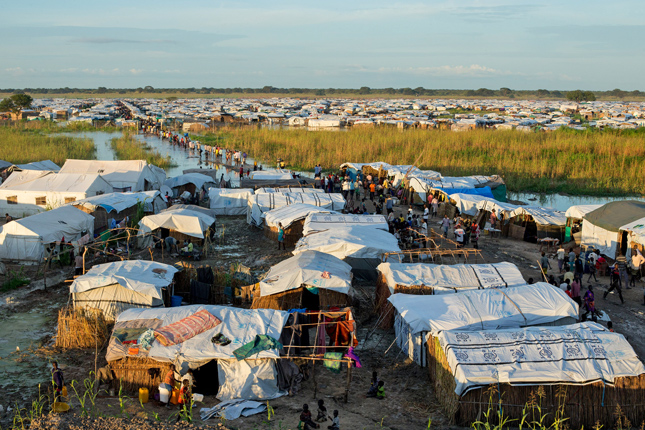
    According to Reifsnyder, the U.S. government frequently supports UNEP initiatives, such as the $1.8 million in U.S. funding for a UNEP reforestation and energy-efficiency program in an internally displaced persons camp in Darfur. This project grew out of the post-conflict environmental assessment that UNEP recently conducted in Sudan.

    Reifsnyder praised UNEP’s focus: “UNEP is uniquely positioned to play a real catalytic role within the UN system, bringing together various parts of the UN system to try to focus on the importance of natural resources and the importance of the environment in peacebuilding initiatives,” he said.

    Photos: From top to bottom, Achim Steiner, Andrew Morton, and Daniel Reifsnyder. Courtesy of Dave Hawxhurst and the Woodrow Wilson Center.
    MORE
  • Green Advisers Assisting UN Peacekeeping Troops: Is the Third Time the Charm?

    ›
    March 27, 2009  //  By Geoffrey D. Dabelko
    Speaking at the Wilson Center earlier this week, UN Environment Programme (UNEP) Director Achim Steiner said he recently discussed plans with Alain Le Roy, UN undersecretary-general for peacekeeping operations, to integrate environmental awareness into UN peacebuilding efforts. According to a study recently released by UNEP, From Conflict to Peacebuilding: The Role of Natural Resources and the Environment (see New Security Beat post), at least 18 violent conflicts have been fuelled by the exploitation of natural resources since 1990, but fewer than 25 percent of peace agreements for resource-related conflicts address natural resources. Steiner said he is hopeful that putting in “green advisers, so to speak, with blue helmets” could change that.

    As someone who has followed the history of environmental security efforts for a long time, trust me—this is news. It’s not that Steiner’s idea of integrating environmental expertise into peacekeeping is novel; on the contrary, a “Green Helmets” force to respond to environmental conflicts was proposed unsuccessfully by Mikhail Gorbachev in 1989-89 and by then-UNEP Director Klaus Toepfer in 1998. Both of these proposals failed because many countries feared a dilution of the principle of sovereign control over their territory and natural resources. But Steiner’s less-ambitious, more-practical plan to provide environmental advisers to peacekeeping troops seems to hold promise for reducing the environmental impact of conflicts and choking the supply chain of illegal resources fueling them. We may see this new integrated peacebuilding approach in action in the Democratic Republic of the Congo and Haiti.

    Stay tuned for the archived video and transcript of Steiner’s talk, which also featured Daniel Reifsnyder of the U.S. Department of State and Andrew Morton of UNEP.

    Photo: UNEP Director Achim Steiner. Courtesy of the Wilson Center and Dave Hawxhurst.
    MORE
  • VIDEO: Gidon Bromberg on the Jordan River Peace Park and the Good Water Neighbors Project

    ›
    March 13, 2009  //  By Wilson Center Staff
    The Jordan River Peace Park will help “rehabilitate the river, create economic opportunities for communities on both sides of the river’s banks” and serve “as a concrete example of peacebuilding,” says Gidon Bromberg in this short expert analysis from the Environmental Change and Security program. In this short video, Bromberg, co-director of Friends of the Earth Middle East (FoEME) – which recently received the Skoll Award for Social Entrepreneurship – explains how the new Jordan River Peace Park will help build peace by bringing together Jordanian, Israeli, and Palestinian environmentalists.

    To learn more about the Jordan River Peace Park, please visit:
    • Friends of the Earth Middle East
    • The Jordan River Peace Park Charrette (Design Workshop)
    • FoEME’s Peace Park Proposal (Power Point)
    MORE
  • VIDEO: Gidon Bromberg on the Good Water Neighbors Project

    ›
    March 13, 2009  //  By Wilson Center Staff


    “Water resources in our part of the world are shared. There is no major source of water that does not cross one or more political boundaries,” says Gidon Bromberg in this short expert analysis from the Environmental Change and Security Program. “Therefore there is this natural interdependence between countries – but more obviously between communities.” And the Good Water Neighbors project uses that “rationale of interdependence to help create trust; to solve livelihood problems that our communities face.” In this short video, Bromberg, a 2008 Time Magazine Hero of the Environment, discusses the Good Water Neighbors project, one of the innovative cross-border initiatives of this award-winning NGO.
    MORE
Newer Posts   Older Posts
View full site

Join the Conversation

  • RSS
  • subscribe
  • facebook
  • G+
  • twitter
  • iTunes
  • podomatic
  • youtube
Tweets by NewSecurityBeat

Trending Stories

  • unfccclogo1
  • Pop at COP: Population and Family Planning at the UN Climate Negotiations

Featured Media

Backdraft Podcast

play Backdraft
Podcasts

More »

What You're Saying

  • Volunteers,At,The,Lagos,Food,Bank,Initiative,Outreach,To,Ikotun, Pan-African Response to COVID-19: New Forms of Environmental Peacebuilding Emerge
    Rashida Salifu: Great piece 👍🏾 Africa as a continent has suffered this unfortunate pandemic.But it has also...
  • A desert road near Kuqa An Unholy Trinity: Xinjiang’s Unhealthy Relationship With Coal, Water, and the Quest for Development
    Ismail: It is more historically accurate to refer to Xinjiang as East Turkistan.
  • shutterstock_1779654803 Leverage COVID-19 Data Collection Networks for Environmental Peacebuilding
    Carsten Pran: Thanks for reading! It will be interesting to see how society adapts to droves of new information in...

What We’re Reading

  • Rising rates of food instability in Latin America threaten women and Venezuelan migrants
  • Treetop sensors help Indonesia eavesdrop on forests to cut logging
  • 'Seat at the table': Women's land rights seen as key to climate fight
  • A Surprise in Africa: Air Pollution Falls as Economies Rise
  • Himalayan glacier disaster highlights climate change risks
More »
  • woodrow
  • ecsp
  • RSS Feed
  • YouTube
  • Twitter
  • Facebook
  • Home
  • Who We Are
  • Publications
  • Events
  • Wilson Center
  • Contact Us
  • Print Friendly Page

© Copyright 2007-2021. Environmental Change and Security Program.

Woodrow Wilson International Center for Scholars. All rights reserved.

Developed by Vico Rock Media

Environmental Change and Security Program

Woodrow Wilson International Center for Scholars

Ronald Reagan Building and International Trade Center

  • One Woodrow Wilson Plaza
  • 1300 Pennsylvania Ave., NW
  • Washington, DC 20004-3027

T 202-691-4000