• woodrow wilson center
  • ecsp

New Security Beat

Subscribe:
  • rss
  • mail-to
  • Who We Are
  • Topics
    • Population
    • Environment
    • Security
    • Health
    • Development
  • Columns
    • China Environment Forum
    • Choke Point
    • Dot-Mom
    • Friday Podcasts
    • Navigating the Poles
    • Reading Radar
  • Multimedia
    • Water Stories (Podcast Series)
    • Backdraft (Podcast Series)
    • Tracking the Energy Titans (Interactive)
  • Films
    • Water, Conflict, and Peacebuilding (Animated Short)
    • Paving the Way (Ethiopia)
    • Broken Landscape (India)
    • Scaling the Mountain (Nepal)
    • Healthy People, Healthy Environment (Tanzania)
  • Publications
  • Events
  • Contact Us

NewSecurityBeat

The blog of the Wilson Center's Environmental Change and Security Program
Showing posts from category environmental peacemaking.
  • Today: International Day for Preventing the Exploitation of the Environment in War and Armed Conflict

    ›
    November 6, 2009  //  By Sajid Anwar
    “There can be no durable peace if the natural resources that sustain livelihoods are damaged or destroyed,” said UN Secretary-General Ban Ki-moon, in his message today, the 9th annual International Day for Preventing the Exploitation of the Environment in War and Armed Conflict. He called for “Member States to clarify and expand international law on environmental protection in times of war.”

    Coinciding with this year’s observance, the United Nations Environment Programme, along with the Environmental Law Institute, released “Protecting the Environment During Armed Conflict: An Inventory and Analysis of International Law,” which finds serious gaps and weaknesses in international law and offers 12 recommendations for the UN and policymakers.

    “Destroying and damaging the natural assets and ecological infrastructure of a country or community should be an issue of highest humanitarian concern,” said UNEP Executive Director Achim Steiner in a UNEP press release.

    Earlier this year, Steiner spoke at the Wilson Center to launch From Conflict to Peacebuilding: The Role of Natural Resources and the Environment. In a recent ECSP video interview, UNEP’s David Jensen spoke about how post-conflict resource management can be a platform for economic recovery and cooperation.

    MORE
  • VIDEO: David Jensen on UNEP and Natural Resource Management After Conflict

    ›
    November 5, 2009  //  By Sajid Anwar
    “We don’t do the gloom-and-doom scenarios anymore,” says David Jensen of the UN Environment Programme’s Post-Conflict and Disaster Management Branch, in a video interview with ECSP Director Geoff Dabelko. “We focus on the opportunities provided by resource management. We focus much more on how they can support economic recovery, how they support livelihoods, how environment can be a platform for cooperation.”

    When conducting its post-conflict environmental assessments, UNEP looks for “entry points using specific hotspots or specific sites that people can really understand and see the linkage between environment and conflict, or between their livelihoods and natural resources,” says Jensen. “We always try to be in the field and demonstrate the value of better resource management” for post-conflict recovery.
    MORE
  • Send in the Scientists: Finnish MP Calls for Assessing Toxic Waste Threats in Somalia

    ›
    October 22, 2009  //  By Geoffrey D. Dabelko
    “If there are rumors, we should go check them out!” declared Finnish MP Pekka Haavisto about barrels of toxic waste that supposedly washed ashore in Somalia after the 2004 tsunami. I spoke with Haavisto in Helsinki last month as he took a break from marathon budget meetings.

    “I think it is possible to send an international scientific assessment team in to take samples and find out whether there are environmental contamination and health threats. Residents of these communities, including the pirate villages, want to know if they are being poisoned, just like any other community would.”

    In April this year, Haavisto flew commercial to Mogadishu to meet with Somalia’s president, Sheik Sharif Sheik Ahmed (who narrowly escaped assasination today), and African Union (AU) peacekeepers. In August Haavisto visited Puntland state to speak with President Abdirahman Mohamed Mohamud and other government representatives.

    “Parliamentarian” is only one of Haavisto’s jobs. He also works as Finland’s special envoy for the Horn of Africa and, after playing a similar role within the EU as special representative for Sudan. From 1999-2005, he headed the UN Environment Programme’s Disaster and Conflicts Programme (then called the Post-Conflict Assessment Unit), which specializes in objective scientific environmental assessments in war-torn countries.

    Haavisto is an enthusiastic advocate for environmental missions that may improve the desperate conditions resulting from violent conflicts. “We should be talking with all the factions,” he told me, to investigate the toxic waste charges. Such a thorough and objective assessment could provide a rare and potentially valuable avenue for addressing underlying suspicions and grievances some Somalis hold against those whom they claim dump waste off shore and overfish their waters.

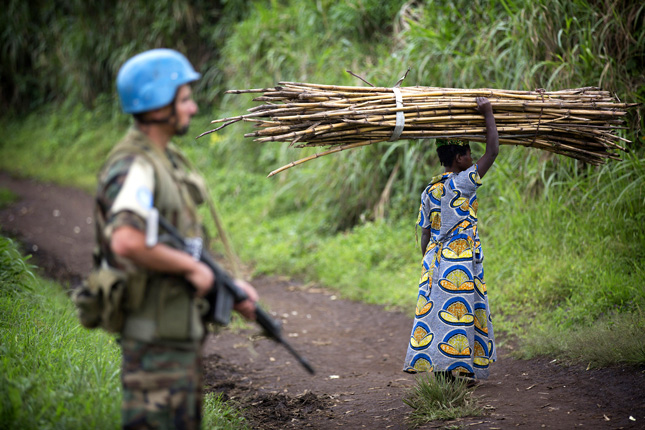
    Using environmental dialogue to build confidence is a top objective of Haavisto’s former colleagues at UNEP—and an idea that is gaining more traction within the wider UN family. For example, UNEP is now working directly with the UN Department of Peacekeeping Operations (DPKO) to provide “green advisors” to their blue helmets, lowering their environmental bootprints and establishing green, self-sufficient bases, including one in Somalia for AU troops.

    Assessing the tsunami’s possible toxic legacy in Somalia may provide an avenue for dialogue by addressing first-order concerns for local populations. The dialogue could ultimately support action on front-burner problems outside Somalia, such as piracy, poverty, internal conflict, and terrorism.

    Photo: IDPs outside Mogadishu, courtesy of Flickr user Abdurrahman Warsameh and ISN Security Watch.
    MORE
  • Weekly Reading

    ›
    Reading Radar  //  September 15, 2009  //  By Wilson Center Staff
    The American Security Project (ASP) launched its Climate Security Index, which identifies climate change “a clear and present danger to the national security of the United States,” at an event hosted by George Washington University. ASP warns that “American leaders will face a multitude of tough choices as climate-induced national security threats begin to compete with and crowd out our ability to respond to traditional threats,” reports ClimateWire.

    According to “Fewer Emitters, Lower Emissions, Less Cost,” contraception is almost five times cheaper than conventional green technologies as a means of combating climate change. “[E]ach $7 spent on basic family planning (2009 US$) would reduce CO2 emissions by more than one ton,” researchers conclude, while low-carbon technologies would add an extra $25 per ton.

    Experts at a recent forum on sexual and reproductive health and development in Berlin also argued for making the population-climate link, although it did not appear in the Call to Action. Helen Clark, administrator of the UN Development Programme (UNDP), said that there is a “virtuous cycle formed by educating women and families in the developing world on the number of children they actually wish to have, improving the health of women and promoting gender equality, reducing poverty and hunger, and mitigating climate change.”

    The World Bank has suspended International Finance Corporation (IFC) funding of operations in the palm oil sector over concerns that lending could be causing social and environmental harm, says Mongabay.com. World Bank President Robert Zoellick announced the move in a letter to NGO leaders who argued that IFC-backed palm oil production in Indonesia was fuelling deforestation, land grabbing, and human rights abuses.

    In “Urban Poverty and Vulnerability in Kenya,” Oxfam warns that Kenya “is facing a new urban timebomb, with millions of Nairobi residents suffering a daily struggle for food and water as the divide between rich and poor widens.” The group points out that “the price of staple foods such as maize has more than doubled in the past year” and drought has led to an outbreak of cholera “as almost 90% of slum dwellers have no piped clean water.”

    “Water and Conflict: Incorporating Peacebuilding into Water Development” from Catholic Relief Services outlines a way for development and human rights practitioners to integrate water and peacebuilding in their projects, drawing on the experiences of CRS and other development organizations, mainly in Central and South America.
    MORE
  • Glaciers, Cheetahs, and Nukes, Oh My! EP in the FT

    ›
    August 7, 2009  //  By Geoffrey D. Dabelko
    Financial Times South Asia Bureau Chief James Lamont has written a flood of environment-as-political-dialogue stories this week! (Well, only two, but that constitutes a deluge in the world of environmental peacebuilding.)

    On Monday he wrote about India and China’s agreement to work together to monitor Himalayan glacial melt. The potential decline in water availability from seasonal snow and glacier melt is finally seeping into the consciousness of policymakers outside the climate world, including the diplomatic and security communities. Lamont frames the step as a rare instance of cooperation in a strategically sensitive area at the center of a 1962 territorial war between the countries.

    While it would be easy to make too much of such an agreement, it is a tangible recognition of the importance of the ecological unit rather than the national one. It highlights how environmental interdependence across national boundaries can force cooperation in the face of politically difficult relations.

    On Wednesday Lamont used cheetah diplomacy between India and Iran as an entry point for his story on international attempts to address Iran’s nuclear proliferation threat. India is asking Iran to help reintroduce cheetahs on the subcontinent, where they are now extinct. In what Lamont said would be an “unusual” example of “high-profile cooperation” for the two countries, diplomats are arranging for talks ahead of a regional wildlife conference. This baby step in relations could be even more significant since the United States publicly acknowledged that India may be able to play an interlocutor role with Iran on the hot button nuclear program question.

    While both of these developments are relatively small in the scheme of the larger strategic relationships, they are fundamentally aimed at (re)building relationships between countries by establishing patterns of cooperation where interdependence is obvious and necessary. Such efforts are just one tool in the often-neglected toolbox of environmental peacebuilding.

    Photo: Yawning cheetah cub courtesy Flickr user Tambako.
    MORE
  • VIDEO: Dan Smith on Climate Change, Development, and Peacebuilding

    ›
    July 1, 2009  //  By Wilson Center Staff
    Climate change will have serious impacts on fragile states. To effectively address the potential for instability, the climate community must communicate and collaborate with the development and peacebuilding communities.

    In an interview recorded in Washington, Dan Smith of International Alert makes the case for extending this dialogue: “This is not just an environmental issue, not just a development issue, it’s not just a peace and conflict issue, if we don’t understand the connectivity and the interactions between all of these categories, we’re going to get it wrong.”

    Smith enumerates the shortcoming of failing to account for the special circumstances of states in conflict or emerging from conflict by “Adaptation and peacebulding are very, very closely related. A society which can adapt against the threat of climate change is a society that can you imagine can handle conflict and peace issues quite well and quite constructively…and vice versa,” he tells ECSP Director Geoff Dabelko.

    With the Copenhagen negotiations set for December, the climate community is negotiating over significant funds for adaption in the realm of development. Yet the climate and development communities have too few overlaps in terms of people and understandings.

    At a Woodrow Wilson Center event, Smith and colleague Shruti Mehrotra provided an update on the climate-conflict arguments and called for better trilateral dialogue among these three communities, drawing on the November 2007 co-authored report A Climate of Conflict.
    MORE
  • VIDEO: Geoff Dabelko on the Global Environmental Change and Human Security Conference (Day Two)

    ›
    June 24, 2009  //  By Wilson Center Staff
    The second day of the Global Environmental Change and Human Security conference in Oslo illustrated the evolution of the environment, conflict, and security debate. The key discussion came from a panel entitled “Environmental Change, Conflicts, and Vulnerability in War-Torn Societies” that featured Ken Conca of the University of Maryland; David Jensen of the UN Environment Programme (UNEP); and Arve Ofstad of the Norwegian Agency for Development Cooperation.

    In this short video, Geoff Dabelko, director of the Wilson Center’s Environmental Change and Security Program and chair of the panel, notes that in the last 10 years, researchers and practitioners have moved from a nearly exclusive focus on the connections between environmental scarcity or abundance and conflict to a wider set of questions about environment’s roles all along the conflict continuum—including prevention, active conflict, conflict termination, and post-conflict peacebuilding and reconstruction. This wider agenda includes questions of cooperation and peacebuilding around environmental interdependence. Jensen’s UNEP post-conflict office directly engages these multiple environment-conflict connections, and he shared both practical lessons learned and concrete UN points of entry.

    Dabelko also comments that human security, enunciated most prominently in the 1994 UNDP Human Development Report, has raised the profile of a wider set of vulnerabilities than those coming directly from the end of a gun. This more inclusive agenda brings livelihoods, human rights, and social and cultural values more squarely into the analysis of insecurity.
    MORE
  • Managing Environmental Conflict in Latin America: Resolution Rests on Inclusion, Communication, Development

    ›
    June 23, 2009  //  By Brian Klein
    Public policies governing natural-resource extraction in Latin America “are often seen as arbitrary” and illegitimate by communities, said Mara Hernández, director of the Centro de Colaboración Cívica, A.C. – México, at the Wilson Center on June 3, 2009. Pablo Lumerman, director of Argentina’s Fundación Cambio Democrático, and Carlos Salazar, director of Socios Perú: Centro de Colaboración Cívica, joined Hernández to share methods of resolving environmental disputes. The event was co-sponsored by the Wilson Center’s Environmental Change and Security Program and Latin American Program and held in conjunction with Partners for Democratic Change.

    The Balance of Power

    Fashioning effective and equitable natural-resource policies requires the participation of all the relevant stakeholders, especially community members who are directly affected, Hernández contended. Consensus building must supplant unilateral decision-making by individual authorities, such as local or national governments.

    For example, Fundación Cambio Democrático has successfully constructed a “Platform of Dialogue for Responsible Mining Development,” with the Argentinian government as an early and essential partner. The effort is an outgrowth of the organization’s Extractive Industries Program, which examines conflict over mining in Argentina.

    Similarly, Salazar and Socios Perú have tried to ensure that the Peruvian government and companies operating in Peru build relationships with local communities from the moment they are interested in communities’ land, not just once a concession is secured.

    However, Hernández believes that excluding government from the initial stages of consensus building can sometimes be advantageous. “Non-governmental organizations…are desperate for long-term solutions to their issues,” she said, while politicians “tend to have more short-term views and prefer quick fixes.”

    When a conflict broke out in the Upper Sea of Cortez in 2005 between fishers and environmentalists over protection of the vaquita marina, a rare porpoise, Centro de Colaboración Cívica convened representatives from the community, NGOs, and corporations. The diverse stakeholders formed an organization called Alto Golfo Sustentable (“Sustainable Upper Gulf”), which successfully lobbied the Mexican government for better protection of the vaquita, improved monitoring of illegal fishing, and sounder management of marine resources.

    Transparency and Communication

    “Lack of clear and on-time information to the communities” has been a primary driver of conflict around extractive industries, said Salazar. Stakeholders will often disseminate their own information, Lumerman cautioned, with each accusing the other of bias.

    A neutral, third-party information provider can mitigate disagreement. For example, in order “to develop a system of information of public access…for all the stakeholders,” Fundación Cambio Democrático is creating a mining conflict map of Argentina, said Lumerman.

    Cultural Sensitivity and Sustainable Development

    Members of local communities often have different worldviews than government elites or corporate representatives. “The land, the water, the air, the trees are more than only resources. They’re part of their lives,” said Salazar. “So, when a company comes to exploit these resources…the communities are really, really confused.”

    Natural-resource extraction should be closely linked to the sustainable development of communities. Salazar emphasized that projects with a clear plan for “development, fighting against poverty, improving their way of life” are more likely to be met with approval. Lumerman cited the Cerro Vanguardia mining project as an example of a successful partnership that included local development into its long-term plan.

    Top Photo: Heavy metal mine at La Oroya, Peru, one of the world’s most polluted places. Courtesy Flickr user Matthew Burpee.

    Photos of Mara Hernández, Pablo Lumerman, and Carlos Salazar courtesy Dave Hawxhurst and the Woodrow Wilson Center.
    MORE
Newer Posts   Older Posts
View full site

Join the Conversation

  • RSS
  • subscribe
  • facebook
  • G+
  • twitter
  • iTunes
  • podomatic
  • youtube
Tweets by NewSecurityBeat

Trending Stories

  • unfccclogo1
  • Pop at COP: Population and Family Planning at the UN Climate Negotiations

Featured Media

Backdraft Podcast

play Backdraft
Podcasts

More »

What You're Saying

  • Volunteers,At,The,Lagos,Food,Bank,Initiative,Outreach,To,Ikotun, Pan-African Response to COVID-19: New Forms of Environmental Peacebuilding Emerge
    Rashida Salifu: Great piece 👍🏾 Africa as a continent has suffered this unfortunate pandemic.But it has also...
  • A desert road near Kuqa An Unholy Trinity: Xinjiang’s Unhealthy Relationship With Coal, Water, and the Quest for Development
    Ismail: It is more historically accurate to refer to Xinjiang as East Turkistan.
  • shutterstock_1779654803 Leverage COVID-19 Data Collection Networks for Environmental Peacebuilding
    Carsten Pran: Thanks for reading! It will be interesting to see how society adapts to droves of new information in...

What We’re Reading

  • Rising rates of food instability in Latin America threaten women and Venezuelan migrants
  • Treetop sensors help Indonesia eavesdrop on forests to cut logging
  • 'Seat at the table': Women's land rights seen as key to climate fight
  • A Surprise in Africa: Air Pollution Falls as Economies Rise
  • Himalayan glacier disaster highlights climate change risks
More »
  • woodrow
  • ecsp
  • RSS Feed
  • YouTube
  • Twitter
  • Facebook
  • Home
  • Who We Are
  • Publications
  • Events
  • Wilson Center
  • Contact Us
  • Print Friendly Page

© Copyright 2007-2021. Environmental Change and Security Program.

Woodrow Wilson International Center for Scholars. All rights reserved.

Developed by Vico Rock Media

Environmental Change and Security Program

Woodrow Wilson International Center for Scholars

Ronald Reagan Building and International Trade Center

  • One Woodrow Wilson Plaza
  • 1300 Pennsylvania Ave., NW
  • Washington, DC 20004-3027

T 202-691-4000