• woodrow wilson center
  • ecsp

New Security Beat

Subscribe:
  • rss
  • mail-to
  • Who We Are
  • Topics
    • Population
    • Environment
    • Security
    • Health
    • Development
  • Columns
    • China Environment Forum
    • Choke Point
    • Dot-Mom
    • Friday Podcasts
    • Navigating the Poles
    • Reading Radar
  • Multimedia
    • Water Stories (Podcast Series)
    • Backdraft (Podcast Series)
    • Tracking the Energy Titans (Interactive)
  • Films
    • Water, Conflict, and Peacebuilding (Animated Short)
    • Paving the Way (Ethiopia)
    • Broken Landscape (India)
    • Scaling the Mountain (Nepal)
    • Healthy People, Healthy Environment (Tanzania)
  • Publications
  • Events
  • Contact Us

NewSecurityBeat

The blog of the Wilson Center's Environmental Change and Security Program
Showing posts from category environmental peacemaking.
  • New UNEP Report Explores Environment’s Links to Conflict, Peacebuilding

    ›
    March 10, 2009  //  By Will Rogers
    “Integrating environment and natural resources into peacebuilding is no longer an option—it is a security imperative,” says a new report from the UN Environment Programme (UNEP), From Conflict to Peacebuilding: The Role of Natural Resources and the Environment (to be launched by Achim Steiner, executive director of UNEP, at a March 24, 2009, event at the Wilson Center). A joint product of UNEP and UNEP’s Expert Advisory Group on Environment, Conflict and Peacebuilding, the report was co-authored by Richard Matthew of the University of California, Irvine, Oli Brown of the International Institute for Sustainable Development, and David Jensen of UNEP’s Post-Conflict and Disaster Management Branch. Though environmental conditions are rarely – if ever – the sole precipitator of violent conflict and war, they do play an important role as a “threat multiplier which exacerbates existing trends, tensions and instability” that can ultimately lead to conflict.

    Environmental factors can play a pivotal role along all points of the conflict continuum—from the outbreak of conflict, to the perpetuation of conflict, to the collapse of peace and return to violence. “Attempts to control natural resources or grievances caused by inequitable wealth sharing or environmental degradation can contribute to the outbreak of conflict,” the report says. In Darfur, for example, “water scarcity and the steady loss of fertile land are important underlying factors” that have combined with ethnic rivalry, human and livestock population growth, and weak governance to contribute to conflict.

    Exploitation of natural resources also played a substantial role in financing and sustaining conflicts in Sierra Leone, Liberia, Angola, and Cambodia, “transforming war and insurgency into an economic rather than purely political activity.” Economic incentives to control valuable natural resources can reinforce political fragmentation, derail a peace process, and even “undermine genuine political reintegration and reconciliation” after peace has been forged.

    Not only can natural resources help precipitate violence, conflict can also affect natural resources, destroying people’s livelihoods and perpetuating the conflict cycle. During conflict, the environment can be transformed into a weapon of war that can endanger human health and disrupt and destroy livelihoods—as when wells are poisoned or crops are burned, for example. Environmental destruction disrupts “normal socio-economic patterns,” forces “populations to adopt coping strategies, and often leads to internal displacement or migration to neighboring countries.” And conflict can erode or destroy state institutions and civil society, exacerbating grievances (or creating new ones) and furthering the resource exploitation that fuels the conflict.

    Successful peacebuilding therefore requires that “environmental drivers are managed, that tensions are defused, and that natural assets are used sustainably to support stability and development in the long term.” According to the report, successfully integrating natural resource and environmental issues into conflict prevention and peacebuilding strategies requires the United Nations and international community to:
    1. Improve the capacity for early warning and action “in countries that are vulnerable to conflict over natural resources;”

    2. Implement economic sanctions and develop new legal strategies to improve “oversight and protection of natural resources during conflicts” to minimize their use in financing and sustaining conflict;

    3. Address natural resource and environmental issues in the initial peacemaking and peacekeeping processes;

    4. Incorporate natural-resource and environmental issues into integrated peacebuilding strategies in order to avoid a relapse into conflict;

    5. Help countries use their natural resources to promote economic growth, while practicing good governance and environmental sustainability; and

    6. Promote confidence building and cooperation between conflicting groups that have shared interests over natural resources and the environment.
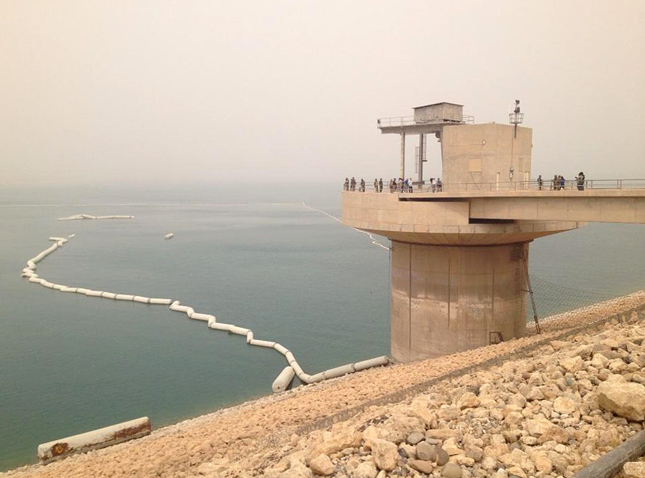
    Photo: Cover of UNEP’s “From Conflict to Peacebuilding: The Role of Natural Resources and the Environment,” featuring an image of Nigerian soldiers with the UN’s African Mission in Darfur patrolling a bombed village. Courtesy of Lynsey Addario/Corbis and the UN Environment Programme.
    MORE
  • Reading Radar — A Weekly Roundup

    ›
    February 27, 2009  //  By Wilson Center Staff
    A new study published in Conservation Biology (abstract) calculates that more than 80 percent of major armed conflicts from 1950-2000 have taken place in one of the world’s 34 biodiversity hotspots. “The fact that so many conflicts have occurred in areas of high biodiversity loss and natural resource degradation warrants much further investigation as to the underlying causes, and strongly highlights the importance of these areas for global security,” says coauthor Russell A. Mittermeier. He and lead author Thor Hansen argue that protecting nature during war can help recovery, and call for integrating conservation “into military, reconstruction and humanitarian programs in the world’s conflict zones.”

    The Bixby Forum, “World in 2050: A Scientific Investigation of the Impact of Global Population Changes on a Divided Planet” included panels on population’s links to war, climate change, and the environment. Malcolm Potts, the chair of the University of California, Berkeley’s Bixby Center for Population Health and Sustainability recently spoke at the Wilson Center about his latest book, Sex and War.

    In Troubled Waters: Climate Change, Hydropolitics, and Transboundary Resources from the Henry L. Stimson Center, experts from South Asia, Southeast Asia, and the Middle East “examine the environmental dangers and policy dilemmas confronting the sustainable management of shared water resources in a warming world”—including the potential for conflict. In the concluding chapter, David Micheli finds that climate change is unlikely to lead to full-scale “water wars,” but warns that “rising climatic stresses on common waters will put new and perhaps unprecedented strains on cooperative governance institutions at the local, national, and international levels.”

    Rampant logging fueled Cambodia’s decades-long civil war. Now a new report from transparency watchdogs Global Witness, Country for Sale, claims that the country’s emerging oil and mineral sectors may pose a similar threat. Says Gavin Hayman, “The same political elite that pillaged the country’s timber resources has now gained control of its mineral and petroleum wealth. Unless this is changed, there is a real risk that the opportunity to lift a whole generation out of poverty will be squandered.”

    Thirty-three countries have been named “highly vulnerable” to the impact of climate change on their fisheries by a new study published in Fish and Fisheries. In these countries, two-thirds of which are in tropical Africa, fish accounts for 27 percent or more of daily protein intake, compared to 13 percent in non-vulnerable nations. InterPress examines the impact of acidification and rising surface temperatures on the fish stocks of coastal South Africa.

    Photo: Fish-dependent people of Bangladesh could see their coastal catch reduced as a result of predicted increases in the frequency and intensity of tropical storms. Bangladesh is one of the nations identified as highly dependent on fisheries along with Cambodia, DR Congo, Madagascar, Sierra Leone, Tanzania, and Uganda. Photo credit: Mark Prein, courtesy of WorldFish Center.
    MORE
  • PODCAST – A Discussion on Climate Change and Security: Arctic Links and U.S. Intelligence Community Responses

    ›
    February 24, 2009  //  By Wilson Center Staff
    “The climate issue also very clearly illustrates the whole complexity of the security issue,” says Henrik Selin. “Arctic melting is a national security issue in the traditional national security kind of way.” In this podcast from the Environmental Change and Security Program, Selin, assistant professor of international relations at Boston University, and Stacy VanDeveer, associate professor of political science at the University of New Hampshire, sat down with ECSP Director Geoff Dabelko to discuss the resonance of climate change in the U.S. security community.

    VanDeveer and Selin were in Washington to speak at a January 12 event, “Governing the Climate: Lessons From the National Conference on Climate Governance.” VanDeveer has frequently coauthored articles with Dabelko, including “It’s Capacity, Stupid: International Assistance and National Implementation” in Global Governance, “European Insecurities: Can’t Live With ’Em, Can’t Shoot ‘Em” in Security Dialogue, and “Environmental Cooperation and Regional Peace: Baltic Politics, Programs, and Prospects” in Environmental Peacemaking.
    MORE
  • Weekly Reading

    ›
    Reading Radar  //  February 20, 2009  //  By Wilson Center Staff
    From Conflict to Peacebuilding: The Role of Natural Resources and the Environment, based on the work of the UN Environment Programme’s Expert Advisory Group on Environment, Conflict and Peacebuilding, summarizes the links between the environment, conflict, and peacebuilding, and includes 14 case studies of how natural resources affect—or are affected by—conflict.

    The authors of “On Population Growth Near Protected Areas” come to an opposite conclusion from Wittemyer et al., who found a pattern of higher population growth near protected areas in Africa and Latin America. “To understand the disagreement, we re-analyzed the protected areas in Wittemyer et al.’s paper. Their results are simply artifacts of mixing two incompatible datasets,” write the authors. “Protected areas may experience unusual population pressures near their edges; indeed, individual case studies provide examples. There is no evidence, however, of a general pattern of disproportionate population growth near protected areas.”

    “The President and I agreed to a new initiative that will further cross-border cooperation on environmental protection and environmental security,” said Canadian Prime Minister Stephen Harper yesterday, announcing plans for a U.S.-Canada Clean Energy Dialogue.

    Scientists at Purdue University have teamed up with Google Earth to create an interactive map of U.S. CO2 emissions.

    Mark Weston, who writes for the Global Dashboard blog, posted an edited version of a recent talk he gave on West African demography and security.
    MORE
  • VIDEO: Kent Butts on Climate Change, Security, and the U.S. Military

    ›
    February 5, 2009  //  By Wilson Center Staff

    “Climate change is an important issue that can be addressed by all three elements of the national security equation: defense, diplomacy, and development,” says Kent Butts, in this short expert analysis from the Environmental Change and Security Program. Kent Butts, professor of political-military strategy at the Center for Strategic Leadership, U.S. Army War College, makes the case for considering global climate change a nontraditional threat to security and discusses how the U.S. military is reacting to a changing climate.

    MORE
  • Reading Radar– A Weekly Roundup

    ›
    January 23, 2009  //  By Wilson Center Staff

    “As long as we continue to subsidize Gaza’s extreme demographic armament, young Palestinians will likely continue killing their brothers or neighbors. And yet, despite claiming that it wants to bring peace to the region, the West continues to make the population explosion in Gaza worse every year. By generously supporting UNRWA’s budget, the West assists a rate of population increase that is 10 times higher than in their own countries,” argues the University of Bremen’s Gunnar Heinsohn in the Wall Street Journal.

    In an article for the Huffington Post, Water Advocates’ John Sauer argues that we should group together waterborne diseases like diarrhea, typhoid, and cholera under the name “No-Plumbing Disease,” to help water and sanitation get the attention they deserve.

    It takes a strong editor to push for stories on development issues like poverty and public health, but there is often surprisingly high interest in these stories, writes Richard Kavuma for the Guardian.

    Yale Environment 360 sums up President Obama’s statements on the environment in his inaugural address.

    The Democratic Republic of the Congo has cancelled nearly 60 percent of its logging contracts in an attempt to end corrupt and environmentally destructive logging, report the BBC and Reuters.

    “Could the crises of food, fuel and finance that we experienced in 2008 simply be three canaries in the coalmine? What if these are just the early-warning signals that our current economic system is not sustainable at a much deeper level?” asks Dominic Waughray, head of environmental initiatives at the World Economic Forum.

    “A flurry of scientific field work and environmental reports have linked the spread of oil palm plantations in Indonesia to the decimation of rain forests, increased conflict between logging and oil palm interests and rural and indigenous people, and massive CO2 emissions through logging, burning, and the draining of carbon-rich peat lands,” writes Tom Knudson on Yale Environment 360.

    A nickel mine in Madagascar is likely to harm biodiversity in one of the world’s most biologically unique places, reports mongabay.com.

    “It is high time that India and Pakistan consider the primacy of ecological cooperation as a means of lasting conflict resolution,” argues Saleem Ali in Pakistan’s Daily Times.

    MORE
  • Egyptian, Sudanese Governments Stall Nile Treaty

    ›
    January 16, 2009  //  By Rachel Weisshaar
    Ten years of negotiations over a new pact governing the use of the Nile River have come to a halt, due to Egyptian and Sudanese reluctance to relinquish their near-total control over the distribution of water resources. “The technocrats had worked out all the paper work for a good protocol but the politicians have thrown a clean piece of cloth in the mud,” Professor Afuna Aduula, chair of the Nile Basin Discourse Forum, told IPS News. “Since Egypt must consent to other nations’ use of the Nile’s water, most of the other basin countries have not developed projects that use it extensively. Not surprisingly, over the years other basin countries have contested the validity of these treaties and demanded their revocation to make way for a more equitable system of management,” explains Patricia Kameri-Mbote in “Water, Conflict, and Cooperation: Lessons From the Nile River Basin.” Decreasing water levels in Lake Victoria, the Nile’s source, have also added to upstream countries’ concerns about water allocation.

    Despite the political tensions between many of the 10 Nile Basin riparians—which also include Burundi, the Democratic Republic of the Congo, Eritrea, Ethiopia, Kenya, Rwanda, Tanzania, and Uganda—and the critical importance of water to agriculture, health, and economic growth, analysts think it is unlikely that tensions over water will lead to war. All 10 countries belong to the Nile Basin Initiative, a ministerial-level body that has conducted the negotiations, as well as other cooperative and confidence-building measures. “While formally framed as a development enterprise, these efforts also implicitly serve as a means to prevent conflict predicated on environmental interdependence,” notes ECSP Director Geoff Dabelko in “An Uncommon Peace: Environment, Development, and the Global Security Agenda.”

    Photo: Satellite image of the northern Nile River. Courtesy of Flickr user thevoyager.
    MORE
  • Weekly Reading

    ›
    Reading Radar  //  January 16, 2009  //  By Wilson Center Staff
    A study in Science warns that climate change “is likely to have more dramatic effects on global agriculture than previously predicted, leaving around half the world’s population facing serious food shortages,” reports SciDev.Net.

    In an op-ed for Defense News, Sherri Goodman and David Catarious express hope that President-Elect Barack Obama will take steps to reduce climate change’s security impacts.

    “Much of politics is repetitive and unproductive, but sometimes a logjam breaks. In the past two years, most politicians have ceased being in denial about climate change, greenhouse emissions, limits to water, and peak oil. All these crises reflect the deeper underlying problem: our population growth is out of control. Waiting for the population debate to begin is like waiting for the other shoe to drop,” writes Mark O’Connor for the Sydney Morning Herald.

    Regional Water Cooperation and Peacebuilding in the Middle East, an Initiative for Peacebuilding paper by Annika Kramer of Adelphi Research, surveys peacebuilding challenges and opportunities around water among Israelis, Palestinians, and Jordanians.

    Stephan Faris outlines the global divisions over climate change policy on Global Post, a new online-only international media site.
    MORE
Newer Posts   Older Posts
View full site

Join the Conversation

  • RSS
  • subscribe
  • facebook
  • G+
  • twitter
  • iTunes
  • podomatic
  • youtube
Tweets by NewSecurityBeat

Trending Stories

  • unfccclogo1
  • Pop at COP: Population and Family Planning at the UN Climate Negotiations

Featured Media

Backdraft Podcast

play Backdraft
Podcasts

More »

What You're Saying

  • Volunteers,At,The,Lagos,Food,Bank,Initiative,Outreach,To,Ikotun, Pan-African Response to COVID-19: New Forms of Environmental Peacebuilding Emerge
    Rashida Salifu: Great piece 👍🏾 Africa as a continent has suffered this unfortunate pandemic.But it has also...
  • A desert road near Kuqa An Unholy Trinity: Xinjiang’s Unhealthy Relationship With Coal, Water, and the Quest for Development
    Ismail: It is more historically accurate to refer to Xinjiang as East Turkistan.
  • shutterstock_1779654803 Leverage COVID-19 Data Collection Networks for Environmental Peacebuilding
    Carsten Pran: Thanks for reading! It will be interesting to see how society adapts to droves of new information in...

What We’re Reading

  • Rising rates of food instability in Latin America threaten women and Venezuelan migrants
  • Treetop sensors help Indonesia eavesdrop on forests to cut logging
  • 'Seat at the table': Women's land rights seen as key to climate fight
  • A Surprise in Africa: Air Pollution Falls as Economies Rise
  • Himalayan glacier disaster highlights climate change risks
More »
  • woodrow
  • ecsp
  • RSS Feed
  • YouTube
  • Twitter
  • Facebook
  • Home
  • Who We Are
  • Publications
  • Events
  • Wilson Center
  • Contact Us
  • Print Friendly Page

© Copyright 2007-2021. Environmental Change and Security Program.

Woodrow Wilson International Center for Scholars. All rights reserved.

Developed by Vico Rock Media

Environmental Change and Security Program

Woodrow Wilson International Center for Scholars

Ronald Reagan Building and International Trade Center

  • One Woodrow Wilson Plaza
  • 1300 Pennsylvania Ave., NW
  • Washington, DC 20004-3027

T 202-691-4000