• woodrow wilson center
  • ecsp

New Security Beat

Subscribe:
  • rss
  • mail-to
  • Who We Are
  • Topics
    • Population
    • Environment
    • Security
    • Health
    • Development
  • Columns
    • China Environment Forum
    • Choke Point
    • Dot-Mom
    • Friday Podcasts
    • Navigating the Poles
    • Reading Radar
  • Multimedia
    • Water Stories (Podcast Series)
    • Backdraft (Podcast Series)
    • Tracking the Energy Titans (Interactive)
  • Films
    • Water, Conflict, and Peacebuilding (Animated Short)
    • Paving the Way (Ethiopia)
    • Broken Landscape (India)
    • Scaling the Mountain (Nepal)
    • Healthy People, Healthy Environment (Tanzania)
  • Publications
  • Events
  • Contact Us

NewSecurityBeat

The blog of the Wilson Center's Environmental Change and Security Program
Showing posts from category environmental peacemaking.
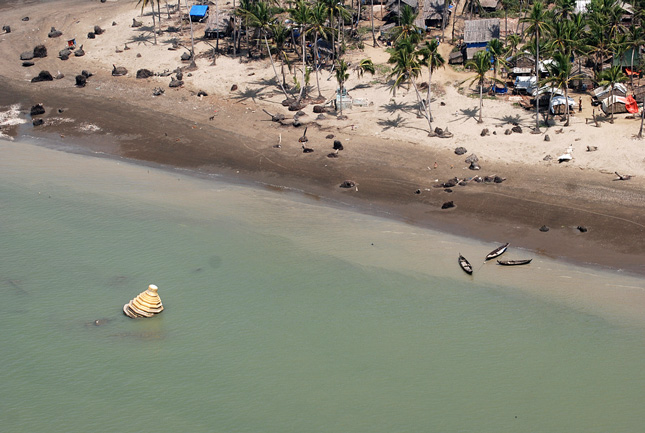
  • ‘miniAtlas’ Misses Opportunity to Map Environmental Causes of Conflict

    ›
    January 7, 2009  //  By Will Rogers
    “Former UN Secretary-General Kofi Annan said that there can be no development without security—and no security without development,” says the miniAtlas of Human Security, a global atlas illustrating international and civil conflicts, as well as human rights abuses. The atlas explains that human security comprises the broader pillar of freedom from want (for basic necessities like food, water, shelter, education, employment, and health care) and the narrower pillar of freedom from violence. Although freedom from want is vital to sustainable development and long-term security, the atlas only maps instances where freedom from violence has been marred by inter- or intrastate conflict.

    While the atlas openly admits its exclusion of the broader pillar of human security—which notably includes environmental issues—it nevertheless misses the opportunity to acknowledge that the environment can span both pillars of human security. Though the atlas notes that the environment can be used as a weapon of violence—by poisoning wells, for instance—it never explains the role of the environment as a cause of violent conflict—in land disputes, local conflicts over water, or by spurring climate change-induced migration.

    The authors of the miniAtlas of Human Security argue that today, most violent conflicts are rooted in poverty and politics. “Poor countries, unlike rich ones, lack the resources to address the grievances that can spark armed uprisings,” the report explains, and “poor countries tend to have weak security forces and so find it difficult to deter rebellions and to crush those that cannot be deterred.” In addition, dictatorships and “anocracies—regimes that are neither dictatorships nor full democracies—are the most prone to armed conflict” and human rights abuses. Though generally speaking, both of these statements are true, there are other causes of violent conflict that are just as important and have serious implications for human security.

    For instance, the environment has helped spark conflict in many parts of the world. Competition over natural resources—whether diamonds in Angola and Sierra Leone, timber in Liberia, or coltan in the eastern Democratic Republic of the Congo—has been a source of violent conflict between warlords, governments, and civilian populations. Getting policymakers to recognize that the environment is a cause of violent conflict is an essential step to preventing conflict, as well as conducting successful post-conflict environmental and disaster management. Until we recognize that the environment can increase the risk of violence, global security itself will suffer.

    Photo: The Zambezi (Chobe) River borders eight African states: Angola, Botswana, Namibia, Malawi, Mozambique, Tanzania, Zambia, and Zimbabwe. In an effort to improve governance and prevent violent conflict from erupting, these eight states are working for the establishment of a commission to govern this vital water resource. Courtesy of Flickr user Mara 1.
    MORE
  • VIDEO: Crisis Management and Natural Resources Featuring Charles Kelly

    ›
    December 19, 2008  //  By Wilson Center Staff
    “Governance is key. If you don’t have a competent government after the war, you’re not going to solve the problems that weren’t solved before the war because of incompetent governance,” said Charles Kelly at “Sustaining Natural Resources and Environmental Integrity During Response to Crisis and Conflict,” a November 12 event.

    In this latest video from the Environmental Change and Security Program, Kelly discusses the importance of carefully planning and executing post-conflict environmental assistance, which can lead to renewed conflict if not implemented properly. He highlights ongoing post-conflict and disaster management operations in Sudan and Haiti, offering suggestions for the way forward.
    MORE
  • United Nations Observes International Day for Preventing the Exploitation of the Environment in War and Armed Conflict

    ›
    November 6, 2008  //  By Rachel Weisshaar
    Each November 6, the International Day for Preventing the Exploitation of the Environment in War and Armed Conflict passes by, largely unnoticed. But as the UN General Assembly noted in 2001 when it gave the day official status, “damage to the environment in times of armed conflict”—including poisoning of water supplies and agricultural land; habitat and crop destruction; and damage resulting from the use of biological, chemical, and nuclear weapons—“impairs ecosystems and natural resources long beyond beyond the period of conflict, and often extends beyond the limits of national territories and the present generation.”


    In a written statement issued today, UN Secretary-General Ban Ki-moon points out that although natural resources are often exploited during war, they are also essential to establishing peace:
    The environment and natural resources are crucial in consolidating peace within and between war-torn societies. Several countries in the Great Lakes Region of Africa established trans-boundary cooperation to manage their shared natural resources. Lasting peace in Darfur will depend in part on resolving the underlying competition for water and fertile land. And there can be no durable peace in Afghanistan if the natural resources that sustain livelihoods and ecosystems are destroyed.
    As the Development Gateway Foundation’s Environment and Development Community emphasizes, “[e]nvironmental security, both for reducing the threats of war, and in successfully rehabilitating a country following conflict, must no longer be viewed as a luxury but needs to be seen as a fundamental part of a long lasting peace policy.”

    Some of the United Nations’ most important contributions to illuminating the links between conflict and environmental degradation are the excellent post-conflict environmental assessments that the UN Environment Programme’s (UNEP) Disasters and Conflicts Programme has carried out in Afghanistan, Lebanon, and Sudan, among other countries. UNEP is currently preparing to conduct an assessment of Rwanda’s environment.

    Photo: A Kuwaiti oil field set afire by retreating Iraqi troops burns in the distance beyond an abandoned Iraqi tank following Operation Desert Storm. Courtesy of Flickr user Leitmotiv.
    MORE
  • Dispatches From the World Conservation Congress: Geoff Dabelko on Wartime Environmental Protection, Post-Conflict Peacebuilding

    ›
    October 8, 2008  //  By Geoffrey D. Dabelko
    The lawyers are out at the World Conservation Congress Forum in Barcelona. Carl Bruch of the Environmental Law Institute in Washington, DC, was one of several speakers at “Armed Conflict and Environment: Protecting the Environment During War and Improving Post-Conflict Natural Resource Management.”

    Bruch is leading a forward-leaning initiative entitled “Strengthening Post-Conflict Peacebuilding and Recovery Through Natural Resource Management” that is collaborating with Tokyo University and the UN Environment Programme’s Conflicts and Disasters Programme to analyze cases from around the world where the environment is key to causing, extending, ending, or recovering from conflict. Bruch and his team of authors are trying to glean lessons for peacebuilding by examining natural resource management in post-conflict societies. Bruch emphasized that the goal is to provide actors on the ground who are not environmental practitioners with the practical means to integrate natural resource management into their operations.

    Michael Bothe, an expert on the environment and laws of war from Goethe University in Frankfurt, Germany, suggested IUCN could play a positive role in using the parks-for-peace process to establish parks as demilitarized zones. He noted that peacetime treaties often remain in effect in times of conflict, but that obligations in international environmental treaties are promotional and therefore have limited impact during war. Bothe called for more work in three areas:
    1. Passing laws that use parks-for-peace mechanisms to prevent valuable habitats from becoming military objectives;
    2. Clarifying how the military doctrine of proportionality of response applies to environmental damage; and
    3. Specifying the application of customary (i.e., traditional) law regarding environmental protection during armed conflict.

    Illustrating the diversity of participants at the World Conservation Congress, questioners from Iraq, Lebanon, Pakistan, Angola, Georgia, and Germany focused on environmental damage from conflicts in their regions.

    MORE
  • Dispatches From the World Conservation Congress: Geoff Dabelko on Environment, Security

    ›
    October 7, 2008  //  By Geoffrey D. Dabelko

    Veening“The input of the security sector is indispensable for finding the balance” between mitigation and adaptation efforts to combat climate change, said Wouter Veening, co-founder and chairman of the Institute for Environmental Security, based in The Hague, Netherlands. Veening was the first among many speakers in a linked set of panels entitled “Environment and Security Challenges for Change” here at the World Conservation Congress in Barcelona.

    MORE
  • ‘Time’ Honors Friends of the Earth Middle East With “Heroes of the Environment 2008” Award

    ›
    October 3, 2008  //  By Rachel Weisshaar
    The leaders of Friends of the Earth Middle East (FoEME), a joint Israeli, Jordanian, and Palestinian environmental organization that uses environmental advocacy as a peacebuilding tool, were recently recognized as “Heroes of the Environment 2008” by Time magazine. FoEME understands that “the road to sustainability, like the road to peace, is going to be a slow, messy human project of community organizing, education and trust-building,” says Time correspondent Andrew Lee Butters.

    FoEME’s projects include Good Water Neighbors, which uses joint water management to strengthen ties between Israeli and Arab communities on opposite sides of the Jordan River; as well as a plan to build a transboundary peace park on an island in the Jordan River that would attract ecotourism. “We share the same environment, particularly the same water resources,” says Gidon Bromberg, Israeli director of FoEME. “And if we don’t start working together, we’re not going to have an environment.”

    For more information on FoEME’s environmental peacebuilding activities, see “Rehabilitating the Jordan River Valley Through Cross-Border Community Cooperation” (May 8, 2006) and “Good Water Makes Good Neighbors: A Middle East Pilot Project in Conflict Resolution” (January 22, 2003), two events hosted by the Environmental Change and Security Program.
    MORE
  • In Kashmir, Diplomacy Soothes Friction Over Water Resource Management

    ›
    October 3, 2008  //  By Will Rogers
    The conflict over resource-rich Kashmir has sparked renewed tension between India and Pakistan, this time over access to one of Asia’s most indispensable commodities: water. The latest dispute erupted on September 13, 2008, with allegations by Pakistan that India had violated a 2005 World Bank agreement over the operational schedule of the Baglihar Dam, which lies on the Chenab River, just inside Indian-administered Kashmir. That agreement “required that filling [of the dam] should take place between June 21 and Aug 31 with prior consent of Pakistan and subject to a condition that river flows should not drop below 55,000 cusec inside Pakistan at any time,” according to Dawn. India continued to fill the dam well into September, provoking outrage from Pakistan, despite guarantees that water flow into Pakistan would not diminish. Pakistani officials reported that “Pakistan had been losing up to 15,000 cusec of water every day because of India’s action.”

    Regional water disputes are no anomaly in Central, East, and South Asia, where population growth and increases in per capita consumption have led to competition over water resources. In recent years, Indiahas invested in hydroelectric projects—such as the Baglihar Dam, projected to generate 450-900 megawatts of electricity—to satisfy a burgeoning middle class hungry for energy. With the dam just up the river from the Pakistani border, Pakistanis have long worried that the dam would severely limit the region’s water and curtail farmers’ ability to irrigate crops. Since construction began in 1999, Pakistani officials have objected to the project, arguing that the more energyIndia attempts to generate from the dam, the less water will reachPakistan.

    Last week, Pakistanissued a formal protest to the Permanent Indus Commission, a body formed by the 1960 treaty, over the reduction of Chenab River flows and asked for an emergency meeting with the governing body in order to address the danger posed to Pakistani rice farmers who rely on water flow to irrigate their crops. Since then, prospects for diplomatic resolution have warmed: Pakistani President Asif Zardari and Indian Prime Minister Manmohan Singh met on the “sidelines of the United Nations General Assembly” last week to discuss the issue. Meanwhile, the Permanent Indus Commission is schedule to meet this month, following an invitation from India to Pakistan’s Indus Water Commissioner to meet to resolve the issue.

    Fortunately, water disputes have been one area where Pakistan and India have been able to manage their grievances and find resolution through diplomacy rather than force. By working together on environmental issues—whether water resource management, transboundary forest conservation, or endangered species protection—where cooperation is often possible, even longtime foes can move closer to resolving their larger conflict.

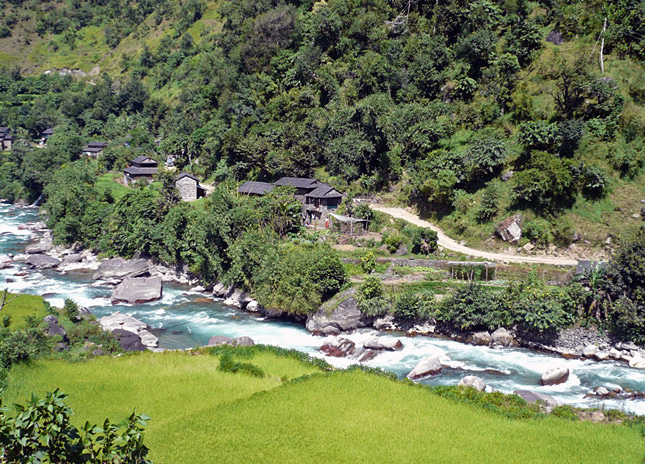
    Photo: The Chenab River, flowing here through Himachal Pradesh in the Indus Basin, provides farmers and local populations with the water required to meet their sustainable needs. Courtesy of flickr user Motographer.
    MORE
  • The More Things Change…Russia Embraces Free Trade (in Nuclear Waste)

    ›
    September 29, 2008  //  By Geoffrey D. Dabelko
    I was disappointed but not surprised to receive a recent e-mail from Wilson Center Senior Scholar Murray Feshbach, warning me off visiting St. Petersburg. A demographer who closely tracks environmental and health conditions in the former Soviet Union, Feshbach was instrumental in pulling back the curtain on the Soviet Union’s catastrophic environmental legacy in his co-authored 1993 volume Ecocide in the USSR. Murray’s message contained further evidence of Russian environmental decline. In this case, institutional failings are throwing Russia open for the business of accepting the world’s nuclear waste. Russian civilian and military radioactive waste is now being supplemented by waste from the Netherlands and Germany—and soon, Pakistan, India, and China.

    The beginning of a September 26 St. Petersburg Times article gives us a glimpse of this selective Russian embrace of free trade:
    Up to 10,000 tons of depleted uranium hexafluoride are expected to travel through St. Petersburg in the next six months, according to the local branch of the international environmental pressure group Bellona….According to official sources, cargos containing depleted uranium hexafluoride arrive in the city on average ten times a month…radioactivity levels near the trains have significantly exceeded the norm on several occasions over the past year.
    Environmental and health issues in Russia have not always looked so dire. In the early 1990s, in the wake of the fall of the Soviet Union, two exciting developments came out of northwest Russia from two unlikely sources: the military and civil society. In one of the most militarized regions of the world, the Russian military cooperated with the Norwegian military and eventually the U.S. military on joint assessments of threats posed by nuclear waste. The 1994 trilateral Arctic Military Environmental Cooperation agreement provided a mechanism for addressing radioactive waste and, more broadly, for finding a way for militaries to talk during the Cold War thaw in an example of what is now called environmental peacemaking or environmental peacebuilding.

    Health concerns connected to nuclear waste also formed the basis of a blossoming civil society movement in early-1990s Russia. Both Russian and international NGOs were increasingly able to gather data and bring to light nuclear waste’s myriad threats to people and ecosystems. The Norwegian Bellona Foundation and its Russian affiliates were particularly effective in revealing the scope of the problems and prodding governments to take more aggressive action to respond.

    But even by the mid-1990s, the tide was beginning to turn back to a secretive and securitized approach to environmental data. The celebrated treason case of former Russian submarine captain Aleksandr Nikitin was merely the most visible example of the recriminalization of sharing environmental data. Nikitin’s “crime” was co-authoring the 1996 Bellona Foundation report The Russian Northern Fleet: Sources of Radioactive Contamination. Following a year of imprisonment and the achievement of Amnesty International prisoner status, Nikitin was released, but his celebrated case was succeeded by the Russian government’s broad-stroke efforts to dial back environmental openness and the rights that came with it. We may be seeing the effects of this return to environmental secrecy in the current row over nuclear waste transportation through St. Petersburg.

    Photo courtesy of Woodrow Wilson Center.
    MORE
Newer Posts   Older Posts
View full site

Join the Conversation

  • RSS
  • subscribe
  • facebook
  • G+
  • twitter
  • iTunes
  • podomatic
  • youtube
Tweets by NewSecurityBeat

Trending Stories

  • unfccclogo1
  • Pop at COP: Population and Family Planning at the UN Climate Negotiations

Featured Media

Backdraft Podcast

play Backdraft
Podcasts

More »

What You're Saying

  • Volunteers,At,The,Lagos,Food,Bank,Initiative,Outreach,To,Ikotun, Pan-African Response to COVID-19: New Forms of Environmental Peacebuilding Emerge
    Rashida Salifu: Great piece 👍🏾 Africa as a continent has suffered this unfortunate pandemic.But it has also...
  • A desert road near Kuqa An Unholy Trinity: Xinjiang’s Unhealthy Relationship With Coal, Water, and the Quest for Development
    Ismail: It is more historically accurate to refer to Xinjiang as East Turkistan.
  • shutterstock_1779654803 Leverage COVID-19 Data Collection Networks for Environmental Peacebuilding
    Carsten Pran: Thanks for reading! It will be interesting to see how society adapts to droves of new information in...

What We’re Reading

  • Rising rates of food instability in Latin America threaten women and Venezuelan migrants
  • Treetop sensors help Indonesia eavesdrop on forests to cut logging
  • 'Seat at the table': Women's land rights seen as key to climate fight
  • A Surprise in Africa: Air Pollution Falls as Economies Rise
  • Himalayan glacier disaster highlights climate change risks
More »
  • woodrow
  • ecsp
  • RSS Feed
  • YouTube
  • Twitter
  • Facebook
  • Home
  • Who We Are
  • Publications
  • Events
  • Wilson Center
  • Contact Us
  • Print Friendly Page

© Copyright 2007-2021. Environmental Change and Security Program.

Woodrow Wilson International Center for Scholars. All rights reserved.

Developed by Vico Rock Media

Environmental Change and Security Program

Woodrow Wilson International Center for Scholars

Ronald Reagan Building and International Trade Center

  • One Woodrow Wilson Plaza
  • 1300 Pennsylvania Ave., NW
  • Washington, DC 20004-3027

T 202-691-4000