-
What’s Next? Two Decades Tracking the Environment-Security-Population Nexus
›
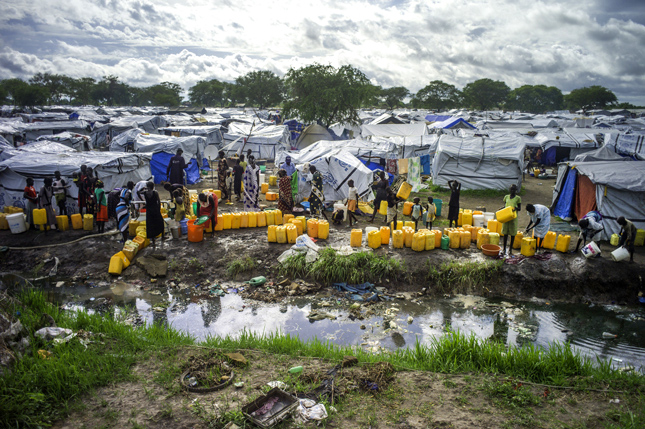
Global crises like the Ebola outbreak force us to consider what “security” really means, said Sharon Burke, senior advisor for the New America Foundation. “Is security getting our kids to school and food on the table…or are you talking about military security and defense threats that require a weapon to counter?”
-
Can We Forecast Where Water Conflicts Are Likely to Occur?
›
Many of the world’s freshwater systems reach across national boundaries, and growing demands combined with supply constraints may lead to increased potential for international water conflicts. If that’s the case, which international river basins are most at risk of conflict or, conversely, which are most prone to cooperation? What are the factors that increase or decrease conflict risk?
-
Pentagon Releases New Climate Roadmap, Plans for Constrained Training, Challenged Infrastructure, Expanding Missions
›October 13, 2014 // By Schuyler NullA series of executive orders signed by President Obama since his first year in office requires all federal agencies to begin planning for climate change and produce an updated adaptation plan by May of this year. The Pentagon is a little late, but today they released their second-ever climate roadmap.
-
Paola Adriázola and Stephan Wolters, ECC Platform
Investing in Collaboration to Manage Natural Resource Conflict
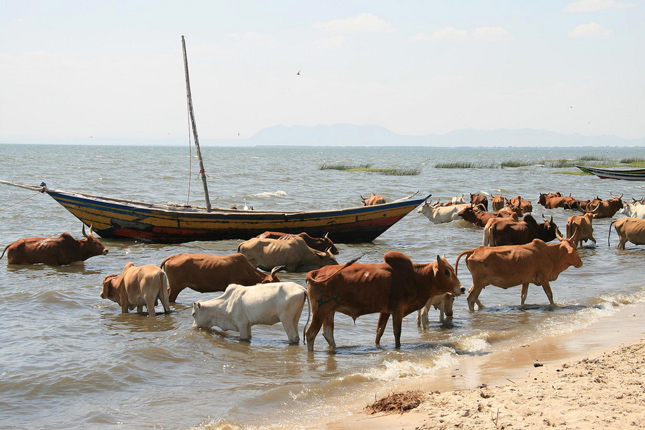
›September 25, 2014 // By Wilson Center StaffConflict over environmental resources endangers rural people’s livelihoods and can increase the risk of broader social conflict. Yet joint action to sustain shared resources can also be a powerful means for community building. The Strengthening Aquatic Resource Governance (STARGO) project demonstrated this in three ecoregions: Lake Victoria, with a focus on Uganda; Lake Kariba, with a focus on Zambia; and Tonle Sap Lake in Cambodia. The results of the project were released at an event in Berlin in early July 2014.
-
Hydro-Diplomacy Can Build Peace Over Shared Waters, But Needs More Support
›From Ukraine and the Middle East to sub-Saharan Africa and East Asia, the world is engulfed in a series of significant international crises. But despite such urgent issues, it would be a grave mistake to forget about the structural foreign policy challenges – such as access to water – that could become the crises of the future.
-
Opportunity Costs: Evidence Suggests Variability, Not Scarcity, Primary Driver of Water Conflict
›Nearly 1 billion people lack reliable access to clean drinking water today. A report by the Water Resources Group projects that by 2030 annual global freshwater needs will reach 6.9 trillion cubic meters – 64 percent more than the existing accessible, reliable, and sustainable supply. This forecast, while alarming, likely understates the magnitude of tomorrow’s water challenge, as it does not account for the impacts of climate change.
-
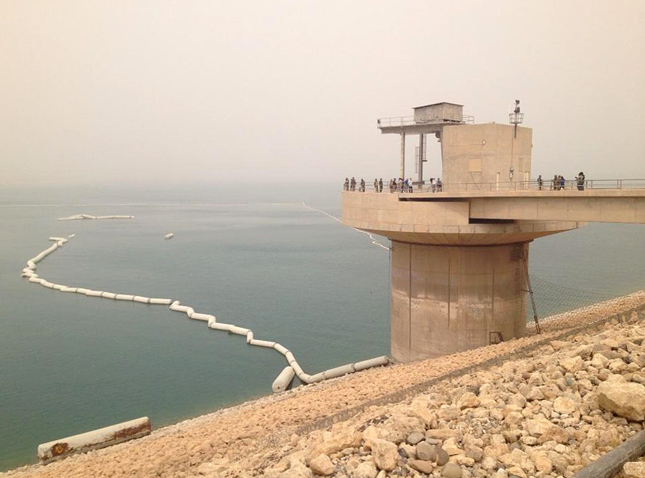
What Can Iraq’s Fight Over the Mosul Dam Tell Us About Water Security?
›The fight for control over “the most dangerous dam in the world” is raging.
Since its capture by Islamic State (IS) militants on August 7 and subsequent attempts by Iraqi government and Kurdish forces to take it back, Iraq’s Mosul Dam has been one of the central components of the government’s surprising and rapid collapse in the country’s northern and western provinces. In fact, one might see the capture of the Mosul Dam as the moment IS ascended from a dangerous insurgent group to an existential threat to Iraq as a state.
-
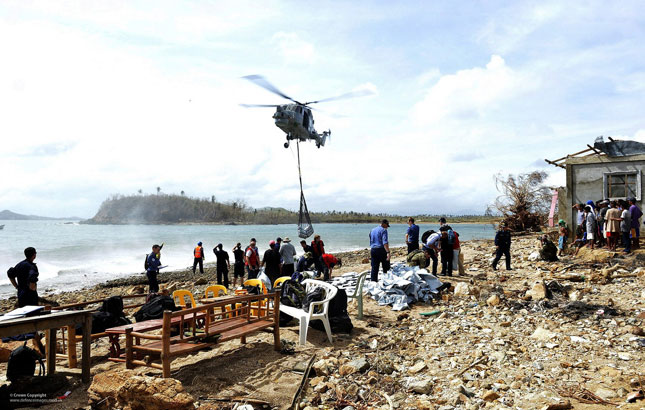
Environmental Dimensions of Sustainable Recovery: Learning From Post-Conflict and Disaster Response
›“Environmental specialists need to change,” said Anita van Breda at the Wilson Center on June 25. “In the new normal, our work has to have a different relevancy.” [Video Below]
Showing posts from category environmental peacemaking.