-
Missing Peace: Why Transboundary Conservation Areas Are Not Resolving Conflicts
›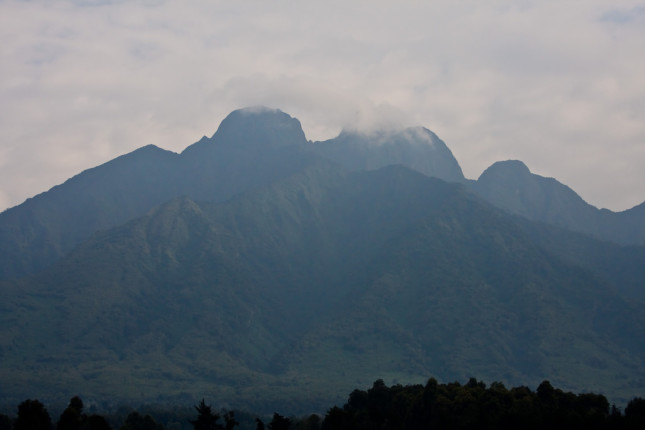
Transboundary Conservation Areas, such as Parks for Peace, have been heralded for their potential to simultaneously contribute to biodiversity conservation and peace, but evidence to this effect has been elusive. In fact, more indications suggest that transboundary conservation areas, including Parks for Peace, rely on pre-existing international peace between countries for formalization and on-going non-violent relations for continuity. Although they are primarily designed for ecological peace (based largely on arguments of ecological connectivity), they are not immune to environmental harms. Perhaps even more challenging is how “fortress conservation” and “green securitization” compromise social peace.
-
Gidon Bromberg on Water and Environmental Peacebuilding
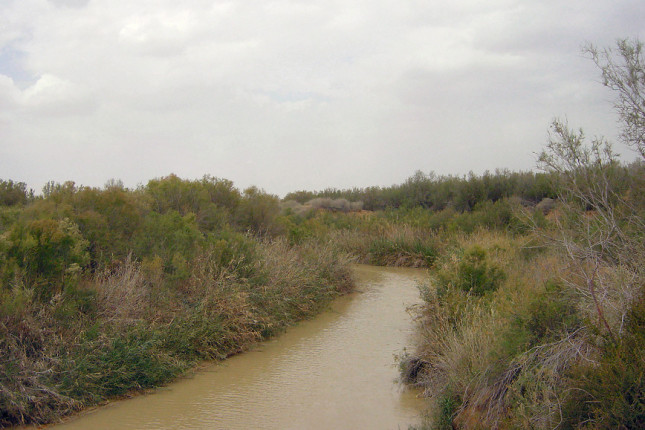
› “The Jordan River has been the lifeblood of the Levant,” says Gidon Bromberg, the Israeli co-director of EcoPeace Middle East, in this week’s Water Stories podcast. The river’s importance offers a unique platform for multi-level conflict resolution and environmental conservation efforts in a region wracked by conflict.
 -
Ken Conca on Transboundary Water Basin Management
›Friday Podcasts // Water Stories (Podcast Series) // January 18, 2019 // By Linsey Edmunds & Truett Sparkman“When we start talking about water in the context of security, we’re immediately drawn to a conversation about conflict. And that’s often framed in terms of scarcity of water and a real zero-sum game around water, where scarcity begets grievances, which beget instability and conflict,” says Ken Conca, Professor at American University’s School of International Service, in this week’s Water Stories podcast. Of the world’s 276 transboundary water basins, fewer than half are governed by an agreement or accord that allocates use of the shared water between countries—and less than a quarter of these accords include all the riparian states in a basin. -
50 Years of Water at Wilson: Water, Conflict, and Cooperation (Part 1 of 2)
›A number of countries across North Africa, the Middle East, into Central and South Asia are “at risk of failure if they can’t get the water equation right,” said Aaron Salzberg of the U.S. Department of State, at a recent Wilson Center event celebrating 50 years of working on water’s connection to conflict and cooperation. The event brought together experts from government, NGOs, and academia for a comprehensive look at the first year of the U.S. Global Water Strategy and new research and practice on water, peace, and conflict. Either now or sometime in the near future, said Salzberg, if fundamentally water insecure countries lacking access to sustainable supplies of safe drinking water and basic sanitation do not address their water problems, they will face increased risk of failure and greater fragility.
-
Sandra Ruckstuhl on Capturing Practical Lessons on Water, Conflict, and Cooperation
›Friday Podcasts // Water Stories (Podcast Series) // December 14, 2018 // By Kathryn Gardner & Truett SparkmanWe realized “there was a need for a toolkit on water,” says Sandra Ruckstuhl in this week’s Water Stories podcast, “with a focus of conflict and conflict mitigation, but also peacebuilding.” Ruckstuhl, a consultant for the World Bank who has researched water programs in Yemen and the Middle East, helped the Wilson Center produce USAID’s Water and Conflict toolkit, which documents examples of successful development interventions focused on water and peacebuilding. -
Power Play: Can Micro-Hydropower Electrify Remote Afghanistan and Promote Peace?
›After close to 40 years of armed conflict, Afghanistan may be poised to begin a period of economic recovery. Electrifying remote areas and establishing pervasive political control is critical to its success. India is currently planning and funding several major hydropower projects along the Kabul River and its tributaries. Micro-hydropower is bringing electricity to remote areas such as the Banda Miralamji Village in eastern Nangarhar Province. However, in some areas far from the capital, the central government in Kabul and opposition groups are struggling for control and influence. While electrification of a village often eases poverty, health concerns, and improves communication, it does not always benefit the government in Kabul.
-
Aaron Wolf on Transboundary Water Conflict and Cooperation
›Friday Podcasts // Water Stories (Podcast Series) // November 30, 2018 // By Evan Barnard & Sharif Wahab“Countries—even countries that don’t like each other much—have, and continue to have, conversations over water resources, even when they won’t about other issues,” says Aaron Wolf, Director of Water Conflict Management and Transformation at Oregon State University, in this week’s Water Stories podcast. -
International Water Cooperation Opens the Door to Peacemaking
›Although water is an essential input for agriculture and industrial production, it is also scarce in many regions. When it crosses international borders via shared rivers, lakes and aquifers, it can become a source of conflict and contention. Yet while water can be a source of instability, especially in the face of climate change, it can also be a source or catalyst for cooperation and even peace.
Showing posts from category environmental peacemaking.
 “The Jordan River has been the lifeblood of the Levant,” says Gidon Bromberg, the Israeli co-director of EcoPeace Middle East, in this week’s Water Stories podcast. The river’s importance offers a unique platform for multi-level conflict resolution and environmental conservation efforts in a region wracked by conflict.
 “When we start talking about water in the context of security, we’re immediately drawn to a conversation about conflict. And that’s often framed in terms of scarcity of water and a real zero-sum game around water, where scarcity begets grievances, which beget instability and conflict,” says Ken Conca, Professor at American University’s School of International Service, in this week’s Water Stories podcast. Of the world’s 276 transboundary water basins, fewer than half are governed by an agreement or accord that allocates use of the shared water between countries—and less than a quarter of these accords include all the riparian states in a basin.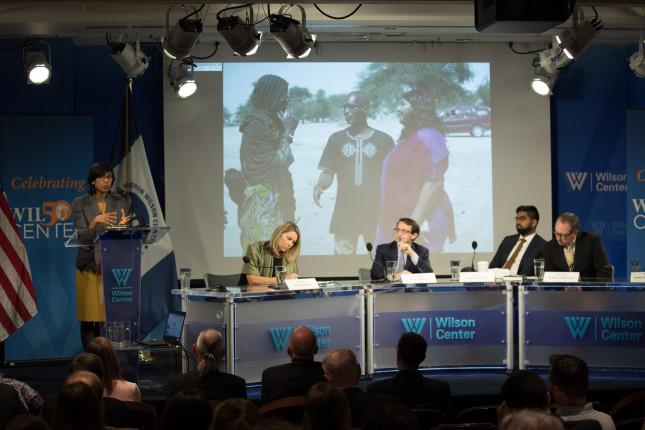
 We realized “there was a need for a toolkit on water,” says Sandra Ruckstuhl in this week’s Water Stories podcast, “with a focus of conflict and conflict mitigation, but also peacebuilding.” Ruckstuhl, a consultant for the World Bank who has researched water programs in
 “Countries—even countries that don’t like each other much—have, and continue to have, conversations over water resources, even when they won’t about other issues,” says