

-
Environmental Security in Times of Armed Conflict
›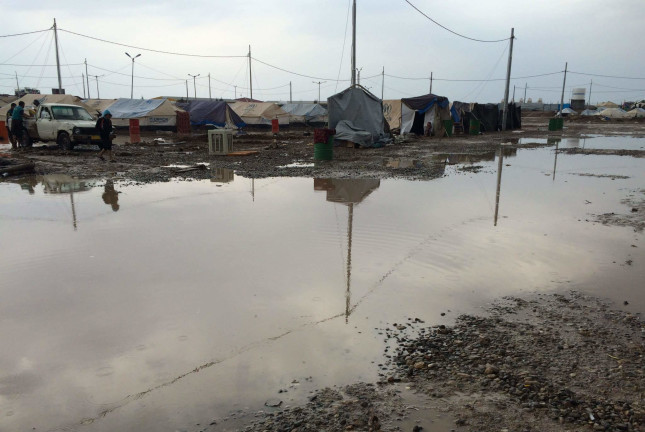
This summer, Iraqi citizens in Basra demonstrated in the streets to protest a serious public health crisis caused by polluted water. The condition of their water infrastructure was deplorable after years of devastating wars, corruption, and droughts and regional hydropolitics. More than 100,000 people have reportedly been poisoned by polluted water, while recent estimates warn that some 277,000 children are at risk of diseases, such as cholera due to rundown water and sanitation facilities at schools.
-
Lessons from Post-Conflict States: Peacebuilding Must Factor in Environment and Climate Change
›
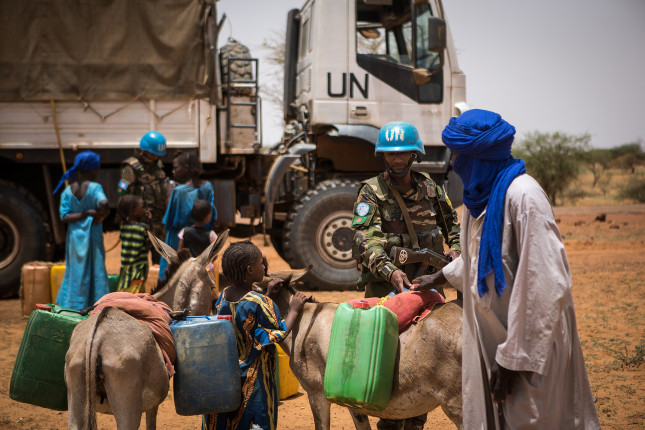
The challenge of peacebuilding missions is not only to stop violence and prevent a rekindling of conflict, but also to help societies and governments reset their internal relations on a peaceful path towards sustaining peace.
-
As Andean Glaciers Retreat, So Does Regional Security
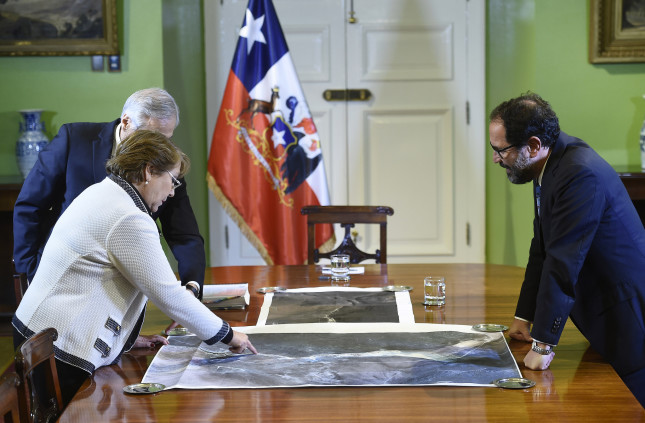
›Last month, Bolivia filed a counterclaim against Chile in the International Court of Justice—the latest salvo in their battle over rights to the waters of the Silala River. The court will decide whether Silala is “an international watercourse”—thus granting water rights to Chilean mining operations—or simply an artificial diversion of Bolivian spring water by Chile. This legal case marks the latest chapter in Bolivia and Chile’s historically delicate relationship, which dates back to the War of the Pacific in the late 19th century.
-
Europe Takes the Lead in Climate, Energy, and Security
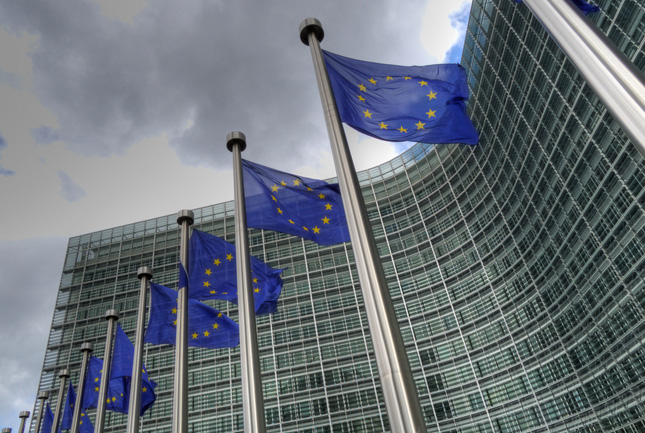
›With the tumultuous NATO summit and a simmering trade war dominating stateside headlines last month, the European Union’s progress on climate-security connections has received little attention. After the U.S. government rolled back its significant efforts in early 2017, the EU and its leading members—particularly Sweden and Germany—picked up the ball. Three significant events herald what could be the start of a new era of climate-security policymaking—one under European leadership.
-
As Afghanistan’s Water Crisis Escalates, More Effective Water Governance Could Bolster Regional Stability
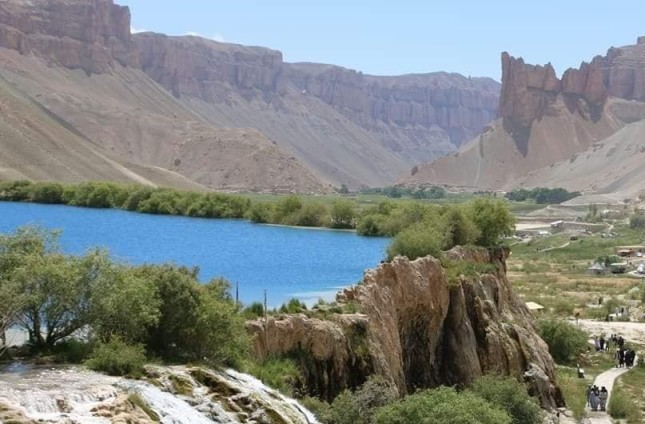
›“Kabul be zar basha be barf ne!” This ancient proverb—“May Kabul be without gold rather than snow”—refers to snowmelt from the Hindu Kush Mountains, a primary source of Afghanistan’s water supply. To recover from years of armed conflict, Afghanistan needs a stable water supply, but its sources are increasingly stressed by severe droughts. The Norwegian Refugee Council estimates that today, 2 out of 3 provinces are impacted by drought, putting two million people at risk of hunger. Improving the country’s water governance—the social, legal, and administrative systems that guide how water is distributed and used—may help it avoid both internal and regional conflicts by stabilizing its economy and its citizens’ livelihoods.
-
Weakened by the Storm: Disasters and the Fighting Capacity of Armed Groups in the Philippines
›Many studies on natural disasters and conflict have assumed that disasters make it easier for rebel groups to recruit new members by fueling grievances against the government and lowering the opportunity costs of joining an insurgency, and that this recruitment will increase conflict. But disasters may actually have the opposite effect. My study of rebel groups in the Philippines, recently published in the Journal of Peace Research, suggests that by weakening the organizational structure and supply lines of rebel groups and their ability to enlist new fighters, disasters may instead reduce the intensity of the conflict, rather than increase it.
-
Sustainable Water, Resilient Communities: The Challenge of Erratic Water
›From the Wilson Center // Water Security for a Resilient World // June 7, 2018 // By Rebecca LorenzenWater variability is increasing “due to climate change and to more frequent natural disasters,” said Jonathan Cook, Senior Climate Change Adaptation Specialist with the U.S. Agency for International Development, at the fourth and final event in a series on water security organized by the Wilson Center and the Sustainable Water Partnership. To solve the problem of increasingly erratic water, “business as usual is really not acceptable anymore,” said Will Sarni, founder of WetDATA.org, who called for new, innovative ideas: “Hope is not a strategy.”
-
Halvard Buhaug: Climate Changes Affect Conflict Dynamics
›“Climate is unquestionably linked to armed conflict,” says Halvard Buhaug, Research Professor at the Peace Research Institute Oslo, in the latest Wilson Center podcast.“If we produce a map of the world with locations of ongoing and recently entered armed conflicts, and we superimpose on that map different climate zones or climatic regions, we would very easily see a distinct clustering pattern of armed conflicts in warmer climates.”
Showing posts from category environmental peacemaking.
 “Climate is unquestionably linked to armed conflict,” says Halvard Buhaug, Research Professor at the Peace Research Institute Oslo, in the latest Wilson Center podcast.

