-
New Security Brief | Converging Risks: Demographic Trends, Gender Inequity, and Security Challenges in the Sahel
›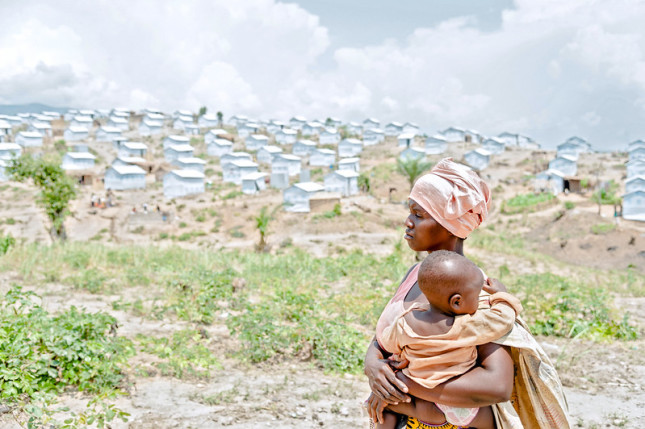
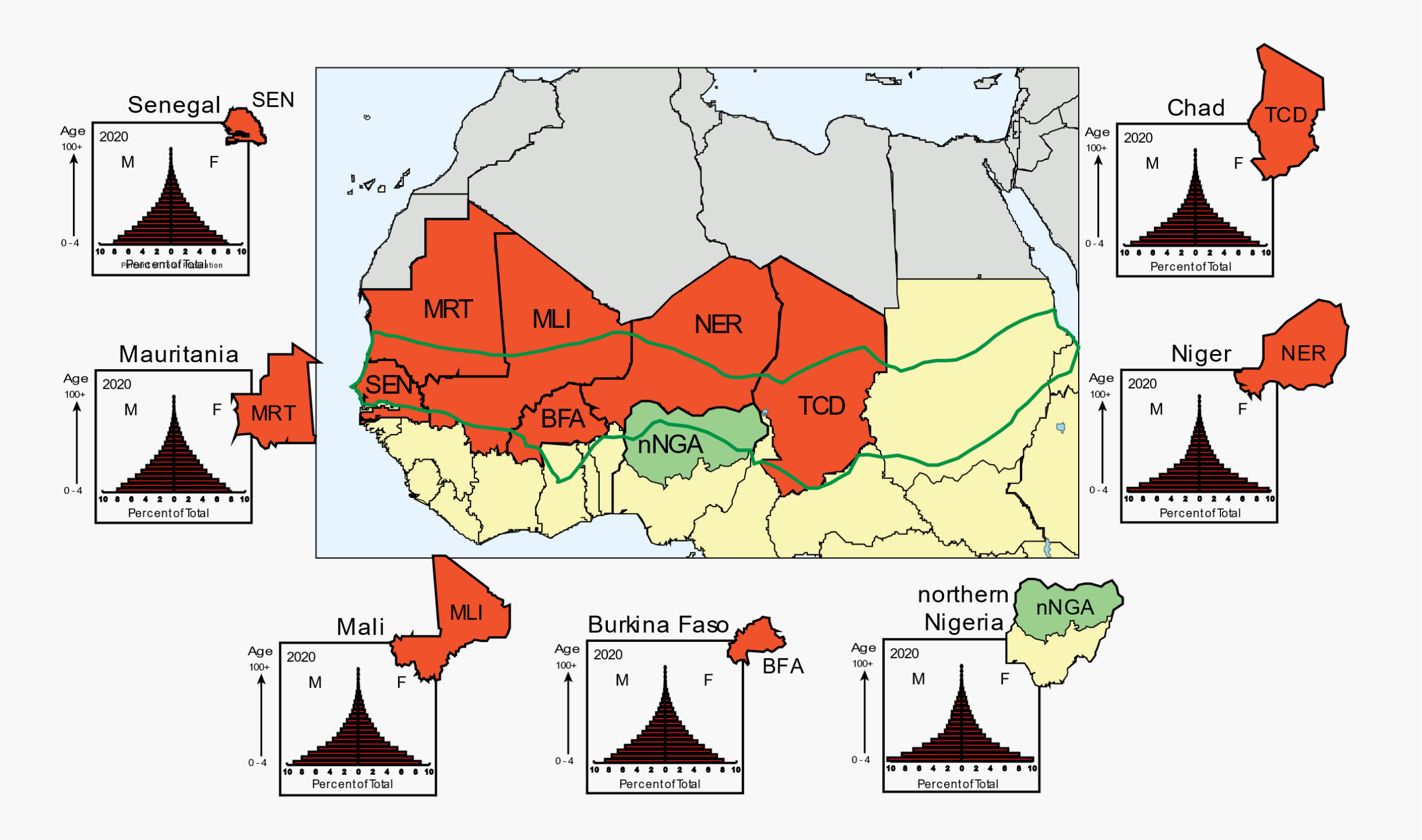
Security conditions in the Sahel are rapidly deteriorating. Since 2016, the region has witnessed a 16-fold increase in terrorist attacks. In Burkina Faso, Chad, Mali, Mauritania, and Niger, 10.5 million people are facing starvation, and with climate-related disasters increasing and intensifying in the region, food insecurity is projected to rise. Against this backdrop, rapid population growth is outpacing governments’ ability to provide access to basic services. These pressures have transformed the central Sahel into the epicenter of a forced displacement crisis, with dire long-term and global humanitarian consequences that reverberate well beyond the region’s borders.
-
Youthful Demographic Conditions Could Push the Sahel to an “Afghanistan Moment”
›Africa in Transition // Guest Contributor // February 8, 2022 // By Richard Cincotta & Stephen Smith Cet essai a été mis à jour avec une traduction française, disponible après la version anglaise, ci-dessous.
 The countries of the Western Sahel find themselves in the tightening grip of a set of mutually reinforcing crises. These include deepening seasonal food insecurity and surges of food-aid dependency, widening income inequalities, widespread childhood stunting, low levels of education attainment and pervasive unemployment, as well as acute political instability and a rapidly growing Islamist-led insurgency that has already displaced some 2.5 million people across the region. In our recent report, What Future for the Western Sahel? The Region’s Demography and Its Implications by 2045, (published by the Atlantic Council’s Scowcroft Center for Strategy and Security), we argue that, unless the Sahelian states focus on reversing the underlying conditions that sustain high fertility—the cause of a persistently youthful and rapidly growing population—they will likely not be able to resolve these crises in the foreseeable future.
-
Keeping Human Rights in Family Planning Policy as Depopulation Fears Mount
›Human rights have been central to the family planning movement for well over half a century, although family planning programs have not always lived up to the human rights commitments that governments publicly subscribe to. The right of couples to control their fertility was first codified in the 1968 Tehran Declaration, which noted that:
“Parents have a basic human right to determine freely and responsibly the number and spacing of their children.”
-
Thomas Sankara’s Lost Legacy
›Thirty-four years ago, Burkina Faso’s president, Thomas Sankara, was murdered. Only now are his alleged assassins on trial. Had he survived, the arid, landlocked country of more than 20 million people might well have taken a far different path to development.
-
Predicting the Rise and Demise of Liberal Democracy: How Well Did We Do?
›In 2007, at the (U.S.) National Intelligence Council, a colleague and I set out to determine if we could forecast two distinct political phenomena, the rise and the demise of high levels of democracy. To guide our decade-long forecasts, we relied on a simple statistical model and a spreadsheet of demographic projections from the UN’s 2006 World Population Prospects data set. Now that the experimental period (from 2010 to 2020) has ended, we can look back and ask: How well did these forecasts perform?
-
The First Political Order: How Sex Shapes Governance and National Security Worldwide (Book Launch)
›“What you do to your women you do to your nation state. And so, if you decide to curse your women, we argue that you will curse your nation state as well,” said Valerie Hudson, University Distinguished Professor and Holder of the George H.W. Bush Chair at the Bush School of Government and Public Service at Texas A&M University, at the launch of The First Political Order. Co-authored by Hudson, Donna Lee Bowen, Professor Emerita at Brigham Young University, and P. Lynne Nielson, Professor of statistics at Brigham Young University, The First Political Order is the culmination of 2 decades of research on the linkages between the status of women and the status of nation-state security.
-
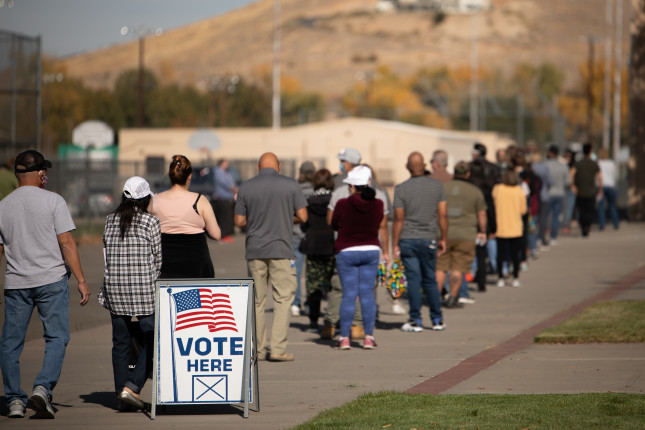
A Tale of Two Transitions: Education, Urbanization, and the U.S. Presidential Election
›Rather than delve into issue opinion polling, or assess presidential campaign strategies, political demographers assume that political change is the predictable product of a set of mutually reinforcing social, economic, and demographic transitions, which can be tracked using data. But is this true in a country like the United States that has been in the advanced stages of these development transitions for decades? If these transitions are as important as demographers believe, could their variation among the 50 states explain the outcome of the recent U.S. presidential election? If so, what could they tell us about America’s electoral future?
-
Why Securing Youth Land Rights Matter for Agriculture-Led Growth in Africa
›Africa’s “youth bulge” represents both an enormous challenge and a tantalizing opportunity for the continent. With over 60 percent of Africans under the age of 35, governments are under increasing pressure to grasp the “demographic dividend” youth represent to boost agricultural productivity, enhance food security, and expand economic opportunities for young men and women. Each year, about 10-12 million young Africans aged 15-24 enter the labor market, but only 3.1 million formal wage jobs are generated, pushing millions of youth into low paying and precarious informal employment.
Showing posts from category demography.