-
Nigeria’s Demographic Moment? Or Just Wishful Thinking?
›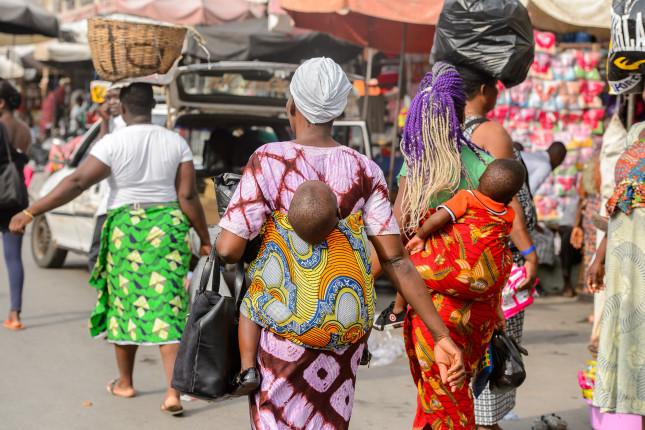
Over the past several months, members of the foreign affairs and development communities have heaped a great deal of attention—and interpretation—on the pace of demographic change in Nigeria.
-
World Population Day: Understanding Current Trends to Enhance Rights and Climate Resilience
›
In today’s demographically diverse world, population issues abound, creating different and important social, economic, and political implications. World Population Day (observed each year on July 11) offers an opportunity to reflect on why population is so important. Understanding the implications of population growth and decline, as well as population age structure and migration—is essential to strengthen our abilities to plan for a more sustainable future.
-
8 Billion and Counting: Rethinking Rhetoric on Population and Choice
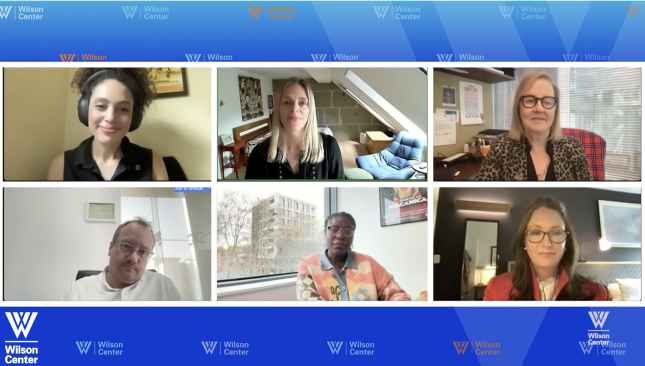
›The United Nations Population Fund (UNFPA) 2023 State of the World Population (SWOP) Report offers a chance to reflect on what’s at stake in debates over global population. “The question is not whether the human population is too large or too small. The question is whether everyone can exercise their fundamental human right to choose the number and spacing of their children,” said Sarah Craven, Chief of the Washington Office of UNFPA at the virtual D.C. launch of the report at the Wilson Center on April 26, 2023.
-
Should Demography Weigh in on U.S. Response to Coups d’Etat?
›The research presented in this article was subsequently published in a peer-reviewed article: https://www.degruyter.com/document/doi/10.1515/spp-2023-0029/html
When a military-led or military-influenced coup d’état occur in a foreign country, does evidence from demographic research merit consideration in the U.S. foreign policy response? It’s a question that U.S. policymakers should be asking as deteriorating political conditions in West Africa come increasingly into confluence with the limited tools available either to deter or respond to illegal and extra-legal forms of political succession.
-
Invisible Threads: Addressing Migration Through Investments in Women and Girls
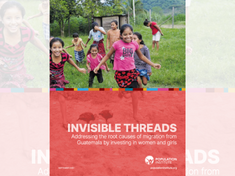
›This week’s episode of the New Security Broadcast explores Invisible Threads: Addressing the Root Causes of Migration from Guatemala by Investing in Women and Girls–a new report from the Population Institute. “We feel like it’s really important to highlight how the lives of women and girls and other marginalized groups are really central to a lot of the issues that are at the root causes of migration from the region,” says Kathleen Mogelgaard, President and CEO of the Population Institute. In this episode, Mogelgaard lays out the report’s findings and recommendations with two fellow contributors: Aracely Martínez Rodas, Director of the Master in Development at the Universidad del Valle de Guatemala, and Dr. J. Joseph Speidel, Professor Emeritus at the University of California, San Francisco School of Medicine. -
Global Population Growth is an Opportunity to Invest in People
›Just in the last minute, 169 more people were born on planet Earth, and everyday more than a quarter of a million are added to that total. John Milewski, Moderator of Wilson Center NOW, laid out these astonishing facts at the beginning of a Wilson Center NOW conversation on the implications of global population growth with Wilson Center Fellow Jennifer Sciubba on November 14— the eve of the historic day when the number of people on the planet officially surpassed 8 billion.
-
How Gender Inequality Drives the Global Crisis of Unintended Pregnancy
›“Half. This is the proportion of all pregnancies that are unintended. That is 121 million pregnancies every year,” said Sarah Craven, Director of the Washington D.C. Office at UNFPA during a recent U.S. launch event for the 2022 UNFPA State of World Population (SWOP) report. “For these women, the most life altering reproductive choice, whether to become pregnant or not, is no choice at all. This is an unseen crisis unfolding right before our eyes.”
-
World Population Day Shines a Spotlight on Inequities
›July 11 is World Population Day—a day designated annually by the United Nations that should prompt us, in the words of the International Institute for Sustainable Development, to “focus attention on the urgency and importance of population issues.”
Examining population trends helps describe where we’ve been and suggests where we’re headed. Yet these facts about human existence on our planet also offer insights into how we got here—including a window into places where inequities exist and rights have been denied.
Showing posts from category demography.