-
Population Age Structure: The Hidden Factor in COVID-19 Mortality
›
Until several months ago, demographers regarded a youthful age structure as an unequivocally detrimental demographic characteristic. Where more than half of the population is younger than age 25, countries are unable to attain high levels of economic and human capital development and face an increased risk of some forms of civil conflict. Yet, so far, during the ongoing pre-vaccine stage of the COVID-19 pandemic, the most age-structurally mature countries have been hardest hit by the disease. These countries are generally urbanized, wealthy, well-educated, and include a large proportion of seniors. And, somewhat surprisingly—despite being equipped with advanced medical technologies—these countries are experiencing the highest rates of mortality from complications related to COVID-19.
-
Investing in Girls and Women Could Set Stage for Peace, Development in Sahel
›
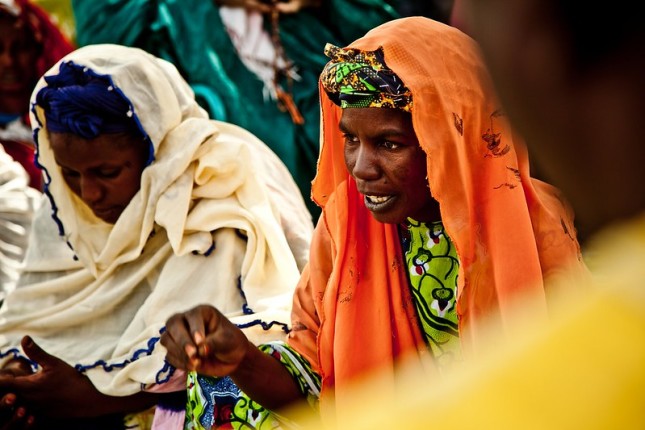
The coronavirus pandemic has people throughout the world pondering how humankind should respond to a public health crisis. While individual countries are managing the crisis with varying degrees of success, we can all agree that the Covid-19 pandemic is commanding the international community’s attention. By contrast, it is much harder to get the world to care about the long-term public health crisis unfolding in the West African Sahel.
-
Sexuality Education Begins to Take Root in Africa
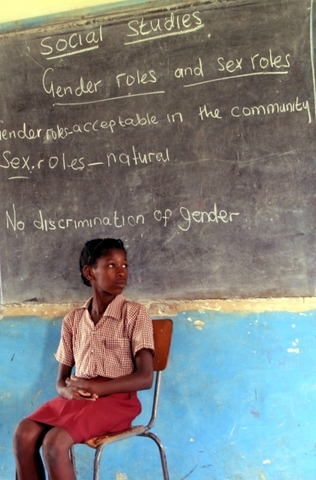
›In Kenya, primary and secondary school students take courses called Life Skills Education. So do students in Malawi, Mozambique, Namibia, and Swaziland. South Sudan adds “peace-building” to the subject title. Lesotho, Madagascar, Rwanda, Tanzania, Uganda, and Zambia are more direct. These countries add the word “sexuality” to the course name.
-
Population, Climate, and Politics—A New Phase is Emerging
›For some time, it has been clear that a global population imbalance is emerging. High income countries, including nearly all of the Americas, Europe, and most of East and parts of South and Southeast Asia, have seen a dramatic, sustained fall in fertility. Already, this is resulting in shrinking labor forces and the oldest mean age populations seen in history. At the same time, the low income countries and even some lower middle-income countries—mainly in Africa but also in Central America, the Middle East, and parts of South and Southeast Asia—continue to have relatively high fertility. This is now, and even more in the coming decades, producing fast-growing labor forces and relatively young populations. -
Emulating Botswana’s Approach to Reproductive Health Services Could Speed Development in the Sahel
›The Western Sahel region—a cluster of arid, low-income countries stretching from Senegal, on Africa’s Atlantic coast, inland to Mauritania, Burkina Faso, Mali, Niger, and Chad—is home to the world’s most youthful populations. According to current UN Population Division estimates, about 57 percent of this six-country region’s population is 19 years old or younger. As security conditions deteriorate across the rural Sahel, governments in Europe and North Africa are taking notice of these countries’ demographic status—and for good reasons. Sustained population youthfulness (often called a “youth bulge”) contributes to low levels of educational attainment, joblessness and social immobility, and ultimately to rapid population growth, which tends to drive declines in per-capita availability of freshwater and other critical natural resources: factors that are associated with the risk of persistent violent conflict and represent powerful push factors for migration.
-
All the Population Future We Cannot See
›In the quarter century the Wilson Center’s Environmental Change and Security Program has been pondering the issues for which it’s named, the world’s demographic future has been wobbling. A key concern of analysts: How many people will farmers need to feed in 2050? Mainstream projections have teetered between 8.9 billion and 9.8 billion, amounting to an increase of between 13 and 21 percent over today’s 7.7 billion. This significant variation in projections is rarely acknowledged by prognosticators. Many simply round up today’s latest guess and state confidently that there will be 10 billion people in 2050—though just a few years ago, the number most confidently stated was 9 billion. -
Which Demographic “End of History”?
›First published 30 years ago in the National Interest, Francis Fukuyama’s landmark essay, “The End of History?,” argued that, with the fall of fascism and communism, no serious blueprint for modern-state development lay open, save for those paths that would ultimately embrace both political and economic liberalism. Over the past two decades, movement toward this ideal end-state has trickled to a halt. Instead, the political elites of Eurasia’s regional powers—Russia, Turkey, Iran, and China—have crafted stable illiberal regimes that borrow whatever they need from free-market economics, electoral politics, nationalism, and religion. Their ascent has produced a form of “non-endpoint stability”—two mutually antagonistic camps: one composed of liberal democracies, the other a mix of illiberal hybrids. As long as these camps remain stable, the international system falls far short of Fukuyama’s theoretical end of history. -
Investing in Women’s Empowerment Essential to Achieving Peace, Security in Africa
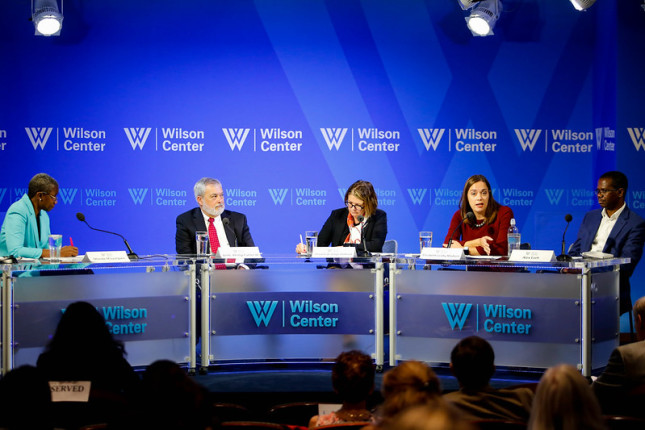
›Africa in Transition // From the Wilson Center // November 14, 2019 // By Brigitte Hugh & Deekshita RamanarayananA country can achieve sustainable peace and security only if women are included, said Monde Muyangwa, Director of the Wilson Center’s Africa Program at a recent Wilson Center event on the role of women in promoting peace and security in Africa. “And I would argue that part of the challenges that we face on the African continent, the insecurity that we face in parts of the African continent,” she said, “is precisely because not all segments of society are included.”
Showing posts from category demography.
 For some time, it has been clear that a global population imbalance is emerging. High income countries, including nearly all of the Americas, Europe, and most of East and parts of South and Southeast Asia, have seen a dramatic, sustained fall in fertility. Already, this is resulting in shrinking labor forces and the oldest mean age populations seen in history. At the same time, the low income countries and even some lower middle-income countries—mainly in Africa but also in Central America, the Middle East, and parts of South and Southeast Asia—continue to have relatively high fertility. This is now, and even more in the coming decades, producing fast-growing labor forces and relatively young populations.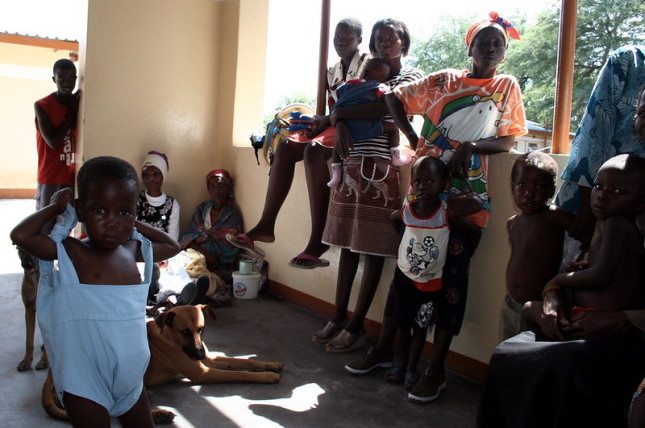
 In the quarter century the Wilson Center’s Environmental Change and Security Program has been pondering the issues for which it’s named, the world’s demographic future has been wobbling. A key concern of analysts: How many people will farmers need to feed in 2050? Mainstream projections have teetered between 8.9 billion and 9.8 billion, amounting to an increase of between 13 and 21 percent over today’s 7.7 billion. This significant variation in projections is rarely acknowledged by prognosticators. Many simply round up today’s latest guess and state confidently that there will be 10 billion people in 2050—though just a few years ago, the number most confidently stated was 9 billion.
 First published 30 years ago in the National Interest, Francis Fukuyama’s landmark essay, “